
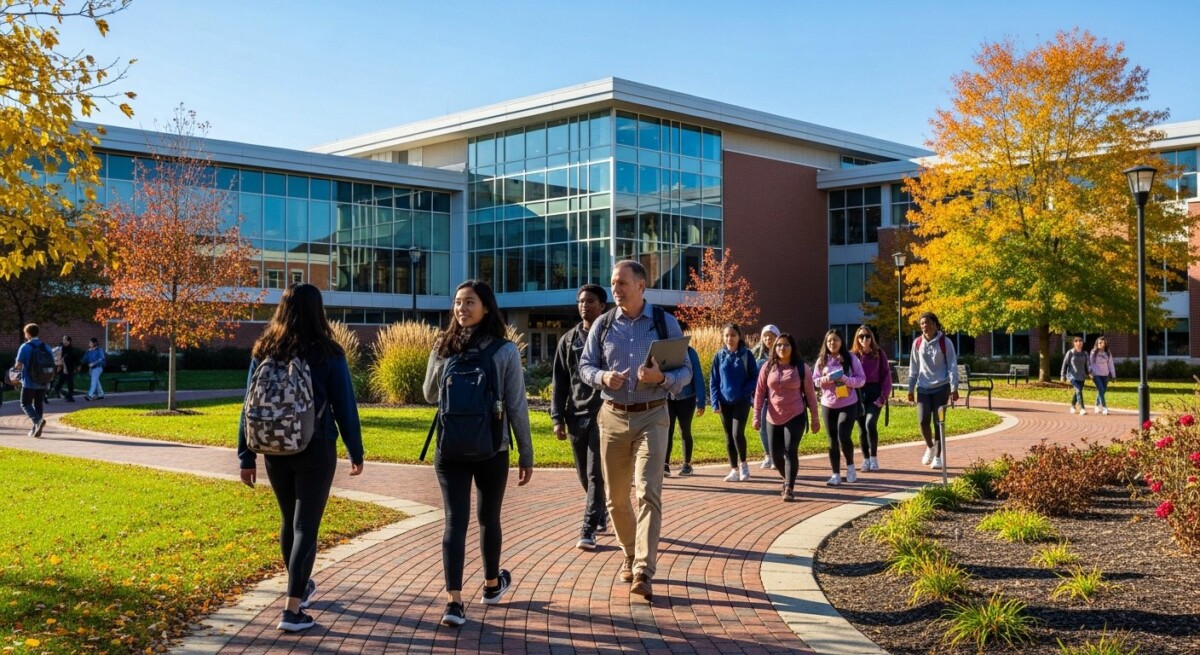
New Jersey offers a wealth of opportunities for students seeking a bachelor’s degree, from large public research universities to small private liberal arts colleges. The state’s proximity to major metropolitan areas like New York City and Philadelphia provides unique internship and career advantages. Whether you are a high school student planning your next step or an adult looking to return to school, understanding which New Jersey colleges with undergraduate degree programs align with your goals is essential. This guide breaks down the top institutions, application strategies, and financial considerations to help you make an informed decision.
Why Choose New Jersey for Your Undergraduate Degree?
New Jersey is home to a dense concentration of highly ranked colleges and universities. The state boasts strong programs in fields such as nursing, engineering, business, computer science, and the liberal arts. Students benefit from a diverse cultural landscape and access to world-class research facilities. Additionally, many New Jersey colleges with undergraduate degree programs offer flexible schedules including evening, weekend, and fully online options. This flexibility is ideal for working adults and parents who need to balance education with other responsibilities.
The cost of attending college in New Jersey can vary significantly. Public institutions like Rutgers University and The College of New Jersey offer in-state tuition rates that are lower than private universities but still represent a substantial investment. However, many students offset costs through financial aid, scholarships, and grants. For those exploring multiple options, our guide on Arizona colleges with undergraduate degree programs provides a useful comparison of how different states structure their higher education systems.
Major Universities and Their Strengths
Rutgers University
Rutgers is the state’s flagship public research university with campuses in New Brunswick, Newark, and Camden. It offers over 100 undergraduate majors and is particularly strong in pharmacy, engineering, and journalism. The New Brunswick campus is the largest and most comprehensive, providing students with extensive research opportunities and a vibrant campus life. Rutgers is often the first choice for students seeking a traditional college experience with the resources of a major research institution.
New Jersey Institute of Technology (NJIT)
Located in Newark, NJIT specializes in engineering, technology, architecture, and applied sciences. The university has strong ties to industry and offers co-op programs that allow students to gain paid work experience while earning their degree. NJIT is an excellent choice for students who want a hands-on, career-focused education in STEM fields. The campus is also home to the Albert Dorman Honors College, which provides a rigorous curriculum for high-achieving students.
The College of New Jersey (TCNJ)
TCNJ is a highly selective public college in Ewing that emphasizes a liberal arts foundation combined with professional programs. It is consistently ranked among the top public regional universities in the North. TCNJ is known for its strong programs in education, nursing, business, and engineering. The campus has a suburban feel with a focus on undergraduate teaching. Class sizes are small, and students receive personalized attention from faculty.
Princeton University
Princeton is a world-renowned Ivy League institution located in Princeton. While it is highly competitive, it offers generous financial aid packages that meet 100% of demonstrated need without loans. Princeton provides a traditional liberal arts curriculum with strengths in the humanities, social sciences, natural sciences, and engineering. For students who can gain admission, Princeton represents an unparalleled educational opportunity.
Private Colleges and Specialized Institutions
Beyond the major universities, New Jersey has a number of private colleges that offer distinctive undergraduate experiences. Seton Hall University in South Orange is a Catholic institution with strong programs in business, law, and diplomacy. Drew University in Madison is a liberal arts college known for its focus on experiential learning and undergraduate research. Stevens Institute of Technology in Hoboken is a private research university specializing in engineering, science, and business with a stunning view of the Manhattan skyline. Each of these New Jersey colleges with undergraduate degree programs provides a unique academic culture and community.
For students interested in the arts, Montclair State University offers a well-regarded College of the Arts. Rider University in Lawrenceville has strong programs in business, education, and music. Ramapo College in Mahwah is a public liberal arts college that emphasizes interdisciplinary learning and global perspectives. The diversity of options means that students can find a program that matches their specific interests and career aspirations.
How to Choose the Right Program
Selecting among New Jersey colleges with undergraduate degree programs requires careful consideration of several factors. First, identify your academic interests and career goals. If you are interested in engineering, NJIT or Stevens might be the best fit. If you prefer a broad liberal arts education, TCNJ or Drew could be more suitable. Second, consider location and campus environment. Do you want an urban campus like Rutgers-Newark or a suburban setting like TCNJ? Third, evaluate the cost and financial aid options. Use net price calculators on each college’s website to estimate your actual cost after aid.
You should also visit campuses if possible. Walking around a campus and talking to current students can give you a sense of the community and culture. Attend information sessions and ask about graduation rates, job placement statistics, and internship opportunities. Many colleges also offer virtual tours and online information sessions for students who cannot visit in person.
Application Tips for New Jersey Colleges
The application process for New Jersey colleges with undergraduate degree programs typically involves submitting transcripts, test scores (if required), letters of recommendation, and a personal essay. Some colleges use the Common Application, which simplifies applying to multiple schools. Deadlines vary; some colleges have early action or early decision options that can increase your chances of admission.
Here are key steps to strengthen your application:
- Start early: Begin researching colleges and preparing applications at least one year before your intended enrollment.
- Focus on your GPA: Courses taken in high school are the most important factor in admissions decisions.
- Prepare for standardized tests: While many colleges are test-optional, strong SAT or ACT scores can still help your application.
- Write a compelling personal statement: Use the essay to showcase your unique experiences and perspectives.
- Seek strong recommendations: Ask teachers who know you well and can speak to your academic abilities and character.
After submitting your applications, monitor your email and applicant portals for updates. Some colleges require an interview or additional materials. Stay organized and meet all deadlines to avoid last-minute stress.
Financial Aid and Scholarships
Paying for college is a major concern for most families. New Jersey offers several state-based financial aid programs including the NJ STARS scholarship, the NJ TAG grant, and the NJCLASS loan program. Additionally, many New Jersey colleges with undergraduate degree programs offer institutional scholarships based on merit or need. File the Free Application for Federal Student Aid (FAFSA) as soon as possible after October 1 of your senior year. Some colleges also require the CSS Profile for institutional aid.
For adult learners and transfer students, there are additional resources. Community colleges in New Jersey have articulation agreements with four-year institutions, allowing students to complete their first two years at a lower cost and then transfer seamlessly. This pathway can significantly reduce the total cost of a bachelor’s degree. Working adults should also check if their employer offers tuition reimbursement benefits.
Online and Hybrid Degree Options
Many New Jersey colleges with undergraduate degree programs now offer online or hybrid options to accommodate students who need flexibility. Rutgers Online provides several fully online bachelor’s degree completion programs. Thomas Edison State University in Trenton is a pioneer in online education for adults, offering credit for prior learning and flexible scheduling. Seton Hall University and Montclair State University also offer online undergraduate programs in select fields. These options are ideal for students who work full-time, have family obligations, or live far from campus.
Online programs maintain the same academic standards as on-campus programs. Students interact with faculty and peers through discussion boards, video conferencing, and collaborative projects. Before enrolling, confirm that the program is accredited and that the degree is the same as the one awarded to on-campus students. Accreditation ensures that your degree will be recognized by employers and graduate schools.
Career Outcomes and Graduate School Preparation
Graduates from New Jersey colleges with undergraduate degree programs have strong career prospects. The state’s economy is diverse, with major industries including pharmaceuticals, finance, technology, healthcare, and logistics. Many colleges have career centers that offer resume workshops, job fairs, and internship placement services. Rutgers, NJIT, and Stevens all have extensive alumni networks that can help graduates find jobs in New Jersey and beyond.
For students planning to attend graduate or professional school, New Jersey colleges provide solid preparation. Pre-medical, pre-law, and pre-business tracks are available at many institutions. Faculty advisors can help students choose courses, prepare for entrance exams, and identify research opportunities. The combination of a strong undergraduate education and strategic career planning can lead to successful outcomes for graduates.
Frequently Asked Questions
What are the cheapest colleges in New Jersey for undergraduate degrees?
Community colleges like County College of Morris and Union County College offer the lowest tuition rates. For four-year degrees, public universities like Rutgers and NJIT provide the best value for in-state students. Private colleges often have higher sticker prices but may offer generous financial aid.
Can I complete an undergraduate degree entirely online in New Jersey?
Yes, several New Jersey colleges with undergraduate degree programs offer fully online bachelor’s degrees. Thomas Edison State University is a leader in this area, and Rutgers also offers online completion programs. Always verify accreditation and program requirements before enrolling.
How do I transfer from a New Jersey community college to a four-year college?
Many community colleges have articulation agreements with four-year institutions. Work with a transfer advisor at your community college to ensure that your credits will transfer. Some colleges, like Rutgers, offer guaranteed admission programs for community college graduates with a certain GPA.
What standardized tests are required for New Jersey colleges?
Many New Jersey colleges have adopted test-optional policies, meaning you can choose whether to submit SAT or ACT scores. However, some competitive programs and scholarships may still require scores. Check each college’s admissions website for specific requirements.
Choosing the right college is a major decision that shapes your future career and personal growth. New Jersey offers a rich array of options for students seeking undergraduate degrees. By researching programs, visiting campuses, and applying for financial aid, you can find a college that meets your needs and budget. For more personalized guidance, explore the degree matching tools and resources at CollegeDegree.Education. These services can help you compare programs and connect with accredited institutions. Additionally, if you are interested in broader academic program insights, you can find more information about postsecondary degree options to support your planning. Take the next step toward your educational goals with confidence and clarity.