
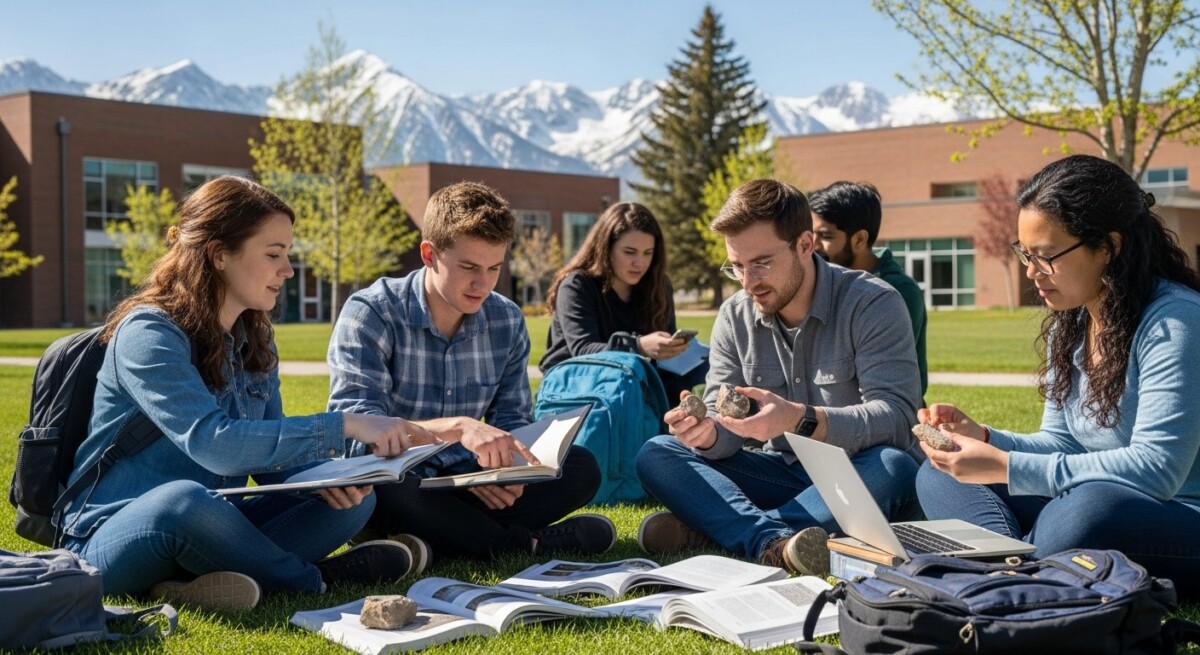
Montana is known for its wide-open spaces, rugged mountains, and a lifestyle that values independence and hard work. For students seeking a bachelor’s degree, the state offers a surprising depth of academic options ranging from research-intensive universities to small liberal arts colleges. Choosing the right institution can shape your career trajectory and personal growth, so understanding what each school offers is essential. This article explores the best Montana colleges for four-year degree programs, highlighting what makes each unique and how to match your goals with the right campus.
Why Montana Stands Out for Higher Education
Montana’s higher education landscape is defined by a mix of public land-grant universities, regional campuses, and private colleges. The state’s relatively small population means class sizes are often smaller than national averages, allowing for more direct interaction with faculty. Many programs also incorporate the state’s natural environment, offering field-based learning in geology, ecology, wildlife biology, and agricultural sciences. For students who value outdoor recreation, Montana campuses provide year-round access to hiking, skiing, fishing, and camping. The cost of living in most Montana cities is lower than the national average, which can make a four-year degree more affordable when combined with in-state tuition rates.
When evaluating Montana colleges for four-year degree programs, students should consider factors such as accreditation, graduation rates, internship opportunities, and alignment with career goals. The Montana University System oversees the public institutions, ensuring consistent academic standards across campuses. Private schools in the state add further diversity, offering specialized programs in fields like engineering, business, health sciences, and the liberal arts. For a deeper look at how to compare schools and make informed decisions, academic program insights can help you navigate the options.
Flagship Universities: The University of Montana and Montana State University
The two flagship institutions dominate the state’s higher education conversation. The University of Montana (UM) in Missoula and Montana State University (MSU) in Bozeman are both research universities that offer a wide range of bachelor’s degree programs. UM is known for its strengths in the humanities, journalism, law, and environmental studies. Its location in the heart of the Rocky Mountains makes it a natural laboratory for students in geology, forestry, and wildlife biology. MSU, conversely, has a strong reputation in engineering, agriculture, architecture, and nursing. Bozeman’s growing tech sector has also created internship pipelines for students in computer science and business.
Both universities offer honors colleges, study abroad programs, and undergraduate research opportunities. UM’s Davidson Honors College and MSU’s Honors College provide academically rigorous tracks for high-achieving students. Each school also has a vibrant campus life with Division I athletics, student organizations, and cultural events. When comparing these two Montana colleges for four-year degree programs, consider which academic strengths align with your intended major and which campus environment suits your personality. Missoula has a more artsy, laid-back vibe, while Bozeman leans toward innovation and entrepreneurship.
Program Highlights at UM and MSU
At UM, the College of Humanities and Sciences offers strong programs in psychology, political science, and creative writing. The School of Journalism is one of the oldest in the nation and provides hands-on reporting experience through student-run news outlets. The College of Business at UM is accredited by AACSB International, a mark of excellence in business education. At MSU, the Norm Asbjornson College of Engineering is highly regarded for its civil, mechanical, and chemical engineering programs. The College of Agriculture offers degrees in sustainable food systems and range science. MSU’s Mark and Robyn Jones College of Nursing is a top choice for students pursuing a Bachelor of Science in Nursing (BSN).
Both institutions also support pre-professional tracks for law, medicine, pharmacy, and veterinary science. Students in these tracks benefit from dedicated advisors and partnerships with professional schools across the region. If you are undecided on a major, both schools offer exploratory studies programs that allow you to take introductory courses across disciplines before committing.
Regional Campuses of the Montana University System
Beyond the flagships, the Montana University System includes several regional campuses that offer four-year degrees in specific fields. Montana Technological University (Montana Tech) in Butte is a standout for engineering, computer science, and earth sciences. Its small size and focus on technical disciplines mean students get intensive lab and field training. Montana Tech’s graduates are highly recruited by mining, energy, and environmental consulting companies. The campus also offers a Bachelor of Science in Occupational Safety and Health, a niche program with strong job placement rates.
Montana State University Billings (MSU Billings) provides a comprehensive liberal arts education with professional programs in business, education, and health administration. It is known for its flexible scheduling, including evening and online options, which appeal to working adults and transfer students. The University of Montana Western (UM Western) in Dillon uses an innovative “Experience One” model where students take one course at a time over 18-day blocks. This immersive format is well-suited for field-intensive subjects like environmental science, equine studies, and outdoor recreation leadership. For students interested in teaching, UM Western’s education program includes extensive classroom practicum experiences.
Private Colleges and Specialized Institutions
Montana is also home to several private colleges that offer distinctive educational experiences. Carroll College in Helena is a Catholic liberal arts college with strong pre-medical, engineering, and nursing programs. It has a reputation for producing Rhodes Scholars and medical school acceptances at rates far above the national average. The small campus fosters close mentorship between faculty and students. Rocky Mountain College in Billings is affiliated with multiple Protestant denominations and offers programs in aviation, equestrian studies, and environmental management. Its aviation program is one of the few in the region that includes a flight training component leading to commercial pilot certification.
Salish Kootenai College (SKC) on the Flathead Indian Reservation is a tribal college that offers four-year degrees in fields like forestry, business administration, and early childhood education. SKC emphasizes Native American culture and community engagement, making it a supportive environment for Indigenous students. These private and tribal institutions add important diversity to the landscape of Montana colleges for four-year degree programs, providing options for students who prefer smaller communities or specialized missions.
Online and Hybrid Four-Year Degree Options
Not all students can relocate to a campus. Montana’s public universities have expanded their online and hybrid degree offerings to serve in-state and out-of-state students. MSU offers fully online bachelor’s degrees in fields like liberal studies, business administration, and applied psychology. UM’s online programs include a Bachelor of Arts in Communication Studies and a Bachelor of Science in Health and Human Performance. These programs are designed for flexibility, allowing students to balance work, family, and education. Credits earned online are the same as those earned on campus, and degrees do not indicate the delivery method.
For students who want a blend of online and in-person learning, hybrid programs are available at several campuses. For example, MSU Billings offers a hybrid Bachelor of Science in Nursing for registered nurses (RN to BSN) that combines online coursework with clinical placements. Montana Tech offers a hybrid Bachelor of Science in Project Management that pairs online learning with intensive weekend sessions. When researching online options, verify that the program holds regional accreditation, which ensures credits transfer and degrees are recognized by employers.
How to Choose the Right Program
Selecting among Montana colleges for four-year degree programs requires a strategic approach. Start by identifying your academic interests and career aspirations. If you are passionate about engineering or agriculture, MSU or Montana Tech may be the best fit. If you prefer writing, environmental policy, or health professions, UM or Carroll College might serve you better. Consider the campus environment: do you want a bustling college town like Bozeman or Missoula, or a quieter setting like Dillon or Butte? Visit campuses if possible, or attend virtual information sessions to get a feel for the culture.
Financial considerations are equally important. Use the Free Application for Federal Student Aid (FAFSA) to determine eligibility for grants, work-study, and loans. Montana also offers state-specific scholarships such as the Montana University System Honor Scholarship and the Governor’s Best and Brightest Scholarship. For a comprehensive overview of funding options, our guide on Financial Aid for College Degree Programs: Complete Guide explains how to maximize your aid package. Compare net price calculators on each school’s website to estimate your out-of-pocket costs after scholarships.
Here is a quick framework to evaluate your options:
- Academic fit: Does the school offer your intended major and any specialized tracks or concentrations?
- Class size and support: Are class sizes small enough for personal attention? What tutoring and career services are available?
- Location and lifestyle: Does the city or town match your preferences for climate, recreation, and cultural activities?
- Cost and aid: What is the total cost of attendance, and what scholarships or grants can reduce it?
- Outcomes: What are the graduation rates and job placement rates for your intended field?
Once you have narrowed your list, reach out to admissions counselors with specific questions about transfer credit, housing, and program requirements. Most Montana schools have dedicated transfer advisors for students coming from community colleges. Taking these steps will help you find a program that supports your academic success and career launch.
Frequently Asked Questions
What are the largest public universities in Montana?
The two largest are Montana State University in Bozeman (approximately 17,000 students) and the University of Montana in Missoula (approximately 10,000 students). Both offer comprehensive four-year programs across multiple disciplines.
Are there any fully online four-year degree programs from Montana colleges?
Yes. Montana State University offers online bachelor’s degrees in liberal studies, business administration, and applied psychology. The University of Montana offers online degrees in communication studies and health and human performance. Montana State University Billings also has online programs in business and health administration.
How do out-of-state tuition rates compare at Montana public universities?
Out-of-state tuition at Montana’s public universities is higher than in-state rates, typically ranging from $25,000 to $30,000 per year for full-time attendance. However, many schools offer non-resident scholarships that can reduce the cost. Western Undergraduate Exchange (WUE) rates are available for students from 15 western states at participating Montana institutions.
Which Montana college is best for engineering?
Montana State University and Montana Technological University are both strong choices. MSU offers a broader range of engineering disciplines and larger research facilities, while Montana Tech provides more hands-on, field-based training in mining, geological, and environmental engineering.
Can I attend a Montana college part-time while working?
Yes. Most Montana public universities and several private colleges offer part-time enrollment options, especially for online and evening programs. MSU Billings and UM Western are particularly accommodating for working adults. Part-time students still qualify for financial aid if enrolled at least half-time (usually 6 credits per semester).
Montana’s colleges for four-year degree programs offer something for nearly every student: research powerhouses, intimate liberal arts colleges, technical institutes, and flexible online options. By researching thoroughly and visiting campuses, you can find a program that not only educates you but also connects you to the unique landscape and culture of Big Sky Country. The right degree from a Montana college can launch a fulfilling career and a lifelong connection to one of America’s most beautiful regions.