
The Evolving Landscape of Future Online Education
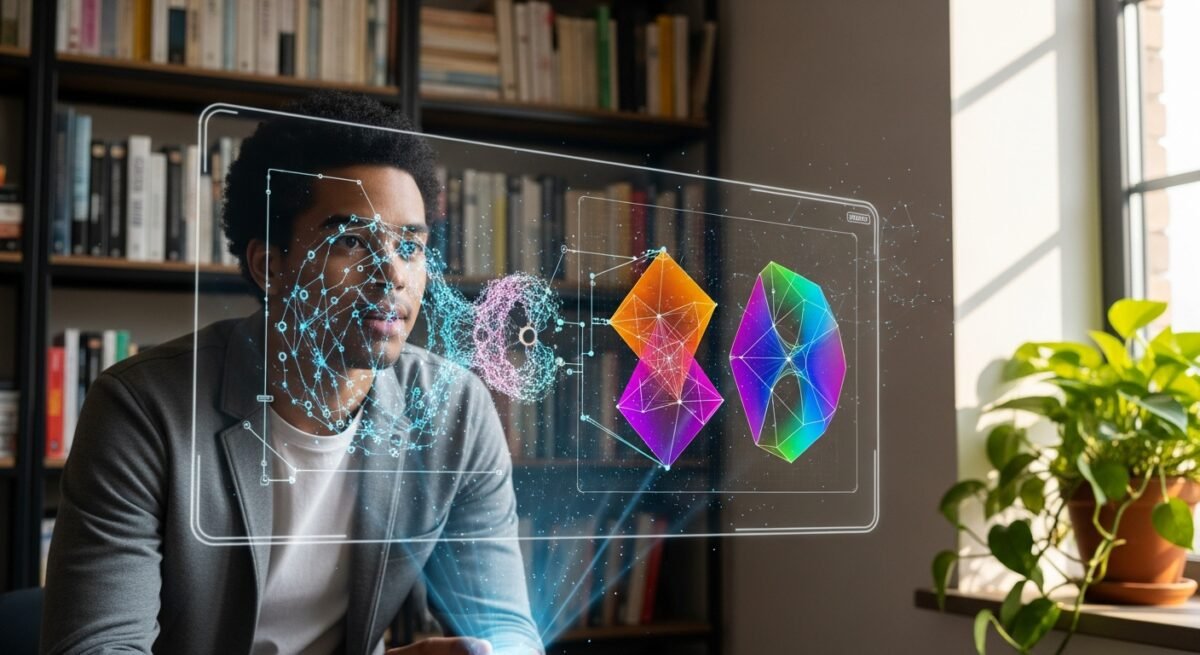
Future online education is evolving into a hyper-personalized, immersive experience powered by AI and VR. It prioritizes skill-based, modular learning for career agility and lifelong development.

By Ryan Taylor
The concept of learning from anywhere is no longer a novelty; it’s a rapidly maturing ecosystem poised to redefine knowledge acquisition. Future online education, far from being a simple digital replica of the classroom, is evolving into a sophisticated, personalized, and immersive experience. Driven by technological convergence and a deeper understanding of pedagogy, it promises to dismantle traditional barriers, making lifelong, skill-specific learning accessible and engaging for a global audience. This transformation is not about replacing traditional institutions but about expanding the very definition of education to be more adaptive, equitable, and aligned with the demands of a dynamic world.
Beyond Video Lectures: The Hyper-Personalized Learning Journey
The foundational shift in future online education moves from a one-size-fits-all broadcast model to a responsive, learner-centric journey. Static video libraries will give way to dynamic learning environments that adapt in real-time. Artificial Intelligence (AI) is the engine of this personalization, analyzing individual performance, pace, and even engagement patterns to curate a unique educational pathway for each student. An AI tutor might identify a knowledge gap in calculus fundamentals and instantly serve up targeted micro-lessons and practice problems before the student progresses, effectively preventing them from falling behind.
This adaptive technology extends to content delivery and assessment. Learning materials can be presented in varied formats based on the learner’s preference—visual, auditory, or kinesthetic. Assessments become continuous and formative, woven seamlessly into the learning process rather than serving as high-stakes endpoints. The result is a system where the educational experience is tailored not just to what you need to learn, but to how you learn best, maximizing efficiency and comprehension. This approach is particularly powerful for working adults seeking career advancement, who require flexible, efficient upskilling.
Core Technologies Shaping the Digital Classroom
Several key technologies are converging to build the infrastructure for this future. Understanding their roles is crucial to grasping the full scope of the transformation.
Artificial Intelligence and Data Analytics
AI acts as the central nervous system of the future learning platform. Beyond personalization, it powers intelligent content creation, automated grading for open-ended responses with nuanced feedback, and predictive analytics that can alert instructors to students at risk of disengagement. Generative AI can simulate diverse tutoring scenarios, create practice dialogues for language learning, or generate unique problem sets. This data-driven approach allows educators to move from administrators to mentors, focusing on high-value interactions like discussion facilitation and one-on-one guidance.
Immersive Technologies: Virtual and Augmented Reality
Where AI personalizes the “what,” immersive technologies transform the “where.” Virtual Reality (VR) and Augmented Reality (AR) will move beyond gimmicks to become standard tools for experiential learning. Imagine a medical student performing a virtual dissection, an engineering student walking through a holographic model of a turbine, or a history student standing in a reconstructed ancient marketplace. These technologies provide safe, scalable, and deeply engaging environments for practicing skills and internalizing complex concepts that are difficult to convey through text or video alone, making disciplines like geology or geography vividly tangible.
Blockchain for Credentialing and Security
As learning becomes more modular and occurs across multiple platforms, verifying skills and credentials becomes a challenge. Blockchain technology offers a secure, decentralized solution. Academic records, micro-credentials, digital badges, and professional certifications can be stored on a blockchain, creating a permanent, tamper-proof ledger of a learner’s achievements. This empowers individuals to own and easily share their verified lifelong learning portfolio with employers or institutions, streamlining recruitment and admissions processes.
The Shift to Skills and Modular Learning
The future of online education aligns closely with the evolving job market, which increasingly values specific, demonstrable skills over broad degree titles alone. This is accelerating the rise of micro-credentials, nanodegrees, and skill-based certificates. Platforms will offer modular learning pathways where individuals can stack credentials—a course in data visualization here, a certification in project management there—to build a customized qualification portfolio. This modularity supports continuous upskilling and reskilling, allowing professionals to adapt nimbly to technological change without necessarily committing to a full multi-year degree program for every new skill.
To ensure these pathways hold value, the role of accreditation remains paramount. Learners must seek out programs from properly accredited online education providers, as accreditation guarantees quality standards and ensures credentials are recognized by employers and other institutions. The future landscape will likely see a blend of traditional degrees, which provide foundational knowledge and critical thinking, alongside a rich ecosystem of shorter, accredited skill-based modules.
Overcoming Challenges and Ensuring Equitable Access
For all its promise, the path to this future is not without significant hurdles. The digital divide remains the most pressing challenge. Access to reliable high-speed internet and adequate devices is still unequal, both globally and within nations. Future online education initiatives must be coupled with public and private investments in digital infrastructure and affordable access programs. Without this, the risk of widening educational inequality is real.
Furthermore, fostering genuine human connection and combating isolation in digital spaces is critical. Future platforms must be designed with social learning at their core. This includes:
- Collaborative Virtual Workspaces: Tools for real-time group projects, peer review, and brainstorming that mimic in-person collaboration.
- AI-Moderated Discussion Forums: Intelligent systems that can stimulate deeper conversation, connect ideas from different students, and ensure inclusive participation.
- Synchronous Community Events: Live virtual seminars, guest speaker sessions, and social mixers that build cohort identity and professional networks.
Assessment integrity and combating academic dishonesty will also evolve, using a combination of biometric verification, sophisticated proctoring AI that analyzes behavior patterns, and a greater emphasis on authentic, project-based assessments that are harder to plagiarize.
Preparing for the Future as a Learner and Educator
Navigating this new landscape requires a shift in mindset for all participants. For learners, success will hinge on developing strong self-regulation, digital literacy, and a proactive approach to steering one’s own learning journey. The ability to discern quality sources, manage one’s time in a flexible environment, and engage persistently in a primarily digital community will be essential meta-skills.
For educators and institutions, the role transforms from “sage on the stage” to “guide on the side.” Instructors will become learning experience designers, data interpreters, and mentors. Institutions must invest in faculty development for these new competencies and rethink their business and pedagogical models to embrace flexibility, partnership with tech providers, and lifelong learning pathways. The value they provide will increasingly be in curation, credentialing, community-building, and high-touch mentorship, rather than just content delivery.
The trajectory is clear. Future online education is moving towards a more intelligent, responsive, and human-centered model. It will be characterized by personalized pathways, immersive experiences, verifiable skill credentials, and a focus on continuous adaptation. By thoughtfully addressing the challenges of access and community, this evolution holds the potential to make high-quality, relevant education a more accessible and integral part of every person’s life journey, unlocking potential on a global scale.