
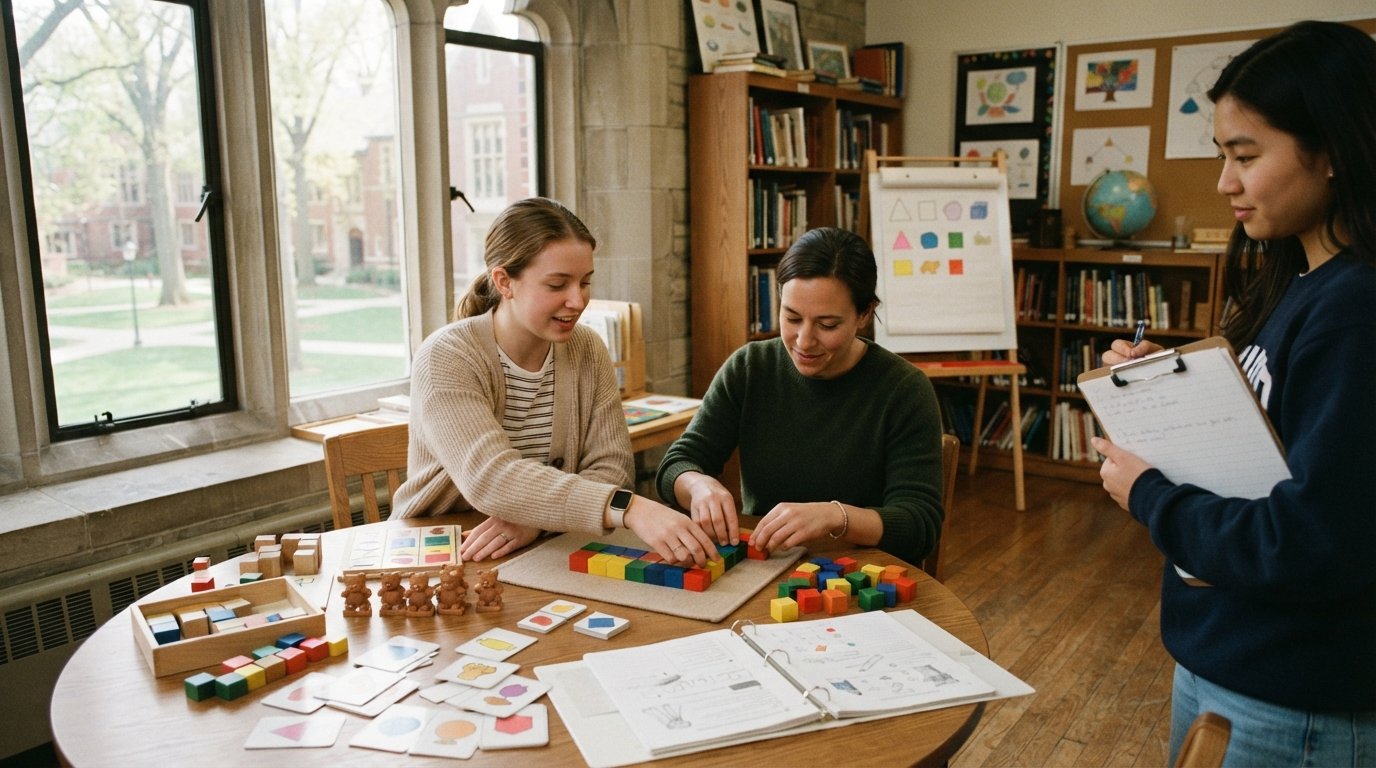
Special Education Bachelor's at Erskine College
Erskine College's four-year, in-person Special Education and Teaching, General Bachelor's degree prepares you for certification and a career serving diverse learners.

By Ethan Clark
Choosing a college major is one of the most consequential decisions a future educator can make, and for students who feel called to serve learners with diverse needs, the path is both challenging and deeply rewarding. Erskine College, a small Christian liberal arts institution in Due West, South Carolina, offers a Bachelor of Arts in Special Education and Teaching, General, a program that blends rigorous coursework, field experience, and a faith-based mission. This degree typically takes four years to complete in person, and it prepares graduates for certification and classroom roles that support students with disabilities across elementary, middle, and secondary settings. If you are weighing whether this program fits your goals, this guide walks through the curriculum, admissions process, career outcomes, and practical considerations that matter most.
Why Special Education Matters and Where Erskine Fits
Special education teachers are in high demand across the United States. School districts struggle to fill openings, and the shortage has persisted for years, particularly in rural and high-need areas. A Bachelor's degree in Special Education and Teaching, General, gives you the foundational knowledge to assess learning differences, design individualized education programs (IEPs), and collaborate with families, general education teachers, and specialists. Erskine College approaches this work through a Christian worldview, emphasizing service, compassion, and the inherent dignity of every learner.
Erskine is a private liberal arts college affiliated with the Associate Reformed Presbyterian Church. Its education programs are approved by the South Carolina State Board of Education, and graduates often pursue certification in special education and general education. The in-person format means students learn on campus, build face-to-face relationships with professors, and complete field placements in nearby schools. That structure suits learners who value mentorship, community, and structured classroom experiences over fully online alternatives.
For students exploring broader teaching careers, understanding how a bachelor's in education opens different pathways can help frame this decision. Our Bachelor of Education Degree Guide: Teaching Career Paths covers certification routes, subject-area options, and job outlooks that complement what you will read here. The key point is that special education is not a niche add-on; it is a core credential that districts actively recruit.
Erskine's size is also a factor. With a student body numbering in the hundreds rather than thousands, class sizes stay small and professors know students by name. For a field that requires patience, observation, and reflective practice, that intimacy can be a significant advantage. Students receive feedback on lesson plans, behavior interventions, and communication strategies in ways that larger lecture halls rarely allow.
Program Structure and What You Will Study
The Special Education and Teaching, General Bachelor's degree at Erskine College is designed to be completed in four years of full-time, in-person study. The curriculum typically combines liberal arts core requirements, professional education courses, and specialized coursework in special education. You will take classes in child development, educational psychology, assessment, instructional methods, and behavior management. Special education courses often cover topics such as learning disabilities, emotional and behavioral disorders, autism spectrum disorder, and inclusive practices.
Field experience is embedded throughout the program. Early courses may include observation hours in local schools, while later semesters involve practicum placements and a culminating student teaching semester. This progression ensures that you are not learning theory in isolation; you are applying it in real classrooms with real students. By the time you graduate, you will have logged hundreds of hours working alongside experienced teachers.
Here is a representative sequence of what the four years may look like:
- Year 1: Liberal arts core (English, math, science, history, Bible), introduction to education, and early observation hours.
- Year 2: Educational psychology, child development, foundational special education courses, and initial practicum.
- Year 3: Advanced methods courses, assessment and IEP development, behavior intervention, and content-area teaching methods.
- Year 4: Student teaching, seminar courses, certification exam preparation, and portfolio completion.
Because Erskine is a Christian liberal arts college, you will also take courses in Bible, theology, and ethics. These are not incidental; they shape how you think about justice, equity, and your responsibility to vulnerable populations. Many graduates say this integration of faith and learning is what drew them to Erskine in the first place.
Certification requirements vary by state, but South Carolina and many other states offer reciprocity agreements. Erskine's education department works with students to ensure they meet the requirements for initial certification in special education. You should confirm current requirements with the program and your target state's licensing board, as policies can change.
Admissions, Costs, and Financial Aid
Admission to Erskine College is moderately selective, with a focus on high school GPA, standardized test scores (though test-optional policies may apply), and personal character. The education program itself may have additional requirements for progression, such as a minimum GPA, background checks, and formal admission to the teacher education program after the sophomore year. Prospective students should review these benchmarks early so they can plan accordingly.
Cost is a major consideration for any private college. Erskine's tuition is comparable to other small private liberal arts institutions, and the total cost of attendance includes room, board, fees, and books. However, few students pay the full sticker price. Merit scholarships, need-based grants, church-related discounts, and state or federal aid can reduce the net price significantly. South Carolina residents may qualify for the LIFE Scholarship or the Palmetto Fellows Scholarship, and the state's TEACH grant or loan forgiveness programs can help future special education teachers.
To manage costs effectively, take these steps:
- File the FAFSA as early as possible to maximize need-based aid.
- Apply for Erskine-specific scholarships and church-related grants.
- Explore state programs for teaching candidates, especially in special education shortage areas.
- Consider work-study or part-time campus employment to offset living expenses.
- Ask the financial aid office about payment plans and whether costs are locked for four years.
It is also wise to compare Erskine's net price with public university alternatives. Public options may have lower tuition, but they often have larger classes and less individualized attention. Erskine's value proposition rests on small cohorts, faith integration, and strong field placement relationships with local districts.
For adult learners and career changers who need more flexibility, online degree programs can be a practical alternative. Resources such as DegreesOnline.Education help working professionals compare accredited online bachelor's and master's programs, review financial aid options, and evaluate whether distance learning fits their schedule. That said, Erskine's program is intentionally in person, and that format is central to its approach.
Career Outcomes and Licensure
Graduates with a Special Education and Teaching, General Bachelor's degree typically pursue roles as special education teachers, resource room teachers, inclusion specialists, or behavioral interventionists. Some continue to graduate school in school psychology, counseling, or educational leadership. Others work in nonprofit organizations, advocacy groups, or private tutoring practices that serve students with disabilities.
Job prospects are strong. The U.S. Bureau of Labor Statistics projects steady demand for special education teachers, and many districts offer signing bonuses, loan forgiveness, or tuition reimbursement for teachers who commit to high-need schools. Salaries vary by state and district, but special education teachers often earn slightly more than general education teachers because of the specialized skill set and the shortage of qualified candidates.
Licensure is the final step before entering the classroom. In South Carolina, you will need to pass the required Praxis exams and complete a background check. Erskine's program is designed to prepare you for these requirements, and the education department provides advising on exam registration and application timelines. If you plan to teach in another state, check that state's reciprocity rules and any additional tests or coursework it requires.
Beyond licensure, the program aims to develop reflective practitioners. You will learn to collect and analyze student data, adjust instruction based on evidence, and communicate effectively with parents and colleagues. These skills transfer across grade levels and settings, from self-contained classrooms to co-taught general education rooms.
Is This Program Right for You?
The Special Education and Teaching, General Bachelor's degree at Erskine College is a strong fit for students who want a faith-based, small-college experience with a clear path to teaching certification. It suits individuals who value in-person mentorship, are comfortable with a structured four-year timeline, and feel called to serve students with diverse learning needs. If you prefer maximum flexibility, a fully online program or a public university with a larger course catalog might be a better match.
Prospective students should visit campus, sit in on an education class, and talk with current students and faculty. Ask about field placement locations, pass rates on certification exams, and job placement support. These details matter more than glossy brochures. You should also clarify the total cost after aid and whether the program fits your long-term career goals, whether that means teaching in a public school, working in a private setting, or pursuing graduate study.
Special education is demanding work, but it is also among the most meaningful careers in education. The right program will challenge you, support you, and prepare you for the realities of the classroom. Erskine College offers one such path, grounded in community, service, and a commitment to every learner.