
Radiologic Technology Programs: A Student’s Essential Guide
This guide details crucial factors for choosing a radiologic technology program, from accreditation to clinical training. Students will learn how to evaluate programs for optimal career preparation.

By Mason Reed
Choosing to pursue a career as a radiologic technologist is a decision that opens the door to a vital, hands-on healthcare profession. Radiologic technology programs are the critical gateway, transforming students into skilled professionals who operate sophisticated imaging equipment, from X-rays and CT scans to MRIs. For prospective students, navigating the landscape of radiology technician programs can be complex, with important considerations around accreditation, curriculum, clinical requirements, and career outcomes. Understanding what these programs entail, what they demand, and what they deliver is the first step toward a successful and rewarding career in medical imaging.
Understanding Radiologic Technology and Its Educational Pathways
Radiologic technology, often synonymous with radiography, is the science of using radiation to produce images of the internal structures of the body for diagnostic purposes. Professionals in this field, known as radiologic technologists or radiographers, are responsible for patient positioning, equipment operation, and ensuring image quality while adhering to strict safety protocols to minimize radiation exposure. The educational foundation for this role is typically an Associate of Applied Science (A.A.S.) degree in Radiologic Technology, which is the minimum requirement for entry-level practice and certification. Some institutions also offer certificate programs for those already holding a relevant degree, as well as Bachelor of Science (B.S.) degrees for those seeking advanced knowledge, supervisory roles, or pathways into specialized imaging modalities.
The core curriculum of any reputable radiologic technology program is designed to provide a balanced mix of didactic coursework and hands-on clinical experience. Classroom instruction covers essential topics such as radiation physics and protection, human anatomy and physiology, patient care procedures, medical terminology, image production and evaluation, and pathology. This theoretical knowledge is immediately applied in clinical rotations, which are a non-negotiable component of every accredited program. These rotations take place in hospitals, clinics, and imaging centers, allowing students to work directly with patients and experienced technologists across various departments, including general radiography, fluoroscopy, surgery, and emergency rooms.
Key Factors to Evaluate in a Radiologic Technology Program
Not all radiologic technology programs are created equal, and thorough research is paramount for students. The single most critical factor is programmatic accreditation. Accreditation ensures that a program meets nationally recognized standards for quality and rigor, which is essential for graduate eligibility to sit for the national certification exam. In the United States, the primary accrediting body is the Joint Review Committee on Education in Radiologic Technology (JRCERT). Graduating from a JRCERT-accredited program is a prerequisite for taking the American Registry of Radiologic Technologists (ARRT) examination, which is the gold standard credential for employment.
Beyond accreditation, students should scrutinize several other program components. The program’s pass rates on the ARRT exam and its job placement rates for graduates are publicly reported metrics that indicate program effectiveness and graduate success. The length and structure of the clinical training component are also vital; a strong program will offer extensive, diverse clinical hours in affiliated healthcare facilities. Furthermore, prospective students should assess the qualifications and experience of the faculty, the age and condition of the imaging equipment used for lab instruction, and the level of student support services offered, such as tutoring and career counseling.
When comparing programs, consider the following essential elements:
- Accreditation Status: Confirm active accreditation by JRCERT or an equivalent recognized agency.
- ARRT Exam Pass Rates: Look for consistently high first-time pass rates, typically above 85-90%.
- Job Placement Rates: High placement rates (often 90% or higher within six months to a year) signal strong industry connections and graduate readiness.
- Clinical Affiliations: Robust partnerships with multiple hospitals and imaging centers provide varied patient care experiences.
- Program Cost and Financial Aid: Understand total tuition, fees, and additional costs (books, uniforms, travel), and explore available scholarships and aid specific to healthcare fields.
The Student Experience: From Admission to Graduation
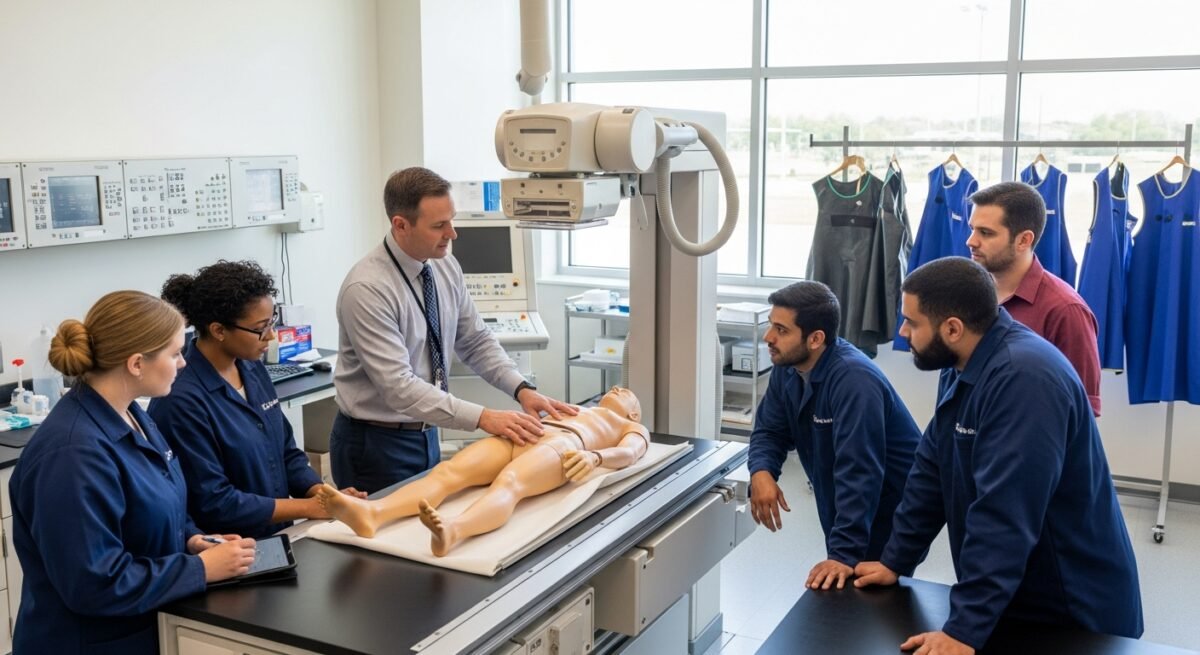
The journey through a radiologic technology program is academically and physically demanding, requiring dedication and specific aptitudes. Admission is often competitive, with programs requiring prerequisites such as college-level anatomy and physiology, mathematics, and English, along with a minimum GPA. Many programs also require observation hours in a radiology department, a personal interview, and background checks. Once admitted, students embark on an intensive schedule that blends lectures, lab practice on phantoms (practice models), and clinical shifts that may include evenings, weekends, and holidays to mirror real-world healthcare operations.
Time management and resilience are key student skills. The workload is substantial, and the need to master both complex technical information and nuanced patient interaction skills can be challenging. Successful students often develop strong study groups, proactively communicate with clinical instructors, and maintain a high degree of professionalism from day one. The clinical environment is where theory becomes practice; students learn to adapt to fast-paced settings, manage patient anxiety, and collaborate with radiologists, nurses, and other healthcare team members. This holistic training is what ultimately prepares a student for the responsibilities and pressures of the career.
Career Outcomes and Advancement After Program Completion
Upon successful completion of an accredited radiologic technology program, graduates are eligible to sit for the ARRT certification exam in Radiography. Earning this credential, often denoted as R.T.(R)(ARRT), is the primary step toward state licensure, which is required to practice in most states. With certification and licensure in hand, radiologic technologists enter a field with strong demand. The U.S. Bureau of Labor Statistics projects growth for radiologic technologists, driven by an aging population’s increasing need for diagnostic imaging.
Entry-level positions are typically found in hospitals, but opportunities abound in outpatient imaging centers, physicians’ offices, and urgent care clinics. The foundational knowledge gained in a general radiologic technology program also serves as a springboard for specialization and career advancement. With additional clinical experience and often further education or certification, technologists can move into advanced modalities that offer higher complexity and compensation. For those interested in broader academic pathways, including potentially combining imaging expertise with other fields, exploring interdisciplinary options can be valuable. For instance, interdisciplinary degree programs can provide a framework for blending radiologic sciences with areas like healthcare administration, education, or informatics.
Common specialization paths include:
- Computed Tomography (CT): Operating CT scanners to produce cross-sectional images.
- Magnetic Resonance Imaging (MRI): Using magnetic fields and radio waves to create detailed images of organs and tissues.
- Mammography: Specializing in breast imaging for cancer detection.
- Cardiovascular-Interventional Technology: Assisting with minimally invasive image-guided procedures.
- Radiation Therapy: A separate but related career path involving the treatment of cancer with radiation.
Frequently Asked Questions for Prospective Students
What is the typical duration of a radiologic technology program?
Most associate degree programs are designed to be completed in two years (including prerequisites), though some may span 21-24 months of concentrated professional coursework and clinicals. Bachelor’s degree programs typically take four years.
Is the career physically demanding?
Yes, to a degree. Technologists are on their feet for much of the day, may need to help lift or reposition patients, and must maneuver heavy portable equipment. Good physical stamina and ergonomic practices are important.
How much does a radiologic technology program cost?
Costs vary widely between public community colleges and private institutions. Total program costs can range from approximately $10,000 to over $40,000. It is crucial to factor in additional expenses for books, uniforms, liability insurance, and travel to clinical sites. To make an informed financial decision, it is wise to learn more about college degrees and their associated return on investment across different educational institutions.
Can I complete a radiologic technology program online?
While the didactic (classroom) portions of some programs may be offered online or in a hybrid format, the clinical component cannot be completed online. All accredited programs require extensive, in-person, supervised clinical hours in a healthcare setting.
What personal qualities make a good radiologic technologist?
Strong candidates possess attention to detail, technical aptitude, interpersonal and communication skills, empathy, and the ability to remain calm under pressure. Integrity and a commitment to safety are also paramount.
Embarking on a radiologic technology program is a significant commitment that leads to a profession at the heart of modern medicine. The path requires careful selection of an accredited program, dedication to mastering both technology and patient care, and a willingness to engage in lifelong learning. For students who are thorough in their research and prepared for the demands, the result is a stable, respected, and personally fulfilling career with tangible impact on patient health and diagnostic outcomes. The key is to start with a clear understanding of what these programs demand and what they ultimately deliver: the skills and credentials to become a competent, compassionate healthcare professional.