
Radiologic Technology Programs: A Complete Career Guide
This guide explains what radiologic technology programs are, detailing the curriculum, clinical training, and steps to certification for a stable healthcare career.

By Mia Roberts
Imagine a career where you are on the front lines of modern medicine, using advanced technology to see inside the human body and directly contribute to patient diagnosis and care. This is the world of radiologic technology, a dynamic and essential allied health profession. For those drawn to healthcare, technology, and direct patient interaction, becoming a radiologic technologist offers a stable, rewarding, and in-demand career path. But the journey begins with understanding the educational pathway. This comprehensive guide explains what radiologic technology programs are, what they entail, and how they prepare you for a successful career as a radiologic technologist, often called a “rad tech.”
Defining Radiologic Technology Programs
At their core, radiologic technology programs are structured educational courses designed to train individuals to become competent, entry-level radiologic technologists. These professionals are responsible for performing diagnostic imaging examinations, such as X-rays, on patients. The programs blend rigorous academic coursework in subjects like anatomy, radiation physics, and patient care with extensive hands-on clinical training. The primary goal is to equip students with the knowledge, technical skills, and professional judgment required to produce high-quality medical images while ensuring patient safety and comfort. Successful completion of an accredited program is the fundamental step toward earning professional certification and state licensure, which are mandatory for practice in most settings.
These programs are specifically designed to meet the standards set by national accrediting bodies and state health departments. They cover the safe operation of complex imaging equipment, the principles of radiation protection for both patient and operator, and the intricacies of human anatomy needed to position patients correctly. Understanding what radiologic technology programs are explained in detail reveals a curriculum that is both challenging and highly specialized, bridging the gap between theoretical science and practical clinical application. It’s a pathway distinct from other medical imaging fields, like sonography or MRI technology, though it often serves as a foundational step for those advanced specialties.
Types of Radiologic Technology Programs and Degrees
Prospective students have several educational pathways to choose from, each with a different time commitment and academic outcome. The most common entry point into the profession is an Associate of Applied Science (A.A.S.) or an Associate of Science (A.S.) degree in Radiologic Technology. These programs are typically offered at community colleges, technical schools, and some hospitals, and they usually take about two years (four to six semesters) to complete full-time. They provide the essential education and clinical hours needed for certification and are an excellent, efficient route to entering the workforce.
For those seeking more advanced academic standing or leadership potential, Bachelor of Science (B.S.) degrees in Radiologic Sciences are available. These four-year programs often include the core radiologic technology curriculum but add courses in management, advanced imaging modalities, education, or healthcare administration. A bachelor’s degree can open doors to supervisory roles, teaching positions, or specialization in areas like computed tomography (CT) or magnetic resonance imaging (MRI). Additionally, for individuals who already hold an associate degree and are certified, many schools offer online degree completion programs to efficiently earn a bachelor’s. If you are exploring these flexible academic pathways, you can learn more about college degrees and how they can fit into your career advancement plans.
Finally, hospital-based certificate programs are another option, though less common today. These are intensive, focused programs for individuals who already hold a degree in a related health field (such as nursing) and wish to cross-train into radiologic technology. They concentrate solely on the radiography curriculum and clinical training, bypassing general education requirements.
Core Curriculum and Clinical Training Components
The strength of any radiology tech program lies in its balanced integration of classroom learning and real-world experience. The didactic (classroom) portion establishes the critical theoretical foundation. Students delve into courses such as radiographic procedures, where they learn the precise positioning techniques for imaging every part of the body. Radiation physics and protection courses teach the science behind the equipment and the paramount importance of safety protocols. Other key subjects include anatomy and physiology, pathology, image analysis, patient care, and medical ethics.
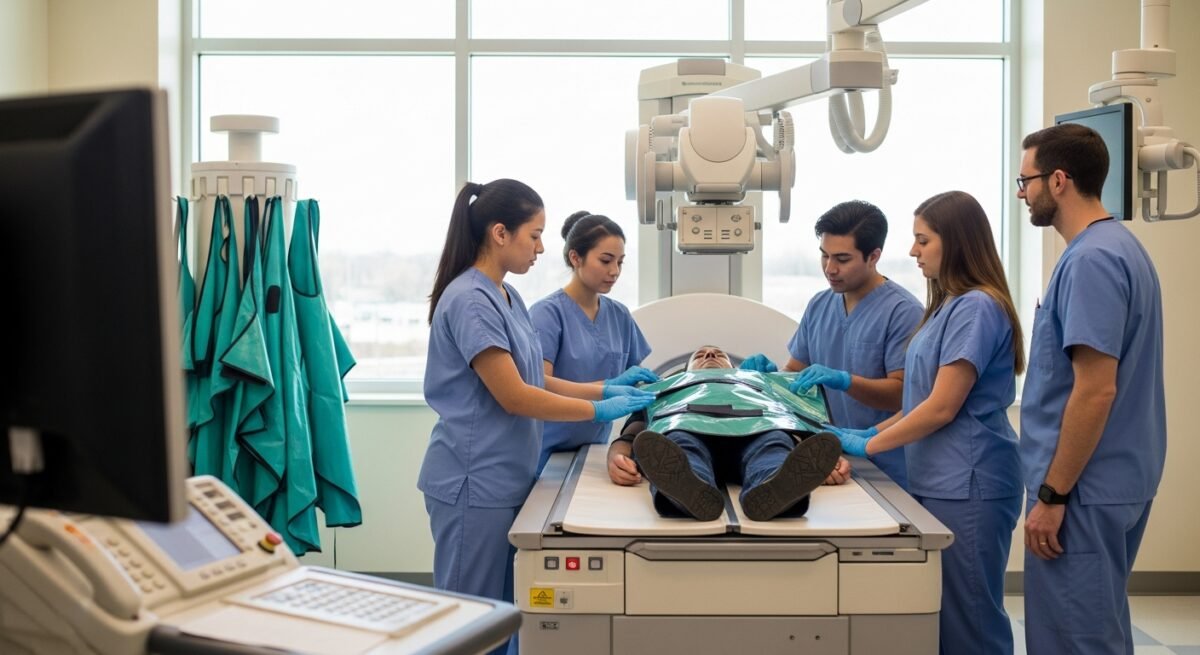
However, book knowledge alone is insufficient. The clinical education component is where students truly become competent practitioners. Under the supervision of registered technologists and clinical instructors, students rotate through various departments within a hospital or imaging center. This hands-on training is sequential and progressive. A student might start by observing, then move to performing basic exams with close supervision, and finally advance to conducting a full range of radiographic procedures independently. This direct patient contact is irreplaceable, teaching not only technical proficiency but also communication skills, empathy, and the ability to work under pressure in a fast-paced healthcare environment. For a deeper look at navigating this crucial training phase, our resource on Radiologic Technology Programs: A Student’s Essential Guide offers practical advice.
Accreditation, Certification, and Licensure: The Non-Negotiables
When researching rad tech programs, the single most important factor to verify is accreditation. Attending a program accredited by the Joint Review Committee on Education in Radiologic Technology (JRCERT) or another recognized agency is essential. Accreditation means the program has been rigorously evaluated and meets national standards for educational quality. Graduating from an accredited program is a prerequisite for sitting for the national certification exam, which is, in turn, required for state licensure.
The path to professional practice follows a clear sequence: Education, Certification, then Licensure. After graduation, you must pass the American Registry of Radiologic Technologists (ARRT) national certification exam. This comprehensive test assesses your knowledge and competency. Upon passing, you earn the credentials “R.T.(R)” (Registered Technologist in Radiography). Most states then require you to apply for a state license to practice, which typically involves submitting your ARRT credentials, paying a fee, and sometimes passing a state-specific exam on radiation safety. Maintaining your certification and license requires completing continuing education credits throughout your career to stay current with evolving technology and practices.
Career Outcomes and Advancement Opportunities
Graduates of radiologic technology programs enter a robust job market. The U.S. Bureau of Labor Statistics projects steady growth for radiologic technologists, driven by an aging population’s increasing need for diagnostic imaging. Employment settings are diverse and include hospitals, outpatient imaging centers, physicians’ offices, and urgent care clinics. The day-to-day work involves more than just taking X-rays, it encompasses patient assessment, equipment operation, image quality assurance, and collaboration with radiologists and other healthcare team members.
One of the most compelling aspects of this career is the potential for specialization and advancement. With additional education and certification, a radiologic technologist can specialize in several advanced modalities. Common specializations include:
- Computed Tomography (CT): Operating CT scanners to produce cross-sectional images of the body.
- Magnetic Resonance Imaging (MRI): Using magnetic fields and radio waves to create detailed images of organs and tissues.
- Mammography: Specializing in breast imaging for cancer screening and diagnosis.
- Interventional Radiology/Cardiovascular-Interventional Technology: Assisting with minimally invasive, image-guided surgical procedures.
- Bone Densitometry: Measuring bone loss and diagnosing osteoporosis.
Beyond clinical specialization, experienced technologists can move into leadership roles such as department supervisor, chief technologist, or program director for a radiologic technology school. Others may leverage their experience into careers in medical equipment sales, applications training, or healthcare administration.
Frequently Asked Questions
What is the difference between a radiologic technologist and a radiology technician?
While the terms are often used interchangeably in casual conversation, “radiologic technologist” is the preferred and more modern professional title. It reflects the advanced knowledge, critical thinking, and patient care skills required beyond simple machine operation. Educational programs award degrees in Radiologic Technology.
How long does it take to complete a radiologic technology program?
An associate degree program, the most common path, typically takes two years of full-time study. Bachelor’s degree programs take four years. Certificate programs for those with prior healthcare degrees can range from 12 to 24 months.
Is the career physically demanding?
It can be. Radiologic technologists are on their feet for much of the day, may need to help lift or reposition patients, and must maneuver heavy equipment. Good physical stamina and proper body mechanics are important.
What personal qualities make a good radiologic technologist?
Strong communication and interpersonal skills are crucial for calming anxious patients. Technical aptitude, attention to detail, problem-solving ability, and a commitment to safety are also essential. Compassion and empathy are key to providing excellent patient care.
Can I complete a radiologic technology program online?
The didactic (classroom) portions of some programs may be offered online, but the clinical training component is always in-person and hands-on. There are no fully online pathways to becoming a radiologic technologist due to the extensive practical skills required.
Choosing to enroll in a radiologic technology program is the first decisive step toward a career that is both technically sophisticated and profoundly human. These programs are carefully constructed to transform students into skilled healthcare professionals who play a vital role in the diagnostic process. By providing a deep understanding of radiation, anatomy, and patient care, coupled with extensive clinical practice, they create a pipeline of qualified technologists ready to meet healthcare’s evolving needs. For anyone with a passion for helping others and a fascination with medical technology, this educational path offers a direct route to a stable, respected, and fulfilling profession where you can make a visible difference every day.