
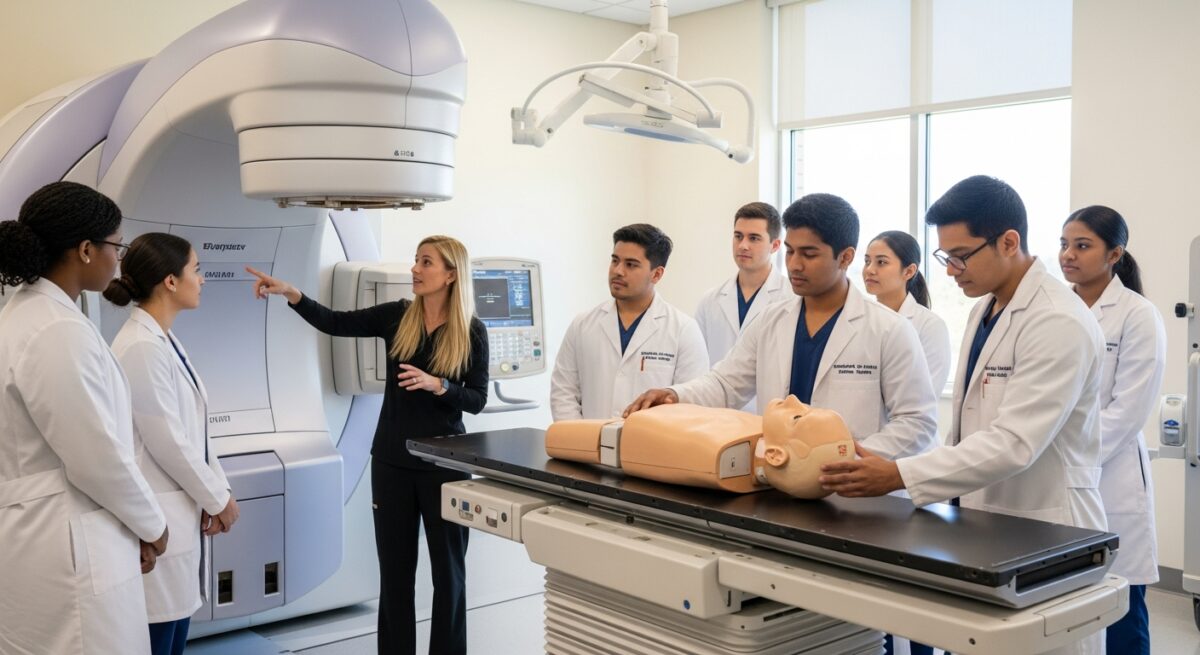
If you are looking for a healthcare career that combines direct patient care with advanced technology and strong job stability, the role of a radiation therapist deserves serious consideration. These allied health professionals are essential members of oncology teams, using sophisticated equipment to deliver targeted radiation treatments to patients with cancer and other conditions. The most common and practical entry point into this field is through a radiation therapist associate degree, a focused program that prepares you for clinical work and professional certification in approximately two years. This Radiation Therapist Associate Degree Career Guide walks you through everything you need to know about earning this degree, what the job entails, how much you can earn, and the steps to launch your career.
The demand for radiation therapists remains steady due to an aging population and advances in cancer treatment. According to the Bureau of Labor Statistics, employment for radiation therapists is projected to grow faster than the average for all occupations. This makes the radiation therapist associate degree an excellent investment for students who want a clear, accelerated path into a rewarding medical profession without the time and cost of a four-year bachelor’s degree. By the end of this guide, you will have a complete roadmap for starting your radiation therapy studies and securing a position in a hospital, cancer center, or outpatient clinic.
What Is a Radiation Therapist? Understanding the Role
A radiation therapist is a trained healthcare professional who operates linear accelerators and other imaging and treatment machines to administer radiation doses to patients. Working under the supervision of a radiation oncologist and medical physicist, the therapist follows a precise treatment plan to target tumors while minimizing exposure to healthy tissue. This role requires strong attention to detail, empathy, and comfort with technology, as you will be responsible for positioning patients correctly, monitoring their vital signs, and documenting each session.
Beyond the technical aspects, radiation therapists spend significant time interacting with patients. Many individuals undergoing radiation therapy feel anxious or fatigued, so the therapist’s ability to provide reassurance and clear instructions is critical. You will also need to recognize and report any side effects or changes in a patient’s condition. In short, this career blends hard technical skills with soft interpersonal skills, making it a uniquely fulfilling option for those who want to make a tangible difference in people’s lives every day.
Why Choose a Radiation Therapist Associate Degree?
While some radiation therapists hold a bachelor’s degree, the associate degree is the most common and efficient route into the profession. Most employers require graduation from an accredited radiation therapy degree program, and the associate-level path is widely accepted for certification eligibility. Here are the key advantages of pursuing an associate degree in this field:
- Faster completion time: Most programs take 18 to 24 months, allowing you to enter the workforce sooner than a four-year degree.
- Lower cost: Community colleges and technical schools offering a radiation therapist associate degree typically have lower tuition than universities, reducing student debt.
- High return on investment: Graduates earn competitive salaries right after graduation, often in the range of $60,000 to $85,000 per year depending on location and experience.
- Strong clinical focus: Associate programs emphasize hands-on clinical rotations, giving you real-world experience before you even graduate.
- Seamless pathway to certification: Graduates of accredited associate programs are eligible to sit for the American Registry of Radiologic Technologists (ARRT) exam, the primary certification for radiation therapists.
Choosing this educational path also provides flexibility. If you later decide to pursue a bachelor’s degree, many institutions offer bridge programs that accept your associate credits. This allows you to work and earn income while continuing your education part-time.
What You Will Learn in a Radiation Therapy Degree Program
A radiation therapist associate degree curriculum is carefully designed to blend classroom instruction with practical laboratory and clinical experiences. You will study subjects that build a strong foundation in anatomy, physics, and patient care. Typical courses include human anatomy and physiology, radiation physics, radiation protection, treatment planning, oncology terminology, and patient care ethics. You will also learn how to operate treatment equipment, use imaging techniques to confirm tumor location, and apply dosimetry calculations to ensure the correct amount of radiation is delivered.
Clinical education is the backbone of any quality radiation therapy degree. Most programs require several hundred hours of supervised clinical rotations in affiliated hospitals or cancer centers. During these rotations, you will work alongside experienced therapists, practice patient positioning, and learn to manage treatment schedules. This hands-on training is invaluable for building confidence and competence. Many students find that their clinical rotations lead directly to job offers, as employers prefer to hire graduates who have already demonstrated their skills in a real clinical environment.
Steps to Start Your Career as a Radiation Therapist
Becoming a radiation therapist involves more than just completing a degree. You must also meet certification and licensure requirements, which vary by state. The following steps outline the typical pathway from enrollment to employment.
1. Complete an Accredited Associate Degree Program
Your first step is to enroll in a radiation therapist associate degree program that holds accreditation from the Joint Review Committee on Education in Radiologic Technology (JRCERT). Accreditation is essential because it ensures the program meets national educational standards and qualifies you for the ARRT certification exam. You can find accredited programs through the ARRT or JRCERT websites. Most programs require prerequisite coursework in math, English, and sciences, so check admission requirements carefully before applying.
2. Pass the ARRT Certification Exam
After graduating, you must pass the ARRT exam in radiation therapy. This comprehensive test covers patient care, safety, image production, and treatment procedures. Earning your certification demonstrates to employers that you have the knowledge and skills to practice safely and effectively. The ARRT also requires candidates to meet ethical standards and complete continuing education credits to maintain certification over time.
3. Obtain State Licensure (If Required)
Some states require radiation therapists to hold a state license in addition to ARRT certification. Licensure requirements vary but often include passing a background check and paying a fee. Check with your state’s health department or medical board to understand specific rules. Even in states without licensure, most employers still require ARRT certification as a condition of employment.
4. Apply for Jobs and Begin Your Career
With your degree and certification in hand, you can begin applying for positions in hospitals, outpatient cancer centers, and physician offices. Your clinical rotation site may offer you a job directly. Otherwise, use job boards, professional networks, and career services at your college to find openings. Tailor your resume to highlight your clinical experience and any specialized skills such as proficiency with specific treatment planning software. The average salary for radiation therapists is strong, with top earners in metropolitan areas and specialized cancer centers reaching six figures.
Career Outlook and Advancement Opportunities
The job market for radiation therapists is expected to grow by about 6 percent through 2032, according to the Bureau of Labor Statistics. This growth is driven by an aging population that requires more cancer treatments and by technological advancements that expand the use of radiation therapy. As a result, graduates with a radiation therapist associate degree can expect favorable job prospects, especially in regions with large healthcare systems.
Advancement opportunities are also available for those who want to move beyond the clinical role. Experienced radiation therapists can become chief therapists, department managers, or clinical instructors. Others may specialize in areas such as stereotactic radiosurgery, brachytherapy, or proton therapy. Some therapists pursue further education to become medical dosimetrists, radiation therapy educators, or radiation oncologist assistants. The associate degree provides a solid foundation for all of these paths.
Frequently Asked Questions
Is a radiation therapist associate degree enough to get a job?
Yes. Most hospitals and cancer centers hire radiation therapists with an associate degree from an accredited program, provided they also hold ARRT certification. Many employers consider the associate degree the standard entry-level qualification.
What is the difference between a radiation therapist and a radiologic technologist?
Radiologic technologists perform diagnostic imaging (X-rays, CT scans), while radiation therapists deliver therapeutic radiation to treat cancer. The two roles require different training, though some schools offer combined programs. A radiation therapist associate degree is specific to treatment, not diagnosis.
How long does it take to complete a radiation therapy degree?
Most associate degree programs take two years of full-time study. Part-time options may take longer. Some programs offer accelerated tracks that can be completed in 18 months.
Can I complete a radiation therapist associate degree online?
Fully online programs are rare because clinical training requires in-person work. However, some schools offer hybrid models with online didactic coursework and local clinical placements. Always verify that a program is JRCERT-accredited before enrolling.
What skills are most important for success in this career?
Attention to detail, strong communication, empathy, physical stamina (standing for long periods), and comfort with technology are essential. You must also be able to work under pressure and follow strict safety protocols.
If you are still exploring your options, consider reviewing our Accelerated Associate Degree Programs: A Fast Track Guide to see how you can complete your education efficiently. For more information on financing your education and comparing schools, visit College and Tuition for resources on affordable degree options.
Choosing a career as a radiation therapist puts you at the intersection of technology, patient care, and oncology. The path through a radiation therapist associate degree is clear, affordable, and leads to a profession with strong demand and meaningful impact. With the right education and certification, you can begin making a difference for patients facing cancer while building a stable and rewarding career for yourself. Now is the time to explore accredited programs, apply for admission, and take the first step toward this vital healthcare role.