
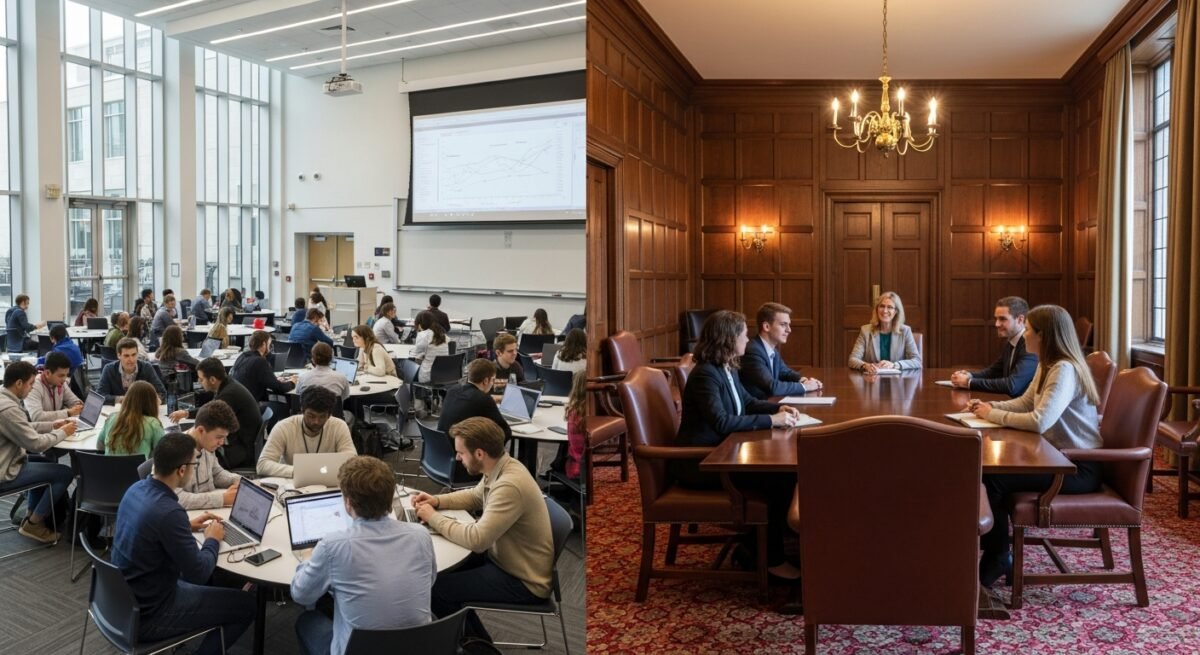
Public vs Private College: Key Differences for Your Decision
Understanding public vs private college differences is crucial for making an informed decision about cost, class size, and campus culture. This guide breaks down the key factors beyond tuition.

By Ethan Clark
Choosing a college is one of the most significant financial and academic decisions a student or family will make. The choice between a public university and a private college is often at the heart of this decision, yet the distinctions can be confusing. Many assume the difference is simply about price, but the reality involves a complex interplay of funding, mission, class size, campus culture, and long-term value. Understanding the fundamental differences between public and private institutions is not about finding which is universally better, but about determining which environment is the best fit for your educational goals, learning style, and financial situation. This guide will dissect the key factors, moving beyond tuition stickers to the core philosophies that shape the student experience at each type of institution.
Understanding the Core Funding and Governance Models
The most fundamental distinction between public and private colleges lies in their funding and governance, which directly shapes their priorities and operations. Public colleges and universities are primarily funded by state and local governments. This funding comes from taxpayer dollars, and in return, these institutions have a mandate to serve the residents of their state. They are typically part of a larger state university system (like the University of California or the State University of New York) and are overseen by a board of regents or trustees appointed by the state governor or legislature. This connection to the state means their mission emphasizes providing affordable, accessible education to in-state students and often focuses on research and workforce development that benefits the state’s economy.
Private colleges, in contrast, do not receive direct operational funding from state governments. They are funded through a combination of tuition revenue, private donations (endowments), research grants, and gifts from alumni. They are governed by an independent board of trustees, not a state entity. This financial independence allows private institutions to set their own agendas, define their unique educational philosophies (often rooted in religious or specific liberal arts traditions), and be more nimble in decision-making. The size of a private school’s endowment is a critical factor in its financial health and its ability to offer generous financial aid packages, which can significantly offset the higher published tuition.
Cost, Tuition, and Financial Aid Realities
The published “sticker price” is the most visible difference, with private colleges often listing tuition figures two to three times higher than public universities. However, the actual cost a student pays, known as the net price, can tell a very different story. Public universities have a two-tiered tuition structure: a significantly lower rate for in-state residents and a higher rate for out-of-state students. For in-state students, this often makes public universities the most affordable four-year option. Out-of-state students at public schools, however, may find their costs approaching or even exceeding those of some private colleges.
Private colleges, with their high sticker prices, typically possess substantial institutional aid resources. They use this aid to attract a diverse and talented student body. A student with strong academic credentials, specific talents, or financial need may receive a generous package of grants and scholarships from a private institution that brings the net price down to a level comparable to a public university. The key is to never rule out a private college based on sticker price alone. Families must complete the Free Application for Federal Student Aid (FAFSA) and any institution-specific forms to receive a true financial aid offer from each school.
To effectively compare costs, follow these steps:
- Collect the official Cost of Attendance (COA) from each school, which includes tuition, fees, room, board, books, and personal expenses.
- Submit the FAFSA and CSS Profile (if required) to determine your Expected Family Contribution (EFC).
- Review each financial aid award letter carefully, distinguishing between free money (grants, scholarships), earned money (work-study), and loans that must be repaid.
- Calculate the net price for each institution: COA minus total grants and scholarships.
- Consider the long-term implications of any student loan debt, a topic explored in depth in our guide on private student loan forgiveness options.
Academic Environment and Class Size
The classroom experience can vary dramatically. Public universities, especially large flagship institutions, often have introductory-level courses, or “lectures,” that can host hundreds of students. Instruction in these large classes may be delivered by a professor but facilitated by graduate teaching assistants (TAs) who lead smaller discussion sections. This model requires a high degree of student initiative to seek help and build relationships with faculty. Upper-division courses in a student’s major typically become much smaller and more interactive.
Private colleges are renowned for their small class sizes and low student-to-faculty ratios. It is common for classes to have 15 to 20 students, even at the introductory level. This fosters a seminar-style environment focused on discussion, debate, and close interaction with professors, who are almost always the primary instructors (not TAs). This environment can be ideal for students who thrive on direct mentorship, frequent feedback, and collaborative learning. The trade-off may be a narrower range of specific course offerings or majors compared to a massive public research university.
Campus Culture, Student Body, and Resources
The culture of a campus flows from its size and mission. Large public universities often have a vibrant, bustling atmosphere with a vast array of student clubs, Division I athletics, Greek life, and campus events. The student body is typically more diverse in terms of geographic origin (within the state), socioeconomic background, and interests. Resources like libraries, recreational facilities, and student unions can be extensive. However, this scale can also feel impersonal, and students must be proactive to build their community.
Private colleges often cultivate a more close-knit, cohesive campus culture. With smaller enrollments, there is a greater sense of shared identity, whether based on academic intensity, religious affiliation, or a liberal arts tradition. Extracurricular opportunities, while perhaps fewer in sheer number, can offer greater leadership potential due to less competition. The student body may be more geographically diverse on a national scale but potentially less socioeconomically diverse, despite financial aid efforts. For students considering flexible or remote options, it’s valuable to explore college degree programs that blend the benefits of different institutional models.
Program Offerings and Research Opportunities
Public research universities are powerhouses for scientific, technical, and graduate-level research. They receive massive federal and state grants, offering unparalleled opportunities for undergraduate students to participate in cutting-edge research projects alongside leading scholars. Their program offerings are vast, often including highly specialized majors, pre-professional tracks, and extensive graduate schools. This makes them ideal for students with very specific, niche academic interests or those aiming for careers in research, engineering, or healthcare.
Private colleges excel in providing a broad, interdisciplinary liberal arts foundation. The emphasis is less on specialized vocational training and more on developing critical thinking, communication, and problem-solving skills applicable to any field. While some private universities (like Stanford or MIT) are also elite research institutions, many smaller private colleges focus on undergraduate teaching. They may offer strong, focused majors but with less breadth than a large public system. Their research opportunities are often deeply integrated into the undergraduate curriculum, with easier access for all students.
Frequently Asked Questions
Is a degree from a private college worth the higher cost?
It depends on the net price after aid, the specific program, and your career goals. For some, the small class size, networking, and focused attention provide a high return on investment. For others, a lower-cost degree from a reputable public university with minimal debt is the wiser financial choice. Always compare net price, not sticker price.
Do employers favor public or private college graduates?
Most employers prioritize the candidate’s skills, experience, and major over the type of institution. The reputation of the specific program or school within an industry matters more than the public/private distinction. A strong portfolio, internships, and relevant experience are ultimately more critical.
Are private colleges harder to get into than public universities?
Not universally. While elite private institutions (Ivies) have extremely low acceptance rates, many private colleges have acceptance rates similar to or higher than selective public universities. Admission competitiveness varies dramatically within both categories.
Can I get a good liberal arts education at a public university?
Absolutely. Many public universities have excellent honors colleges or dedicated liberal arts colleges within the larger university that replicate the small-class, discussion-based environment of a private liberal arts college, often at a public school price.
Which is better for graduate school preparation?
Both can be excellent. Private liberal arts colleges often have strong records of placing students into top graduate programs due to faculty mentorship and research opportunities. Large public research universities offer direct exposure to graduate-level research and a wide range of advanced courses. The key is to seek out research experience and strong letters of recommendation, which are possible at both.
The public vs private college decision is not a simple binary. It requires a holistic evaluation of cost, academic fit, campus environment, and career aspirations. The best choice aligns an institution’s strengths with your personal learning style and financial reality. By looking beyond stereotypes and carefully analyzing net costs, academic offerings, and campus culture, you can identify the environment where you will not only succeed academically but also thrive personally and build a strong foundation for your future.