
Physical Therapy School Explained: Degree Requirements and Path
Learn what physical therapy school involves, from prerequisite courses to the three-year DPT program and clinical rotations required for licensure.

By Mia Roberts
Embarking on a career as a physical therapist is a commitment to improving lives through movement and rehabilitation. This journey begins with a clear understanding of what physical therapy school entails and the specific degree requirements you must meet. The path is rigorous, designed to prepare you for the immense responsibility of patient care, but it is also incredibly rewarding. For aspiring healthcare professionals, navigating the prerequisites, program structure, and licensure process is the first critical step. This comprehensive guide will demystify physical therapy school, breaking down the academic and practical steps needed to earn your Doctor of Physical Therapy (DPT) degree and launch a successful career.
The Doctor of Physical Therapy: The Required Degree
In the United States, the entry-level degree to become a practicing physical therapist is the Doctor of Physical Therapy (DPT). This represents a significant shift from past decades when a master’s degree was the standard. The transition to the doctoral level reflects the expanded depth of knowledge, clinical reasoning, and autonomous practice expected of today’s physical therapists. A DPT program is a graduate-level course of study, meaning you must first complete a bachelor’s degree before enrolling. The program itself typically requires three years of full-time study, combining intensive academic coursework with hands-on clinical education experiences. The curriculum is designed to cover all aspects of human movement science, pathology, examination, diagnosis, and intervention.
The core of any DPT program is its integrated approach. You will not just learn anatomy from a textbook, you will learn how musculoskeletal and neurological systems function, dysfunction, and can be treated through therapeutic exercise, manual therapy, and other modalities. Courses span foundational sciences like physiology, neuroscience, and biomechanics, and progress to clinical sciences such as cardiopulmonary, musculoskeletal, and neuromuscular physical therapy. A deep dive into the specifics of this doctoral pathway can be found in our detailed resource, Your Guide to the Doctor of Physical Therapy Degree (DPT), which outlines the curriculum and career outcomes.
Prerequisites for Physical Therapy School
Gaining admission to a physical therapy school is competitive, and programs set stringent prerequisite requirements to ensure candidates are prepared for the graduate-level rigor. These prerequisites are typically undergraduate courses that must be completed with a minimum grade, often a “B-” or higher, before you can apply. While specific requirements vary by program, there is a standard set of courses common to almost every DPT program in the country.
Prospective students should plan their undergraduate years carefully, often as early as freshman year, to ensure they complete these courses. It is not necessary to major in a specific field like biology or kinesiology, but your major must allow you to complete the prerequisite science courses with labs. Many students choose science-related majors because the prerequisites overlap significantly with their degree requirements. Beyond coursework, admissions committees look for a strong overall GPA (often 3.0 or higher) and a particularly strong GPA in the prerequisite science courses.
The common prerequisite courses for physical therapy school include:
- Biology: Two semesters, usually with labs, often requiring a focus on general biology or zoology.
- Chemistry: Two semesters of general chemistry or inorganic chemistry, with labs.
- Physics: Two semesters, with labs, covering the principles of mechanics, energy, and force, which are fundamental to understanding biomechanics.
- Anatomy & Physiology: Often two semesters. Some programs accept a combined A&P I and II sequence, while others require separate, in-depth courses in human anatomy and human physiology.
- Psychology: At least one general psychology course, with many programs also requiring a course in abnormal psychology or developmental psychology.
- Statistics: One course in statistics, which is crucial for understanding research methodology in evidence-based practice.
In addition to these core courses, some programs may require prerequisites in mathematics (like calculus), medical terminology, or social sciences. It is absolutely essential to research the specific requirements of every school you plan to apply to, as there can be subtle but important differences. Starting your educational planning early is key, and you can explore college degree programs that align well with these prerequisite needs to build a strong foundation.
The Structure and Curriculum of a DPT Program
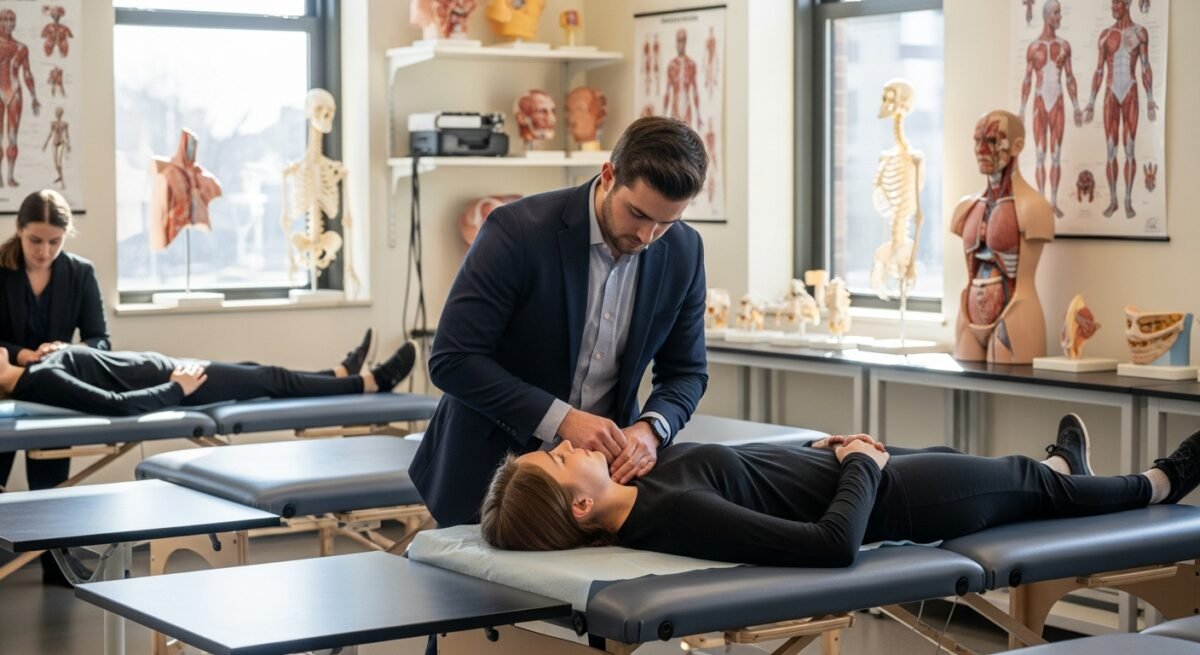
A typical three-year DPT program is meticulously structured to build knowledge from the ground up. The first year, or the didactic phase, is heavily focused on classroom and lab learning. You will immerse yourself in foundational sciences, learning the intricate details of the human body and the principles of disease and injury. The second year usually continues with advanced clinical coursework and often marks the beginning of integrated clinical experiences, where you start to apply classroom knowledge in supervised settings. The final year is predominantly dedicated to full-time clinical rotations, where you will work in various healthcare settings under the guidance of a licensed clinical instructor.
The curriculum is comprehensive and demanding. Key subject areas include musculoskeletal, neuromuscular, cardiovascular and pulmonary, and integumentary (skin) physical therapy. You will learn specific evaluation techniques, how to develop and modify treatment plans, and the ethical and legal responsibilities of a healthcare provider. Beyond direct patient care skills, modern DPT programs emphasize evidence-based practice, teaching students how to critically appraise research and apply it to clinical decision-making. Business and management principles are also often included, preparing graduates for potential roles in practice management or ownership.
Clinical Education and Hands-On Experience
Clinical education is the cornerstone of physical therapy training, bridging the gap between theory and practice. DPT programs require a substantial number of clinical hours, typically ranging from 30 to 40 weeks of full-time experience spread across the program. These experiences are not observational, they are participatory. You will be actively involved in patient care, progressing in responsibility as your skills and judgment develop.
Clinical rotations are designed to expose students to a variety of patient populations and practice settings. You might complete rotations in acute care hospitals, outpatient orthopedic clinics, rehabilitation hospitals, pediatric facilities, skilled nursing facilities, or sports medicine centers. This diversity is intentional, ensuring that new graduates are versatile and can find their niche. During these rotations, you are evaluated on your clinical skills, professionalism, communication, and ability to integrate knowledge. Success in clinical education is mandatory for graduation and is a critical component of your readiness for the national licensure examination.
The Licensure Examination and Beyond
Graduating from an accredited DPT program is only one part of becoming a practicing physical therapist. The next essential step is passing the National Physical Therapy Examination (NPTE), administered by the Federation of State Boards of Physical Therapy (FSBPT). This standardized, multiple-choice exam assesses your knowledge and competence to practice safely and effectively. Each state has its own licensing board, and while they all use the NPTE, they may have additional requirements, such as jurisprudence exams on state law, background checks, or specific application fees.
Once you have passed the NPTE and met all state requirements, you will be granted a license to practice in that state. Licensure is mandatory in all 50 states and U.S. jurisdictions. The journey does not end with licensure, however. Physical therapists are required to complete continuing education units (CEUs) to maintain their license. This ensures they stay current with the latest evidence, techniques, and ethical standards in a rapidly evolving field. Many therapists also choose to pursue board-certified clinical specializations in areas like orthopedics, sports, neurology, or pediatrics, which require additional years of experience and a rigorous examination.
Frequently Asked Questions
What undergraduate degree is best for physical therapy school? There is no single “best” major. While many students major in biology, kinesiology, or exercise science, you can major in any field as long as you complete the prerequisite courses. Choose a major that interests you and in which you can excel academically.
How long does it take to become a physical therapist? Typically, it takes 7 years of full-time study: 4 years for a bachelor’s degree and 3 years for the DPT program. This timeline does not include the time spent fulfilling prerequisite hours or applying to programs.
Is physical therapy school harder than medical school? Both are demanding graduate health professions programs with different focuses. DPT programs have a concentrated, intense curriculum focused specifically on musculoskeletal and neuromuscular rehabilitation. The difficulty is subjective, but both require a high level of dedication and academic rigor.
Can I become a physical therapist with an online degree? The DPT degree requires extensive hands-on lab work and clinical rotations, which cannot be completed fully online. While some programs may offer hybrid formats with online didactic coursework, the clinical and lab components are always in-person. The degree itself must be from a program accredited by the Commission on Accreditation in Physical Therapy Education (CAPTE).
What is the cost of physical therapy school? Tuition varies widely between public and private institutions and by residency status. Total costs can range from $60,000 to over $100,000. It is crucial to factor in tuition, fees, books, and living expenses when planning for your DPT education.
Understanding what physical therapy school and degree requirements entail is the foundational step for a career in this dynamic and fulfilling healthcare profession. The path requires significant investment in time, finances, and effort, but for those passionate about helping others regain function and mobility, it is an investment with profound personal and professional returns. By meticulously planning your undergraduate coursework, gaining relevant experience, and successfully navigating a rigorous DPT program, you can achieve the goal of becoming a licensed physical therapist, ready to make a tangible difference in the lives of your future patients.