
Phlebotomy Technician Certificate at Coffeyville CC
Earn your Phlebotomy Technician Certificate at Coffeyville Community College in 12 weeks to under a year. Hands-on training leads to a fast healthcare career.

Finding a fast, affordable path into healthcare can feel like searching for a needle in a haystack, but a phlebotomy technician certificate at Coffeyville Community College offers a clear and direct route. In as little as 12 weeks to under a year, you can gain the hands-on skills needed to draw blood, work in labs, hospitals, or clinics, and step into an entry-level role that is in steady demand. For career changers, recent high school graduates, or working adults seeking a quick credential, this in-person program combines focused training with the personal attention of a community college setting. Instead of spending years in a classroom before earning a paycheck, you can complete your phlebotomy training and begin applying for jobs in a matter of months. This article breaks down what the certificate covers, how to enroll, what to expect from the in-person format, and how this credential fits into the broader healthcare career landscape.
What a Phlebotomy Technician Certificate Covers
A phlebotomy technician certificate is a short-term, career-focused credential that prepares you to collect blood specimens safely and accurately. At Coffeyville Community College, the curriculum blends classroom instruction with hands-on practice, ensuring you understand both the theory behind blood collection and the practical steps required in a clinical setting. You will learn about anatomy and physiology relevant to venipuncture, infection control, patient identification, and the proper handling and labeling of specimens. The program also emphasizes communication skills, because phlebotomists often serve as the first point of contact for nervous or anxious patients.
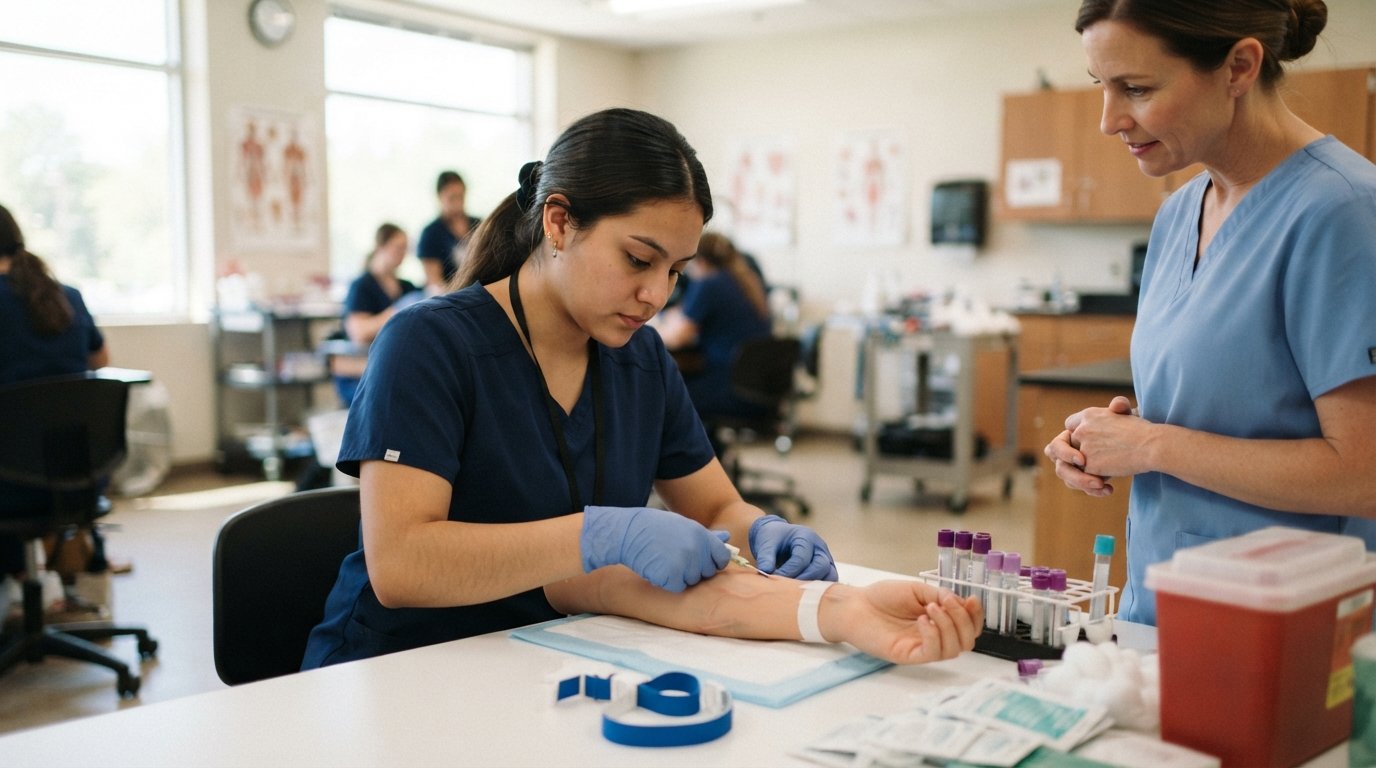
Because the certificate can be completed in 12 weeks to less than one year, the coursework is tightly focused on the skills employers expect. You will not spend time on general education courses that do not directly relate to the job. Instead, every class and lab session is designed to move you toward competency in blood draws, capillary punctures, and specimen processing. The in-person format means you practice on training aids and, in many cases, on fellow students under supervision, building the confidence you need before entering a clinical environment.
Core Skills You Will Develop
The program is structured around a set of core competencies that align with industry standards. These skills form the foundation of your day-to-day work as a phlebotomist and are often the focus of employer interviews and certification exams.
- Venipuncture technique: Learning to locate veins, select the right equipment, and perform draws with minimal discomfort.
- Capillary puncture: Collecting blood from fingertips or heels, commonly used for point-of-care testing.
- Patient identification and safety: Following strict protocols to prevent errors and ensure patient safety.
- Specimen handling and labeling: Understanding how to process, store, and transport samples correctly.
- Infection control: Applying standard precautions and maintaining a sterile environment.
These skills are not just checkboxes on a syllabus; they are the same tasks you will perform daily on the job. The hands-on nature of the Coffeyville program means you will repeat these procedures until they become second nature, which helps reduce anxiety during actual patient interactions. By the time you finish the certificate, you should be able to approach a draw with a calm, systematic routine that puts patients at ease and produces reliable samples.
Why Choose the In-Person Format at Coffeyville Community College
While online learning has become popular for many fields, phlebotomy is a hands-on profession that demands physical practice. The in-person format at Coffeyville Community College gives you access to labs, equipment, and instructors who can correct your technique in real time. This immediate feedback is invaluable when you are learning to adjust the angle of a needle or manage a patient who feels faint. You cannot learn the feel of a vein or the flow of blood through a vacuum tube by watching a video; you need to practice under supervision.
Community colleges also tend to offer smaller class sizes and more personalized attention than large universities. At Coffeyville, you are likely to know your instructors by name and receive one-on-one guidance when you struggle with a particular skill. This supportive environment can make the difference between passing a certification exam and feeling unprepared. Additionally, the in-person format fosters connections with classmates who are pursuing the same career path, creating a network you can rely on for study groups and job leads.
Facilities and Equipment
Coffeyville Community College provides training facilities that mirror real clinical settings. You will practice with actual phlebotomy chairs, tourniquets, vacutainer systems, and other equipment you will encounter on the job. The college maintains labs with simulation devices that allow you to practice draws without using live patients, which is especially helpful for beginners. As you progress, you may have opportunities to practice on volunteers or during clinical rotations, depending on the program structure. This hands-on experience is a major advantage of the in-person certificate and helps you build a resume that demonstrates practical competence.
Admission Requirements and Enrollment Steps
Enrolling in the phlebotomy technician certificate program at Coffeyville Community College is a straightforward process, but it does require some planning. Most community college health science programs have specific admission criteria to ensure students are prepared for the rigors of clinical training. While requirements can vary by year, typical prerequisites include a high school diploma or GED, a minimum age (often 18), and sometimes a background check or immunization records. Because you will be working with patients, you may also need to provide proof of certain vaccinations and complete a criminal background check before starting clinical rotations.
To get started, follow these general steps, but always verify current requirements with the college's admissions office or program advisor:
- Apply to Coffeyville Community College: Complete the general admission application and submit transcripts.
- Meet with an advisor: Discuss the phlebotomy program, review prerequisites, and create a plan.
- Complete health and safety requirements: Submit immunization records, background check, and any required drug screening.
- Register for classes: Once accepted into the program, enroll in the required courses for your cohort.
- Attend orientation: Participate in program orientation to learn about schedules, uniforms, and clinical expectations.
Because the program is short, cohorts may start at specific times during the year, so it is important to apply early. Financial aid may be available for eligible students, and the college's financial aid office can help you explore grants, scholarships, and payment plans. For those considering a broader healthcare career, the medical coding specialist certificate and career guide offers a useful comparison of another short-term credential that can lead to administrative roles in healthcare.
Time Commitment and Curriculum Structure
The phlebotomy technician certificate is designed to be completed in 12 weeks to less than one year, depending on whether you enroll full-time or part-time. Most students complete the program in one semester, which typically lasts about 15 weeks, or in an accelerated format that may run 12 weeks. The curriculum includes a mix of lecture, lab, and clinical experience. You can expect to spend several hours per week in class and lab, plus additional time studying and practicing skills. Because the program is in-person, you will need to be available during daytime hours for labs and clinical rotations.
Coursework generally covers topics such as medical terminology, anatomy and physiology, phlebotomy procedures, and professional conduct. Some programs also include a clinical externship where you work in a healthcare facility under supervision. This externship is a critical component because it gives you real-world experience and often serves as a bridge to employment. The college may help place you in a local clinic, hospital, or lab for your clinical hours. Keep in mind that clinical schedules can vary and may require you to travel to off-campus sites.
Sample Course Sequence
While the exact sequence may vary, a typical phlebotomy certificate program includes the following courses:
- Introduction to Phlebotomy: Overview of the profession, ethics, and safety.
- Anatomy and Physiology for Phlebotomy: Focus on the circulatory system and relevant body systems.
- Phlebotomy Procedures Lab: Hands-on practice of venipuncture and capillary puncture.
- Clinical Practicum: Supervised experience in a healthcare setting.
- Professional Development: Resume writing, job search strategies, and certification exam preparation.
This structure ensures you build knowledge incrementally and apply it in a clinical context before you graduate. The combination of lab practice and clinical experience is what sets in-person programs apart from purely online options. You will leave the program with a portfolio of skills and, ideally, a certification that employers recognize.
Certification and Career Outlook
After completing the certificate, many phlebotomists choose to become certified to enhance their job prospects. While certification requirements vary by state and employer, national organizations such as the American Society for Clinical Pathology (ASCP), the National Healthcareer Association (NHA), and the American Medical Technologists (AMT) offer certification exams. Coffeyville Community College's program is designed to prepare you for these exams, and your instructors can guide you through the application process. Certification demonstrates your competence and commitment to the field, and some employers require it.
Phlebotomy is a growing field. The U.S. Bureau of Labor Statistics projects steady demand for phlebotomists as healthcare services expand and an aging population requires more diagnostic testing. Jobs are available in hospitals, medical laboratories, physicians' offices, blood donation centers, and outpatient care centers. The median annual wage for phlebotomists is around $37,000, with opportunities for advancement into supervisory roles, laboratory management, or further education in medical technology or nursing. Because the certificate can be completed quickly, it is an attractive entry point for those who want to start earning while considering longer-term career goals.
Where Phlebotomists Work
Phlebotomists are employed in a variety of settings, each with its own pace and patient population. Hospitals offer a fast-paced environment with opportunities to work in emergency rooms, inpatient units, and outpatient labs. Clinics and physicians' offices provide more routine, scheduled draws and often allow for closer relationships with patients. Blood donation centers focus on donor safety and collection, while diagnostic laboratories process a high volume of samples. Some phlebotomists also work in mobile units or home health settings, traveling to patients who cannot easily leave home. This variety means you can find a work environment that suits your personality and career goals.
Financial Aid and Affordability
Coffeyville Community College, like many community colleges, offers a relatively affordable path to a healthcare credential. Tuition for the phlebotomy certificate is typically much lower than a full degree program, and the short duration means you can enter the workforce sooner. Financial aid options may include federal grants, scholarships, and payment plans. The college's financial aid office can help you complete the FAFSA and explore funding sources. Some employers also offer tuition reimbursement or sponsorship for employees seeking phlebotomy training, so it is worth asking your current employer if such benefits exist.
For students interested in exploring other affordable education options, CollegeDegree.Education provides a matching service that connects prospective students with accredited programs and financial aid information. You can use their tools to compare costs and find programs that fit your budget and schedule. Additionally, resources like Careers.org offer broader career exploration and guidance on how to become a phlebotomist, including typical job duties and training paths. These resources can help you make an informed decision about your educational investment.
Next Steps for Prospective Students
If you are ready to pursue a phlebotomy technician certificate at Coffeyville Community College, the next step is to contact the college directly. Visit the program's webpage or call the admissions office to request an information packet and speak with an advisor. Ask about upcoming start dates, prerequisites, and the application deadline. Because the program is short, deadlines can be tight, so it is best to start the process early. You can also schedule a campus visit to tour the labs and meet instructors, which will give you a sense of the learning environment.
As you consider your options, keep in mind that the in-person format requires a commitment of time and travel, but the payoff is a hands-on education that employers value. The certificate is an excellent stepping stone for those who want to enter healthcare quickly and build a stable career. Whether you are a recent high school graduate, a career changer, or a working adult seeking new opportunities, the phlebotomy program at Coffeyville Community College offers a practical and efficient pathway to a rewarding profession.
For additional guidance on choosing the right program and navigating the application process, explore the resources available through CollegeDegree.Education, where you can find articles on financial aid, career outlooks, and application steps. Their matching service can help you compare programs and connect with schools that align with your goals. With careful planning and a clear focus, you can complete your phlebotomy training and start your healthcare career in less than a year. Careers.org