
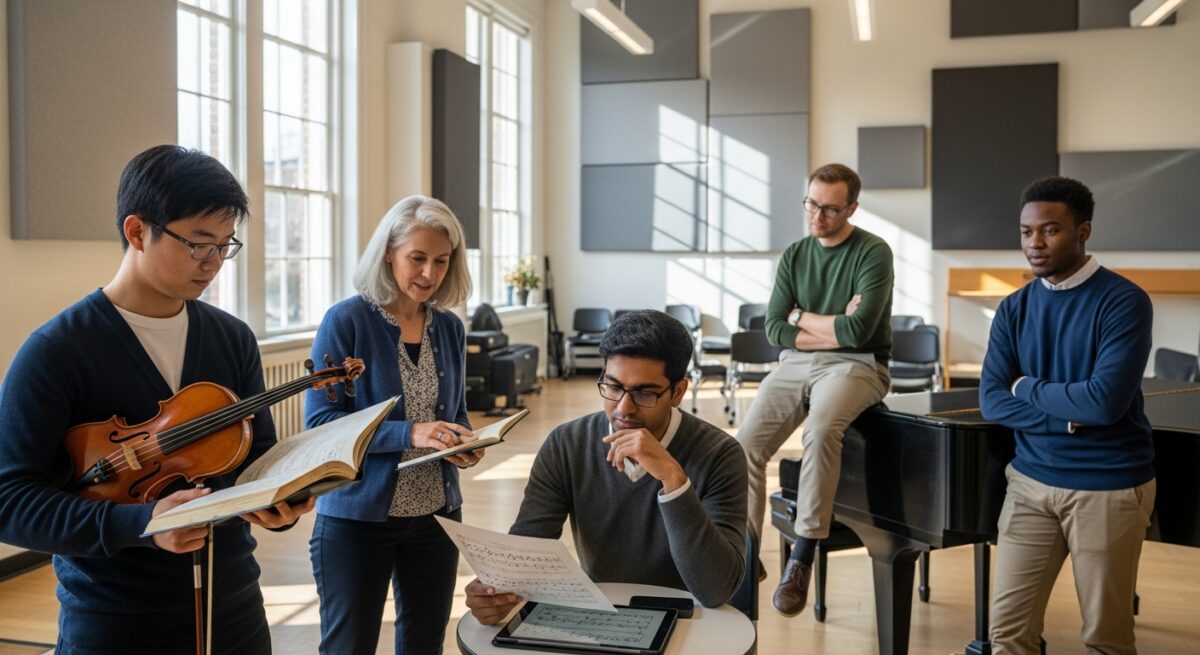
For musicians who feel called to push beyond performance and pedagogy into the realm of original inquiry, a doctorate in music represents the highest level of academic and artistic achievement. Yet the traditional image of a PhD in music programs and creative research often conjures dry archives and dusty theory rooms. In reality, many contemporary music doctorates embrace practice-led research, composition portfolios, and even performance-as-research. Understanding how these programs work, what they demand, and how they connect to real-world careers can help you decide whether this rigorous path is the right next step in your musical journey.
The landscape of doctoral music education has shifted significantly over the past two decades. Where once a PhD in music meant almost exclusively historical musicology or music theory, today’s programs often accommodate creative practice as a legitimate form of scholarship. This evolution has opened doors for composers, performers, ethnomusicologists, and music educators to pursue research that is rooted in their artistic work. Whether you hope to teach at a university, lead a research ensemble, or shape public policy around the arts, a music doctorate can provide the credentials and intellectual framework to do so.
What Defines a PhD in Music Programs and Creative Research
A PhD in music programs and creative research is a terminal degree that combines rigorous academic study with original creative output. Unlike a DMA (Doctor of Musical Arts), which typically emphasizes advanced performance or composition skills, the PhD track places greater weight on research methodology, theoretical grounding, and the production of a substantial dissertation. However, the dividing line between these two doctoral degrees has blurred in recent years. Many institutions now offer PhD pathways that allow candidates to submit a creative work such as a composition portfolio, a recorded performance series, or a digital media project alongside a written dissertation.
The term “creative research” itself signals a philosophical commitment: that making art is a form of inquiry. In these programs, you are not simply producing a piece of music and then writing about it separately. Instead, the creative process becomes the research method. Questions emerge from the studio, the rehearsal room, or the field recording session. The dissertation might take the form of a critical commentary that accompanies the creative work, explaining the decisions, techniques, and intellectual context that shaped it. This model is especially common in the United Kingdom, Australia, and parts of continental Europe, though it is increasingly influential in North American music departments as well.
Key Components of a Creative Research Doctorate
Most PhD in music programs and creative research share a common structure, though specific requirements vary by institution. Understanding these components can help you evaluate whether a given program aligns with your artistic and professional goals.
- Coursework and seminars: The first one to two years typically include advanced classes in research methods, music theory, musicology, and sometimes pedagogy. These courses build the analytical toolkit you will need for your dissertation.
- Comprehensive examinations: After coursework, you must pass written and/or oral exams that demonstrate mastery of your chosen area of specialization, as well as broader musical knowledge.
- Dissertation or creative portfolio: The centerpiece of the degree. For creative research candidates, this may be a substantial composition, a recorded performance project, or a digital work accompanied by a written commentary.
- Oral defense: A final examination in which you present your research to a faculty committee and respond to their questions. This is often a public event.
One of the most important decisions you will make is selecting a supervisor or advisor whose expertise matches your research interests. Unlike undergraduate or master’s study, where the curriculum is largely predetermined, a PhD is a self-directed venture. Your supervisor will guide you, challenge you, and help you navigate institutional requirements, but the intellectual labor is yours. A strong working relationship with your advisor can make the difference between a rewarding experience and a frustrating one.
Types of Music Doctorates and How They Differ
Prospective doctoral students often confuse the various terminal degrees available in music. Knowing the differences can help you target the right programs and present yourself as a competitive applicant.
The Doctor of Musical Arts (DMA) remains the most common doctoral degree for performers and composers. It emphasizes artistic excellence and typically requires a series of recitals or a major composition, along with a shorter written document. The PhD in music, by contrast, is more research-intensive. It is the standard degree for musicologists, theorists, and ethnomusicologists. However, as noted above, a growing number of institutions now offer a PhD with a creative research component, effectively merging the DMA’s artistic focus with the PhD’s scholarly rigor.
A third option is the Doctor of Philosophy in Music Education, which prepares candidates for careers as university faculty in music teacher training programs. This degree involves research on pedagogical methods, curriculum development, or the psychology of music learning. It is a distinct pathway, but one that shares many structural features with other music doctorates.
For those interested in interdisciplinary work, some universities offer a PhD in Creative Arts or a PhD in Performance Studies, where music is one focus among several. These programs can be ideal if your research crosses boundaries between music, theater, dance, or digital media. They also tend to be more flexible in their dissertation requirements, allowing for hybrid projects that combine performance, installation, and written analysis.
How to Choose the Right PhD in Music Program
Selecting a doctoral program is one of the most consequential decisions in an academic career. The reputation of the institution, the expertise of the faculty, and the resources available to you will shape your experience and your future job prospects. Here are the factors you should weigh carefully.
First, examine the faculty. Look for professors who are actively publishing, performing, or creating in your area of interest. Read their recent articles or listen to their compositions. If possible, attend a lecture or concert they have given. You want to work with someone who is not only knowledgeable but also engaged and approachable. Reach out to current doctoral students in the program and ask about their experiences with mentorship, funding, and the overall culture of the department.
Second, consider the program’s structure and timeline. Some PhD in music programs and creative research are designed to be completed in three to four years of full-time study, while others may take five to seven. Understand the expectations for coursework, teaching assistantships, and the dissertation. A program that offers guaranteed funding for four or five years is generally more supportive than one that requires you to reapply for funding annually.
Third, evaluate the resources available for your specific type of research. Does the university have a well-equipped electronic music studio? A strong library collection in your area? Partnerships with local orchestras, museums, or cultural institutions? Access to archival materials or specialized instruments? These practical considerations can enable or constrain your work.
Finally, think about your career goals. If you want to teach at a research university, a PhD with a strong publication record and a traditional dissertation may serve you best. If you hope to work at a conservatory or a liberal arts college, a DMA or a creative-focused PhD might be more appropriate. Talk to people in your desired field to understand what credentials and experiences are valued.
For a broader perspective on doctoral study across disciplines, you may find it useful to explore our guide on PhD in History Programs: Your Academic Career Path, which outlines similar considerations around research focus, funding, and career planning.
Navigating the Application Process
Applying to doctoral programs in music is a multi-step process that requires careful preparation. Most applications are due between December and February for fall admission, though some programs have rolling deadlines. Plan to begin your materials at least six months before the deadline.
The most important component is your statement of purpose. This document should articulate your research interests, explain why you want to pursue a PhD specifically, and describe how the program you are applying to fits your goals. Be specific: name faculty members you hope to work with and mention their recent work. Show that you have done your homework. For creative research applicants, you may also need to submit a portfolio of compositions, recordings, or other creative work. Make sure this portfolio reflects your best and most recent efforts, and that it is clearly labeled and easy to navigate.
Letters of recommendation are another critical element. Choose recommenders who know you well and can speak to your intellectual abilities, your artistic potential, and your readiness for doctoral-level work. Ideally, these should be faculty members from your master’s or undergraduate programs. Give them plenty of time to write strong letters, and provide them with your statement of purpose and CV so they can tailor their comments.
Many programs also require GRE scores, though this is becoming less common. Always check the specific requirements of each program. If the GRE is optional and your scores are not exceptional, you may choose not to submit them. Some programs require an interview or an audition as part of the application process. Prepare for these as you would for a job interview: rehearse your answers, anticipate questions about your research, and be ready to discuss your creative work in depth.
Finally, be strategic about where you apply. Apply to a mix of reach schools, match schools, and safety schools. But remember that a PhD is a long commitment, and you should only attend a program that you would be genuinely excited to join. An acceptance from a less prestigious program that offers strong mentorship and funding is often better than a more famous program that leaves you isolated or in debt.
Funding Your Music Doctorate
Doctoral education is expensive, but most reputable PhD in music programs and creative research offer funding packages that cover tuition and provide a living stipend. These packages typically come in the form of teaching assistantships, research assistantships, or fellowships. A teaching assistantship requires you to teach undergraduate courses, such as music appreciation, ear training, or applied lessons. This experience is valuable for your future career, but it also takes time away from your own research. Be realistic about how many hours per week you will be expected to teach, and factor that into your timeline.
External fellowships can supplement institutional funding. The Fulbright Program, the American Council of Learned Societies, and the Social Science Research Council all offer grants for doctoral research. Some organizations, such as the American Musicological Society or the Society for Ethnomusicology, have small grants for dissertation research. Apply for as many of these as you qualify for, but be aware that they are competitive and require significant lead time.
Avoid taking on significant debt for a PhD if possible. Unlike professional degrees in law or medicine, a PhD in music rarely leads to a high-paying job, and student loan payments can be a heavy burden on an academic salary. If a program offers no funding, think carefully before accepting. It may be better to wait a year and reapply to programs that can support you.
For those committed to accessible education, CollegeDegree.Education connects students with affordable and flexible degree options, including online programs that can reduce costs associated with relocation and campus fees. You can explore accredited degree pathways through their matching service to find programs that fit your budget and schedule.
Career Outcomes After a Music Doctorate
The most common career path for PhD graduates in music is academia. A doctorate is typically required for tenure-track positions at colleges and universities. However, the academic job market is highly competitive, and the number of PhD graduates exceeds the number of available faculty positions. To improve your chances, develop a strong publication record, present at conferences, and gain teaching experience during your doctoral studies. Networking is also essential: attend conferences, meet senior scholars, and build relationships that can lead to job opportunities.
Beyond the professoriate, music doctorates find work in a variety of settings. Some become curators at museums or archives, managing collections of musical instruments, manuscripts, or recordings. Others work in arts administration, leading nonprofit organizations, orchestras, or festivals. A growing number of graduates work in the music technology industry, designing software, developing digital instruments, or consulting on acoustics. Still others become independent artists, researchers, or writers, combining their expertise with entrepreneurial ventures.
The skills you develop during a PhD in music programs and creative research are transferable. You learn to manage complex projects, communicate clearly, analyze data, and think critically. These abilities are valued in many fields outside of academia, including publishing, journalism, and government. If you are open to non-traditional career paths, your doctorate can open doors you may not have considered.
Frequently Asked Questions
Can I earn a PhD in music online?
Yes, some universities offer online or low-residency PhD programs in music education, musicology, and creative research. These programs are often designed for working professionals and may require brief on-campus residencies. Accreditation is important, so verify that the program is offered by a regionally accredited institution.
How long does a PhD in music typically take?
Full-time students generally complete their degree in four to six years. Part-time study can extend the timeline to seven or more years. Factors that affect duration include the nature of your research, the requirements of your program, and your ability to balance teaching and writing.
What is the difference between a PhD and a DMA?
A PhD emphasizes research and scholarship, culminating in a dissertation. A DMA emphasizes artistic practice, culminating in a performance or composition portfolio. However, many contemporary programs blur this distinction, allowing PhD candidates to submit creative work as part of their dissertation.
Do I need a master’s degree to apply for a PhD in music?
Most programs require a master’s degree in music or a related field, though some accept exceptional candidates with only a bachelor’s degree. Check the specific admissions requirements for each program.
Is funding available for music doctoral students?
Many programs offer teaching assistantships, research assistantships, or fellowships that cover tuition and provide a stipend. External fellowships are also available. It is uncommon for students to self-fund a full-time doctoral program.
Final Thoughts on Pursuing a Music Doctorate
Earning a PhD in music programs and creative research is a profound intellectual and artistic commitment. It demands discipline, curiosity, and resilience. But for those who are driven by a deep desire to understand music more fully and to contribute original knowledge to the field, it can be an extraordinarily rewarding journey. The key is to choose a program that aligns with your research interests and career goals, to secure adequate funding, and to build strong relationships with faculty and peers. With careful planning and sustained effort, a music doctorate can serve as a foundation for a meaningful career in scholarship, performance, or creative practice.