
Nursing Practice Beyond Bachelor's at DeSales University
Advance your nursing career with in-person graduate programs at DeSales University. Call 8772187081 to explore your options today.

By Ethan Clark
Earning a Bachelor of Science in Nursing (BSN) is a major milestone, but for many registered nurses, it is only the beginning of a lifelong educational journey. The healthcare landscape is evolving rapidly, and the demand for nurses with advanced skills, leadership training, and specialized knowledge continues to grow. If you are a nurse in Pennsylvania or the surrounding region looking to elevate your career, you have likely encountered the phrase "Nursing Practice Beyond bachelor's degree In-person at DeSales University." This phrase represents a powerful opportunity: a pathway to move beyond the generalist role of a BSN-prepared nurse into specialized, autonomous, and leadership-focused practice. DeSales University, located in Center Valley, Pennsylvania, offers a distinctive in-person learning environment that blends rigorous academic theory with the compassionate, ethical foundation of a Christian education. For nurses seeking to advance their careers, understanding the landscape of graduate nursing education is essential. Whether you are aiming to become a nurse practitioner, a clinical nurse leader, or a nursing educator, the step you take after your bachelor's degree will define your professional trajectory. This article explores the advanced nursing programs available at DeSales University, the benefits of in-person learning, and how to navigate the financial and admissions landscape to find the right fit for your future.
Why Pursue Nursing Practice Beyond a Bachelor's Degree?
The Institute of Medicine's landmark report on the future of nursing recommended that the proportion of nurses with a baccalaureate degree be increased to 80 percent by 2020, and it also emphasized the need for a more highly educated nursing workforce to meet the complexities of modern healthcare. While a BSN prepares you for entry-level practice, a master's or doctoral degree opens doors to roles that require critical thinking, evidence-based practice, and system-level leadership. Nurses with advanced degrees are not just better compensated; they are often the decision-makers at the bedside and in the boardroom. They lead quality improvement initiatives, implement new technologies, and advocate for patient safety policies. Furthermore, the changing demographics of the patient population mean that nurses must be equipped to manage chronic conditions, coordinate care across multiple settings, and address social determinants of health. Advanced nursing education provides the tools to do exactly that. It is not merely about earning a higher salary, though that is a significant benefit; it is about gaining the autonomy to practice at the top of your license and making a tangible difference in patient outcomes.
The Demand for Advanced Practice Registered Nurses
The Bureau of Labor Statistics projects that employment for nurse practitioners, nurse midwives, and nurse anesthetists will grow much faster than the average for all occupations over the next decade. This growth is driven by an aging population, an increased focus on preventive care, and the need to fill gaps in primary care, especially in rural and underserved areas. For nurses considering a transition, the return on investment for a graduate degree is compelling. However, the path is not without its challenges. Balancing work, life, and school requires a program that offers flexibility without sacrificing the quality of instruction. This is where the format of the program becomes a critical factor. While many schools have shifted to fully online models, the value of face-to-face interaction, hands-on simulation, and direct mentorship from experienced faculty cannot be overstated, particularly in a clinical field like nursing.
The DeSales University Advantage: In-Person Learning
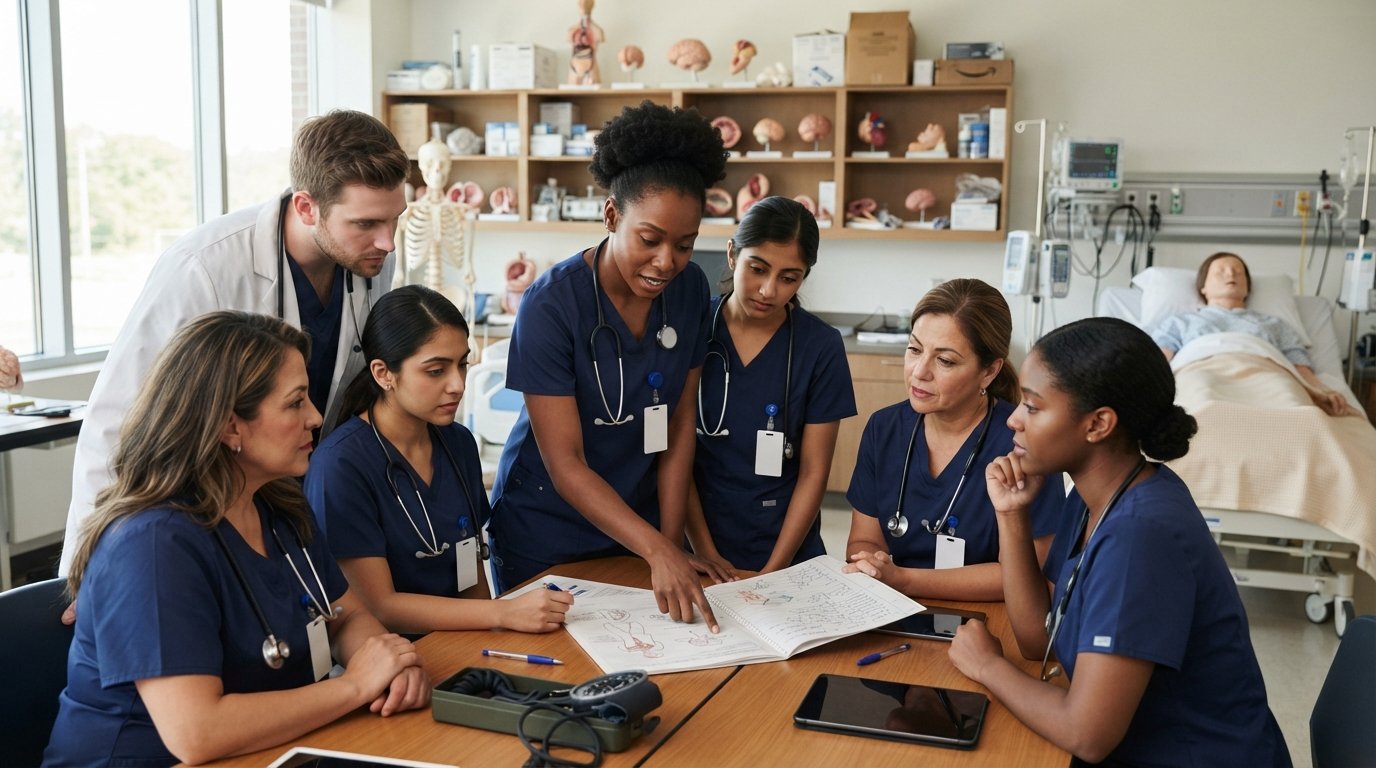
DeSales University has a long-standing reputation for excellence in nursing education. The university's approach to graduate nursing is rooted in its Catholic, Salesian philosophy, which emphasizes gentleness, humility, and the dignity of every human person. This creates a unique learning environment where students are not just numbers; they are supported as whole individuals. When you choose to pursue Nursing Practice Beyond bachelor's degree In-person at DeSales University, you are opting for an immersive experience. In-person learning at DeSales means small class sizes, where you can engage in deep discussions with faculty who are active practitioners and researchers. It means access to state-of-the-art simulation labs where you can practice advanced clinical skills, from suturing to managing complex medical emergencies, before you ever step into a real clinical setting. It also means building a professional network with your peers, who will become your colleagues and collaborators in the years to come. The in-person format fosters a sense of community and accountability that is often harder to replicate in a fully online environment. For nurses who thrive on interaction and hands-on learning, this is a significant advantage.
Programs Available at DeSales University
DeSales University offers a range of graduate nursing programs designed to meet the diverse needs of the nursing workforce. These programs are built on a strong foundation of evidence-based practice and leadership.
- Master of Science in Nursing (MSN): The MSN program offers specializations such as Family Nurse Practitioner (FNP), Adult-Gerontology Acute Care Nurse Practitioner, and Nursing Education. These tracks prepare nurses for advanced clinical roles or academic positions.
- Doctor of Nursing Practice (DNP): The DNP is a practice-focused doctoral degree designed for nurses who want to lead clinical innovation and improve healthcare delivery systems. It is ideal for those aiming for executive leadership or advanced clinical practice.
- Post-Master's Certificates: For nurses who already hold a master's degree but wish to change specialties or gain new skills, DeSales offers certificate programs that can be completed in a shorter timeframe.
Each of these programs is designed to be rigorous and relevant. The curriculum is constantly updated to reflect the latest guidelines from accrediting bodies like the Commission on Collegiate Nursing Education (CCNE) and the American Association of Colleges of Nursing (AACN). This ensures that graduates are well-prepared for certification exams and the realities of modern practice. The decision to return to school is significant, and choosing the right program is paramount. For those still exploring their options, platforms like DegreesOnline.Education provide resources to compare programs and understand the landscape of higher education. However, for nurses in the Lehigh Valley area, the local, in-person experience at DeSales is a unique draw.
Navigating the Admissions and Financial Aid Process
Applying to graduate nursing school can feel daunting, especially for working adults who have been out of the classroom for years. The process typically involves submitting transcripts, letters of recommendation, a personal statement, and evidence of an unencumbered RN license. At DeSales, the admissions team looks for candidates who demonstrate not only academic potential but also a commitment to the values of the university and the nursing profession. It is important to start the process early and to be organized. One of the biggest concerns for prospective students is the cost of tuition. Graduate education is an investment, but there are numerous ways to mitigate the financial burden. Nurses should explore employer tuition reimbursement programs, which are common in hospital systems. Additionally, there are scholarships specifically for graduate nursing students, including those offered by professional organizations and the university itself. The Free Application for Federal Student Aid (FAFSA) is also a critical step for accessing federal loans and work-study opportunities. DeSales University's financial aid office can guide students through the process of understanding their options and planning their finances.
Steps to Apply for Graduate Nursing Programs
To streamline the application process, consider the following sequence of steps. This framework can help you stay on track and present the strongest possible application.
- Research and Select Your Program: Determine whether you want to focus on clinical practice, education, or leadership. Ensure the program is accredited and aligns with your career goals.
- Gather Your Materials: Request transcripts from all previous institutions, secure strong letters of recommendation from supervisors or professors, and draft a compelling personal statement.
- Submit Your Application: Pay close attention to deadlines. Many programs have priority deadlines for financial aid and early admission.
- Prepare for an Interview: Some programs require an interview. Be ready to discuss your professional goals and how the program fits into your plans.
- Apply for Financial Aid: Complete the FAFSA and search for external scholarships and grants.
Following these steps can reduce stress and increase your chances of admission. It is also helpful to connect with current students or alumni to get an inside perspective on the program's culture and workload. For those looking at a broader range of options, including hybrid and online formats, a resource like the guide on degree value and career outcomes can offer insights into how different fields approach graduate education, though nursing has its own unique clinical requirements. The key is to find a program that fits your life and your learning style.
Career Outcomes and Specialization Opportunities
Graduating with an advanced nursing degree from DeSales University opens up a wide array of career opportunities. The skills you acquire, from advanced pathophysiology to healthcare policy analysis, are highly transferable. Many graduates go on to work in primary care clinics, hospitals, specialty practices, and academic institutions. The role of the Nurse Practitioner, for example, is one of the most in-demand and rewarding paths. NPs can diagnose and treat illnesses, prescribe medications, and manage patient care independently or in collaboration with physicians. This level of autonomy is a major draw for nurses who want to have a greater impact on patient care. Alternatively, nurses interested in the administrative side can pursue roles as nurse managers, directors of nursing, or chief nursing officers. These positions require a deep understanding of healthcare finance, human resources, and quality improvement, all of which are covered in graduate-level coursework. For those who love teaching, becoming a nursing educator allows you to shape the next generation of nurses while maintaining a connection to clinical practice. The variety of paths available means that an advanced degree is a versatile asset that can adapt to your changing interests over the course of your career.
The Importance of Accreditation and Reputation
When choosing a program, accreditation is non-negotiable. Attending an unaccredited program can disqualify you from sitting for certification exams and may limit your eligibility for federal financial aid. DeSales University is accredited by the Middle States Commission on Higher Education, and its nursing programs are accredited by the CCNE. This ensures that your degree will be recognized by employers and credentialing bodies. Furthermore, the reputation of the university matters. DeSales is well-regarded in the region, and its alumni network is strong. Employers know that graduates from DeSales are well-prepared, ethical, and compassionate. This reputation can give you a competitive edge in the job market. It is also worth noting that the in-person format allows you to build relationships with faculty who can serve as references and mentors throughout your career.
Balancing Work, Life, and School
Returning to school as a working nurse requires careful time management. The in-person format at DeSales is designed with adult learners in mind, often offering evening or weekend classes. However, it still requires a significant commitment. It is important to have a support system in place, both at home and at work. Talk to your employer about your goals; many hospitals are supportive of nurses pursuing advanced degrees and may offer flexible scheduling. Create a study schedule and stick to it. Use your peers as a support network; study groups can be incredibly effective for mastering complex material. Remember that the investment of time and effort is temporary, but the benefits, both personal and professional, are long-lasting. The sense of accomplishment that comes with earning a graduate degree is profound, and it sets an example for your colleagues and family.
Taking the next step in your nursing career is a decision that requires careful consideration of your goals, your learning style, and your resources. The option to pursue Nursing Practice Beyond bachelor's degree In-person at DeSales University offers a structured, supportive, and rigorous pathway to advancement. By engaging with faculty, utilizing the resources available, and committing to the process, you can transform your career and enhance your ability to care for those in need. Whether you choose to specialize in clinical practice, education, or leadership, the education you receive will empower you to practice with confidence and compassion.