
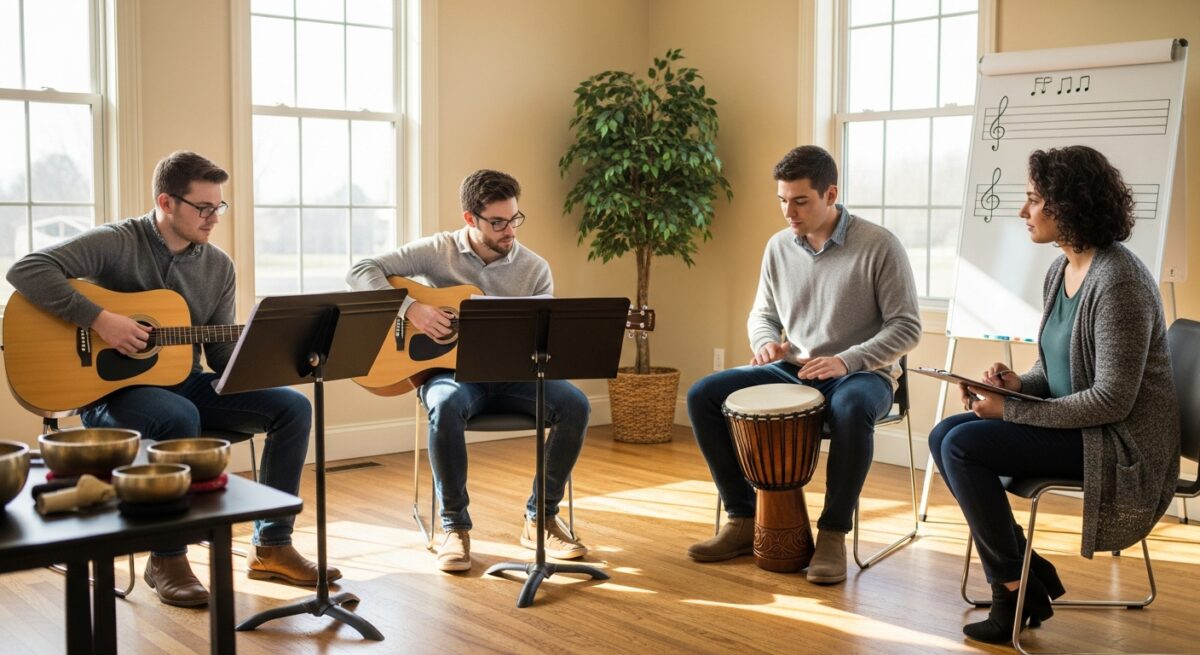
Music has an extraordinary ability to reach people in ways that words sometimes cannot. For centuries, cultures around the world have recognized the healing power of rhythm, melody, and harmony. Today, that ancient wisdom has evolved into a structured, evidence-based health profession known as music therapy. If you are drawn to both music and helping others heal, a music therapy degree might be your calling. This article provides a comprehensive music therapy degree overview and career scope, exploring what you will study, where you can work, and how to launch a fulfilling career in this growing field.
What Is a Music Therapy Degree?
A music therapy degree is an academic program that trains students to use music interventions to address clients’ physical, emotional, cognitive, and social needs. Unlike a general music performance or education degree, therapy music studies combine clinical psychology, anatomy, neuroscience, and therapeutic techniques with applied musicianship. Students learn how to assess clients, design treatment plans, and evaluate progress using music as the primary tool.
Programs are offered at the bachelor’s, master’s, and doctoral levels. The bachelor’s degree is the entry-level credential required to become a board-certified music therapist (MT-BC). A music counseling degree often overlaps with music therapy but may have a stronger focus on verbal counseling skills integrated with musical interventions. Most accredited programs are approved by the American Music Therapy Association (AMTA) and include a supervised clinical internship of at least 1,200 hours.
Core Curriculum Components
While specific courses vary by institution, most music therapy degree programs share a common core. Students take classes in music theory, history, and applied lessons on their primary instrument. They also study human development, abnormal psychology, counseling techniques, and research methods. Specialized coursework covers therapeutic applications of music, improvisation, songwriting, and receptive music experiences. Clinical training begins early, often with observation hours, and culminates in a full-time internship.
Here are the typical knowledge areas you will develop during a music therapy degree program:
- Clinical assessment and documentation skills for client evaluation
- Proficiency in guitar, piano, voice, and percussion for therapeutic use
- Understanding of psychiatric disorders and developmental disabilities
- Ethical practice standards and cultural competency
- Research literacy to evaluate and apply evidence-based interventions
After completing coursework and the internship, graduates must pass the national board certification exam administered by the Certification Board for Music Therapists (CBMT). Passing this exam grants the MT-BC credential, which is required by most employers and many state licensure boards.
Career Scope: Where Can Music Therapists Work?
The career scope for music therapists has expanded significantly in recent years. As healthcare systems increasingly recognize the value of non-pharmacological interventions, demand for credentialed music therapists continues to grow. Music therapists work across the lifespan, from premature infants in neonatal intensive care units to older adults with dementia in hospice care.
Typical employment settings include hospitals, psychiatric facilities, rehabilitation centers, schools, nursing homes, correctional facilities, and private practice. Some music therapists also work in community mental health agencies, substance abuse treatment centers, or with military veterans experiencing post-traumatic stress disorder. The versatility of this skill set means that a music therapy degree can open doors to many different populations and environments.
According to the AMTA, the largest employers of music therapists are mental health centers, developmental disability agencies, and general medical hospitals. However, emerging areas include pain management clinics, oncology units, and telehealth platforms that deliver music therapy services remotely. The Bureau of Labor Statistics does not track music therapists separately, but it projects faster-than-average growth for recreational therapists and related creative arts therapists through 2032.
Specialized Populations and Interventions
One of the most rewarding aspects of a music therapy career is the ability to specialize. For example, a therapist working with children on the autism spectrum might use structured drumming to improve motor coordination and social turn-taking. A therapist in a burn unit might use songwriting to help patients process trauma and express emotions that are difficult to verbalize. Each population requires a tailored approach grounded in clinical assessment.
Music therapists also collaborate with interdisciplinary teams. In a hospital setting, you might work alongside doctors, nurses, physical therapists, and social workers to create a holistic care plan. Your unique contribution is the ability to engage patients through music, often reaching them when other therapies fail. This collaborative role strengthens the professional standing of music therapy within healthcare systems.
For those considering this path, it is helpful to explore our Forensic Science Degree: Overview and Career Path Guide as a comparison point for other interdisciplinary health and science careers that require similar clinical training and board certification.
Licensure, Certification, and State Regulations
Becoming a practicing music therapist requires more than just a degree. After earning your music therapy degree from an AMTA-accredited program, you must complete the supervised internship and pass the CBMT exam to earn the MT-BC credential. As of 2025, a growing number of states have enacted licensure laws that regulate the practice of music therapy. These laws typically require the MT-BC credential, continuing education, and adherence to a scope of practice.
Currently, over 20 states have some form of music therapy licensure, and more are considering legislation. If you plan to practice in a specific state, check that state’s health department or professional licensing board for current requirements. Even in states without licensure, employers almost always require the MT-BC credential because it demonstrates a national standard of competence.
Maintaining certification requires 100 continuing education credits every five years. This ensures that music therapists stay current with research, ethical standards, and new clinical techniques. Many professionals pursue advanced training in neurologic music therapy (NMT), which focuses on using music to retrain the brain after injury or illness.
Salary Expectations and Job Outlook
Salary for music therapists varies by setting, experience, and geographic location. According to the AMTA’s 2023 Workforce Survey, the median annual salary for full-time music therapists was approximately $55,000. Entry-level positions often start in the $40,000 to $45,000 range, while experienced therapists in hospitals or private practice can earn $70,000 or more. Those with advanced degrees or specialized certifications typically command higher salaries.
Job satisfaction in this field tends to be high, despite the modest pay compared to some other healthcare professions. Music therapists report strong intrinsic rewards from witnessing clients’ progress and forming meaningful therapeutic relationships. Additionally, the profession offers flexibility: many therapists work part-time, contract, or self-employed arrangements, allowing them to balance multiple settings or build a private practice.
The job outlook is positive due to an aging population, increased awareness of mental health, and the integration of creative arts therapies into mainstream medicine. However, competition for positions in desirable urban areas can be strong. Graduates who are willing to relocate or work in underserved communities often find more opportunities.
How to Choose the Right Music Therapy Degree Program
Selecting the right program is a critical decision that affects your education, internship placement, and career readiness. Start by verifying that the program is accredited by the AMTA. Accreditation ensures that the curriculum meets national standards and qualifies you to sit for the CBMT exam. Without AMTA accreditation, you may not be eligible for certification.
Consider factors such as faculty expertise, clinical training opportunities, and the program’s pass rate on the national exam. Ask about the ratio of classroom instruction to hands-on clinical hours. Some programs offer early fieldwork starting in the first year, while others concentrate clinical experiences in the final year. Look for a program that aligns with your learning style and career goals.
Also think about the format that works for you. Many universities now offer hybrid or fully online music therapy degree programs, which can be ideal for working adults or those who do not live near a campus. However, clinical placements must be completed in person, so ensure that the program provides support for arranging local internships. Our platform at CollegeAndTuition.com offers tools to compare accredited music therapy programs and connect with schools that fit your schedule and budget.
Frequently Asked Questions
What is the difference between a music therapy degree and a music education degree?
A music education degree prepares you to teach music in schools, focusing on performance, pedagogy, and classroom management. A music therapy degree prepares you to use music as a clinical intervention in healthcare settings, emphasizing psychology, anatomy, and therapeutic techniques. The two fields require different certifications and serve different populations.
Can I become a music therapist with a degree in psychology?
Not directly. While a psychology background provides helpful foundational knowledge, you still need a music therapy degree from an AMTA-accredited program to qualify for the board certification exam. Some master’s programs accept students with a bachelor’s degree in psychology or music, but you must complete prerequisite coursework in both music and therapy.
How long does it take to earn a music therapy degree?
A bachelor’s degree typically takes four years of full-time study, including the required clinical internship. A master’s degree for those who already hold a bachelor’s in music or a related field usually takes two to three years. Accelerated programs may shorten this timeline for eligible students.
Do music therapists need to be proficient in multiple instruments?
Yes. Most programs require functional skills in guitar, piano, voice, and percussion. You do not need to be a virtuoso on each instrument, but you must be able to accompany clients and lead musical activities competently. Your primary instrument (the one you study in applied lessons) is typically your strongest area.
Is music therapy covered by insurance?
Coverage varies. Some private insurance plans, Medicaid programs, and TRICARE (military insurance) cover music therapy when it is deemed medically necessary. Many music therapists work in settings where funding comes from grants, facility budgets, or client self-pay. Advocacy efforts continue to expand insurance reimbursement for music therapy services.
Taking the Next Step
The path to becoming a music therapist requires dedication, clinical training, and a deep love for both music and human connection. A music therapy degree overview and career scope such as this one can help you decide if the profession aligns with your strengths and values. If you enjoy improvising, collaborating with healthcare teams, and witnessing transformation through creative expression, this field may offer exactly the blend of art and science you are seeking.
Start by researching AMTA-accredited programs, speaking with current music therapists about their daily work, and exploring financial aid options. With the right preparation, you can turn your passion for music into a meaningful career that changes lives, including your own.