
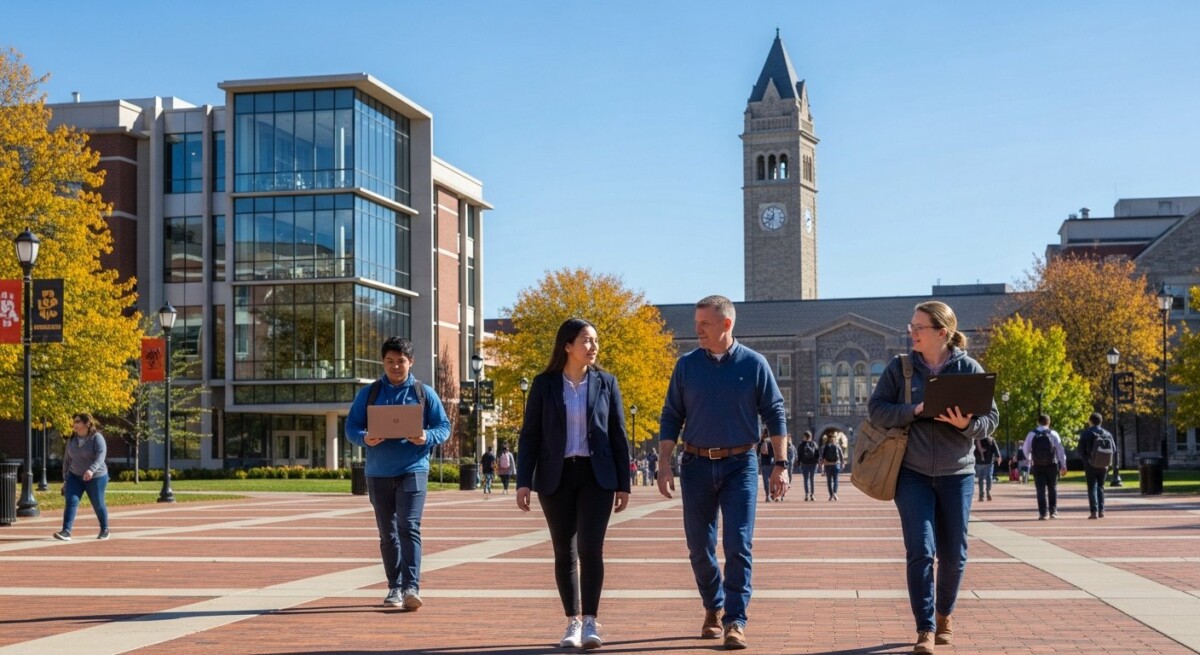
When you think about pursuing higher education in the Great Lakes State, the breadth and depth of Michigan undergraduate degree offerings can feel overwhelming. From world-renowned research institutions in Ann Arbor to specialized technical colleges in Houghton, Michigan provides a rich tapestry of academic pathways designed to prepare students for virtually every career field imaginable. Whether you are a high school senior mapping out your future, a working adult seeking a career pivot, or a military veteran exploring educational benefits, understanding what Michigan universities offer is the first critical step toward making an informed decision.
The state is home to a diverse mix of public universities, private liberal arts colleges, and community colleges that collectively enroll hundreds of thousands of students each year. Each institution brings its own strengths, culture, and unique program offerings to the table. For prospective students, the challenge is not a lack of options but rather navigating the abundance to find the right fit. This article will walk you through the major categories of undergraduate programs available across Michigan, highlight key institutions and their signature degrees, and provide actionable guidance on how to evaluate which path aligns with your personal and professional goals.
Major Public Research Universities in Michigan
Michigan’s public research universities form the backbone of the state’s higher education system. These large, comprehensive institutions offer hundreds of majors, extensive research opportunities, and robust support services for undergraduates. They are ideal for students who want access to a wide variety of academic disciplines, from engineering and business to the arts and humanities.
University of Michigan Ann Arbor
The University of Michigan Ann Arbor is consistently ranked among the top public universities in the nation. Its undergraduate degree offerings span more than 280 degree programs across 14 schools and colleges. Particularly renowned are the Ross School of Business, the College of Engineering, and the College of Literature, Science, and the Arts. Students here benefit from world-class faculty, a massive alumni network, and a campus culture that emphasizes both academic rigor and extracurricular engagement. Popular majors include computer science, mechanical engineering, economics, and psychology. The university also offers unique interdisciplinary programs such as the Program in the Environment and the Residential College, which allow students to customize their educational experience.
Michigan State University
Located in East Lansing, Michigan State University is another flagship public institution with a strong land-grant heritage. MSU is particularly celebrated for its programs in agriculture, communication sciences, education, and supply chain management. The Eli Broad College of Business is highly regarded, and the College of Communication Arts and Sciences is one of the largest and most comprehensive in the country. MSU offers over 200 undergraduate programs, including notable strengths in criminal justice, hospitality business, and plant biology. The university’s emphasis on undergraduate research and study abroad opportunities gives students practical experience that translates directly to the workforce.
Wayne State University
Situated in the heart of Detroit, Wayne State University combines the resources of a major research institution with the vibrancy of an urban campus. It is especially strong in health sciences, engineering, and business. The School of Medicine and the College of Nursing offer pre-professional tracks that are highly competitive. Wayne State is also a top choice for students interested in film, media studies, and the arts, thanks to its proximity to Detroit’s cultural institutions. The university’s commitment to urban engagement means that many undergraduate programs incorporate community-based learning and internships with local businesses and nonprofits.
Private Liberal Arts and Specialized Colleges
For students who prefer a smaller, more intimate learning environment, Michigan is home to a number of excellent private liberal arts colleges and specialized institutions. These schools often emphasize close faculty-student mentorship, a core curriculum rooted in critical thinking, and a strong sense of community. They are particularly well-suited for students who are still exploring their interests or who want a well-rounded education before specializing in graduate school or a specific career.
Kalamazoo College is known for its K-Plan, a personalized educational pathway that integrates rigorous academics with career development, study abroad, and independent research. Hope College in Holland is a Christian liberal arts college with strong programs in the sciences, music, and education. Hillsdale College, with its classical curriculum and strong emphasis on the liberal arts, attracts students seeking a traditional, values-based education. Albion College, Alma College, and Adrian College also offer distinctive programs in fields like environmental science, business, and the arts. For students interested in a specialized focus, the College for Creative Studies in Detroit offers bachelor’s degrees in fine arts, graphic design, illustration, and entertainment arts, directly connecting students to the region’s creative industries.
Regional Universities and Community Colleges
Beyond the well-known flagships, Michigan has a robust network of regional public universities that provide accessible, high-quality undergraduate education focused on career preparation. These institutions often have strong ties to local industries, making them an excellent choice for students who want to stay in a specific region or who prefer a more applied, hands-on learning approach. For instance, Grand Valley State University offers competitive programs in nursing, health professions, and engineering. Eastern Michigan University is known for its education and aviation programs. Western Michigan University has a strong reputation for engineering, business, and aviation. And Northern Michigan University in Marquette is a hub for outdoor recreation management and environmental studies.
Community colleges in Michigan play a vital role in the undergraduate degree landscape as well. Schools like Washtenaw Community College, Macomb Community College, and Lansing Community College offer associate degrees and certificate programs that can be transferred to four-year institutions. Many students use these affordable options to complete their general education requirements before transferring to a university to finish a bachelor’s degree. This pathway not only saves money but also allows students to build academic confidence in a smaller setting before transitioning to a larger campus. The Michigan Transfer Agreement (MTA) facilitates seamless credit transfer between community colleges and participating four-year universities, removing many of the traditional barriers to earning a bachelor’s degree.
Key Factors to Consider When Choosing a Program
Selecting from the wide array of Michigan undergraduate degree offerings requires careful thought about your personal priorities. Below are several critical factors to evaluate during your search.
- Academic fit: Does the program offer a major that genuinely interests you? Are there opportunities for research, internships, or study abroad within that department?
- Location and campus culture: Do you prefer a bustling urban campus like Wayne State, a traditional college town like East Lansing or Ann Arbor, or a more remote setting like Houghton (Michigan Tech)?
- Cost and financial aid: What is the total cost of attendance, and what scholarships, grants, or work-study options are available? In-state public tuition is generally more affordable than private institutions.
- Graduation and career outcomes: Research the program’s four-year graduation rate and the career placement rate for graduates in your field of interest. Many universities publish this data online.
- Accreditation: Ensure the institution and your specific program hold regional or specialized accreditation. This is crucial for transferring credits, qualifying for financial aid, and obtaining professional licensure.
Each of these factors plays a significant role in your long-term satisfaction and success. For example, a student who thrives on close personal attention might find a small liberal arts college more supportive than a large research university, even if both offer the same major. Conversely, a student aiming for a career in corporate finance might benefit from the extensive alumni network and recruiting pipeline at a larger business school. Taking the time to visit campuses, talk to current students, and review program-specific data will help clarify which environment suits you best.
If you are still exploring your options and want to compare different academic tracks side by side, you can find detailed academic program insights that break down curriculum requirements, faculty expertise, and student outcomes for various fields. This kind of research is invaluable when narrowing down your list of potential schools.
Emerging and In-Demand Degree Fields
As the economy evolves, Michigan universities have adapted by launching new undergraduate programs in high-growth fields. Data science, cybersecurity, and artificial intelligence are among the fastest-growing majors across the state. The University of Michigan offers a Bachelor of Science in Data Science through its College of Engineering, while Michigan State has developed a highly regarded program in cybersecurity. Wayne State University recently introduced a Bachelor of Science in Artificial Intelligence, reflecting the growing demand for graduates who can work at the intersection of computer science and machine learning.
Sustainability and environmental fields are also expanding rapidly. Programs in renewable energy, sustainable business, and environmental policy are now available at institutions like Northern Michigan University, Grand Valley State University, and the University of Michigan’s School for Environment and Sustainability. Healthcare continues to be a dominant sector, with strong demand for registered nurses, medical laboratory scientists, and health information managers. Many Michigan universities offer accelerated bachelor’s-to-master’s pathways in nursing and allied health fields, allowing students to enter the workforce more quickly with advanced credentials.
Frequently Asked Questions
What is the difference between a BA and a BS degree in Michigan?
A Bachelor of Arts (BA) typically requires more coursework in humanities, social sciences, and foreign languages, offering a broader liberal arts education. A Bachelor of Science (BS) usually focuses more on technical, scientific, or quantitative subjects within the major. Both are equally respected, and the choice depends on your career goals and learning preferences.
Can I transfer credits from a Michigan community college to a four-year university?
Yes, the Michigan Transfer Agreement (MTA) ensures that students who complete a 30-credit hour block of general education courses at a participating community college can transfer those credits to any other participating public university in the state. Private colleges may also accept these credits on a case-by-case basis.
Are there affordable online undergraduate degrees available in Michigan?
Yes, several Michigan universities offer fully online bachelor’s degree programs. Examples include the University of Michigan-Flint, Central Michigan University, and Ferris State University. These programs are designed for working adults and often carry the same accreditation and tuition rates as on-campus programs.
How do I know if a Michigan college is accredited?
You can verify accreditation by visiting the website of the Higher Learning Commission (HLC), which is the regional accrediting body for Michigan institutions. You can also check the U.S. Department of Education’s database of accredited postsecondary institutions.
Choosing a path through Michigan’s undergraduate degree offerings is a significant decision that will shape your career and personal growth. By understanding the landscape of universities, the types of programs available, and the key factors that matter most to you, you can make a choice that sets you up for long-term success. Start your research early, ask questions, and use the resources available through match services like CollegeDegree.Education to connect with programs that align with your goals. The right fit is out there; it simply takes thoughtful exploration to find it.