
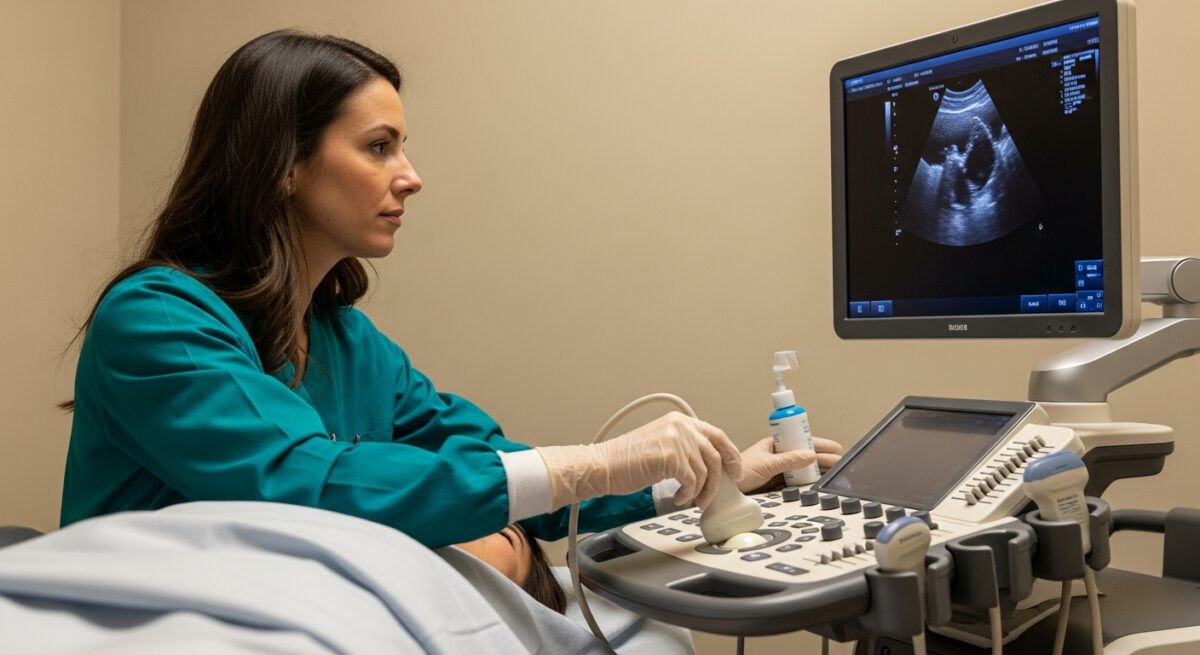
Imagine a healthcare career where you combine cutting-edge technology with direct patient care, all while earning a competitive salary after just two years of focused study. This is the reality for medical sonographers, professionals who use ultrasound equipment to create images of the body’s internal organs and tissues. The demand for these skilled technicians is growing rapidly, and the most common entry point is a medical sonographer associate degree. This guide will walk you through everything you need to know about this rewarding path, from what you will learn in class to how you can land your first job and advance in the field.
What Is a Medical Sonographer Associate Degree?
A medical sonographer associate degree is a two-year program offered at community colleges, technical schools, and some universities. It prepares students to perform diagnostic medical sonography (ultrasound) exams under the supervision of a physician. Unlike a certificate program, which may be shorter but less comprehensive, an associate degree provides a broader educational foundation, including general education courses in math, English, and the sciences. This makes it a more versatile credential that is widely accepted by employers and required for professional certification.
The curriculum blends classroom instruction with hands-on clinical training. You will study human anatomy, patient care, medical ethics, and the physics of ultrasound. In the lab, you will practice on mannequins and eventually real patients under the watchful eye of experienced sonographers. By the time you graduate, you will have performed hundreds of scans, building the muscle memory and clinical judgment needed to work independently. This degree is often referred to as a sonography associate degree or an ultrasound technician degree, though the official title varies by institution.
Why Choose an Associate Degree in Sonography?
There are several compelling reasons to pursue a sonography associate degree over other educational paths. First, it is one of the fastest routes to a stable, well-paying job in healthcare. Most programs can be completed in 20 to 24 months, allowing you to enter the workforce quickly. Second, the cost is significantly lower than a bachelor’s degree, making it an accessible option for many students. Community colleges often offer affordable tuition, and financial aid is available.
Third, the career outlook is excellent. The Bureau of Labor Statistics projects that employment of diagnostic medical sonographers will grow much faster than the average for all occupations. This growth is driven by an aging population and the increasing use of ultrasound as a safe, non-invasive imaging tool. Finally, an associate degree gives you a solid foundation for future advancement. Many sonographers go on to earn bachelor’s or master’s degrees in healthcare management or specialized imaging modalities, such as vascular or cardiac sonography. In our guide on good associate degrees for career growth and flexibility, we explain how this degree serves as a launchpad for long-term career success.
What You Will Learn: Core Curriculum and Skills
A medical sonographer associates degree program is rigorous and focused. The first year typically covers foundational subjects, while the second year dives into advanced imaging techniques and clinical rotations. Here is a breakdown of the key areas of study:
Anatomy and Physiology
You will need a deep understanding of human anatomy, particularly the abdomen, pelvis, heart, blood vessels, and reproductive organs. Courses in sectional anatomy are especially important because ultrasound images are two-dimensional slices of three-dimensional structures. You will learn to identify organs, blood vessels, and potential abnormalities on a screen.
Ultrasound Physics and Instrumentation
This is the technical heart of the program. You will study how sound waves travel through different tissues, how to adjust machine settings to optimize image quality, and how to recognize artifacts that can mimic disease. Mastery of physics is essential for passing the national certification exam.
Patient Care and Professional Ethics
Sonographers work closely with patients who may be anxious, in pain, or facing a serious diagnosis. You will learn how to explain procedures, position patients comfortably, maintain privacy, and handle sensitive information. Ethics courses cover topics like informed consent, patient rights, and professional boundaries.
Clinical Practicum
The most important part of your education happens in a real hospital or clinic. You will complete 800 to 1,200 hours of supervised clinical training, scanning real patients. This is where you apply everything you learned in the classroom. You will start by observing, then gradually take on more responsibility until you can complete a scan independently.
How to Choose the Right Sonography Program
Not all sonography associate degree programs are created equal. When evaluating schools, consider these critical factors:
- Accreditation: Look for programs accredited by the Commission on Accreditation of Allied Health Education Programs (CAAHEP). Graduating from a CAAHEP-accredited program is required to sit for the American Registry for Diagnostic Medical Sonography (ARDMS) certification exam.
- Clinical Partnerships: Ask about the clinical sites where students train. A program with strong hospital partnerships will give you exposure to diverse patient populations and advanced equipment.
- Graduation and Job Placement Rates: Request data on how many students complete the program and how many find jobs within six months of graduation. High rates indicate a quality program.
- Faculty Experience: Instructors should be registered sonographers with years of clinical experience. They can share real-world tips and help you build professional connections.
Take the time to visit campuses, talk to current students, and review the program’s curriculum in detail. The right program will set you up for success on certification exams and in your career. Many schools also offer online components for lecture courses, but clinical training must be completed in person.
Certification and Licensure Requirements
After earning your medical sonographer associate degree, the next step is obtaining professional certification. The ARDMS offers the Registered Diagnostic Medical Sonographer (RDMS) credential, which is the gold standard in the field. To qualify for the exam, you must graduate from a CAAHEP-accredited program. The exam covers both physics and a specialty area, such as abdomen or obstetrics and gynecology.
While certification is not legally required in all states, most employers prefer or mandate it. Some states, such as Oregon and New Mexico, have licensure laws that require sonographers to hold ARDMS certification. Even where it is not mandatory, being certified demonstrates your competence and commitment to the profession. It also typically leads to higher pay and more job opportunities. You can maintain your certification by earning continuing medical education (CME) credits throughout your career.
Job Outlook and Salary Expectations
The job market for medical sonographers is exceptionally strong. According to the Bureau of Labor Statistics, employment is projected to grow 14 percent from 2022 to 2032, much faster than the average for all occupations. This demand is fueled by the shift toward non-invasive diagnostic procedures and the expansion of healthcare services for an aging population.
Salaries are competitive, especially for an associate degree. The median annual wage for diagnostic medical sonographers was over $80,000 in 2023. Entry-level positions typically start in the $60,000 to $70,000 range, while experienced sonographers, especially those with multiple specialties, can earn well into six figures. Geographic location also plays a role; salaries tend to be higher in urban areas and states with higher costs of living. Hospitals, outpatient clinics, and physician offices are the primary employers, though mobile imaging services and diagnostic laboratories also hire sonographers.
Frequently Asked Questions
What is the difference between a medical sonographer and an ultrasound technician?
There is no difference. The terms are used interchangeably. Medical sonographer is the preferred professional title, but ultrasound technician is still common in job listings and casual conversation. Both refer to the same role: a healthcare professional who operates ultrasound equipment to produce diagnostic images.
Can I earn a medical sonographer associate degree online?
Some programs offer hybrid formats where lecture courses are completed online, but the clinical training must be done in person. You cannot become a competent sonographer without hands-on practice. Look for accredited programs that offer online didactic components with local clinical placements.
How long does it take to become a medical sonographer?
Most associate degree programs take two years of full-time study. If you attend part-time or need to complete prerequisite courses, it may take longer. After graduation, you will need to pass the ARDMS certification exam, which adds a few months of study time.
Is sonography a stressful job?
Like any healthcare role, sonography can be stressful at times. You may work with patients who are seriously ill, and the physical demands of the job (standing for long periods, manipulating the transducer) can lead to repetitive strain injuries. However, many sonographers find the work deeply rewarding. They enjoy using technology to help diagnose conditions and appreciate the strong job security.
What specialties can I pursue with a sonography associate degree?
After earning your RDMS credential, you can specialize in areas such as abdominal sonography, obstetrics and gynecology, vascular sonography, or cardiac sonography (echocardiography). Each specialty requires additional certification and often on-the-job training. Many sonographers obtain multiple specialties to increase their earning potential and job flexibility.
Next Steps: Launching Your Career
Your journey begins with research. Identify accredited programs in your area or those offering hybrid online options. Apply for financial aid and scholarships early. Once accepted, commit to your studies and clinical rotations with the same dedication you would bring to a full-time job. Build relationships with your instructors and clinical preceptors; they can be invaluable references when you start your job search.
After graduation, register for the ARDMS exam and study diligently using review books and practice tests. Once certified, update your resume and begin applying for positions. Consider joining professional organizations like the Society of Diagnostic Medical Sonography (SDMS) to access job boards and networking opportunities. The field of medical sonography offers a stable, fulfilling career with room for growth, and an associate degree is your most efficient path to entry. For more resources on finding the right program and exploring related healthcare careers, visit scholarship.education to learn about funding opportunities and educational support. Your future in diagnostic imaging starts now.