
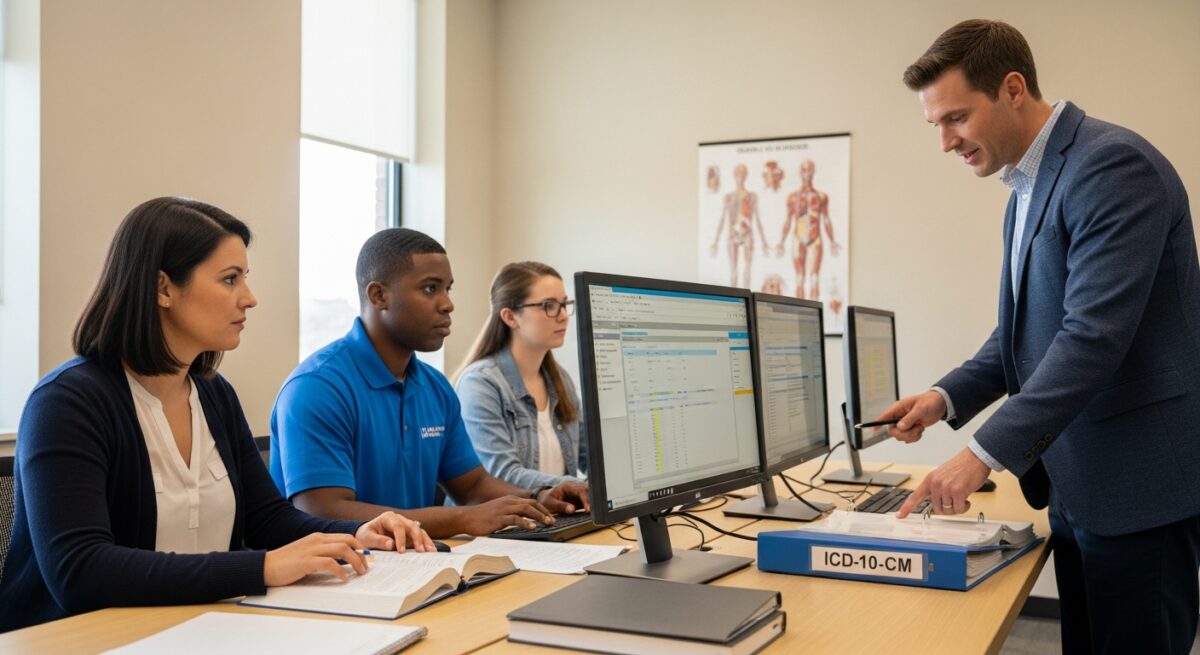
Healthcare administration is one of the fastest-growing fields in the United States, and at its core lies a critical function: translating patient care into standardized codes for insurance reimbursement. For anyone seeking a stable, well-paying career without the years of medical school, understanding medical billing and coding certification programs is the first step. These programs train professionals to assign diagnostic and procedural codes, submit claims to insurers, and ensure healthcare providers get paid accurately and on time. With the Bureau of Labor Statistics projecting 9 percent growth for medical records specialists through 2032, the demand for certified coders is strong. But not all training paths are equal. Choosing the right certification program can mean the difference between a job that pays $40,000 a year and one that pays $70,000 or more.
This article breaks down exactly what these programs cover, how to choose between them, and what you need to know about accreditation, costs, and career outcomes. Whether you are a career changer, a recent high school graduate, or a working parent looking for flexible online options, you will find a clear roadmap here. For a broader look at how healthcare credentials fit into your overall education plan, you can explore our guide on Medical Billing Certification Programs Explained to see how different certifications compare. By the end of this article, you will have the knowledge to select a program that fits your goals and budget.
What Are Medical Billing and Coding Certification Programs?
Medical billing and coding certification programs are structured educational tracks that prepare students to work as medical coders, billers, or health information technicians. These programs teach the official coding systems used in healthcare, primarily ICD-10-CM (International Classification of Diseases, 10th Revision, Clinical Modification), CPT (Current Procedural Terminology), and HCPCS Level II (Healthcare Common Procedure Coding System). Students learn to read clinical documentation from doctors and nurses, translate diagnoses and procedures into alphanumeric codes, and submit clean claims to insurance companies including Medicare, Medicaid, and private payers.
Programs vary widely in length, cost, and delivery format. Certificate programs can be completed in as little as four to six months of full-time study. Associate degree programs typically take two years and include general education courses alongside coding-specific classes. Diploma programs fall somewhere in between, often taking nine to twelve months. Most programs culminate in a credential that qualifies the graduate to sit for a national certification exam, which is what employers actually require for hiring. The distinction between program completion and certification is crucial: finishing a program gives you knowledge, but passing an exam from a recognized organization like the American Academy of Professional Coders (AAPC) or the American Health Information Management Association (AHIMA) gives you the certified billing and coding certification that employers demand.
Key Coding Systems You Will Learn
Every reputable program covers three main code sets. First, ICD-10-CM codes describe diagnoses: for example, E11.9 means Type 2 diabetes without complications. Second, CPT codes describe medical procedures and services, such as 99213 for an established patient office visit. Third, HCPCS Level II codes cover supplies, equipment, and services not included in CPT, like ambulance rides or prosthetic devices. Mastery of these systems requires attention to detail, because a single wrong character can cause a claim denial or even trigger a fraud investigation. Good programs emphasize real-world scenarios and give students practice with actual medical records.
Accredited Billing and Coding Certification: Why It Matters
Accreditation is the single most important factor when choosing a program. An accredited billing and coding certification program has been reviewed by an independent agency to ensure it meets quality standards. For medical coding, the gold standard is accreditation from the Commission on Accreditation for Health Informatics and Information Management Education (CAHIIM) for associate degree programs, or from a recognized body like the AAPC for certificate programs. Attending an accredited program protects your investment in several ways. First, it ensures the curriculum is current with industry standards and HIPAA regulations. Second, it makes you eligible to sit for the most respected certification exams, such as the Certified Professional Coder (CPC) or Certified Coding Specialist (CCS). Third, it signals to employers that you received rigorous training.
Without accreditation, you risk graduating from a program that does not prepare you for the exam or that employers do not recognize. This can leave you with student debt and no job prospects. Always verify a school’s accreditation status before enrolling. The U.S. Department of Education maintains a database of accredited institutions, and professional organizations like AHIMA and AAPC publish lists of approved programs. Do not rely solely on a school’s website; check with the accrediting body directly. For example, if a program claims to be “AAPC-approved,” you can confirm this on the AAPC website. This due diligence separates successful career changers from those who waste time and money on subpar training.
Types of Certification Programs: Certificate vs. Associate Degree
Prospective students face a fundamental choice between certificate programs and associate degree programs. Each has distinct advantages depending on your timeline, budget, and career ambitions. Certificate programs are the fastest route into the field. They focus exclusively on coding and billing coursework, with no general education requirements. Most can be completed online in four to eight months, and they cost significantly less than a degree, often between $1,000 and $5,000 total. These programs are ideal for career changers who already hold a bachelor’s degree in another field or for individuals who want to start working quickly. Graduates typically earn entry-level positions as medical coders or billing specialists, with median salaries around $48,000 per year.
Associate degree programs in health information management or medical coding take two years and include general education classes in English, math, and social sciences. They cost more, typically $10,000 to $30,000, but they offer broader career mobility. Graduates can qualify for supervisory roles, hospital coding positions, or jobs in health data analytics. An associate degree also provides a foundation for pursuing a bachelor’s degree later, which can open doors to management or consulting roles. For students who are certain they want to advance beyond entry-level coding, the associate degree is the better long-term investment. However, for those who need to start earning quickly, a certificate from an accredited program followed by national certification is a proven path.
How to Choose the Right Program: A Step-by-Step Framework
Selecting a medical billing and coding certification program requires careful evaluation. Use this five-step framework to make an informed decision.
- Verify accreditation first. Check the program against CAHIIM, AAPC, or AHIMA lists. If a program is not accredited by one of these bodies, eliminate it from consideration unless you have a very specific reason to choose it.
- Compare exam pass rates. Reputable programs publish their graduates’ pass rates on national certification exams. A pass rate above 80 percent is a strong indicator of quality. Ask for this data directly if it is not on the website.
- Review the curriculum for hands-on practice. Look for courses that include coding exercises with real medical records, not just textbook theory. The best programs incorporate at least 40 to 60 hours of practical coding labs.
- Evaluate cost versus value. Include tuition, fees, books, software, and exam fees in your total. A $3,000 certificate from a community college may be better value than a $1,500 online program with hidden costs and no accreditation.
- Check job placement assistance. Ask about career services, internship partnerships, and employer relationships. Programs that connect graduates with local hospitals, clinics, or billing companies dramatically shorten the job search.
Following this framework reduces the risk of choosing a program that does not deliver. Remember that the goal is not just to complete a course but to earn a billing and coding accreditation that employers trust. Invest the time upfront to research, and you will save months of frustration later.
Online vs. On-Campus Programs: Pros and Cons
The rise of remote work has made online medical coding programs extremely popular. Many students prefer the flexibility of self-paced online courses, especially those balancing jobs or family responsibilities. Online programs from accredited institutions are just as valid as on-campus programs, provided they offer robust support, including instructor access, coding labs, and exam preparation. The key advantage of online learning is convenience: you can study at any time, from anywhere, and often complete the program faster. However, online programs require strong self-discipline. Without a structured classroom environment, some students fall behind.
On-campus programs offer face-to-face interaction with instructors and peers, which can be valuable for students who learn best in a collaborative setting. They also provide access to campus resources like tutoring centers and career fairs. The downside is less flexibility: you must attend classes at scheduled times, which may conflict with work or childcare. On-campus programs are also limited geographically, whereas online programs let you choose from schools across the country. For most adult learners today, an accredited online program is the practical choice, but it is worth visiting a local community college to see if their program aligns with your learning style. Whichever format you choose, confirm that the program prepares you for the same national certification exams.
Cost and Financial Aid Considerations
The cost of medical billing and coding certification programs ranges from under $1,000 for a self-paced online certificate to over $30,000 for an associate degree from a private college. Community college certificate programs often cost between $2,000 and $5,000, making them the most affordable option. Many schools offer payment plans, and some employers offer tuition reimbursement for employees pursuing healthcare credentials. Federal financial aid is available for accredited programs at Title IV-eligible institutions, which typically include community colleges and universities. Certificate programs may qualify for Pell Grants if they are offered by an accredited college and meet certain clock-hour requirements.
Before enrolling, create a budget that includes the following: tuition and fees, textbooks and coding manuals, software subscriptions for practice coding, and the cost of the certification exam itself, which ranges from $300 to $500. Some programs bundle the exam fee into tuition. Also factor in the opportunity cost of time spent studying versus working. For many students, the quick turnaround of a certificate program minimizes lost income. A strategic approach is to start with an affordable accredited program, pass the CPC exam, gain two years of experience, and then have an employer help pay for further education. This pay-as-you-go model works well in the medical coding field.
Career Outlook and Salary Expectations
Certified medical coders and billers enjoy strong job security and competitive pay. According to the AAPC, the average salary for a certified coder in 2025 is approximately $60,000 per year, with top earners in metropolitan areas and specialized roles exceeding $80,000. Entry-level positions typically start around $40,000 to $45,000, but salaries rise quickly with experience and additional certifications. Coders who earn credentials in specialty areas such as outpatient coding, inpatient coding, or risk adjustment coding can command higher rates. Remote coding positions are increasingly common, offering flexibility that many other healthcare roles do not.
Employment settings include hospitals, physician practices, outpatient clinics, nursing homes, home health agencies, and insurance companies. Some coders work as independent contractors, setting their own schedules and rates. The field also offers clear advancement paths: a certified coder can move into auditing, compliance, coding education, or health information management. With an associate degree and five years of experience, some professionals become coding managers overseeing teams of coders. For those who enjoy detail-oriented work and want a career that combines healthcare, data, and finance, medical billing and coding is a smart choice.
Frequently Asked Questions
What is the difference between medical billing and medical coding?
Medical coding involves translating clinical documentation into standardized codes. Medical billing uses those codes to create and submit insurance claims, follow up on payments, and handle denials. Many professionals do both, and certification programs cover both skills.
Do I need a certification to get a job?
Most employers require a national certification, such as the CPC or CCS, for hiring. While it is possible to find entry-level work without certification, the best jobs and higher pay go to certified professionals. Certification demonstrates competence and commitment.
How long does it take to become certified?
If you attend a full-time certificate program, you can complete the coursework in four to six months. After that, you need to pass the certification exam, which adds a few weeks of preparation. Total time from start to certification is typically six to nine months.
Can I complete a program entirely online?
Yes, many accredited programs are fully online. Ensure the program includes interactive coding exercises and instructor support. Online programs from regionally accredited colleges are widely accepted by employers.
Is medical coding a good career for someone with no healthcare experience?
Yes. The field is designed for career changers. Programs assume no prior medical knowledge and teach everything from anatomy to coding guidelines. Strong attention to detail and basic computer skills are more important than healthcare experience.
Your Next Step Toward a Certified Career
Medical billing and coding certification programs offer a direct, affordable path into a growing healthcare career. By choosing an accredited program that prepares you for a recognized certification, you position yourself for stable employment, competitive pay, and opportunities for advancement. The key is to start with a clear plan: research programs that fit your budget and schedule, verify their accreditation, and commit to passing the national exam. Whether you choose a fast certificate or a comprehensive associate degree, the investment pays off. For more guidance on comparing programs and finding schools that match your needs, explore the resources at DegreesOnline.Education to see how online learning can fit your life. Take the first step today, and within a year you could be working as a certified medical coder, helping healthcare providers get paid while building a career you can count on.