
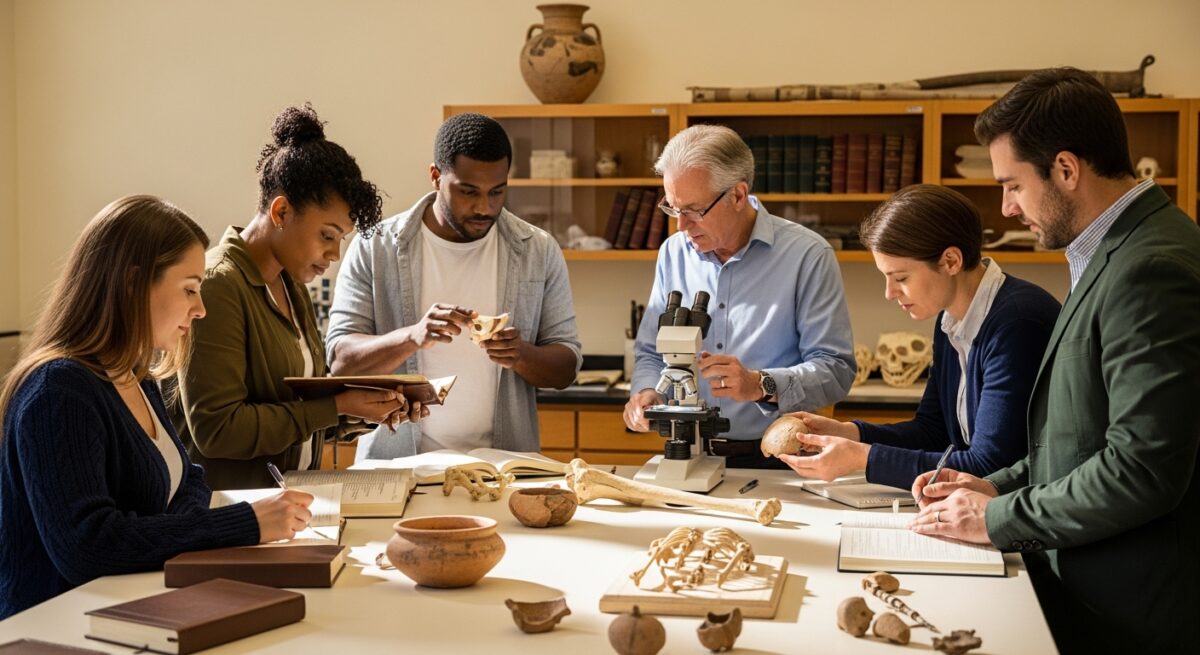
Anthropology is the study of humanity across time and space. It examines cultures, languages, biological evolution, and material remains to understand what it means to be human. A master’s degree in this field opens doors to careers in research, education, public policy, healthcare, and corporate settings. Yet many prospective students wonder whether an advanced degree in anthropology is practical or whether it leads only to academia. The truth is that a masters in anthropology offers versatile career paths and rigorous coursework that prepare graduates for diverse roles in a changing world. This article explores the structure of anthropology graduate degree programs, the specializations available, and the concrete career opportunities that await graduates.
Whether you are a recent undergraduate or a working professional considering a career shift, understanding the full scope of an anthropology masters program is essential. The following sections break down the core components of these programs, the skills you will develop, and how you can apply them in real-world settings. By the end, you will have a clear picture of what to expect and how to leverage your degree for long-term success.
Core Coursework in a Masters in Anthropology Program
Most anthropology masters programs require students to complete a foundation of core courses before specializing. These core classes typically cover the four main subfields of anthropology: cultural anthropology, biological anthropology, archaeology, and linguistic anthropology. Students also take courses in research methods, statistics, and ethnographic fieldwork. The goal is to build a strong theoretical and methodological base that supports advanced study and professional practice.
In a typical anthropology masters program, you might take courses such as Anthropological Theory, Research Design and Methods, Cultural Ecology, Human Osteology, or Applied Anthropology. Many programs also require a capstone project, thesis, or comprehensive exam. The thesis option is common for students planning to pursue a PhD, while the capstone or applied project suits those entering the workforce directly. Coursework emphasizes critical thinking, cross-cultural analysis, and ethical research practices. These skills are highly transferable to many industries.
Specializations and Electives
After completing core requirements, students choose electives that align with their career goals. Common specializations include medical anthropology, environmental anthropology, forensic anthropology, museum studies, and cultural resource management. Each specialization has its own set of required courses and practical experiences. For example, a student focusing on medical anthropology might take courses in global health, epidemiology, and health disparities. A forensic anthropology track might include human skeletal analysis, crime scene investigation, and legal ethics.
Electives allow students to tailor their degree to specific interests. Some programs offer interdisciplinary options, such as courses in public health, sociology, geography, or international development. This flexibility is one of the strengths of an anthropology graduate degree. It enables graduates to adapt to a variety of professional contexts, from non-profit organizations to government agencies to private corporations.
Career Paths for Anthropology Masters Graduates
Graduates with a masters in anthropology pursue careers in many sectors. The skills gained through coursework and fieldwork are valuable in settings that require cultural sensitivity, data analysis, and problem-solving. Below are some of the most common and rewarding career paths.
Before exploring specific roles, it is helpful to understand the broad categories of employment. Anthropologists work in academia, government, non-profit organizations, private industry, and healthcare. Each sector offers different opportunities for specialization and advancement. The key is to match your interests and skills with the right environment.
Academic and Research Positions
Some graduates choose to stay in academia, teaching at community colleges or universities, or working as research assistants on funded projects. A master’s degree qualifies you for instructor or lecturer positions at many institutions, especially those focused on undergraduate education. Research roles may involve working on archaeological digs, ethnographic studies, or laboratory analysis. While a PhD is often required for tenure-track faculty positions, a master’s degree can lead to fulfilling careers in academic support, museum curation, or research coordination.
Government and Public Sector Careers
Government agencies at the federal, state, and local levels employ anthropologists in various capacities. The U.S. Bureau of Labor Statistics notes that anthropologists and archaeologists work for agencies such as the National Park Service, the Smithsonian Institution, the Department of Defense, and the Centers for Disease Control and Prevention. Roles include cultural resource management, policy analysis, program evaluation, and community outreach. Government jobs often offer stability, benefits, and the opportunity to contribute to public service.
Non-Profit and International Development
Non-governmental organizations (NGOs) and international development agencies value anthropologists for their ability to understand local cultures and design effective programs. Graduates may work on projects related to poverty alleviation, public health, education, human rights, or environmental conservation. Positions include program manager, monitoring and evaluation specialist, advocacy coordinator, and field researcher. These roles often require travel or extended stays in communities abroad.
Private Sector and Corporate Anthropology
Corporations increasingly hire anthropologists to improve user experience, market research, and organizational culture. Tech companies, design firms, and consulting agencies seek professionals who can conduct ethnographic research to understand consumer behavior or employee dynamics. Titles include user experience (UX) researcher, market research analyst, design strategist, and organizational development consultant. The private sector offers competitive salaries and opportunities for rapid advancement.
For example, a UX researcher at a major tech company might use ethnographic methods to observe how people interact with a new app, then recommend design changes. This application of anthropological training is growing rapidly, making an anthropology masters program a strong foundation for a career in tech or consulting. If you are interested in how a similar degree can open doors in international affairs, our guide on International Affairs Major: Career Paths and Coursework offers additional perspective on cross-disciplinary opportunities.
Healthcare and Medical Anthropology
Medical anthropologists work in hospitals, public health departments, research institutes, and global health organizations. They study how cultural beliefs and social structures affect health outcomes, access to care, and treatment adherence. Roles include health educator, research coordinator, cultural competency trainer, and policy advisor. With the growing emphasis on health equity, demand for medical anthropologists is expected to increase.
Skills Developed in an Anthropology Masters Program
Beyond specific career paths, an anthropology graduate degree cultivates a set of transferable skills that employers value across industries. These skills are often the deciding factor in hiring decisions.
- Cross-cultural competence: The ability to understand and navigate different cultural contexts is crucial in globalized workplaces.
- Qualitative and quantitative research methods: Graduates know how to design studies, collect data, conduct interviews, and analyze results.
- Critical thinking and analytical reasoning: Anthropology training emphasizes questioning assumptions and evaluating evidence from multiple perspectives.
- Written and oral communication: Students produce detailed reports, grant proposals, and presentations, honing their ability to convey complex ideas clearly.
- Ethical decision-making: Anthropology programs stress ethical research practices and respect for human subjects, preparing graduates to handle sensitive issues responsibly.
These skills make anthropology graduates adaptable to many roles. Whether you are managing a project, advising a policy team, or designing a product, the ability to think anthropologically is a distinct advantage. Employers in fields such as human resources, marketing, and data analysis increasingly seek candidates with this background.
Salary Expectations and Job Outlook
According to the U.S. Bureau of Labor Statistics, the median annual wage for anthropologists and archaeologists was $63,800 in 2023. However, salaries vary widely by sector and location. Corporate anthropologists and UX researchers often earn higher salaries, sometimes exceeding $100,000 per year in major tech hubs. Government and non-profit roles tend to pay less but offer other benefits such as loan forgiveness programs and retirement plans.
The job outlook for anthropologists is projected to grow 4 percent from 2022 to 2032, about as fast as the average for all occupations. Demand will be driven by the need for cultural expertise in areas like public health, international development, and user experience research. Graduates with a master’s degree and practical fieldwork experience will have the best prospects.
Frequently Asked Questions
Can I work outside academia with a masters in anthropology?
Yes. Many graduates work in government, non-profits, healthcare, and the private sector. The skills you gain are applicable to a wide range of careers that require research, analysis, and cultural understanding.
Is a PhD necessary for a career in anthropology?
Not always. A master’s degree qualifies you for many professional roles. A PhD is typically required only for tenure-track academic positions or certain high-level research jobs.
How long does it take to complete a masters in anthropology?
Most full-time programs take two years. Part-time options may take three to four years. Some accelerated programs can be completed in 12 to 18 months.
What are the admission requirements for an anthropology masters program?
Requirements vary but typically include a bachelor’s degree, transcripts, letters of recommendation, a statement of purpose, and GRE scores (though many programs now waive the GRE). Relevant coursework or fieldwork experience is often preferred.
Can I pursue an anthropology master’s degree online?
Yes. Many accredited universities offer online or hybrid programs. These options provide flexibility for working professionals. When choosing a program, ensure it is accredited and recognized by employers in your target field. For help finding accredited programs that match your needs, explore the matching service at CollegeDegree.School.
Final Thoughts
A masters in anthropology is a versatile degree that prepares you for meaningful work in a variety of settings. The coursework builds a strong foundation in research, analysis, and cultural understanding. The career paths are diverse, ranging from academia to corporate innovation. By choosing a specialization that aligns with your interests and gaining practical experience through internships or fieldwork, you can position yourself for a rewarding career. Whether you want to improve public health, preserve cultural heritage, or design better technology, an anthropology graduate degree provides the tools and perspective to make a difference.