
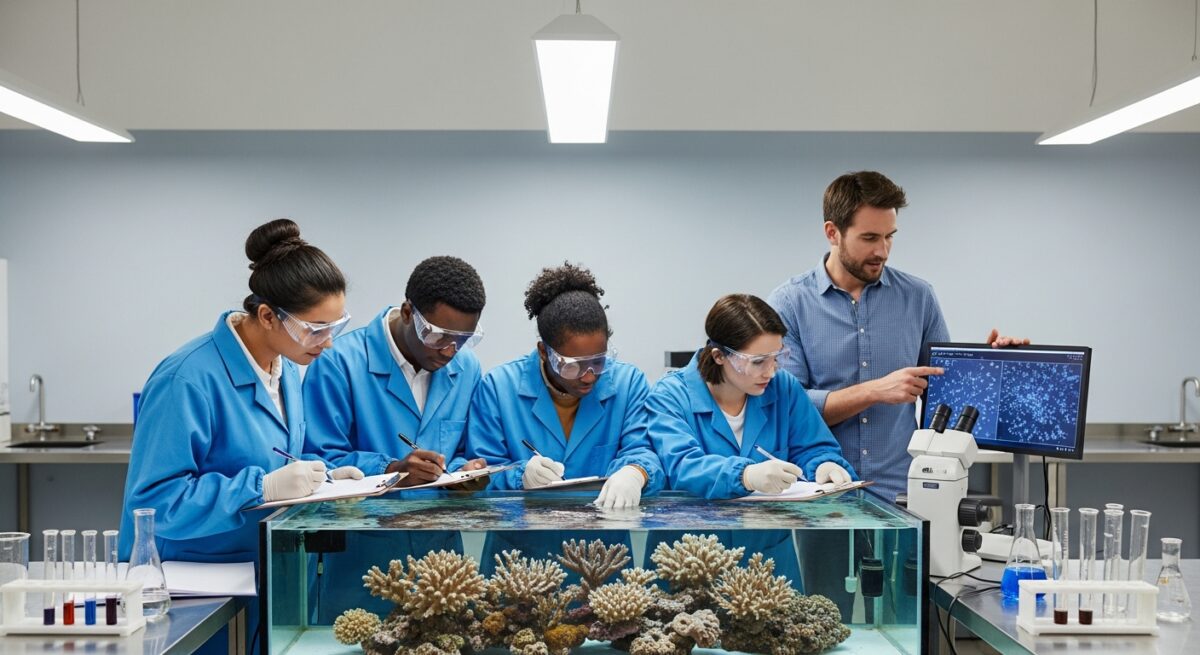
The ocean covers more than 70 percent of our planet, yet we have explored only a fraction of its depths. For those drawn to the mysteries of marine life, a marine biology degree opens the door to a career that combines scientific discovery with environmental stewardship. This field offers a unique blend of laboratory research, fieldwork, and data analysis. Whether you dream of studying coral reefs, tracking whale migrations, or developing sustainable fisheries, understanding the career scope and coursework of this degree is the first step. This article breaks down what you will study, where it can lead, and how to navigate your educational journey.
What Is a Marine Biology Degree?
A marine biology degree is an undergraduate or graduate program that focuses on the study of organisms living in saltwater environments. It is a specialized branch of biology that draws on chemistry, physics, oceanography, and ecology. Students learn how marine organisms interact with each other and their environment. They also explore the effects of human activity on ocean ecosystems.
Most programs offer a Bachelor of Science (BS) in Marine Biology or a related field such as Ocean Science or Marine Science. Some universities offer a marine biology major within a broader biology department. Others have dedicated schools of marine and atmospheric sciences. Graduate degrees, including master’s and PhD programs, allow for deeper specialization in areas like marine mammalogy, ichthyology (fish biology), or marine conservation biology.
Core Coursework in a Marine Biology Program
The curriculum for a marine biology major is rigorous and interdisciplinary. It builds a strong foundation in the natural sciences before moving into specialized marine topics. Below are the typical course categories you will encounter.
Foundation Sciences
Every marine biology program begins with introductory biology, general chemistry, and physics. These courses provide the basic language of science. You will also take calculus or statistics, as quantitative skills are essential for analyzing population data and experimental results. Organic chemistry is often required, especially for students interested in biochemical or physiological research.
Oceanography and Earth Systems
Understanding the ocean requires knowledge of its physical and chemical properties. Courses in physical oceanography cover currents, tides, and water masses. Chemical oceanography explores nutrient cycles, salinity, and ocean acidification. Geological oceanography examines seafloor structures and sediment processes. These classes help marine biologists understand the habitat in which marine organisms live.
Marine Biology Core
The heart of the major includes courses such as:
- Marine Ecology This course examines interactions among marine organisms and their environment, including predator-prey dynamics, competition, and symbiotic relationships.
- Marine Physiology Students learn how marine animals and plants function in high-salinity, high-pressure, and often cold environments.
- Marine Conservation Biology This course addresses threats like overfishing, habitat destruction, and climate change, and explores strategies for protecting marine biodiversity.
- Invertebrate Zoology Because most marine animals are invertebrates, this course is a staple. It covers sponges, corals, mollusks, crustaceans, and echinoderms.
- Vertebrate Marine Biology This course focuses on fish, sea turtles, seabirds, and marine mammals.
Many programs also require a field-intensive course where students spend weeks at a marine laboratory or on a research vessel. These experiences are critical for developing hands-on skills in species identification, water sampling, and data collection.
Advanced Electives and Research
Upper-level students can choose electives that match their interests. Options might include marine genomics, fisheries science, aquaculture, marine toxicology, or polar biology. Most bachelor’s programs also require a capstone research project or senior thesis. This project gives students the chance to design an experiment, analyze data, and present findings. It is excellent preparation for graduate school or a research technician role.
For those considering further study, a master’s or PhD program involves even more specialized coursework and a substantial original research dissertation. Graduate students often work closely with a faculty advisor on projects funded by grants from organizations like the National Science Foundation or NOAA.
Marine Biology Degree Career Scope
The career scope for marine biology graduates is broader than many people assume. While the iconic image is a scientist diving on a coral reef, the reality includes many roles in government, industry, education, and non-profit organizations. The U.S. Bureau of Labor Statistics groups marine biologists under the broader category of zoologists and wildlife biologists. Employment in this field is projected to grow about 4 percent from 2023 to 2033, which is about average. Competition for research and academic positions is strong, but opportunities in environmental consulting and renewable energy are expanding.
Research and Academia
Many marine biologists work in universities, research institutes, or government agencies like the National Oceanic and Atmospheric Administration (NOAA) or the U.S. Fish and Wildlife Service. Research positions often require a graduate degree. A master’s degree qualifies you for research technician roles, while a PhD is needed for lead investigator or tenure-track professor positions. Research topics range from climate change impacts on coral bleaching to the behavior of deep-sea fish.
Conservation and Policy
Non-profit organizations such as the World Wildlife Fund, Oceana, and The Nature Conservancy hire marine biologists to advocate for marine protected areas, sustainable fisheries, and pollution reduction. These roles often involve public education, policy analysis, and collaboration with local communities. Government agencies also employ marine biologists to enforce environmental regulations and conduct impact assessments for coastal development projects.
Aquaculture and Fisheries Management
With global demand for seafood rising, aquaculture is a growing field. Marine biologists work in fish hatcheries, shellfish farms, and seaweed cultivation operations. They help improve breeding programs, monitor water quality, and develop sustainable feed. Fisheries management roles involve setting catch limits, assessing fish stocks, and creating regulations that balance economic needs with conservation.
Environmental Consulting
Private consulting firms hire marine biologists to conduct environmental impact studies for coastal construction, offshore energy projects, and shipping ports. These professionals assess potential harm to marine habitats and recommend mitigation measures. This sector offers stable employment and often provides opportunities for fieldwork along coastlines.
Education and Outreach
Aquariums, museums, and science centers employ marine biologists as educators and exhibit designers. These roles involve creating programs for school groups, giving public lectures, and caring for live animals. Science communication is another path, where biologists write articles, produce videos, or work as on-air experts for nature documentaries.
Skills You Gain from a Marine Biology Major
Beyond specific scientific knowledge, a marine biology degree develops transferable skills valuable in many careers. You will learn to design experiments, use statistical software like R or Python, and write clear research reports. Fieldwork teaches problem-solving under unpredictable conditions, such as bad weather or equipment failure. You will also develop strong teamwork skills, as marine research often involves collaboration with divers, boat captains, and other scientists.
Communication is another key skill. Marine biologists regularly present findings at conferences, write grant proposals, and explain complex issues to the public or policymakers. These abilities make graduates attractive candidates for jobs in data analysis, environmental law, and science policy.
Online and Alternative Pathways
Not everyone can attend a traditional four-year university with a marine lab on the coast. Fortunately, many accredited institutions now offer online degrees in marine biology or related fields. An online bachelor’s degree in biology with a marine concentration can be a flexible and affordable option. Some programs combine online coursework with short, intensive field sessions at a coastal research station. For working adults or those with family obligations, this hybrid model provides access to a marine biology education without relocating.
If you are exploring online options, you may also find value in our guide on HR Bachelor Degree: Career Scope and Coursework. While that article focuses on human resources, the principles of choosing an accredited program and understanding career outcomes apply across fields. For marine biology specifically, ensure that any online program you consider includes hands-on lab or field components, as these are critical for developing practical skills and meeting graduate school prerequisites.
For those seeking a more direct path, some community colleges offer associate degrees in marine technology or oceanography that can transfer to a four-year university. This can be a cost-effective way to complete general education requirements before diving into upper-level marine science courses.
Additionally, if you are still deciding on the right educational match, you can explore resources at CollegeDegree.School to compare accredited programs and find options that fit your schedule and budget.
Frequently Asked Questions
Is a marine biology degree hard?
Yes, it is academically demanding. The curriculum requires strong skills in chemistry, physics, and mathematics. However, students who are passionate about marine life and willing to work hard can succeed. Many programs offer tutoring and study groups to support students through challenging courses.
Can I get a marine biology job with only a bachelor’s degree?
Yes, but entry-level positions are more common in government agencies and private consulting than in academic research. Jobs like fisheries technician, environmental technician, or aquarium educator are accessible with a bachelor’s. For higher-level research or teaching roles, a graduate degree is typically required.
What is the average salary for a marine biologist?
According to the U.S. Bureau of Labor Statistics, the median annual wage for zoologists and wildlife biologists was about $70,000 in 2023. Salaries vary by employer and location. Federal government positions tend to pay more, while non-profit and educational roles may offer lower starting salaries but greater job satisfaction and benefits.
Do I need to be a good swimmer to study marine biology?
Not necessarily. Many marine biologists rarely dive. They may work in labs analyzing DNA samples, at a desk modeling fish populations, or on a boat collecting water samples. However, strong swimming skills are helpful for field courses and some research positions. Scuba certification is a plus but not always required.
Can I study marine biology online?
Yes, several accredited universities offer online bachelor’s degrees in biology with a marine science concentration. These programs often require a short on-campus or field residency. Online graduate certificates in marine biology are also available for professionals looking to specialize.
Final Thoughts
A marine biology degree offers a rewarding path for those who are curious about ocean life and committed to protecting it. The coursework is challenging but builds a strong scientific foundation. The career scope is diverse, ranging from hands-on fieldwork to policy and education. Whether you choose a traditional campus program or an online degree, the key is to seek hands-on experience through internships, volunteer work, or research projects. By connecting with accredited programs and leveraging resources like CollegeDegree.Education, you can find the right educational fit and launch a career that makes a difference for our oceans.