
How to Earn an Associate Degree in Nursing in Michigan
Launch your nursing career in Michigan with an Associate Degree in Nursing, the fastest path to becoming a licensed RN and entering the high-demand healthcare field.

By Lucas Lucas
For many aspiring healthcare professionals in the Great Lakes State, the most direct and efficient path to becoming a Registered Nurse (RN) is through an Associate Degree in Nursing (ADN) program. These programs, offered at community colleges and select universities across Michigan, provide a focused, practical education designed to prepare students for the NCLEX-RN licensure exam and entry-level nursing practice in approximately two years. With a significant and ongoing demand for nurses in Michigan’s hospitals, clinics, and long-term care facilities, an ADN represents a strategic and accessible career investment. This guide will navigate the essential steps, program options, and critical considerations for pursuing your nursing education in Michigan.
Understanding the ADN Pathway in Michigan
An Associate of Applied Science in Nursing (AAS) or Associate Degree in Nursing (ADN) is a two-year, college-level program that blends classroom instruction in sciences and nursing theory with hands-on clinical rotations in healthcare settings. The primary objective is to equip graduates with the competencies required to pass the National Council Licensure Examination for Registered Nurses (NCLEX-RN) and to deliver safe, effective patient care. In Michigan, as in all states, you must pass the NCLEX-RN to obtain your license from the Michigan Board of Nursing, which operates under the Michigan Department of Licensing and Regulatory Affairs (LARA). The ADN pathway is particularly appealing for its shorter timeline and lower upfront cost compared to a four-year Bachelor of Science in Nursing (BSN), allowing students to enter the workforce and start earning a nursing salary sooner.
It is important to understand the conversation around “BSN in 10” initiatives and hospital preferences for BSN-prepared nurses. While an ADN grants full RN licensure and qualifies you for most staff nurse positions, some healthcare systems, especially large metropolitan hospitals, may express a preference for or require a BSN for certain roles or career advancement. However, the ADN remains a vital and respected entry point. Many Michigan RNs start with an ADN, gain valuable experience, and then pursue an RN-to-BSN completion program online while working, often with employer tuition assistance. This flexible approach to nursing career advancement is a common and smart strategy for long-term growth.
Key Steps to Enroll in a Michigan ADN Program
The journey to becoming an RN through an ADN program requires careful planning and meeting specific prerequisites. Admission to these programs is often competitive, with limited seats available each year.
First, research and identify accredited programs. Accreditation, particularly from the Accreditation Commission for Education in Nursing (ACEN) or the Commission on Collegiate Nursing Education (CCNE), is non-negotiable. It ensures the program meets quality standards and is a prerequisite for taking the NCLEX-RN and for transferring credits later. Next, you must fulfill the program’s admission requirements. While these vary, a typical set includes:
- A high school diploma or GED.
- Completion of prerequisite courses with a minimum grade, often a “B” or better. Common prerequisites include Anatomy & Physiology I & II, Microbiology, English Composition, and Psychology.
- A minimum cumulative GPA, often between 2.5 and 3.0 on previous college work.
- Satisfactory scores on a pre-admission exam, such as the TEAS (Test of Essential Academic Skills).
- Current CPR certification for healthcare providers.
- Passing a criminal background check and drug screen.
After gathering your transcripts and test scores, submit your application before the deadline, which may be up to a year before the program start date. Many programs use a point system based on GPA, TEAS scores, and sometimes healthcare experience. Once accepted, you will need to complete health immunization records and may need to obtain a Certified Nurse Aide (CNA) license before starting clinicals. Diligent financial planning is also crucial. Exploring federal aid (FAFSA), Michigan-specific grants, scholarships from the Michigan Nurses Foundation, and employer reimbursement programs can make education more affordable. For comprehensive college degree guidance on comparing costs and aid options, dedicated resources can be invaluable.
Top Considerations for Choosing Your ADN Program
Not all ADN programs are created equal. Selecting the right school involves evaluating several factors beyond basic accreditation. One of the most critical metrics is the program’s NCLEX-RN first-time pass rate. The Michigan Board of Nursing publishes these rates for all pre-licensure programs. Consistently high pass rates (e.g., above 85-90%) strongly indicate a program’s effectiveness in preparing students for the licensing exam. You should also investigate the program’s graduation rate and job placement statistics for graduates.
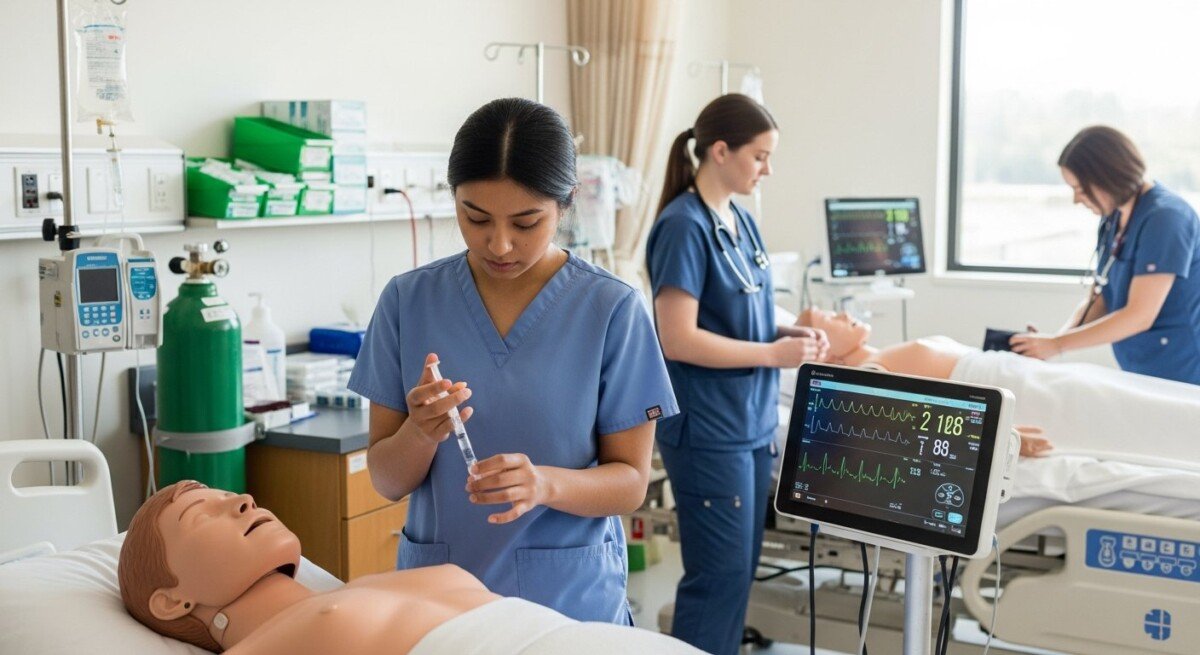
The structure and logistics of the program are equally important. Determine if the program is offered in a traditional on-campus format, a hybrid model with online theory courses, or as a full-time or part-time track. Consider the location of clinical rotation sites. Programs with partnerships at a variety of clinical sites (hospitals, community clinics, specialty units) provide broader experience. Furthermore, assess the support services offered, such as dedicated nursing academic advisors, tutoring, NCLEX-RN prep resources, and career placement assistance. The quality of the skills labs and simulation technology can also greatly enhance your learning experience before you enter a real clinical environment.
Career Outlook and Advancement for ADN Nurses in Michigan
The career outlook for Registered Nurses in Michigan is robust. The U.S. Bureau of Labor Statistics projects steady growth for RNs nationwide, and Michigan’s aging population and evolving healthcare needs reinforce strong demand. ADN-prepared RNs in Michigan find employment in diverse settings including hospitals (medical-surgical, emergency, operating rooms), long-term care facilities, physicians’ offices, home healthcare services, and outpatient clinics. Entry-level salaries vary by region and setting, but RNs in Michigan earn competitive wages that provide a solid return on the educational investment of an ADN.
Career advancement is a key part of the professional journey. While an ADN opens the door, many nurses choose to continue their education to unlock opportunities in leadership, specialization, education, and advanced practice. Michigan boasts numerous RN-to-BSN and RN-to-MSN bridge programs, many designed for working nurses with fully online coursework. Specializing through certification in areas like critical care, pediatrics, or oncology is another path for advancement. Furthermore, with experience, ADN RNs can move into charge nurse roles, unit coordinators, or other supervisory positions within clinical settings. The ADN is not a dead end, but a powerful launchpad for a dynamic and rewarding career in Michigan’s vital healthcare sector.
Frequently Asked Questions
How long does it take to complete an ADN program in Michigan?
Most traditional, full-time ADN programs are designed to be completed in two years (four to five semesters). This timeframe assumes the student has already completed any required prerequisite courses. Part-time options may extend the timeline to three or more years.
Can I complete an ADN program online in Michigan?
While the core nursing theory courses are increasingly offered online in hybrid programs, the clinical training component cannot be completed online. You must attend in-person clinical rotations at approved healthcare facilities. Therefore, fully online ADN programs are not available, but hybrid formats with online coursework do exist.
What is the approximate cost of an ADN program in Michigan?
Costs vary significantly between community colleges and private institutions. At a Michigan community college, total tuition and fees for an in-district student can range from approximately $10,000 to $18,000. Private colleges may cost $25,000 to $40,000 or more. These estimates do not include books, supplies, uniforms, or pre-admission expenses.
Is there a waiting list for Michigan ADN programs?
Due to high demand and limited clinical placement slots, many Michigan ADN programs have competitive admission and may utilize waiting lists. However, an increasing number of programs use a selective admission points system based on grades and test scores rather than a first-come, first-served waitlist. It is essential to apply early and strive for strong academic performance in prerequisites.
What if I already have a bachelor’s degree in another field?
Individuals with a non-nursing bachelor’s degree may consider an Accelerated Bachelor of Science in Nursing (ABSN) program, which is a faster route to a BSN. However, if seeking the quickest path to RN licensure, a second-degree ADN program might still be an option, though less common. Comparing the total time and cost of an ABSN versus an ADN followed by an RN-to-BSN is advisable.
Pursuing an Associate Degree in Nursing in Michigan is a decisive step toward a stable and fulfilling career. By methodically researching accredited programs, meeting prerequisites head-on, and planning for both immediate licensure and lifelong learning, you can successfully navigate this proven educational pathway. The need for skilled, compassionate nurses in Michigan’s communities has never been greater, and an ADN provides the foundational skills to answer that call and build a lasting professional future.