
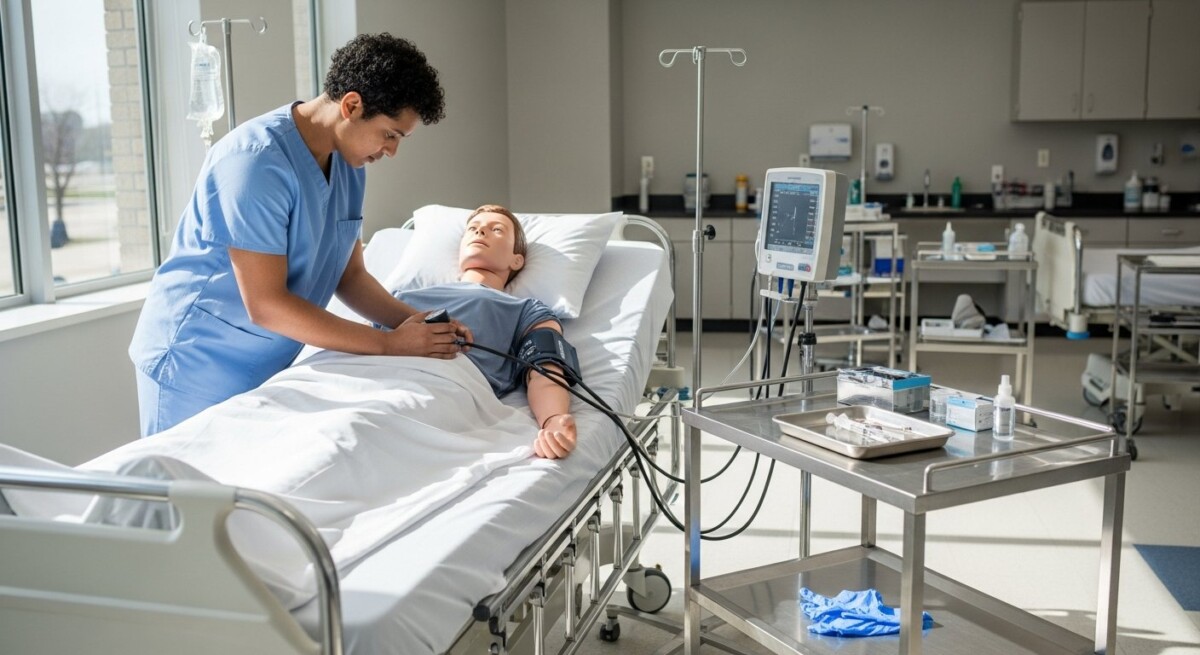
For many aspiring nurses in the Hawkeye State, the most direct and efficient path to a rewarding healthcare career begins with an Associate Degree in Nursing (ADN). This focused, typically two-year program provides the essential clinical skills and theoretical knowledge required to sit for the NCLEX-RN licensure exam and begin working as a Registered Nurse (RN). In Iowa, where healthcare facilities from major hospitals in Des Moines and Cedar Rapids to critical access hospitals in rural communities consistently seek qualified nursing staff, an ADN represents a powerful credential. It offers a balance of accelerated education, hands-on training, and a strong return on investment, making it an ideal choice for career-starters, healthcare support staff looking to advance, and adults seeking a stable, in-demand profession.
Understanding the ADN Pathway in Iowa
An Associate Degree in Nursing is a practical, career-focused program designed to prepare students for entry-level RN positions. Unlike a four-year Bachelor of Science in Nursing (BSN), the ADN curriculum concentrates intensely on core nursing competencies, patient care fundamentals, and clinical practice. Programs in Iowa are offered primarily through community colleges, such as Des Moines Area Community College (DMACC), Eastern Iowa Community Colleges, and Iowa Central Community College, as well as some private career colleges. These institutions work closely with the Iowa Board of Nursing to ensure their curricula meet state standards for licensure. The goal is unambiguous: to equip graduates with the proficiency to pass the NCLEX-RN and provide safe, effective nursing care. For a broader perspective on how this pathway functions in other regions, our guide on becoming an RN in Nevada outlines similar steps and considerations.
Choosing an ADN program in Iowa involves understanding its structure. Most programs require approximately 70-75 credit hours, which can be completed in two years of full-time study, including prerequisite courses in anatomy, physiology, microbiology, and English. The coursework blends classroom instruction in subjects like pharmacology, pathophysiology, and nursing ethics with supervised clinical rotations in real healthcare settings. These rotations are a cornerstone of the ADN experience, allowing students to apply their learning in medical-surgical units, pediatrics, obstetrics, mental health, and community health environments. This direct patient care experience is invaluable and is a key reason ADN graduates are highly employable immediately upon licensure.
Key Benefits of an Iowa ADN Program
Pursuing an associate degree in nursing in Iowa presents several distinct advantages. First is the time-to-employment. Students can complete their education and be ready for the NCLEX-RN in as little as two years, allowing them to enter the workforce and start earning a competitive RN salary much sooner than with a four-year degree. This accelerated timeline is particularly appealing for second-career adults or those with financial constraints who need to begin working quickly.
Second is cost-effectiveness. Tuition at Iowa’s community colleges is significantly lower than at four-year universities. When combined with potential financial aid, scholarships, and grant opportunities, an ADN is one of the most affordable routes to becoming an RN. This lower financial barrier reduces student debt burden, a critical consideration for many. Third is strong local demand. Iowa, like much of the nation, faces a nursing shortage. Hospitals, long-term care facilities, clinics, and surgical centers across the state actively recruit ADN-prepared RNs. Graduates often find multiple job opportunities close to their communities, contributing to Iowa’s healthcare infrastructure. Finally, the ADN serves as a solid academic foundation. Many RNs begin their careers with an ADN and later pursue an RN-to-BSN completion program online, often with employer tuition assistance. This “earn while you learn” model allows nurses to gain experience and income while advancing their education.
Admission Requirements and Program Selection
Admission to ADN programs in Iowa is typically competitive, as seats are limited by clinical placement availability. Prospective students must meet specific criteria, which generally include:
- Completion of prerequisite courses (e.g., Anatomy & Physiology I & II, Microbiology, College Composition) with a minimum grade, often a B- or higher.
- A competitive cumulative GPA, usually 2.5 or above, though many programs have higher averages for accepted students.
- Satisfactory scores on a pre-admission exam, such as the Test of Essential Academic Skills (TEAS).
- Current certification in Basic Life Support (BLS) for Healthcare Providers.
- Clearance of a criminal background check and drug screening.
- Submission of health records and immunizations.
When selecting a program, accreditation is the most critical factor. Ensure the program is accredited by the Accreditation Commission for Education in Nursing (ACEN) or the Commission on Collegiate Nursing Education (CCNE). This accreditation is essential for eligibility to sit for the NCLEX-RN and for transferring credits to a future bachelor’s program. Additionally, consider the program’s NCLEX-RN first-time pass rates, which are published by the Iowa Board of Nursing. High pass rates indicate a strong curriculum and effective student preparation. Other factors include the program’s schedule (full-time, part-time, evening/weekend options), location of clinical partnerships, and overall cost, including fees for uniforms, equipment, and testing. Prospective students should also research financial planning resources, as understanding tuition, fees, and aid options is crucial. For comprehensive support on this front, seeking college degree guidance can help navigate the financial aspects of your education.
The Road to Licensure: From Student to Iowa RN
Graduating from an ADN program is the first major milestone; the next is obtaining your Iowa RN license. This process is administered by the Iowa Board of Nursing. Upon successful completion of your ADN, you must apply to the Board for licensure by examination. This involves submitting an application, paying a fee, and arranging for your official transcript to be sent from your nursing program. Once your application is reviewed and approved, you will receive an Authorization to Test (ATT) from the testing service, Pearson VUE. This allows you to schedule your NCLEX-RN exam at a testing center.
The NCLEX-RN is a computerized adaptive test that assesses the knowledge, skills, and abilities essential for safe and effective entry-level nursing practice. Preparation is key, and most ADN programs integrate NCLEX review throughout the curriculum and offer dedicated review courses near graduation. After passing the NCLEX, the Iowa Board of Nursing will issue your RN license. You are then legally permitted to practice as a Registered Nurse in the state. It is important to understand Iowa’s licensure compact status. Iowa is a member of the Nurse Licensure Compact (NLC), which means an RN license issued by Iowa is a multistate license, allowing you to practice physically or via telehealth in other NLC member states without obtaining additional licenses. This greatly enhances career mobility for Iowa-educated nurses.
Career Outlook and Advancement for ADN Nurses in Iowa
The career outlook for RNs in Iowa is promising. The U.S. Bureau of Labor Statistics projects steady growth for the profession nationwide, and Iowa’s aging population and focus on rural healthcare access ensure sustained demand. ADN-prepared RNs in Iowa find employment in hospitals, physician offices, home healthcare services, nursing care facilities, and outpatient clinics. Entry-level roles often involve direct patient care, medication administration, care plan implementation, and patient education in medical-surgical units.
While an ADN qualifies you for RN positions, career advancement often involves further education. Many healthcare employers, especially larger hospital systems, encourage or require RNs to obtain a BSN through tuition reimbursement programs. Iowa’s colleges and universities offer numerous online and part-time RN-to-BSN programs designed for working nurses, often allowing completion in 12-18 months. This educational progression can open doors to specialized nursing roles, leadership positions like charge nurse or nurse manager, and graduate studies to become a Nurse Practitioner, Nurse Educator, or Clinical Nurse Specialist. The ADN is therefore not an endpoint, but a robust springboard into a lifelong, dynamic career in nursing.
Frequently Asked Questions
Can I complete an ADN program in Iowa online?
While theoretical coursework is increasingly offered online, an Associate Degree in Nursing requires extensive hands-on clinical hours that must be completed in person at approved healthcare facilities. Therefore, most Iowa ADN programs are hybrid, with online classes and in-person labs and clinicals. Fully online ADN programs are rare and still require local clinical placements.
How much does an ADN program cost in Iowa?
Costs vary by institution. At a public community college, total tuition and fees for the entire program can range from approximately $10,000 to $15,000 for in-state residents. Private institutions may cost more. Additional expenses include textbooks, uniforms, lab fees, background checks, and testing fees.
What is the salary for an ADN-prepared RN in Iowa?
According to state wage data, the median annual wage for Registered Nurses in Iowa is competitive and varies by region and setting. Entry-level ADN nurses can expect salaries that increase significantly with experience and additional certifications.
Is there a waiting list for Iowa ADN programs?
Many programs have competitive admission or waiting lists due to high demand and limited clinical slots. Some programs use a points-based selective admission process rather than a simple waiting list. It’s crucial to apply early, excel in prerequisites, and score well on the pre-admission exam.
Do Iowa hospitals hire ADN graduates?
Yes, hospitals across Iowa actively hire ADN graduates. Some major hospital systems may have policies requiring ADN hires to enroll in an RN-to-BSN program within a certain timeframe, but employment is readily available upon licensure.
Earning an associate degree in nursing in Iowa is a strategic and achievable goal that opens the door to a profession defined by purpose, stability, and growth. By carefully selecting an accredited program, dedicating yourself to the rigorous curriculum, and successfully navigating the licensure process, you can launch a fulfilling career as a Registered Nurse, serving the health needs of Iowans while building a secure future for yourself. The journey requires commitment, but for those called to care, the ADN pathway in Iowa provides a clear and proven route to making a meaningful difference.