
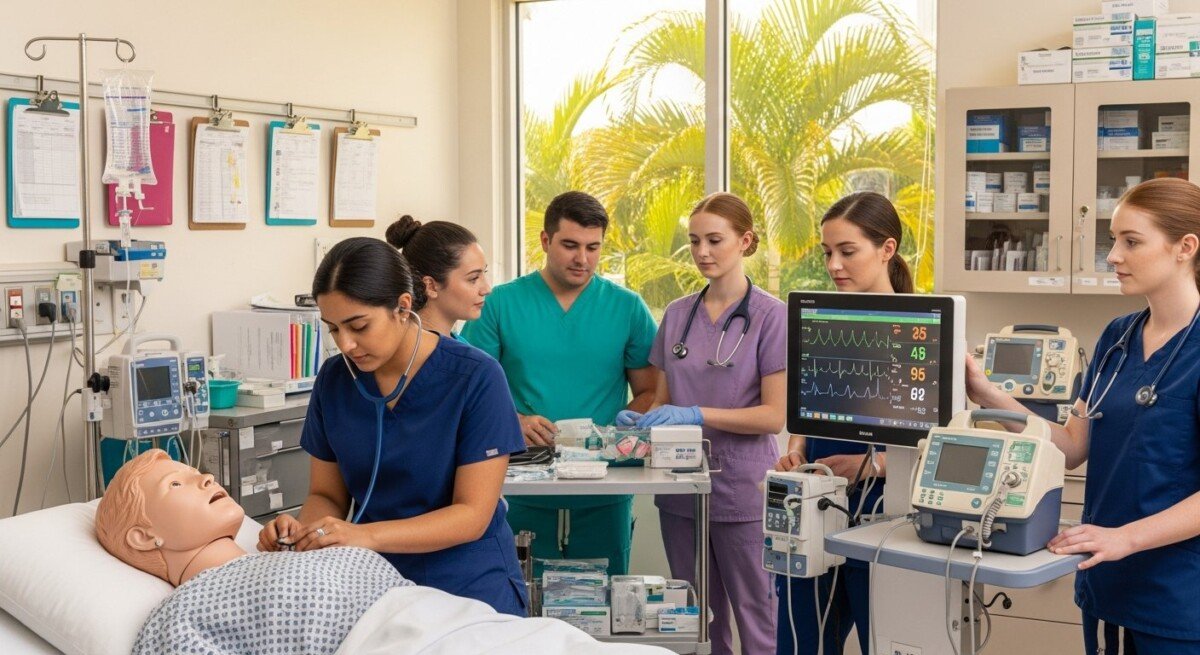
How to Earn an Associate Degree in Nursing in Hawaii
Launch a nursing career in the islands with an associate degree in nursing in Hawaii, a fast track to RN licensure and in-demand healthcare jobs.

By Janet Wilson
For many aspiring healthcare professionals in the Aloha State, the most direct and effective path to a rewarding nursing career begins with an Associate Degree in Nursing (ADN). This practical, focused program provides the essential clinical skills and theoretical knowledge needed to sit for the NCLEX-RN licensing exam and enter the workforce as a Registered Nurse (RN). In Hawaii, where healthcare needs are unique and community-focused, an ADN offers a relatively fast and affordable route to a stable, in-demand profession. This guide explores everything you need to know about pursuing an associate degree in nursing in Hawaii, from program specifics and admission hurdles to licensure and career advancement in the islands’ distinct healthcare landscape.
Understanding the ADN Pathway in Hawaii
An Associate Degree in Nursing is typically a two-year program offered at community colleges and some technical schools. It is designed to prepare students for the technical and practical aspects of bedside nursing. In Hawaii, these programs are accredited by the Accreditation Commission for Education in Nursing (ACEN) or the Commission on Collegiate Nursing Education (CCNE), and they must be approved by the Hawaii Board of Nursing. The curriculum blends general education courses, such as English and psychology, with core nursing coursework and extensive hands-on clinical rotations in hospitals, clinics, and long-term care facilities. The ultimate goal is to equip graduates with the competency to pass the NCLEX-RN and provide safe, effective patient care. The structure is similar to programs in other states, but the clinical experiences are deeply informed by Hawaii’s diverse patient population and specific health concerns, such as chronic diseases prevalent in Pacific Islander communities.
Choosing an ADN program in Hawaii requires careful consideration of several factors beyond just location. Prospective students must evaluate the program’s accreditation status, NCLEX-RN pass rates (which are publicly reported by the Hawaii Board of Nursing), the depth and variety of clinical partnerships, and the total cost of attendance. Tuition at Hawaii’s community colleges is generally lower than at four-year universities, but living expenses in the islands can be high. Financial planning is crucial, and resources for college degree guidance can be invaluable for navigating tuition, fees, and potential scholarship opportunities specific to nursing students in Hawaii.
Key Admission Requirements and Program Structure
Gaining entry into an ADN program in Hawaii is competitive. Programs have limited seats and seek candidates who demonstrate strong academic potential and a clear commitment to the nursing profession. While requirements vary slightly by institution, most share a common set of prerequisites. Understanding these requirements early allows prospective students to plan their academic path strategically.
Common prerequisites and admission criteria include:
- Completion of Prerequisite Courses: This almost always includes anatomy and physiology (with lab), microbiology, English composition, and college-level math. These courses often require a minimum grade, such as a “C” or better.
- Minimum GPA: Programs typically require a cumulative GPA of 2.5 to 3.0 or higher in prerequisite and general education courses.
- Entrance Exam: Most programs require the Test of Essential Academic Skills (TEAS). A competitive score is necessary for admission consideration.
- Background Check and Health Clearances: Due to clinical placement requirements, students must pass a criminal background check and provide proof of immunizations, TB testing, and CPR certification.
- Personal Statement or Interview: Many programs ask for an essay or conduct interviews to assess communication skills, motivation, and understanding of the nursing role.
Once admitted, the program structure is intensive. The first year often focuses on foundational nursing concepts, health assessment, and introductory clinical practice. The second year delves into more complex medical-surgical nursing, maternal-child health, mental health nursing, and potentially community health. Clinical hours are a non-negotiable core component, providing real-world experience under the supervision of instructors and practicing RNs. Time management and dedication are essential for success in this rigorous course of study.
Licensure and Career Outlook for ADN Graduates in Hawaii
Upon successful completion of an accredited ADN program, graduates are eligible to apply to take the National Council Licensure Examination for Registered Nurses (NCLEX-RN). Passing this exam is mandatory to obtain an RN license from the Hawaii Board of Nursing. The application process involves submitting transcripts, fingerprints for a background check, and paying applicable fees. Hawaii is part of the Nurse Licensure Compact (NLC), which means nurses licensed in Hawaii can practice in other compact states without obtaining an additional license, a significant benefit for mobility.
The career outlook for RNs in Hawaii is strong, driven by an aging population and ongoing healthcare needs across the islands. ADN-prepared RNs are qualified for a wide range of entry-level staff nurse positions in hospitals, outpatient surgery centers, long-term care facilities, home health agencies, and community clinics. While a Bachelor of Science in Nursing (BSN) is increasingly preferred for some hospital positions, especially on Oahu, ADN graduates are actively hired, particularly in neighbor island communities and specialized settings like long-term care. Furthermore, many Hawaii healthcare employers offer tuition reimbursement or assistance for ADN-prepared RNs to pursue an RN-to-BSN degree while working, making the ADN a strategic stepping stone. The process of advancing from an ADN to a BSN is a common and well-supported pathway, similar to the educational journeys described in our guide on how to earn an associate degree in nursing in Washington State.
Frequently Asked Questions
How long does it take to complete an ADN program in Hawaii?
Typically, a full-time student can complete an ADN program in two years. However, this timeframe assumes the student has already completed all necessary prerequisite courses before starting the core nursing curriculum. If prerequisites are needed, the total time to degree may extend to three years.
Can I complete an ADN program in Hawaii online?
While some theoretical coursework may be offered online or in hybrid formats, an ADN program cannot be completed fully online due to the mandatory hands-on clinical and lab components. Students must be physically present in Hawaii to attend clinical rotations at affiliated healthcare sites.
What is the approximate cost of an ADN in Hawaii?
Tuition costs vary. At a Hawaii Community College, in-state tuition for a two-year ADN program can range from approximately $8,000 to $12,000, not including books, fees, uniforms, supplies, and living expenses. Private institutions will be significantly more expensive.
Is there a waiting list for ADN programs in Hawaii?
Many ADN programs in Hawaii are competitive and may have waiting lists due to high demand and limited clinical placement slots. It is essential to apply early, meet all prerequisites with strong grades, and achieve a high TEAS score to improve your chances of timely admission.
What is the salary expectation for an ADN-prepared RN in Hawaii?
According to the U.S. Bureau of Labor Statistics, the mean annual wage for Registered Nurses in Hawaii is competitive, often reflecting the state’s high cost of living. Salaries can vary based on island location, healthcare setting, and experience level, but ADN graduates can expect entry-level wages that provide a solid foundation for a career.
Pursuing an associate degree in nursing in Hawaii is a commitment to both academic rigor and service to a unique community. It represents a viable and respected pathway into a profession that is both personally fulfilling and critically needed. By thoroughly researching programs, preparing diligently for admission, and engaging fully in the clinical experience, students can launch a successful nursing career that allows them to contribute meaningfully to the health and well-being of Hawaii’s people. The journey requires focus and resilience, but the destination, a career as a licensed Registered Nurse in paradise, is a powerful reward.