
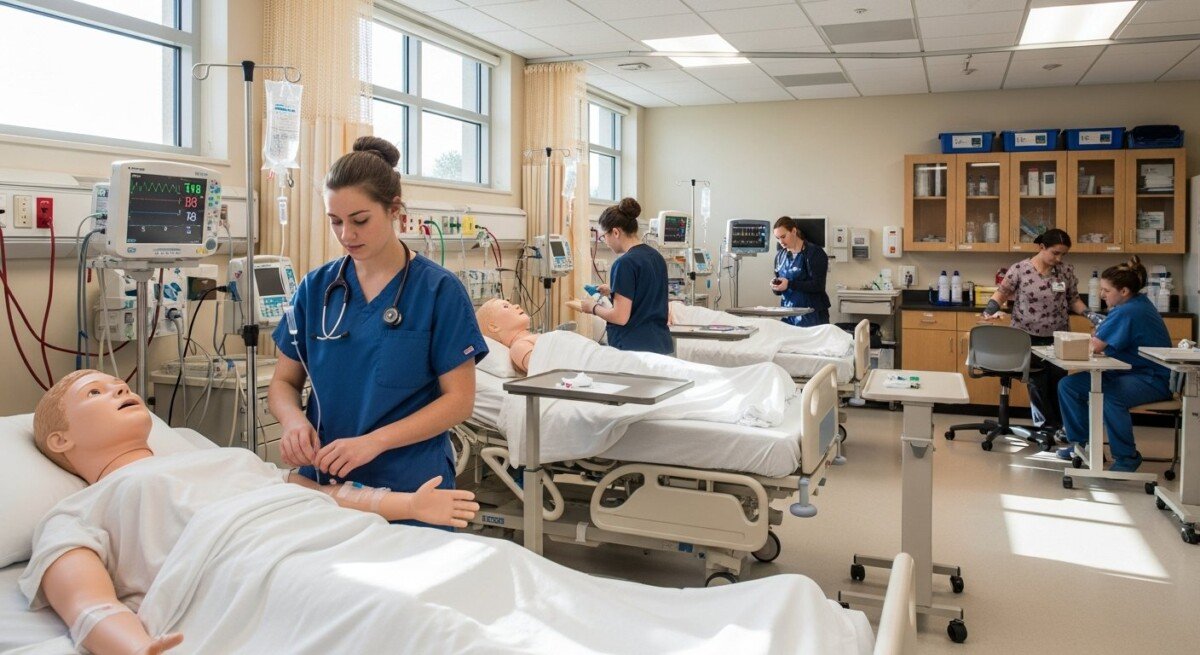
How to Earn an Associate Degree in Nursing in California
An Associate Degree in Nursing in California offers a fast, affordable path to becoming a Registered Nurse, with strong job demand across the state.

By Mia Roberts
Becoming a Registered Nurse (RN) in California is a powerful career move, and for many, the most direct and accessible path is through an Associate Degree in Nursing (ADN). This two-year program, offered at community colleges and select private institutions across the state, provides the essential clinical skills and theoretical knowledge needed to sit for the NCLEX-RN licensure exam. With California facing a persistent nursing shortage, ADN graduates are in high demand, offering a relatively fast and cost-effective route into a stable, rewarding, and well-compensated profession. This guide will walk you through everything from choosing the right California ADN program to navigating the licensure process and launching your nursing career.
Understanding the ADN Pathway in California
An Associate Degree in Nursing is a foundational nursing education program typically completed in two years of full-time study. It is designed to prepare students for entry-level positions as registered nurses. In California, ADN programs are rigorously regulated by the California Board of Registered Nursing (BRN) and must meet specific standards to ensure graduates are ready for safe patient care. The curriculum blends classroom instruction in subjects like anatomy, physiology, microbiology, and nursing theory with hands-on clinical rotations in hospital and community settings. This combination ensures that upon graduation, you are not only prepared to pass the NCLEX-RN but also to function competently in a real-world healthcare environment. The appeal of the ADN route is significant, especially for career-changers or those mindful of educational debt, as it offers a faster and often more affordable entry point into nursing compared to a four-year Bachelor of Science in Nursing (BSN).
Key Steps to Enroll in a California ADN Program
The journey to becoming an RN via an ADN in California is structured and competitive. Understanding the sequential steps can help you plan effectively and avoid common pitfalls.
First, you must meet the prerequisite requirements. Nearly all ADN programs have a set of prerequisite courses that must be completed before you can even apply. These commonly include college-level anatomy and physiology (with lab), microbiology, chemistry, English composition, psychology, and developmental psychology. Completing these with strong grades (often a minimum “B” average or higher) is crucial, as admission is highly competitive. Simultaneously, you should research and identify accredited programs. Use the California BRN’s official list of approved pre-licensure programs to ensure the school’s accreditation status. Consider factors like program length, campus location, cost, NCLEX-RN pass rates, and clinical rotation partnerships.
Once prerequisites are underway, the application process begins. This typically involves submitting transcripts, a dedicated nursing program application (often separate from the general college application), and possibly essays or personal statements. Many programs use a multi-criteria screening process that evaluates your academic history, relevant healthcare experience, language proficiency, and socioeconomic factors. After acceptance, you will need to complete additional compliance steps, which may include a background check, drug screening, immunizations, and obtaining CPR certification for healthcare providers. The process can be detailed, similar to the steps outlined for aspiring nurses in neighboring states, as seen in our guide on how to become an RN in Nevada with an ADN.
Top Considerations for Choosing Your ADN Program
Not all ADN programs are created equal. Selecting the right one is a decision that will impact your education quality, stress level, and career launch. Here are the most critical factors to weigh.
Accreditation is non-negotiable. The program must be approved by the California BRN. Additionally, national accreditation from the Accreditation Commission for Education in Nursing (ACEN) or the Commission on Collegiate Nursing Education (CCNE) is a mark of quality and is essential if you plan to pursue a BSN later via an RN-to-BSN bridge program. Next, examine the program’s NCLEX-RN first-time pass rates. The BRN publishes these rates for all approved programs. Consistently high pass rates (above the state average) are a strong indicator of effective teaching and curriculum. You should also investigate the clinical experience offered. Ask about the hospitals and healthcare facilities where students complete rotations. Diverse clinical placements (e.g., medical-surgical, pediatrics, obstetrics, mental health) provide a broader skill set.
Finally, be realistic about cost and logistics. California community colleges offer the most affordable tuition, but they are also the most competitive. Private institutions may have higher costs but different admission cycles and potentially smaller cohorts. Create a detailed financial plan that includes tuition, books, uniforms, fees, and living expenses. Exploring financial aid options, scholarships for nursing students, and tuition reimbursement programs from future employers is a vital part of this planning phase. For comprehensive help comparing costs and financial aid packages, seeking college degree guidance from experts can be an invaluable step in your decision-making process.
Licensure and Career Outlook for ADN Graduates
Graduating from an ADN program is a major milestone, but it is not the final step to practicing as an RN in California. You must obtain your state license.
The licensure process is managed by the California BRN. Upon completion of your ADN, your school will submit your information to the BRN, making you eligible to register for the National Council Licensure Examination for Registered Nurses (NCLEX-RN). This standardized, computerized adaptive test assesses the knowledge and skills needed to perform safely and effectively as an entry-level nurse. After passing the NCLEX-RN, you will receive your California RN license. It is important to note that California is not part of the enhanced Nurse Licensure Compact (eNLC), so if you plan to work in another state, you will need to apply for licensure by endorsement in that specific state.
The career outlook for ADN-prepared RNs in California is exceptionally strong. The state continues to experience a significant nursing shortage driven by an aging population, nurse retirements, and expanded healthcare access. According to the U.S. Bureau of Labor Statistics, employment of RNs in California is projected to grow much faster than the average for all occupations. While many hospitals, especially large acute-care facilities, express a preference for BSN-prepared nurses due to Magnet status aspirations, ADN graduates are actively hired in a vast array of settings, including:
- Hospitals (particularly in medical-surgical, emergency, and critical care units with residency programs)
- Long-term care facilities and skilled nursing homes
- Outpatient clinics and ambulatory surgery centers
- Home health care agencies
- Correctional facilities
- Public health departments
Furthermore, the ADN is often a stepping stone. Many nurses begin working with their ADN and then enroll in an online RN-to-BSN program, which their employer may help finance. This allows you to earn an income while advancing your education.
Frequently Asked Questions
How long does it take to complete an ADN program in California?
A full-time ADN program typically takes two years. However, the total timeline is often longer when factoring in the time needed to complete prerequisite courses, which can take 1-2 semesters before you even start the nursing core.
Is an ADN or a BSN better in California?
The “better” degree depends on your goals. An ADN is faster and less expensive, allowing you to enter the workforce and start earning sooner. A BSN may offer broader career advancement opportunities, is required for some specialty areas, and is strongly preferred by major hospital systems. Many choose the ADN-to-BSN path to balance cost and career progression.
What is the average salary for an ADN-RN in California?
Salaries vary widely by region within California. Metropolitan areas like San Francisco, San Jose, and Los Angeles offer higher wages to offset the cost of living. According to state data, the annual mean wage for Registered Nurses in California is significantly above the national average, often ranging from $120,000 to $150,000 in high-cost areas, with ADN and BSN nurses at the entry-level often starting at comparable salaries.
Can I complete an ADN program online in California?
While the theoretical coursework for an ADN can sometimes be offered online or in a hybrid format, the clinical training component cannot be completed remotely. You must attend in-person clinical rotations at approved healthcare facilities. There are, however, hybrid programs that combine online classwork with local, arranged clinicals.
What if I already have a bachelor’s degree in another field?
You may be an excellent candidate for an Accelerated Bachelor of Science in Nursing (ABSN) program, which is designed for individuals who already hold a non-nursing bachelor’s degree. These are intensive, full-time programs that can be completed in 12-18 months. While not an ADN, it’s a crucial alternative pathway for career-changers to consider.
Pursuing an Associate Degree in Nursing in California is a strategic and achievable goal for dedicated individuals. By thoroughly researching programs, excelling in prerequisites, and understanding the post-graduation licensure landscape, you can successfully navigate this pathway to a fulfilling career as a Registered Nurse. The demand is clear, the need is great, and the opportunity to make a meaningful difference in the lives of patients awaits.