
Imagine earning college credit for knowledge you already have. For many adults who started a degree but never finished, or for professionals seeking to formalize their expertise, the path to a diploma can feel blocked by time, cost, and rigid schedules. Yet a powerful option exists that bypasses traditional semester-long courses: credit by exam and work experience for degree completion. This approach allows you to translate real-world skills and self-study into recognized academic credit, saving thousands of dollars and cutting years off your timeline. Whether you are a working parent, a military veteran, or a career changer, understanding how to leverage these alternative credit pathways can transform your educational goals from distant dreams into achievable plans.
What Is Credit by Exam and How Does It Work?
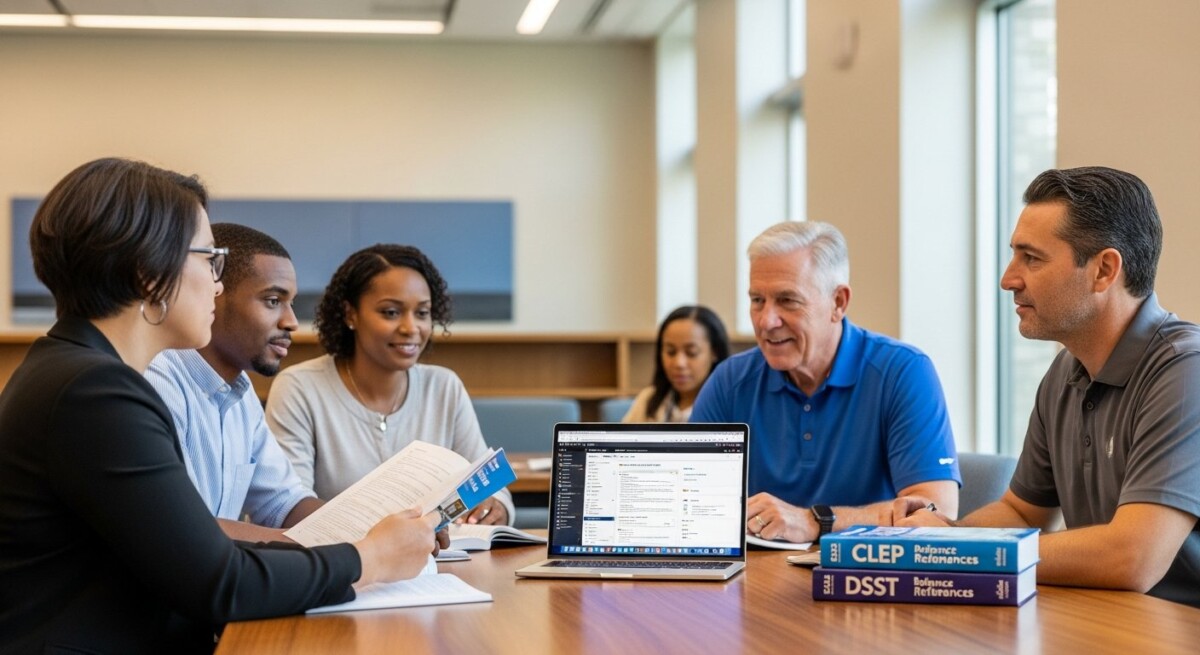
Credit by exam is a formal process where you demonstrate mastery of a subject through a standardized test instead of enrolling in a course. Colleges and universities award credit when you achieve a passing score on exams such as the College-Level Examination Program (CLEP), DSST (formerly DANTES Subject Standardized Tests), or Excelsior College examinations. These tests cover introductory and intermediate-level topics in fields like composition, mathematics, history, science, and business.
The typical process involves three steps. First, you select an exam that aligns with a course offered at your target institution. Second, you prepare using study guides, online resources, or prior knowledge from work or military training. Third, you register and take the exam at an authorized testing center. After passing, you request your official score report be sent to the college. Most institutions have a credit-granting policy that maps exam scores to specific courses, often listed in a transfer equivalency database on the registrar’s website.
One of the biggest advantages is cost. A CLEP exam costs roughly $95 plus a small proctoring fee, compared to hundreds or thousands of dollars for a three-credit college course. With over 2,900 colleges accepting CLEP credit, this strategy can significantly reduce tuition expenses. For example, earning 30 credits through exams could save a student over $10,000 at a public university. Additionally, you can study at your own pace, which is ideal for those balancing jobs and family obligations.
Turning Professional Experience Into College Credit
Work experience can also translate into academic credit through a process called prior learning assessment (PLA). PLA evaluates knowledge and skills gained outside the classroom from employment, military service, volunteer work, or independent study. Common PLA methods include portfolio assessment, where you compile evidence of learning (such as work samples, certifications, and a reflective essay), and evaluation of industry credentials like IT certifications or nursing licenses.
Many accredited institutions have dedicated PLA offices that guide students through the process. For example, a seasoned marketing manager might submit a portfolio demonstrating competencies equivalent to a Principles of Marketing course. If approved, the college awards credit hours that count toward degree requirements. The American Council on Education (ACE) also reviews many corporate and military training programs, recommending college credit equivalencies that institutions may accept.
Combining credit by exam and work experience for degree completion creates a powerful synergy. While exams cover broad academic foundations, PLA can capture specialized, hands-on expertise that tests cannot measure. This dual approach maximizes the number of credits you can earn outside traditional classrooms. For instance, a firefighter with EMT certification and years of field experience could earn PLA credit for emergency medical courses and use CLEP exams to fulfill general education requirements like English and math.
Key Strategies for Maximizing Alternative Credit
To make the most of these opportunities, you need a clear plan. Start by researching your target school’s transfer credit policies. Not all institutions accept every exam or PLA method, and some have residency requirements mandating that a certain number of credits be earned directly from the institution. Look for colleges that are known as “credit-friendly,” especially those serving adult learners through online or competency-based programs.
Here are several practical strategies to consider:
- Map your degree plan first. Identify which courses in your program can be fulfilled by exams or PLA. Focus on lower-level general education requirements, as upper-division courses are less commonly available through these methods.
- Start with high-pass-rate exams. CLEP exams like Analyzing and Interpreting Literature or Introductory Sociology have high pass rates for prepared students, building confidence and momentum.
- Use free and low-cost study resources. Modern States Education Alliance offers free CLEP prep courses and vouchers that cover exam fees for those who complete the course. Libraries and online platforms also provide practice tests.
- Document your work experience thoroughly. For PLA portfolios, keep records of job descriptions, performance reviews, training certificates, and projects that demonstrate learning outcomes aligned with college courses.
- Check for military and veteran benefits. Service members can use Tuition Assistance and the GI Bill to cover exam fees, and many military occupations have ACE credit recommendations already on file.
These strategies require upfront effort but yield substantial returns. A student who strategically earns 30 to 60 credits through exams and PLA can reduce their degree completion time by one to two years. This acceleration not only saves money but also allows you to enter or advance in the workforce sooner. Many universities now offer degree completion programs specifically designed for transfer students, making it easier to apply alternative credits toward a bachelor’s degree.
Overcoming Common Challenges and Misconceptions
Despite the benefits, some students hesitate to pursue credit by exam and work experience. A common misconception is that these credits are “less rigorous” or not respected by employers. In reality, accredited institutions only award credit when you demonstrate competence at a level equivalent to a passing grade in the course. Employers care about the degree itself and the skills you bring, not how every credit was earned. Another concern is that exams are too difficult. However, with proper preparation using official study guides and practice tests, many students succeed. The key is to be honest about your current knowledge and invest time in review.
A practical barrier can be navigating the policies of different institutions. Some colleges limit the total number of alternative credits accepted, often capping it at 25 to 50 percent of the degree. Others require that the last 30 credits be taken in residence. To avoid surprises, request a written credit evaluation from the registrar before enrolling. If a school’s policies are too restrictive, consider transferring to a more flexible institution. Many regionally accredited online programs are designed for adult learners and accept a high volume of transfer and alternative credits. For more guidance on structuring your study time effectively, read our article on 3 time management tips for studying a master’s degree online.
Frequently Asked Questions
Can I use credit by exam for any degree program?
Most degree programs accept some form of credit by exam, but availability varies. General education requirements are the easiest to fulfill. Specialized programs like nursing or engineering may have fewer exam options for major-specific courses. Always check with your academic advisor.
How many credits can I earn through work experience?
There is no universal limit. It depends on your institution’s policy and the depth of your experience. Some schools cap PLA credits at 30, while others allow up to 60 or more. A well-documented portfolio covering multiple competencies can yield substantial credit.
Do online colleges accept credit by exam?
Yes, many accredited online colleges actively encourage alternative credit. Competency-based programs like those at Western Governors University or Southern New Hampshire University’s College for America are built around prior learning and self-paced exams. These schools are excellent options for students seeking maximum flexibility.
What if I fail an exam?
You can retake most exams after a waiting period, typically three to six months. Some exams have no limit on retakes, though you must pay the fee again. Use failure as a diagnostic tool to identify weak areas and then focus your study efforts before retesting.
Is credit by exam and work experience for degree completion worth the effort?
Absolutely. For motivated students, the return on investment is high. You save money, finish faster, and keep your existing commitments intact. The process also validates your professional knowledge, boosting confidence and career credibility. Many graduates report that earning credit for what they already knew was the most empowering part of their degree journey.
To explore how these pathways can fit your specific goals, consider using a matching service that connects you with accredited colleges offering flexible credit policies. DegreeOnline.Education provides tools to compare programs and find schools that prioritize prior learning assessment and exam-based credit. By taking advantage of these resources, you can design a personalized degree completion plan that respects your time, budget, and experience.