
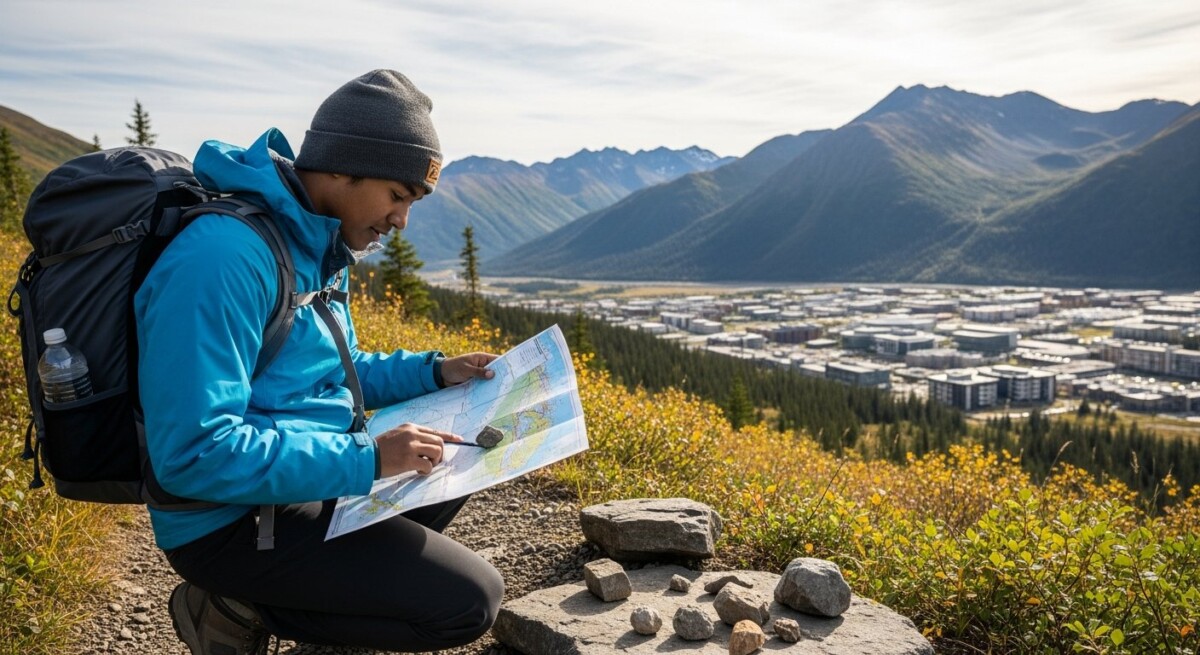
Pursuing a bachelor’s degree in Alaska offers a unique educational journey, blending rigorous academics with the unparalleled natural and cultural landscape of the Last Frontier. Whether you’re a lifelong Alaskan or drawn to the state’s distinctive opportunities, the bachelor’s degree options available in Alaska cater to a wide array of interests, from Arctic research and natural resource management to Indigenous studies and remote healthcare. The state’s higher education system is designed to meet both local workforce needs and global challenges, providing pathways that are as vast and varied as the land itself. Understanding these options is the first step toward an education that can define both a career and a life deeply connected to one of the world’s most dynamic regions.
Alaska’s University System: Public Institutions and Their Strengths
The University of Alaska system forms the cornerstone of public higher education in the state, comprising three main accredited universities: the University of Alaska Anchorage (UAA), the University of Alaska Fairbanks (UAF), and the University of Alaska Southeast (UAS). Each institution has developed distinct academic profiles and areas of excellence, allowing students to choose a campus that aligns with their specific career and intellectual goals. These universities are comprehensively accredited, ensuring that credits transfer and degrees are recognized nationally, a critical factor for both immediate employment and future graduate studies.
UAA, the state’s largest university, functions as a metropolitan institution with a strong focus on health sciences, business, engineering, and education. Its location in Alaska’s largest city provides students with extensive internship and networking opportunities within a diverse urban economy. UAF, classified as a high-research activity institution by the Carnegie Foundation, is renowned for its world-class programs in Arctic biology, geophysics, wildlife biology, and engineering related to cold climates and natural resources. It is also home to unique facilities like the Poker Flat Research Range. UAS, with campuses in Juneau, Ketchikan, and Sitka, specializes in marine biology, environmental science, outdoor studies, and education, leveraging its Southeast Alaska coastal environment for hands-on learning. Together, these institutions ensure that wherever you are in Alaska, a quality public university education is within reach, both on campus and through robust online degree completion programs.
Private and Specialized College Options
Beyond the public university system, Alaska hosts several private and specialized institutions that broaden the spectrum of bachelor’s degree options available in Alaska. These colleges often provide smaller class sizes, distinct religious or philosophical affiliations, and specialized curricula that fill specific niches in the state’s educational landscape. Alaska Pacific University (APU) in Anchorage, for instance, is a private liberal arts university emphasizing active, hands-on learning, sustainability, and Alaska Native studies. Its programs in environmental science, business administration, and counseling psychology are particularly noted for their experiential approach and community engagement.
Charter College, with campuses in Anchorage and Wasilla, offers career-focused bachelor’s degrees in fields like information technology, business, and healthcare administration, often with accelerated formats designed for working adults. For those interested in theological studies, Alaska Christian College provides a biblical studies foundation, with many students transferring to complete bachelor’s degrees at partner institutions. These private options add important diversity to the educational ecosystem, offering alternative pedagogical approaches and specialized accreditation that can be ideal for students with specific career trajectories or learning preferences. When evaluating these schools, it is essential to verify their accreditation status, a process where resources offering academic program insights can be invaluable.
High-Demand and Unique Academic Majors in Alaska
The Alaskan economy and environment create a high demand for certain professions, which is directly reflected in the academic strengths of its universities. Choosing a major aligned with these needs can lead to excellent career prospects within the state. Furthermore, Alaska offers academic programs found in few other places, providing a truly unique educational selling point.
Majors in high demand include various engineering disciplines (civil, mechanical, geological, and Arctic), nursing and allied health fields, education (especially with rural and cross-cultural specializations), and business management with a focus on small business or tourism. The state’s reliance on natural resources also drives need for graduates in fisheries, wildlife biology, and land management. The most unique bachelor’s degree options available in Alaska, however, are those born from the state’s singular position. These include degrees in Northern Studies, Arctic Engineering, Alaska Native Languages and Studies, Ethnobotany, and Outdoor Leadership. Programs in marine biology and oceanography have direct access to pristine and diverse marine ecosystems. These specialized degrees not only prepare students for local careers but also position them as experts in globally relevant fields like climate change, indigenous governance, and sustainable resource development.
Online and Distance Education: Earning Your Degree Remotely
For many Alaskans, particularly those in the state’s hundreds of remote villages and communities, physical access to a university campus is a significant challenge. In response, the University of Alaska system has become a national leader in distance education. A vast number of bachelor’s degree options available in Alaska can be completed entirely online or via blended formats. This includes everything from a Bachelor of Business Administration and a Bachelor of Arts in Justice to a Bachelor of Science in Nursing (for RN-to-BSN completion) and a Bachelor of Arts in Social Work. UAF’s eCampus and UAA’s Online & Distance Education platforms provide comprehensive support services for remote learners, including academic advising, tutoring, and library access.
This commitment to distance learning does more than provide convenience, it is a matter of educational equity and workforce development for the state. It allows rural residents, working adults, military personnel, and parents to advance their education without relocating. When considering an online program in Alaska, prospective students should confirm the program’s accreditation, understand the technology requirements, and investigate the level of interaction with instructors and peers. The flexibility is immense, but success in these programs requires self-discipline and effective time management skills.
Financial Considerations and Support for Alaska Students
Financing a bachelor’s degree is a universal concern, and Alaska offers several unique financial aid opportunities alongside federal programs. In-state tuition at the University of Alaska system is competitively priced, and a reciprocity agreement with many western states through the Western Undergraduate Exchange (WUE) can provide reduced tuition for out-of-state students from participating states. The Alaska Performance Scholarship (APS) is a state-funded merit-based award for Alaska high school graduates who meet specific curriculum, GPA, and assessment score requirements.
Furthermore, a wide array of private scholarships are targeted specifically at Alaska residents, often focusing on fields of study critical to the state or supporting students from particular regions or backgrounds. For a deeper understanding of how these degrees are structured, our resource on the different types of bachelor degrees explains the core differences between BA, BS, and other designations. Key steps for securing funding include:
- Complete the FAFSA (Free Application for Federal Student Aid) as early as possible to unlock federal grants, loans, and work-study.
- Apply for the Alaska Performance Scholarship during your senior year of high school.
- Research and apply for private scholarships offered by Alaska-based organizations, Native corporations, and community foundations.
- Explore employer tuition reimbursement programs if you are already working.
- Contact the financial aid office at your chosen university for information on institutional scholarships and aid packages.
Planning a financial strategy early is crucial to minimizing debt and focusing on academic success.
Career Pathways and Outcomes with an Alaskan Degree
Earning a bachelor’s degree in Alaska opens doors to careers within the state’s distinctive economy and beyond. Graduates are well-positioned for roles in state and federal agencies (e.g., Department of Fish and Game, National Park Service, NOAA), the thriving healthcare sector, resource extraction industries (with an increasing focus on sustainability), aviation, maritime industries, and education. The degree also signals to employers a capacity for resilience, adaptability, and often, cross-cultural competency, traits highly valued in today’s global workforce.
Many programs incorporate internships, cooperative education, or undergraduate research as degree requirements, providing vital real-world experience. For example, a fisheries student might work with the Alaska Department of Fish and Game, while a social work student could intern with a tribal health organization. This integration of theory and practice ensures that graduates are not just knowledgeable, but are also ready to contribute meaningfully on day one. Whether you plan to build your life in Alaska or take the unique skills learned there to a global stage, the career pathways stemming from an Alaskan education are robust and filled with potential.
Frequently Asked Questions
What is the cost of out-of-state tuition for bachelor’s degree options available in Alaska?
Out-of-state tuition at University of Alaska schools is higher than in-state rates. However, the Western Undergraduate Exchange (WUE) program offers significantly reduced tuition to students from participating western U.S. states for many eligible programs. Some scholarships are also available specifically for non-resident students.
Can I complete a bachelor’s degree in Alaska if I live in a remote village?
Yes. The University of Alaska system has a strong commitment to distance education. Many bachelor’s degrees can be completed entirely online. Additionally, some programs offer “hybrid” courses with intensive in-person sessions combined with online work. Academic and technical support for distance students is a priority.
Are there bachelor’s degree programs focused on Alaska Native culture and issues?
Absolutely. Several institutions, notably the University of Alaska Fairbanks and Alaska Pacific University, offer bachelor’s degrees and minors in Alaska Native Studies, Indigenous Languages, and Rural Development. These programs are developed with and often taught by Alaska Native scholars, providing an in-depth, respectful study of Indigenous cultures, politics, and knowledge systems.
How do I know if an online program from an Alaska school is reputable?
Always verify institutional accreditation. The University of Alaska institutions are accredited by the Northwest Commission on Colleges and Universities (NWCCU). For specialized programs (e.g., nursing, engineering), check for additional programmatic accreditation. The university’s website should clearly state its accreditation status, and you can verify it directly with the accrediting body.
What are the best bachelor’s degrees for finding a job in Alaska after graduation?
Fields with consistently high demand include nursing and allied health professions, engineering (especially civil and mechanical), education, business management, and information technology. Degrees in natural resources (fisheries, wildlife biology, geology) and social services (social work, counseling) also offer strong prospects due to the state’s specific economic and social needs.
Exploring the bachelor’s degree options available in Alaska reveals an educational landscape that is both pragmatic and profoundly unique. From the research labs of Fairbanks to the online classrooms connecting the Bush, Alaska provides avenues for intellectual growth that are deeply intertwined with place and community. By carefully considering your academic interests, career goals, and personal circumstances against what these institutions offer, you can find a program that not only delivers a respected credential but also fosters a transformative understanding of the North and your role within it. The journey toward a degree here is an investment in a specific kind of future, one built on knowledge, resilience, and a connection to a truly extraordinary part of the world.