
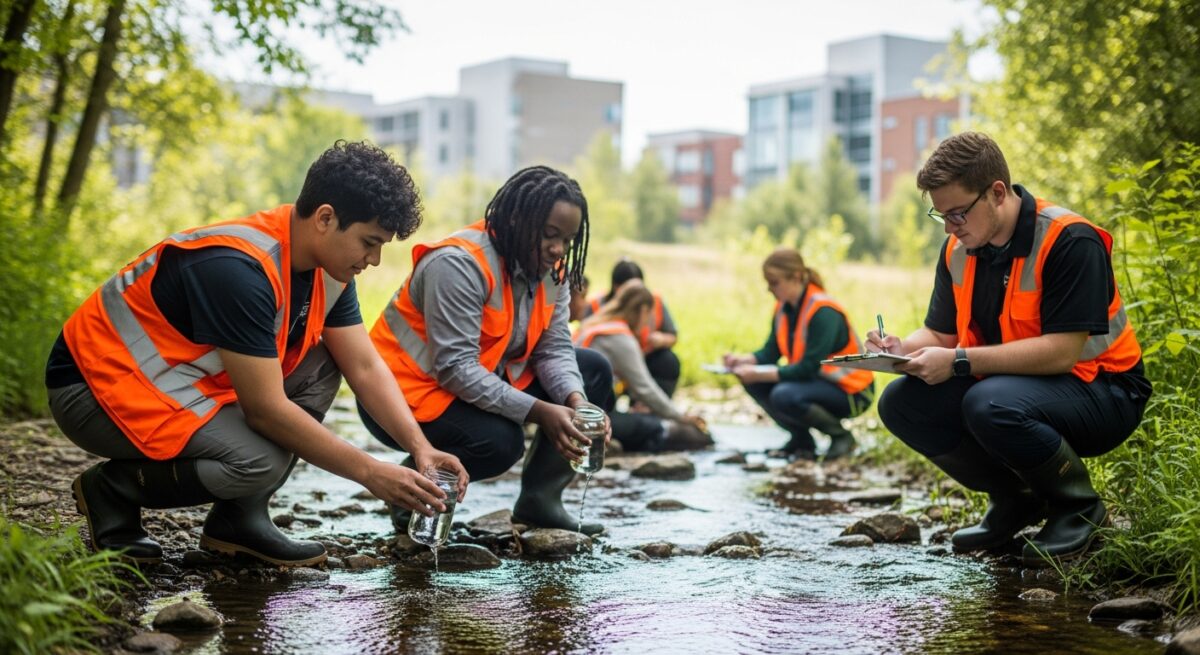
If you have ever felt a pull to understand the natural world and solve pressing environmental challenges, an environmental science major might be the right path for you. This interdisciplinary field combines biology, chemistry, geology, and social sciences to address issues like climate change, pollution, and resource management. Understanding the environmental science major course structure and careers that follow is essential for making an informed decision about your education and future. This article breaks down what you will study, the skills you will gain, and the professional opportunities that await after graduation.
What Is an Environmental Science Major?
An environmental science major is a rigorous, science-based program that focuses on understanding the Earth’s systems and how human activity affects them. Unlike an environmental studies degree, which often emphasizes policy, ethics, and humanities, environmental science is deeply rooted in empirical data, laboratory work, and field research. Students learn to collect and analyze samples, model environmental processes, and develop solutions based on scientific evidence. This major is ideal for individuals who enjoy hands-on investigation and want to apply quantitative methods to real-world ecological problems.
Core Course Structure of an Environmental Science Major
The environmental science major course structure typically begins with foundational sciences and progresses into specialized, applied coursework. Most programs are designed to provide a solid base in biology, chemistry, physics, and mathematics before moving into upper-level environmental topics. Below is a typical breakdown of the curriculum.
Foundation Courses (First Two Years)
During the first two years, students complete general education requirements and introductory science courses. These classes build the essential knowledge needed for advanced study. Common foundation courses include:
- General Biology I and II with labs: Covers cell biology, genetics, ecology, and evolution.
- General Chemistry I and II with labs: Focuses on atomic structure, chemical reactions, and stoichiometry.
- Calculus I and Statistics: Provides mathematical tools for data analysis and modeling.
- Introductory Geology or Earth Science: Explores plate tectonics, mineralogy, and landform processes.
- Physics I (mechanics): Required for understanding energy systems and environmental physics.
These courses ensure that all environmental science majors share a common scientific vocabulary and analytical framework. Many programs also require a course in environmental ethics or policy during the first year to introduce the societal context of environmental issues.
Core Environmental Science Courses (Second and Third Years)
After completing the prerequisites, students dive into the core of the major. These courses are the heart of the environmental science major course structure and careers preparation. Typical core classes include:
- Ecology: Study of interactions between organisms and their environments, including population dynamics and ecosystem function.
- Environmental Chemistry: Focuses on chemical processes in air, water, and soil, including pollutant behavior and remediation.
- Hydrology: Examines water movement, groundwater systems, and water quality management.
- Atmospheric Science or Climatology: Investigates weather patterns, climate systems, and atmospheric pollution.
- Environmental Geology: Covers natural hazards, soil science, and the geological aspects of environmental problems.
- Environmental Law and Regulation: Introduces major federal laws like the Clean Air Act and Clean Water Act.
Many programs also include a course in Geographic Information Systems (GIS), which is a powerful tool for mapping and analyzing spatial data. GIS skills are highly valued in environmental consulting and government agencies.
Advanced Electives and Specializations
During the third and fourth years, students can tailor their degree by choosing electives aligned with their career goals. Common specializations include conservation biology, renewable energy, environmental toxicology, soil science, and environmental policy. For example, a student interested in wildlife management might take courses in vertebrate zoology and habitat restoration, while someone aiming for a career in air quality might study industrial emissions and air monitoring techniques. This flexibility allows graduates to enter the job market with targeted expertise.
Capstone, Internship, and Research Requirements
Most environmental science programs require a capstone experience, which may be a senior thesis, a research project, or a field-based practicum. Students often complete a 12-week internship with a government agency, nonprofit organization, or private consulting firm. These experiences are critical for building professional networks and gaining practical skills. For example, an internship with a state environmental protection agency might involve collecting water samples from local rivers and analyzing them for contaminants. This hands-on work is invaluable when applying for jobs after graduation.
Skills You Develop as an Environmental Science Major
The environmental science major course structure and careers are closely linked because the curriculum builds transferable skills. Graduates emerge with the ability to design experiments, operate scientific instruments, analyze complex datasets, and communicate findings to diverse audiences. Technical skills include proficiency in statistical software (such as R or Python), GIS mapping, and laboratory techniques like spectrophotometry and chromatography. Equally important are critical thinking, problem-solving, and project management skills. These competencies make environmental science majors competitive candidates in many industries beyond traditional environmental roles.
Careers for Environmental Science Graduates
A degree in environmental science opens doors to a wide range of careers. The job market for environmental professionals is growing due to increased regulatory requirements and public awareness of ecological issues. Here are some of the most common and rewarding career paths.
Environmental Scientist or Consultant
Environmental scientists work for consulting firms, government agencies, or corporations. They conduct site assessments, monitor pollution levels, and ensure compliance with environmental regulations. Typical tasks include collecting soil and water samples, preparing environmental impact statements, and recommending cleanup strategies. The median annual salary for environmental scientists was around $76,000 in 2023, according to the Bureau of Labor Statistics, with strong demand projected over the next decade.
Conservation Scientist or Forester
Conservation scientists manage natural resources such as forests, parks, and wildlife habitats. They develop land-use plans, oversee restoration projects, and advise landowners on sustainable practices. This career is ideal for those who enjoy outdoor fieldwork and have a strong background in ecology. Many positions are with federal agencies like the U.S. Forest Service or state departments of natural resources.
Environmental Engineer
While environmental engineering typically requires an engineering degree, many environmental science majors pursue graduate study in this field. Environmental engineers design systems for waste treatment, pollution control, and renewable energy production. They work on projects like constructing water treatment plants or developing methods to reduce industrial emissions. This career offers higher earning potential, with median salaries exceeding $96,000.
Environmental Educator or Outreach Coordinator
Environmental educators work for museums, nature centers, nonprofit organizations, and schools. They develop curricula, lead public workshops, and create educational materials about environmental topics. This career is well-suited for individuals who are passionate about communication and community engagement. An environmental studies degree with a focus on education is often a complementary path.
Policy Analyst or Regulatory Specialist
Policy analysts research environmental issues and help shape regulations at the local, state, or federal level. They write reports, analyze legislation, and advise policymakers on the scientific basis for environmental laws. This role often requires strong writing and research skills, as well as a deep understanding of environmental science and economics.
Graduate School and Advanced Degrees
Many environmental science majors continue their education by pursuing a master’s or doctoral degree. Graduate programs allow for deeper specialization in areas like toxicology, climate science, or environmental policy. Advanced degrees can lead to careers in academic research, high-level consulting, or leadership roles in government agencies. Some students also choose to combine an environmental science bachelor’s with a law degree to specialize in environmental law.
Comparing Environmental Science to Related Majors
It is helpful to distinguish environmental science from similar fields. An ecology major focuses more narrowly on the relationships between organisms and their habitats, often with an emphasis on field biology. An environmental studies degree is broader and includes more coursework in sociology, economics, and political science. Environmental science sits at the intersection of these approaches, prioritizing scientific rigor while still acknowledging the human dimensions of environmental problems. Many students double-major in environmental science and environmental studies to gain both technical and policy expertise.
Job Outlook and Salary Expectations
The Bureau of Labor Statistics projects that employment for environmental scientists and specialists will grow by 8% from 2023 to 2033, faster than the average for all occupations. This growth is driven by increasing public concern for environmental quality and the need for compliance with complex regulations. Entry-level positions typically start around $45,000 to $55,000, while experienced professionals can earn over $100,000 annually, especially in consulting or engineering roles. Salaries vary by location, industry, and level of education.
Frequently Asked Questions
What is the difference between an environmental science major and an environmental studies degree?
Environmental science focuses on the natural sciences and uses quantitative methods to study environmental problems. An environmental studies degree includes more coursework in the humanities, social sciences, and policy. Both can lead to environmental careers, but environmental science is better for technical and research-oriented roles.
Is environmental science a hard major?
Environmental science is challenging because it requires proficiency in several science disciplines, including biology, chemistry, and physics. Students must also be comfortable with mathematics and statistics. However, the material is highly engaging for those passionate about the environment, and many programs offer strong support systems.
What jobs can I get with an environmental science degree without a graduate degree?
Many entry-level positions are available with a bachelor’s degree, including environmental technician, field scientist, conservation aide, and laboratory analyst. Advancement to senior roles often requires a master’s degree or several years of experience.
Do environmental science majors make good money?
Salaries vary widely by role and location. Environmental scientists earn a median salary of about $76,000, while environmental engineers and high-level consultants can earn six-figure incomes. Public sector and nonprofit roles tend to pay less than private industry.
Planning Your Next Steps
Choosing an environmental science major is a decision that combines intellectual curiosity with a commitment to making a tangible difference. The environmental science major course structure and careers outlined here show that this degree provides both a rigorous scientific education and a clear pathway to meaningful work. Whether you see yourself testing water quality in a lab, mapping wetlands with GIS, or advocating for policy changes, this major equips you with the tools to succeed. As you explore programs, consider factors like internship opportunities, faculty expertise, and the availability of specialized tracks that match your interests. With the right preparation, you can turn your passion for the environment into a rewarding career.