
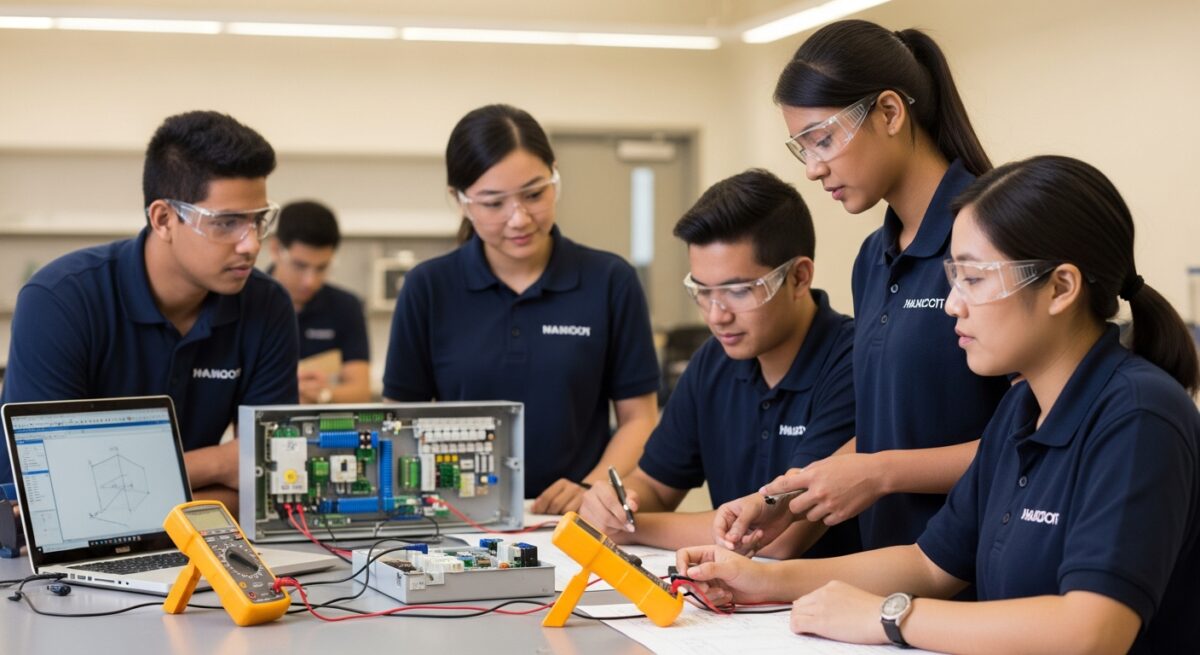
If you enjoy solving technical problems and working with your hands but want a faster path to a stable career than a traditional four-year degree, an engineering technology associate degree might be the right choice for you. This two-year program blends theoretical knowledge with practical application, preparing graduates for high-demand roles in manufacturing, construction, electronics, and more. Unlike pure engineering degrees that focus heavily on abstract math and design theory, an engineering technology associate’s degree emphasizes hands-on implementation, testing, and maintenance of existing systems. In this article, we provide a complete engineering technology associate degree overview and careers outlook, explaining what you will learn, what jobs you can get, and how to get started.
What Is an Engineering Technology Associate Degree?
An associate degree in engineering technology is a two-year program offered by community colleges, technical institutes, and some four-year universities. It is classified as an applied science degree (often an A.A.S. or A.S.) and focuses on the practical side of engineering. Students learn how to operate, troubleshoot, and improve equipment and processes used in various industries. The curriculum includes coursework in mathematics (algebra and trigonometry, not calculus), physics, computer-aided drafting (CAD), electronics, materials science, and technical writing.
This engineering tech degree is distinct from a traditional engineering degree. Engineers typically design systems from scratch using advanced mathematics and theory. Engineering technologists, on the other hand, work alongside engineers to implement, test, and maintain those designs. They are the bridge between the engineer’s blueprint and the finished product. For example, a mechanical engineer might design a new conveyor system for a factory, while an engineering technologist would install the system, program the controls, and train operators. This practical focus means graduates are often ready to enter the workforce immediately after graduation.
Typical Curriculum and Specializations
Most associate engineering programs share a core set of general education and technical courses. However, many programs allow students to specialize in a specific area of engineering technology. Common specializations include mechanical engineering technology, electrical/electronics engineering technology, civil engineering technology, and manufacturing engineering technology. Each specialization tailors the technical courses to that field.
For a mechanical engineering technology track, you might take courses in statics, strength of materials, thermodynamics, and CAD. An electrical engineering technology track would include circuit analysis, digital logic, microcontrollers, and programmable logic controllers (PLCs). Civil engineering technology students study surveying, materials testing, structural analysis, and construction management. Regardless of the specialization, all programs emphasize lab work and hands-on projects. Many programs also require a capstone project or internship to ensure students can apply their skills in a real-world setting.
Here are three key skills you will develop in any accredited engineering technology program:
- Technical problem-solving: You will learn to diagnose equipment failures, analyze test data, and implement cost-effective fixes.
- Computer proficiency: You will gain experience with industry-standard software such as AutoCAD, SolidWorks, MATLAB, and PLC programming environments.
- Communication and teamwork: You will practice writing technical reports and collaborating on group projects, mirroring the teamwork required in most engineering settings.
These skills make graduates versatile and adaptable. Even if you choose a specialization, the foundational knowledge you gain can be applied across many industries. Many graduates find that their associate degree provides a strong foundation for further education, such as a bachelor’s degree in engineering technology, which can open doors to management and advanced technical roles.
Career Paths and Job Outlook
One of the most compelling reasons to pursue an engineering technology associate degree is the strong job market. The U.S. Bureau of Labor Statistics projects steady growth for many engineering technology occupations over the next decade. Industries such as renewable energy, advanced manufacturing, automation, and infrastructure repair are driving demand for skilled technicians and technologists. Because the degree focuses on applied skills, graduates are often hired immediately upon completion.
Common job titles for graduates include electrical engineering technician, mechanical engineering technician, civil engineering technician, industrial engineering technician, and quality assurance technician. According to the BLS, the median annual wage for engineering technicians and technologists ranges from approximately $55,000 to $70,000, depending on specialization and location. Entry-level positions typically start around $40,000 to $50,000, with experienced technicians earning significantly more. Some graduates also pursue roles in technical sales, field service, or project coordination.
It is important to note that many employers prefer candidates who have earned an associate degree from a program accredited by the Accreditation Board for Engineering and Technology (ABET). ABET accreditation ensures the program meets rigorous quality standards and that your degree will be recognized by employers and other institutions. When researching programs, check whether they hold ABET accreditation. For a broader look at how associate degrees can lead to stable careers, you can read our Cyber Security Associate Degree Overview and Career Path, which follows a similar structure for a different field.
Online and Flexible Learning Options
Many accredited institutions now offer an engineering technology associate degree online or in a hybrid format. This flexibility is ideal for working adults, parents, or military veterans who need to balance education with other responsibilities. Online programs typically deliver lecture content through video modules and interactive assignments, while lab components may be completed using simulation software or through in-person weekend sessions at a local facility. Some programs also allow students to complete labs at home using kits provided by the school.
When evaluating an online program, consider whether it includes hands-on components that match your career goals. Pure online programs may be sufficient for computer-aided design or programming roles, but fields like electrical or mechanical technology often benefit from in-person lab work. Many community colleges offer hybrid programs that combine the convenience of online lectures with scheduled lab sessions. Additionally, some employers offer tuition reimbursement programs, making an online associate degree even more affordable. Through CollegeDegree.Education’s matching service, you can compare online and on-campus programs that fit your schedule and budget.
How to Choose the Right Program
Selecting the best program requires careful research. Start by identifying programs that are ABET-accredited, as this credential is widely respected by employers. Next, consider the specialization offered. If you are interested in renewable energy, look for a program with courses in solar or wind technology. If you want to work in robotics, ensure the curriculum covers PLCs and automation. Location matters too. Some programs have strong local partnerships with employers, which can lead to internships and job placements after graduation.
Cost is another important factor. Community colleges typically offer the lowest tuition rates, and many have transfer agreements with four-year universities if you decide to continue your education. Be sure to fill out the Free Application for Federal Student Aid (FAFSA) to determine your eligibility for grants, loans, and work-study programs. Some states also offer scholarships specifically for students pursuing technical degrees. Finally, read student reviews and talk to alumni if possible. They can provide insight into the quality of instruction, job placement rates, and the overall student experience.
Frequently Asked Questions
What is the difference between an engineering technology degree and an engineering degree?
An engineering degree focuses on theoretical design and advanced mathematics, preparing graduates to become licensed engineers who create new systems. An engineering technology degree focuses on applying existing technology, testing systems, and solving practical problems. Engineering technologists typically work in implementation, maintenance, and operations rather than original design.
Can I transfer my associate degree to a bachelor’s program?
Yes, many community colleges have articulation agreements with four-year universities that allow you to transfer credits seamlessly. Some universities offer a Bachelor of Science in Engineering Technology that builds directly on your associate degree. Be sure to confirm transfer policies before enrolling.
What is the typical salary for an engineering technology associate degree graduate?
Salaries vary by specialization and location, but the median annual wage for engineering technicians is around $60,000. Entry-level positions may start in the low $40,000s, while experienced technologists can earn $80,000 or more, especially in industries like aerospace or oil and gas.
Is an engineering technology associate degree worth it?
For many students, yes. The degree is affordable, takes only two years, and leads to well-paying jobs with strong demand. It is a practical option for those who want to enter the workforce quickly without the time and cost of a four-year degree. Graduates also have the option to pursue a bachelor’s degree later if they wish to advance.
If you are ready to explore programs, CollegeDegree.Education can help you find accredited schools offering engineering technology associate degrees near you or online. Their free matching service connects you with institutions that match your career goals, location, and budget. Additionally, for more information on financing your education and understanding program costs, visit College and Tuition for detailed guides on tuition and financial aid options.
An engineering technology associate degree is a smart investment in your future. It provides a direct path to a rewarding career in a field that values practical skills and problem-solving. Whether you choose mechanical, electrical, civil, or manufacturing technology, you will graduate with the confidence and competence to make an immediate impact. Start your search today and take the first step toward a stable, hands-on career.