
Engineering Technology Associate Degree at Carl Albert State College
Earn an Engineering/Engineering-Related Technologies/Technicians, Other Associate's degree, usually 2 years In-person at Carl Albert State College and start a hands-on technical career.

By Noah Collins
Choosing the right associate degree can feel like standing at a busy intersection with no clear signs. For students who enjoy solving practical problems, building systems, and working with their hands and minds, the Engineering/Engineering-Related Technologies/Technicians, Other Associate's degree, usually 2 years In-person at Carl Albert State College offers a focused route into a growing field. This program is designed for people who want technical skills, real-world training, and a faster path to employment or further study, without committing to a four-year engineering degree right away.
Carl Albert State College (CASC), located in Poteau, Oklahoma, has built a reputation for accessible, career-oriented education. Its engineering-related technologies program fits that mission. The degree falls under the broad category of "Engineering/Engineering-Related Technologies/Technicians, Other," which means it covers interdisciplinary technical training rather than a single narrow specialty. Students learn drafting, electronics, manufacturing processes, computer-aided design, and problem-solving methods that apply across industries. Because the program is delivered in person over roughly two years, learners benefit from hands-on labs, face-to-face instruction, and equipment they can touch and troubleshoot.
If you are comparing options, it helps to understand what this degree actually delivers. The next sections break down the curriculum, admission steps, costs, career outcomes, and how it compares to related programs. By the end, you should know whether this pathway aligns with your goals and how to take the next step.
What the Engineering Technology Associate Degree Covers
The phrase "Engineering/Engineering-Related Technologies/Technicians, Other" is a classification used by the U.S. Department of Education. It captures programs that train students to support engineers, operate technical systems, and solve applied problems. At Carl Albert State College, this associate degree blends classroom theory with lab-based practice. You will not spend all your time deriving formulas; instead, you will apply math and science to real equipment, designs, and processes.
Core topics typically include technical drafting, computer-aided design (CAD), electronics, materials testing, manufacturing methods, and safety procedures. Students also take general education courses in communication, mathematics, and social sciences. That balance matters because employers want technicians who can read a schematic, write a clear report, and collaborate on a team. The "Other" designation means the program can adapt to regional workforce needs, so course offerings may shift slightly based on local industry demand.
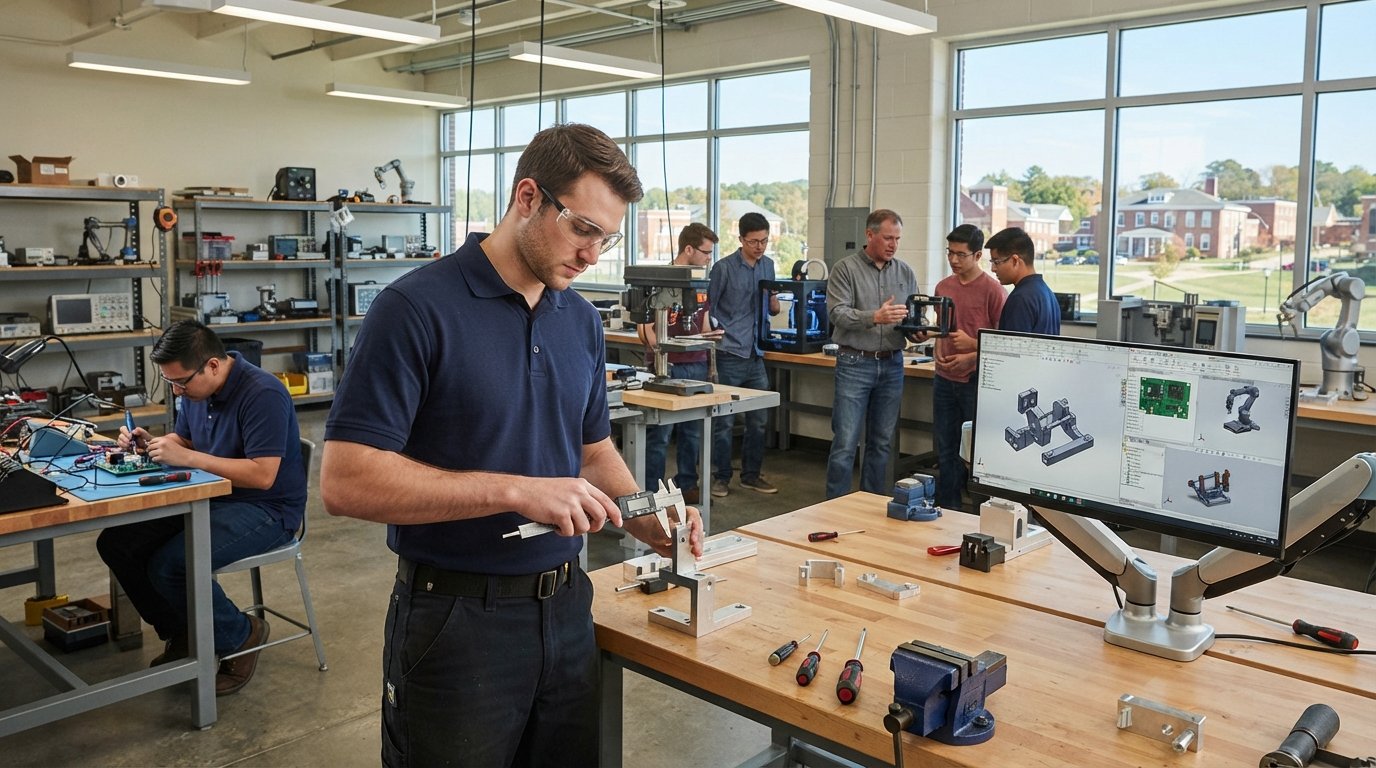
One of the biggest advantages of an in-person format is access to labs. You will work with multimeters, CAD software, 3D printers, and mechanical systems. That tactile experience is hard to replicate online, and it gives you concrete examples to discuss in job interviews. According to the U.S. Bureau of Labor Statistics, engineering technicians and related roles often require hands-on training, and associate degrees are a common entry point.
Sample Coursework and Skills You Build
While exact course titles vary, the following areas usually appear in an engineering technology associate program. These courses build a foundation you can carry into manufacturing, maintenance, drafting, or field service work.
- Technical drafting and CAD: Learn to create and interpret engineering drawings using industry software.
- Electronics and instrumentation: Understand circuits, sensors, and measurement tools used in automated systems.
- Manufacturing processes: Explore machining, welding, and production workflows.
- Applied mathematics and physics: Solve practical problems involving force, motion, and energy.
- Safety and quality control: Apply standards that keep workplaces efficient and compliant.
These skills are not abstract. A graduate might calibrate a pressure sensor on a production line, revise a CAD model for a new part, or troubleshoot an electrical panel. That applied focus is why many students choose this degree over a traditional engineering transfer track. If you are still exploring broader engineering fields, you can review What Is a Civil Engineering Degree? Career Paths and Value to see how a four-year engineering path differs from a two-year technician route.
Why Choose Carl Albert State College for This Program
Carl Albert State College is a public community college with campuses in Poteau and Sallisaw, Oklahoma. It serves a mix of traditional students, working adults, and career changers. The engineering-related technologies program reflects the college's broader emphasis on workforce development. Small class sizes mean instructors often know students by name, and advising tends to be personal rather than bureaucratic.
Location also matters. Eastern Oklahoma has manufacturing, energy, and transportation employers that need skilled technicians. CASC has partnerships with regional businesses, and some programs include internships or cooperative work experiences. Those connections can lead to job offers before graduation. For students who want to stay near home, this is a practical advantage over relocating to a distant university.
Another benefit is cost. Community college tuition is generally lower than four-year institutions, and Oklahoma residents may qualify for state aid, tribal scholarships, or workforce grants. The in-person format also reduces the need for expensive technology upgrades at home, since labs provide the equipment. If affordability is a top concern, it helps to compare this program with other low-cost options. Resources like CollegeDegrees.School offer guidance on finding accredited, budget-friendly degree pathways.
Admission Requirements and Application Steps
Admission to Carl Albert State College is designed to be accessible. You do not need to be a top high school performer to enter this program, but you should be ready for college-level math and technical courses. The steps below outline a typical path from inquiry to enrollment.
- Complete the CASC application: Apply online through the college's admissions portal. There is usually a modest or waived application fee for Oklahoma residents.
- Submit transcripts: Provide your high school transcript or GED scores. If you have prior college credit, send those transcripts for evaluation.
- Take placement tests: Assessment in math and English helps advisors place you in the right courses. Some students may need a developmental course before starting technical classes.
- Meet with an advisor: Discuss your career goals and map out a two-year schedule. This is also the time to ask about financial aid and scholarships.
- Register for classes: Enroll in first-semester courses, which often include introductory drafting, math, and a general education class.
Once enrolled, keep in touch with your advisor. Engineering technology programs have sequencing requirements, meaning some courses must be taken before others. Falling off track can delay graduation, so plan each semester carefully. If you need to work while studying, ask about evening or part-time options, though the in-person format may limit flexibility compared to online degrees.
Career Outcomes and Salary Potential
Graduates with an engineering-related technologies associate degree enter the workforce in roles that support engineers, production teams, and maintenance departments. Job titles vary, but common examples include engineering technician, CAD drafter, manufacturing technician, electronics technician, and field service representative. These positions exist in manufacturing, energy, aerospace, construction, and telecommunications.
Pay depends on location, industry, and experience. According to the U.S. Bureau of Labor Statistics, engineering technicians in some specialties earn median annual wages between $50,000 and $70,000, with experienced technicians earning more. In Oklahoma, the cost of living is lower than the national average, so those wages can stretch further. Some employers also offer overtime, shift differentials, and tuition reimbursement for further study.
Career advancement often comes through specialization or additional education. A technician might move into quality assurance, project coordination, or supervisory roles. Others transfer to a four-year engineering technology program to earn a bachelor's degree. Because the associate degree includes general education credits, transferring is usually smoother than starting from scratch. If you are considering that route, research articulation agreements between CASC and Oklahoma universities.
Industries That Hire Engineering Technology Graduates
The versatility of the "Other" designation means graduates are not locked into one industry. The list below highlights sectors where demand tends to be steady, though hiring cycles can vary with the economy.
- Advanced manufacturing: Automated production lines, robotics, and quality control.
- Energy and utilities: Power generation, pipeline operations, and renewable energy systems.
- Aerospace and defense: Component testing, assembly support, and technical documentation.
- Construction and civil infrastructure: Surveying, materials testing, and project support.
- Telecommunications: Network hardware, signal testing, and field installation.
Because technology changes quickly, employers value technicians who keep learning. Certifications in CAD software, programmable logic controllers (PLCs), or safety protocols can make you more competitive. Some students earn these credentials alongside their degree, which adds value to their resume without extending time to graduation.
Comparing This Degree to Other Options
Prospective students often weigh an associate degree in engineering technology against a bachelor's degree in engineering or a shorter certificate. Each path has trade-offs. A bachelor's degree in engineering opens doors to design and management roles, but it takes four or more years and requires stronger math preparation. A certificate can get you into entry-level work quickly, but it may limit advancement. The associate degree sits in the middle: two years of training, a credential employers recognize, and a foundation for further study.
Another comparison is online versus in-person. Online engineering technology programs exist, but they often struggle to replicate lab work. At Carl Albert State College, the in-person format ensures you get hands-on practice. That matters when you interview for jobs that require troubleshooting physical systems. If you are comparing programs, ask about lab access, equipment, and internship placement. Those factors often matter more than the name of the degree.
Finally, consider your timeline and obligations. If you need to work full-time while studying, a two-year in-person program may require careful scheduling. Some students take three years instead of two to balance work and school. That is a valid choice, and advisors can help you adjust your plan without losing momentum.
Financial Aid and Paying for Your Degree
Cost is a major factor for most students. Carl Albert State College offers financial aid through federal grants, student loans, work-study, and scholarships. Oklahoma residents may also qualify for state programs like the Oklahoma Promise or workforce development grants. Tribal members may have access to additional funding through their nation's higher education office.
To apply for federal aid, complete the Free Application for Federal Student Aid (FAFSA). The FAFSA uses your income and family situation to determine eligibility for Pell Grants and subsidized loans. Even if you think you will not qualify, filling it out is worth the effort because some scholarships require it. The CASC financial aid office can help you interpret your award letter and compare options.
Beyond aid, consider employer tuition assistance. Some manufacturing and energy companies reimburse employees for technical courses. If you already work in a related field, ask your human resources department whether they support degree completion. Apprenticeship programs can also combine paid work with classroom instruction, reducing your out-of-pocket costs.
Tips for Keeping Costs Manageable
Small decisions add up over two years. The strategies below can help you graduate with less debt and more options.
- Buy used textbooks or rent: Technical books are expensive, but older editions often work fine.
- Apply for local scholarships: Community foundations, civic clubs, and employers offer awards that go unused.
- Live at home if possible: Housing and meals are major expenses. Commuting can save thousands.
- Work part-time in a related job: A position at a machine shop or electronics retailer builds experience and income.
- Talk to your advisor before dropping a class: Dropping can affect financial aid and delay graduation.
These steps will not eliminate costs, but they can reduce the amount you borrow. Less debt means more freedom when you graduate, whether you enter the workforce or continue to a bachelor's degree.
Is This Program Right for You?
The Engineering/Engineering-Related Technologies/Technicians, Other Associate's degree, usually 2 years In-person at Carl Albert State College is a strong fit for students who like practical problem-solving, prefer hands-on learning, and want to enter the workforce relatively quickly. It is also a good choice for working adults who need to upgrade their skills without leaving their region. If you enjoy figuring out how things work, this program gives you the tools to turn that curiosity into a career.
Before you apply, visit the campus, meet an instructor, and tour the labs. Ask about job placement rates, internship partners, and transfer agreements. Those details will tell you whether the program matches your goals. If you are still undecided, explore other degree fields through CollegeDegree.Education, which connects prospective students with accredited programs and financial aid resources.
Education is an investment, but it does not have to be a gamble. With clear planning, the right support, and a program that emphasizes applied skills, you can move from interest to employment in about two years. Carl Albert State College offers one pathway, and it may be the one that fits your life.