
EMT Paramedic Associate's Degree at Central Piedmont
The Emergency Medical Technology/Technician (EMT Paramedic) Associate's degree, usually 2 years In-person at Central Piedmont Community College builds job-ready skills. Call (877)-218-7081 for guidance.

By Alex Jordan
Emergency medical services stand as one of the most vital and demanding career fields in the United States. When someone dials 911 during a life-threatening crisis, the first trained professional to arrive is often a paramedic. For students in the Charlotte, North Carolina region who want to enter this high-responsibility field, the Emergency Medical Technology/Technician (EMT Paramedic) Associate's degree, usually 2 years In-person at Central Piedmont Community College offers a structured, hands-on pathway to licensure and practice. This program combines classroom instruction, laboratory simulations, and real-world clinical rotations to prepare graduates for the National Registry of Emergency Medical Technicians (NREMT) certification exams and North Carolina state credentialing.
Central Piedmont Community College, part of the North Carolina Community College System, has built a reputation for producing job-ready allied health graduates. The paramedic program is accredited by the Commission on Accreditation of Allied Health Education Programs (CAAHEP) through the Committee on Accreditation of Educational Programs for the Emergency Medical Services Professions (CoAEMSP), which means students can trust that the curriculum meets national standards. Earning this degree typically takes two years of full-time, in-person study, though part-time options may exist depending on cohort scheduling.
Why Choose an Associate's Degree in Emergency Medical Technology
Many people enter emergency medical services through a certificate or diploma pathway, which can qualify them for entry-level EMT roles. However, pursuing an Associate of Applied Science (AAS) degree in Emergency Medical Technology opens doors that shorter programs cannot. Employers increasingly prefer or require the associate's degree for paramedic-level positions, and some hospital systems, fire departments, and private ambulance services use the degree as a differentiator during hiring. Beyond immediate employment, the degree provides a foundation for career advancement into supervisory, instructional, or administrative roles within EMS agencies.
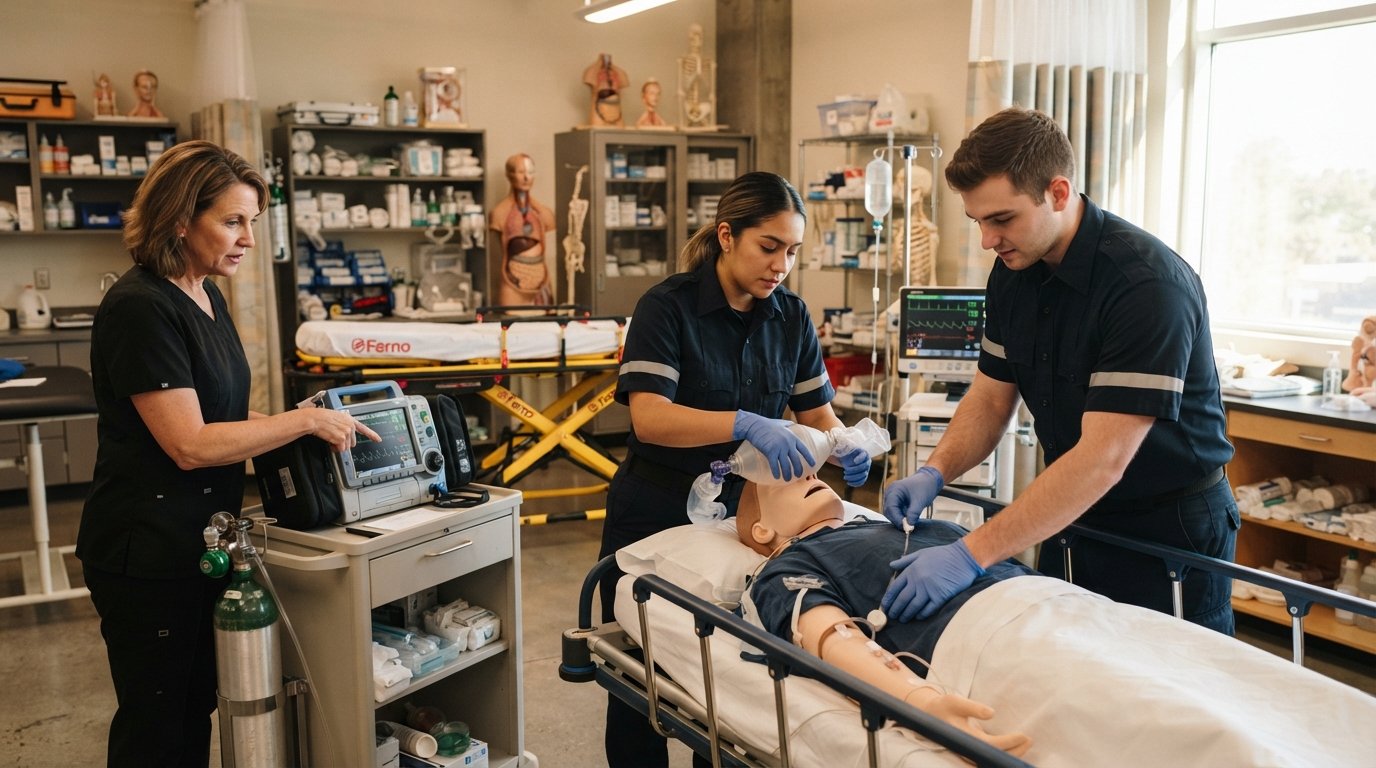
The Emergency Medical Technology/Technician (EMT Paramedic) Associate's degree, usually 2 years In-person at Central Piedmont Community College is designed to take students from foundational emergency care skills all the way through advanced paramedic interventions. Students learn to interpret electrocardiograms, administer medications, manage airways, perform advanced life support, and make rapid clinical decisions under pressure. The in-person format is essential because paramedic training demands hands-on repetition with equipment, manikins, and live patients in clinical settings.
Another advantage of the associate's degree pathway is transferability. Graduates who later decide to pursue a bachelor's degree in emergency management, public health, or healthcare administration often find that their AAS credits transfer more readily than certificate-level training. This flexibility matters for long-term career planning, especially for professionals who want to move into education, policy, or leadership.
Program Structure and What to Expect
The paramedic program at Central Piedmont is a lockstep cohort model, meaning students progress through courses together in a defined sequence. This structure fosters teamwork and peer support, which mirrors the collaborative nature of real EMS work. The curriculum typically spans four to five semesters, including a summer term, and combines general education requirements with core EMS courses.
Students should expect a demanding schedule. Classroom hours are substantial, and clinical rotations often occur on nights, weekends, or holidays to expose students to the full range of emergency scenarios. The program requires a commitment that goes well beyond attending lectures: students must complete ambulance ride time, emergency department rotations, and specialty clinical experiences in areas such as cardiac catheterization labs, operating rooms, and pediatric units.
Core topics covered in the Emergency Medical Technology/Technician (EMT Paramedic) Associate's degree, usually 2 years In-person at Central Piedmont Community College include:
- Advanced airway management and ventilation
- Cardiac rhythm interpretation and defibrillation
- Pharmacology and medication administration
- Trauma assessment and management
- Medical emergencies across the lifespan
- EMS operations and incident command
In addition to technical skills, the program emphasizes professionalism, ethics, and communication. Paramedics frequently interact with patients and families during the worst moments of their lives, so the ability to convey compassion while maintaining clinical focus is essential. Instructors at Central Piedmont bring real-world field experience to the classroom, which helps students understand how textbook knowledge translates into split-second decisions on an ambulance.
For students who are still exploring healthcare career options, resources such as the Medical Billing and Coding Programs Complete Degree Guide can provide useful context about adjacent allied health pathways that may complement or supplement an EMS career.
Admission Requirements and Prerequisites
Admission to the paramedic program at Central Piedmont is competitive and requires more than just submitting an application. Prospective students must first meet general college admission requirements, which include a high school diploma or equivalent and placement testing in math, reading, and English. Many applicants complete prerequisite courses such as anatomy and physiology, medical terminology, and EMT Basic certification before applying to the paramedic track.
Because the program is in-person and cohort-based, seats are limited. Applicants should plan ahead and ensure they have completed all prerequisite coursework well before the application deadline. Background checks, drug screens, immunizations, and CPR certification are typically required before clinical rotations begin. Students should also be prepared for the physical demands of the profession, which include lifting patients, standing for long periods, and working in adverse weather conditions.
Financial considerations are important as well. Tuition for community college programs is generally more affordable than four-year institutions, but students should still explore financial aid options. Grants, scholarships, and workforce development funding may be available for EMS students. The College & Tuition resource offers guidance on navigating higher education costs, financial aid applications, and scholarship opportunities, which can help students make informed decisions about funding their education.
Career Outcomes and Job Outlook
Graduates of the Emergency Medical Technology/Technician (EMT Paramedic) Associate's degree, usually 2 years In-person at Central Piedmont Community College are prepared for immediate employment in a variety of settings. The most common employers include municipal fire departments, county EMS agencies, private ambulance companies, hospital-based transport teams, and event medical services. Some paramedics also work in industrial settings, theme parks, or sports venues.
According to the U.S. Bureau of Labor Statistics, employment of EMTs and paramedics is projected to grow faster than the average for all occupations over the next decade. Demand is driven by an aging population, increased reliance on emergency services, and the expansion of community paramedicine programs that use paramedics for non-emergency home visits and chronic care management. In North Carolina, the Charlotte metropolitan area has a strong demand for credentialed paramedics, particularly as healthcare systems expand prehospital care capabilities.
Salary ranges vary by employer, location, and experience. Entry-level paramedics in North Carolina can expect starting wages that reflect the responsibility and skill level of the role, with opportunities for overtime, shift differentials, and advancement into supervisory positions. Paramedics who pursue additional certifications, such as critical care transport or flight paramedic credentials, can access higher-paying specialty roles.
Accreditation and Licensure
Accreditation is a critical factor when choosing any healthcare education program. The paramedic program at Central Piedmont holds accreditation through CoAEMSP, which ensures the curriculum meets national standards for paramedic education. Graduates are eligible to sit for the NREMT paramedic certification exam, which is required for North Carolina state licensure.
Licensure in North Carolina involves passing the NREMT exam and completing a state application process, including a criminal background check. Maintaining licensure requires continuing education hours and periodic recertification. Students should verify current requirements with the North Carolina Office of Emergency Medical Services, as regulations can change.
Is This Program Right for You?
The Emergency Medical Technology/Technician (EMT Paramedic) Associate's degree, usually 2 years In-person at Central Piedmont Community College is an excellent fit for individuals who thrive in fast-paced, high-stakes environments and who want a career that makes a tangible difference in their communities. It suits students who prefer hands-on learning over purely online coursework, who are comfortable with irregular schedules, and who possess strong critical thinking and communication skills.
Prospective students should honestly assess their readiness for the emotional and physical demands of the profession. Paramedics witness trauma, illness, and death, and the job requires resilience and healthy coping strategies. Programs like Central Piedmont's include stress management and wellness components, but personal support systems and self-care practices are equally important.
For those who are ready to commit, the rewards are substantial. Paramedics enjoy a sense of purpose, strong team bonds, and the knowledge that their skills save lives. The associate's degree provides a solid foundation for a lifelong career in emergency services, whether on the streets, in the air, or in leadership roles.
To learn more about program specifics, application deadlines, and information sessions, visit Central Piedmont Community College's official website or contact their admissions office directly. Taking the first step toward this degree could be the beginning of a fulfilling and impactful career in emergency medical services.