
EMCC Medical/Clinical Assistant Associate's Degree Guide
A Medical/Clinical Assistant Associate's degree, usually 2 years In-person at Eastern Maine Community College, provides hands-on training and a fast path to healthcare jobs.

By Alex Jordan
Choosing a healthcare career path often comes down to balancing time, cost, and job security. For many students in Maine, the Medical/Clinical Assistant Associate's degree, usually 2 years In-person at Eastern Maine Community College, offers a practical and respected route into the medical field. This program combines classroom instruction with hands-on clinical experience, preparing graduates for roles in physicians' offices, clinics, and other healthcare settings. If you are exploring fast-track options, our guide on accelerated medical assistant programs explained covers how compressed timelines compare to traditional two-year degrees.
Eastern Maine Community College (EMCC), located in Bangor, has a long history of training healthcare professionals for the region. The Medical/Clinical Assistant Associate's degree, usually 2 years In-person at Eastern Maine Community College, is designed to meet the demand for skilled support staff in a variety of medical environments. Unlike shorter certificate programs, this associate degree provides a broader foundation in anatomy, medical terminology, administrative procedures, and patient care, which can lead to greater advancement opportunities over time.
In this article, we will explore what the program entails, admission requirements, costs, financial aid options, career outcomes, and how it compares to other educational pathways. Whether you are a recent high school graduate, a career changer, or a working adult looking to enter healthcare, understanding the specifics of this degree will help you make an informed decision about your future.
Program Overview and Curriculum
The Medical/Clinical Assistant Associate's degree, usually 2 years In-person at Eastern Maine Community College, is a full-time program that blends general education courses with specialized medical and clinical training. Students can expect to take classes in subjects such as medical terminology, anatomy and physiology, pharmacology, medical office administration, and clinical procedures. The curriculum is structured to provide both the theoretical knowledge and the practical skills needed to function effectively in a medical practice.
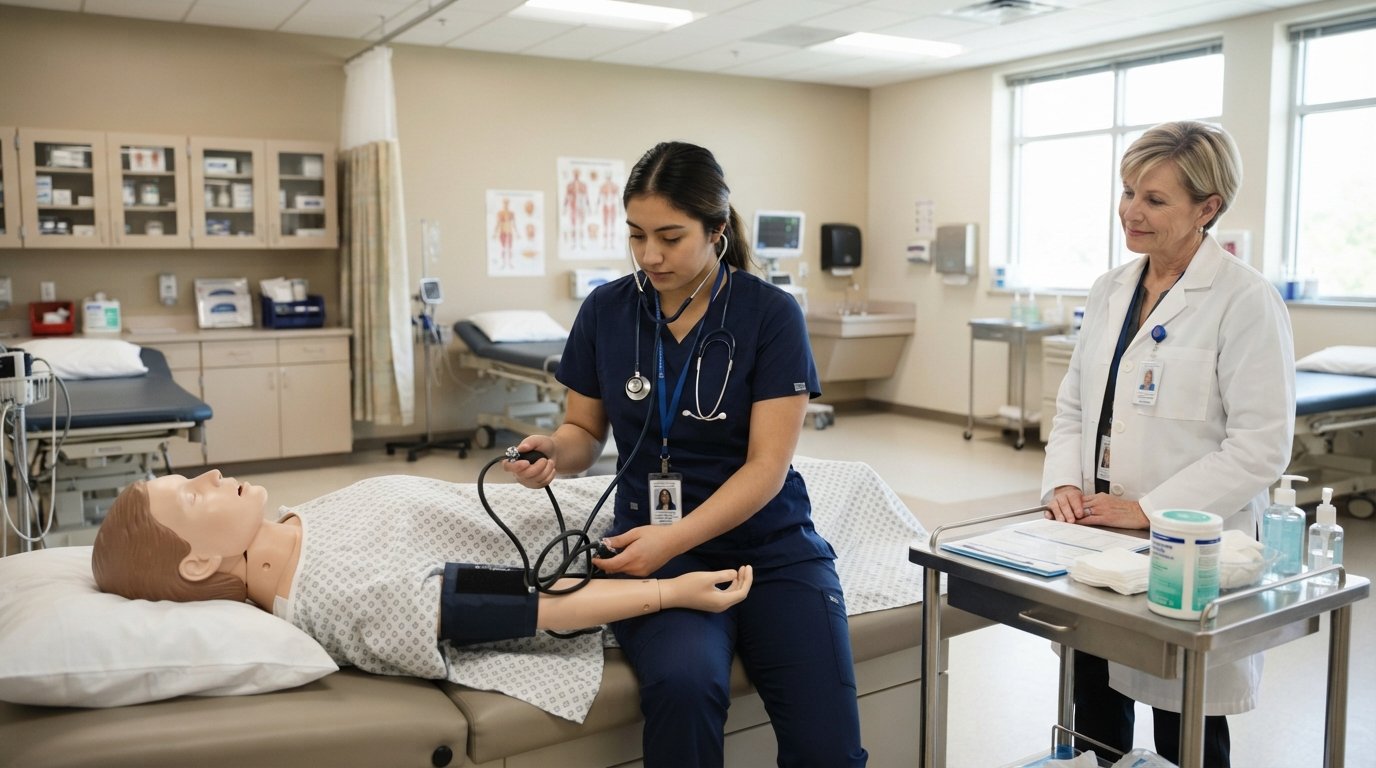
Because the program is delivered in person, students benefit from face-to-face interaction with instructors and peers, as well as access to campus laboratories and simulation equipment. This hands-on approach is particularly important for clinical skills like venipuncture, EKG administration, wound care, and patient positioning. Many courses include a lab component where students practice on mannequins or with each other before entering real clinical settings.
In addition to clinical coursework, the program includes an externship or practicum component, typically completed in the final semester. During this externship, students work under the supervision of healthcare professionals in local clinics, hospitals, or physician offices. This real-world experience not only builds confidence but also provides networking opportunities that can lead to job offers after graduation.
Here is a sample of core courses you might encounter in this associate degree program:
- Medical Terminology and Anatomy
- Clinical Procedures and Patient Care
- Medical Office Management and Billing
- Pharmacology and Medication Administration
- Externship in a Clinical Setting
These courses are designed to prepare students for national certification exams, such as the Certified Medical Assistant (CMA) or Registered Medical Assistant (RMA) credentials. While certification is not always required to start working, it can enhance employability and earning potential. The program's accreditation also ensures that credits are transferable to four-year institutions if students decide to pursue further education in healthcare administration or nursing.
Admission Requirements and Application Process
Admission to the Medical/Clinical Assistant Associate's degree, usually 2 years In-person at Eastern Maine Community College, follows the standard application process for EMCC. Prospective students must submit an application, official high school transcripts or GED scores, and possibly placement test scores. Some programs may require a background check or immunization records prior to the clinical externship, given the nature of healthcare work.
It is recommended that applicants have a strong foundation in math and science, as the curriculum includes courses like anatomy and pharmacology. However, EMCC offers developmental courses for students who need to brush up on these subjects before starting the program. Advisors are available to help map out a plan of study that fits each student's schedule and goals.
Because the program is in-person, students should also consider logistics such as commuting to campus, parking, and time commitment for daytime classes and labs. The two-year timeline assumes full-time enrollment; part-time options may be available but would extend the duration. For those who need to balance work or family obligations, speaking with an academic advisor about flexible scheduling is essential.
Costs, Financial Aid, and Affordability
Understanding the cost of the Medical/Clinical Assistant Associate's degree, usually 2 years In-person at Eastern Maine Community College, is crucial for planning. Tuition and fees for Maine residents are significantly lower than for out-of-state students, making it an affordable option for local residents. Additional costs include textbooks, uniforms, stethoscopes, and other clinical supplies, as well as potential certification exam fees.
Fortunately, there are numerous financial aid opportunities. Students can apply for federal grants like the Pell Grant, state grants, scholarships, and student loans. EMCC's financial aid office can help students navigate the FAFSA and identify scholarships specific to healthcare fields. Some employers in the region also offer tuition reimbursement or assistance for employees seeking to advance their skills.
For those concerned about upfront costs, it is worth noting that many students qualify for enough aid to cover tuition and some living expenses. Additionally, the relatively short duration of the program means students can enter the workforce sooner and begin earning a salary, which can offset the initial investment. When comparing programs, be sure to factor in the total cost of attendance, not just tuition, and consider the potential return on investment based on local wages.
If you are exploring other degree options, CollegeDegrees.School offers resources on college degrees and career planning that can help you compare costs and pathways across fields.
Career Outcomes and Job Outlook
Graduates of the Medical/Clinical Assistant Associate's degree, usually 2 years In-person at Eastern Maine Community College, are prepared for a variety of roles in the healthcare industry. Common job titles include medical assistant, clinical assistant, medical office assistant, and patient care coordinator. These positions are found in physicians' offices, outpatient clinics, hospitals, nursing homes, and other healthcare facilities.
According to the Bureau of Labor Statistics, employment of medical assistants is projected to grow much faster than the average for all occupations over the next decade, driven by the aging population and increased demand for preventive care. In Maine, the need for healthcare support staff is particularly strong in rural areas where access to care is limited. Graduates may find opportunities close to home or in nearby communities.
Earnings for medical assistants vary by location, experience, and certification. In Maine, the median annual wage is competitive with other entry-level healthcare roles, and those with an associate degree and certification often command higher pay. Advancement opportunities include supervisory roles, specialized clinical positions, or further education in nursing, healthcare administration, or public health.
Here is a list of potential work settings for graduates:
- Private medical practices
- Community health centers
- Hospital outpatient departments
- Specialty clinics (e.g., cardiology, dermatology)
- Long-term care facilities
Many students choose this degree as a stepping stone to other healthcare careers. The credits earned can often be applied toward a bachelor's degree in health sciences or nursing, allowing for seamless transition if desired. The hands-on experience gained during the program also provides a solid foundation for those who wish to pursue advanced certifications or specialized training.
Comparing to Other Educational Pathways
When considering the Medical/Clinical Assistant Associate's degree, usually 2 years In-person at Eastern Maine Community College, it is helpful to compare it with other options. Certificate programs in medical assisting typically take one year or less and focus narrowly on clinical and administrative skills. While faster and cheaper, certificates may not provide the same depth of general education or the same level of career mobility as an associate degree.
Online programs offer flexibility for students who cannot attend in-person classes, but they may lack the hands-on clinical practice that employers value. The in-person format at EMCC ensures that students receive supervised practice in labs and real clinical settings, which can be a significant advantage when job hunting. Additionally, the local connections and externship placements often lead directly to employment.
Bachelor's degrees in healthcare administration or nursing take four years and open up higher-level positions and higher salaries. However, for those who want to enter the workforce quickly and start earning, the two-year associate degree is a practical choice. It also allows for later advancement without the commitment of a four-year program right away.
Ultimately, the best pathway depends on your career goals, financial situation, and learning preferences. The Medical/Clinical Assistant Associate's degree, usually 2 years In-person at Eastern Maine Community College, strikes a balance between speed, cost, and comprehensive training, making it a strong option for many students.
Is This Program Right for You?
Deciding whether to pursue the Medical/Clinical Assistant Associate's degree, usually 2 years In-person at Eastern Maine Community College, involves self-reflection and research. If you enjoy working with people, have an interest in healthcare, and want a stable job with room for growth, this could be an excellent fit. The program's in-person nature means you will need to be available for daytime classes and clinical rotations, so consider your schedule and responsibilities.
Prospective students should also think about their long-term goals. If you see yourself in a leadership role or want to specialize in a particular area of medicine, the associate degree provides a solid base and can be a stepping stone to further education. If you are unsure, reaching out to the program coordinator or attending an information session can provide clarity.
Financial considerations are also important. While the program is affordable, especially for Maine residents, it is wise to plan for costs and explore all aid options. The potential for a quick return on investment through employment is a key benefit, as graduates can start earning relatively soon after completion.
Finally, consider the demand for medical assistants in your area. If you live in or near Bangor or other parts of Eastern Maine, job prospects are likely strong. Even if you plan to relocate, the skills and certification are portable to other states, though some states may have additional requirements.
In summary, the Medical/Clinical Assistant Associate's degree, usually 2 years In-person at Eastern Maine Community College, offers a comprehensive, hands-on education that prepares students for a rewarding career in healthcare. With a mix of clinical and administrative training, externship experience, and opportunities for certification, graduates are well-positioned to enter a growing field. By carefully evaluating your goals and resources, you can determine if this program is the right next step for your future.