
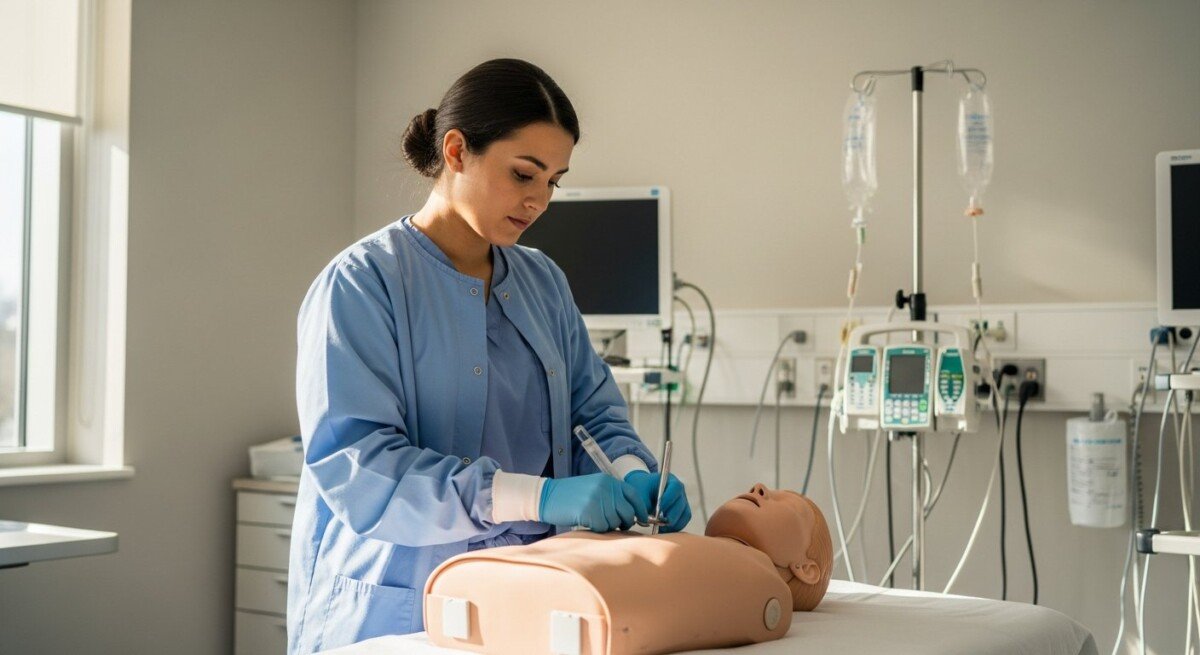
Earn Your Associate Degree in Nursing in Utah: A Practical Guide
An Associate Degree in Nursing in Utah provides a fast, affordable path to becoming a licensed RN, with strong local job demand. This guide covers accredited programs and licensure steps.

By Mason Reed
For many aspiring nurses in the Beehive State, the most direct and efficient path to a rewarding healthcare career begins with an Associate Degree in Nursing (ADN). This focused, two-year program provides the essential clinical skills and theoretical knowledge required to sit for the National Council Licensure Examination for Registered Nurses (NCLEX-RN). In Utah, where healthcare facilities from bustling urban hospitals in Salt Lake City to rural clinics across the state face consistent demand for skilled nursing professionals, an ADN represents a strategic and accessible entry point. This guide will navigate the specifics of obtaining your associate degree in nursing in Utah, from selecting an accredited program to understanding the unique licensure and career landscape within the state.
Understanding the ADN Pathway in Utah
The Associate Degree in Nursing is a practical, career-focused educational track designed to prepare students for the role of a registered nurse. Unlike a four-year Bachelor of Science in Nursing (BSN), the ADN curriculum concentrates intensely on hands-on clinical practice and core nursing competencies, allowing graduates to enter the workforce more quickly. In Utah, these programs are typically offered at community colleges, technical colleges, and some private institutions. The curriculum blends general education courses, such as anatomy, physiology, and microbiology, with specialized nursing coursework in areas like adult health, pediatrics, maternal-newborn care, and mental health nursing. A significant portion of the program is dedicated to supervised clinical rotations in various healthcare settings, providing real-world experience.
Graduates of an ADN program in Utah are awarded an Associate of Applied Science (AAS) in Nursing or an Associate of Science (AS) in Nursing and are then eligible to apply to take the NCLEX-RN. Passing this national exam grants state licensure as a Registered Nurse (RN). It is crucial to understand that while an ADN qualifies you for RN licensure, the broader healthcare industry is increasingly emphasizing the BSN for career advancement and specialized roles. Many Utah RNs begin their careers with an ADN and later pursue an RN-to-BSN completion program, often offered online, to further their education while working. This “ladder” approach allows for immediate entry into the profession with the option to build upon that foundation.
Choosing an Accredited ADN Program in Utah
Selecting the right program is the most critical step in your nursing journey. Accreditation ensures that the education you receive meets rigorous national standards for quality and rigor, which is essential for both licensure and future employment. In Utah, you should look for programs that hold accreditation from the Accreditation Commission for Education in Nursing (ACEN) or the Commission on Collegiate Nursing Education (CCNE). Additionally, the program must be approved by the Utah Division of Professional Licensing (DOPL) to ensure its graduates are eligible for state licensure.
When comparing programs, consider factors beyond just location and cost. Investigate the program’s NCLEX-RN first-time pass rates, which are publicly available and indicate how well the curriculum prepares students for the licensing exam. Examine the clinical rotation partnerships: stronger programs have relationships with a variety of hospitals, clinics, and specialty care centers. Also, assess student support services, such as tutoring, career placement, and academic advising. Many prospective students in Utah balance work and family commitments, making the schedule format (traditional daytime, evening/weekend, or hybrid) a key deciding factor. For a detailed look at navigating similar program choices in a neighboring state, our guide on becoming an RN in Nevada outlines comparable considerations.
Key elements to verify before applying include:
- Accreditation Status: Confirm active accreditation from ACEN or CCNE.
- DOPL Approval: Ensure the program is listed as approved by the Utah Division of Professional Licensing.
- NCLEX Pass Rates: Look for consistent pass rates at or above the national average.
- Program Duration & Format: Most full-time ADN programs take 2 years (4-5 semesters), but some may offer accelerated or part-time tracks.
- Admission Competitiveness: ADN programs in Utah are often selective, with prerequisites like TEAS exam scores, GPA minimums, and completed science courses.
Licensure and Career Outlook for Utah ADN Graduates
Upon successful completion of an accredited ADN program, your next step is to apply for RN licensure in Utah through the DOPL. This process involves submitting an application, providing official transcripts, passing a criminal background check, and receiving authorization to test for the NCLEX-RN. Once you pass the NCLEX, DOPL will issue your RN license. Utah is part of the Nurse Licensure Compact (NLC), meaning your Utah multistate license allows you to practice physically or via telehealth in other NLC member states without obtaining additional licenses. This is a significant advantage for nurses living near state borders or those considering travel nursing.
The career outlook for RNs in Utah is strong. The U.S. Bureau of Labor Statistics projects steady growth for registered nurses nationwide, and Utah’s expanding population and healthcare sector contribute to robust local demand. ADN-prepared RNs in Utah typically find employment in hospitals (particularly in medical-surgical, emergency, and critical care units), long-term care facilities, rehabilitation centers, clinics, and home health agencies. While some major hospital systems in urban areas may express a preference for BSN-prepared nurses, especially for new graduate residency programs, many facilities throughout Utah actively hire and value ADN graduates for their strong clinical skills.
Starting salaries for RNs in Utah vary by location, facility type, and shift differentials. It is important to conduct thorough financial planning for your education. Exploring all options for financial aid, scholarships specifically for nursing students, and employer tuition reimbursement programs is essential. For comprehensive resources on managing the costs of higher education, college degree guidance can be an invaluable tool in your planning process.
Frequently Asked Questions
Can I complete an ADN program online in Utah?
While the theoretical coursework for an ADN can sometimes be completed online or in a hybrid format, the clinical component requires in-person, hands-on training at approved healthcare facilities. Therefore, no ADN program is fully online. You will need to reside in or near Utah to complete clinical rotations.
How long does it take to become an RN with an ADN in Utah?
A full-time student can typically complete an ADN program in two years (four semesters). After graduation, the licensure process (applying and taking the NCLEX) can take an additional 1-3 months. So, from program start to receiving your license, plan for approximately 25-28 months.
What are the typical prerequisites for a Utah ADN program?
Common prerequisites include college-level anatomy & physiology, microbiology, English composition, psychology, and mathematics. Many programs require a minimum GPA (often 3.0 or higher) in these prerequisite courses and a passing score on an entrance exam like the Test of Essential Academic Skills (TEAS).
Is an ADN or a BSN better for nursing in Utah?
Both degrees lead to RN licensure. The ADN is faster and less expensive, ideal for launching your career quickly. The BSN may offer advantages in hiring competitiveness at some large hospitals and is required for certain advanced paths. Many nurses start with an ADN and later enroll in an RN-to-BSN program.
What is the cost of an ADN program in Utah?
Costs vary significantly between public community colleges and private institutions. At a public Utah community college, total program costs (tuition and fees) can range from $8,000 to $15,000. Private college programs can cost $30,000 or more. Always factor in additional costs for books, uniforms, supplies, and licensure fees.
Earning your associate degree in nursing in Utah is a proven and practical route to a stable, fulfilling career in healthcare. By carefully selecting an accredited program, diligently preparing for the NCLEX-RN, and understanding the Utah licensure process, you can efficiently transition from student to skilled registered nurse. The demand for compassionate, competent nursing professionals in Utah ensures that this investment in your education is one that will yield meaningful personal and professional returns for years to come.