
Earn Your Associate Degree in Nursing in New York
Launch your nursing career in New York with an Associate Degree in Nursing, the fastest path to becoming a licensed RN and entering the healthcare workforce.

By Alex Jordan
For many aspiring nurses in the Empire State, the most direct and efficient path to a rewarding healthcare career begins with an Associate Degree in Nursing (ADN). This focused, typically two-year program provides the essential clinical skills and theoretical knowledge required to sit for the NCLEX-RN licensure exam and begin practicing as a Registered Nurse (RN). In a state like New York, with its world-renowned hospital systems and diverse patient populations, an ADN offers a powerful launchpad into a stable, in-demand profession. This guide explores the specifics of pursuing an associate degree in nursing in New York, from program selection and curriculum to licensure and career advancement, providing a clear roadmap for your educational journey.
Understanding the ADN Pathway in New York
An Associate of Science (A.S.) or Associate of Applied Science (A.A.S.) in Nursing is a degree offered by community colleges, technical schools, and some four-year institutions. It is specifically designed to prepare students for entry-level nursing practice. The curriculum balances general education courses, such as English and psychology, with core nursing coursework and extensive hands-on clinical rotations in hospital and community settings. The primary objective is to equip graduates with the competencies to provide safe, effective patient care and to pass the National Council Licensure Examination for Registered Nurses (NCLEX-RN). In New York, as in all states, passing this exam is mandatory for state licensure and practice as an RN.
Choosing the ADN route in New York presents several distinct advantages. The most significant is time to completion: an ADN program generally takes two years of full-time study, compared to four years for a Bachelor of Science in Nursing (BSN). This allows students to enter the workforce, start earning a competitive RN salary, and gain valuable experience more quickly. Furthermore, ADN programs, particularly at public community colleges, are often more affordable than four-year degrees, resulting in lower student debt. For career-changers or those with financial constraints, this cost-effectiveness is a major consideration. The clinical training in ADN programs is robust and directly aligned with the skills needed for hospital medical-surgical floors, long-term care, and other primary care settings.
Key Components of a New York ADN Program
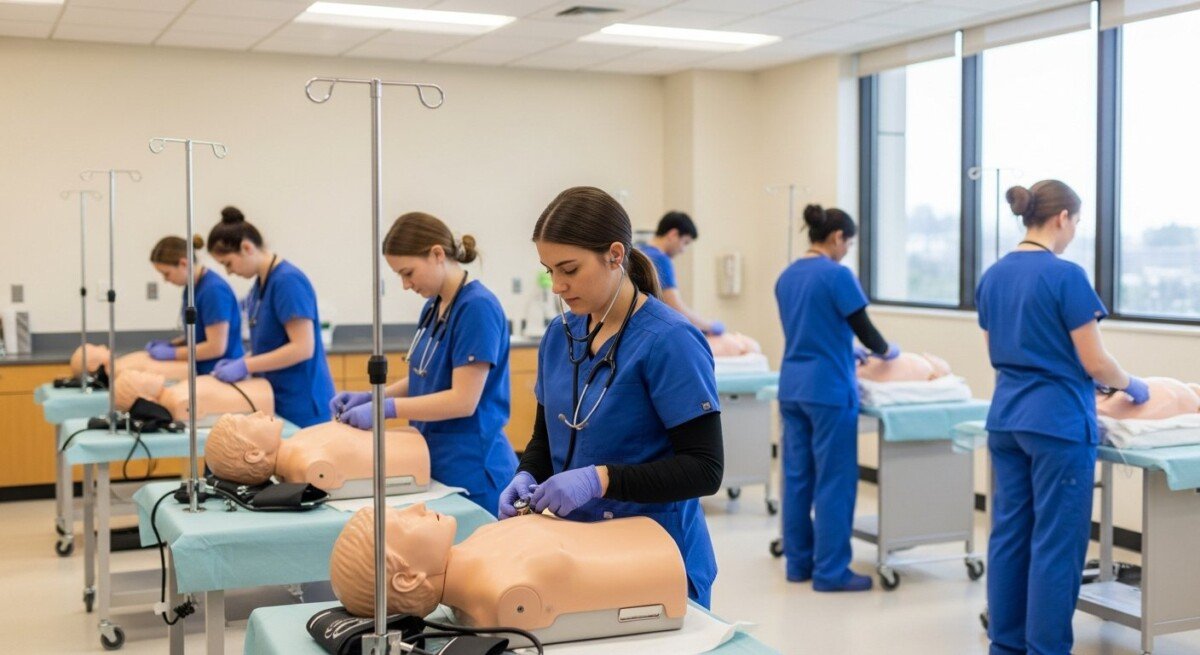
A quality ADN program in New York will have a curriculum approved by the New York State Education Department (NYSED) and will be accredited by a recognized body such as the Accreditation Commission for Education in Nursing (ACEN) or the Commission on Collegiate Nursing Education (CCNE). Accreditation is crucial, as it ensures educational standards are met and is often required for licensure exam eligibility and for transferring credits to a BSN program later. The program structure is intensive, combining classroom learning, simulation lab practice, and real-world clinical hours.
The core nursing coursework covers foundational topics essential for safe practice. These include anatomy and physiology, microbiology, nursing fundamentals, pharmacology, adult health (medical-surgical nursing), maternal-newborn nursing, pediatric nursing, and mental health nursing. Clinical rotations are the heart of the training, allowing students to apply theory under the supervision of clinical instructors and practicing RNs. In New York, students might complete rotations in major academic medical centers in New York City, regional hospitals in places like Buffalo or Albany, or community health clinics, gaining exposure to a wide spectrum of healthcare environments.
Before enrolling, prospective students must meet specific prerequisites. These commonly include:
- High school diploma or GED.
- Completion of prerequisite courses with a minimum grade, often in biology, chemistry, algebra, and English.
- A minimum cumulative GPA, typically between 2.5 and 3.0.
- Satisfactory scores on an entrance exam, such as the TEAS (Test of Essential Academic Skills).
- Background check, immunizations, and health clearance.
Admission to ADN programs, especially at well-regarded public colleges, can be competitive due to high demand and limited clinical placement slots. Therefore, strong academic performance in prerequisites is vital. For comprehensive college degree guidance on financing your education, exploring scholarship opportunities, and comparing program costs, dedicated resources can help you plan effectively.
From Student to Licensed RN: The New York Process
Graduating from an accredited ADN program is just the first step toward becoming a practicing nurse in New York. The next critical phase involves navigating the state’s licensure process. Immediately after graduation, you will receive an Authorization to Test (ATT) from your nursing program, which allows you to register for the NCLEX-RN. This computerized adaptive exam tests your knowledge and ability to make sound nursing judgments. Thorough preparation using review courses and practice questions is highly recommended.
Concurrently, you must apply for licensure with the New York State Education Department’s Office of the Professions. This application is separate from the NCLEX registration and involves submitting transcripts, fingerprints for a criminal background check, and fees. New York is part of the Nurse Licensure Compact (NLC) but only as a home state for its own residents; this means a New York license allows you to practice only within New York unless you obtain a multistate license from another compact state. Once you pass the NCLEX and your application is approved, you will be issued your RN license and can officially begin your job search.
The job market for ADN-prepared RNs in New York is strong, driven by an aging population, nurse retirements, and expanding healthcare services. While some major hospital systems, particularly in New York City, may express a preference for BSN-prepared nurses due to Magnet status aspirations, there are abundant opportunities in community hospitals, long-term acute care facilities, rehabilitation centers, clinics, physicians’ offices, and home health care. Many hospitals also have explicit tuition reimbursement or assistance programs for ADN nurses who commit to pursuing their BSN while working, creating a clear pathway for continued education. For insights into a similar pathway in another state, our detailed resource on how to become an RN in Nevada with an ADN outlines comparable steps and considerations.
Advancing Your Career After the ADN
Earning your ADN and RN license opens the door to a stable career, but it is often considered a starting point. The healthcare industry increasingly emphasizes the BSN degree. In fact, New York has considered “BSN in 10” legislation, which would require nurses to obtain a BSN within ten years of initial licensure. While not yet law, this trend underscores the importance of planning for further education. Fortunately, New York has excellent RN-to-BSN programs, many offered online, designed specifically for working nurses. These programs build upon your ADN foundation, focusing on leadership, community health, research, and public policy, and can often be completed in 1-2 years of part-time study.
Beyond the BSN, your ADN provides the clinical experience necessary to specialize. With a few years of general nursing experience, you can pursue certifications in areas like critical care (CCRN), oncology (OCN), or pediatric nursing (CPN). Furthermore, the ADN is a legitimate springboard to advanced practice roles, though it requires additional degrees. To become a Nurse Practitioner (NP), Clinical Nurse Specialist (CNS), or Nurse Anesthetist (CRNA), you will need to complete your BSN and then a Master of Science in Nursing (MSN) or Doctor of Nursing Practice (DNP). Your ADN clinical hours and experience form the indispensable bedrock for these advanced career trajectories.
Frequently Asked Questions
How long does it take to complete an ADN program in New York?
Most full-time ADN programs are designed to be completed in two years (four semesters). Part-time options are available at some schools but will extend the timeline to three or four years.
Can I work while completing my ADN?
While possible, it is challenging. ADN programs require a significant time commitment for classes, labs, and clinical rotations, which may include evenings and weekends. Many students work limited part-time hours, but full-time work is generally not advised during intensive clinical semesters.
Is an ADN from New York recognized in other states?
Yes, but you must apply for licensure by endorsement in the new state. If you move to a Nurse Licensure Compact (NLC) state, you would need to obtain a multistate license from that state as your primary residence. New York’s single-state license is not automatically transferable.
What is the average salary for an ADN-prepared RN in New York?
Salaries vary widely by region (with NYC being higher), experience, and facility type. According to recent data, the average annual salary for RNs in New York State ranges from approximately $85,000 to over $100,000, with ADN-prepared nurses starting at the lower end of that scale.
Are online ADN programs available in New York?
Fully online ADN programs are rare because of the required hands-on clinical component. However, many programs offer hybrid formats where theory courses are online, but labs and clinicals are completed in person at approved local facilities.
Pursuing an associate degree in nursing in New York is a strategic and practical choice for launching a fulfilling career in healthcare. It provides a faster, more affordable route to RN licensure and entry into a profession known for its stability and impact. By carefully selecting an accredited program, successfully navigating the NCLEX and state licensure process, and embracing the opportunity for lifelong learning through RN-to-BSN pathways, you can build a successful and dynamic nursing career in one of the world’s most dynamic healthcare landscapes. Your journey starts with that first step of researching and applying to the right ADN program for your goals.