
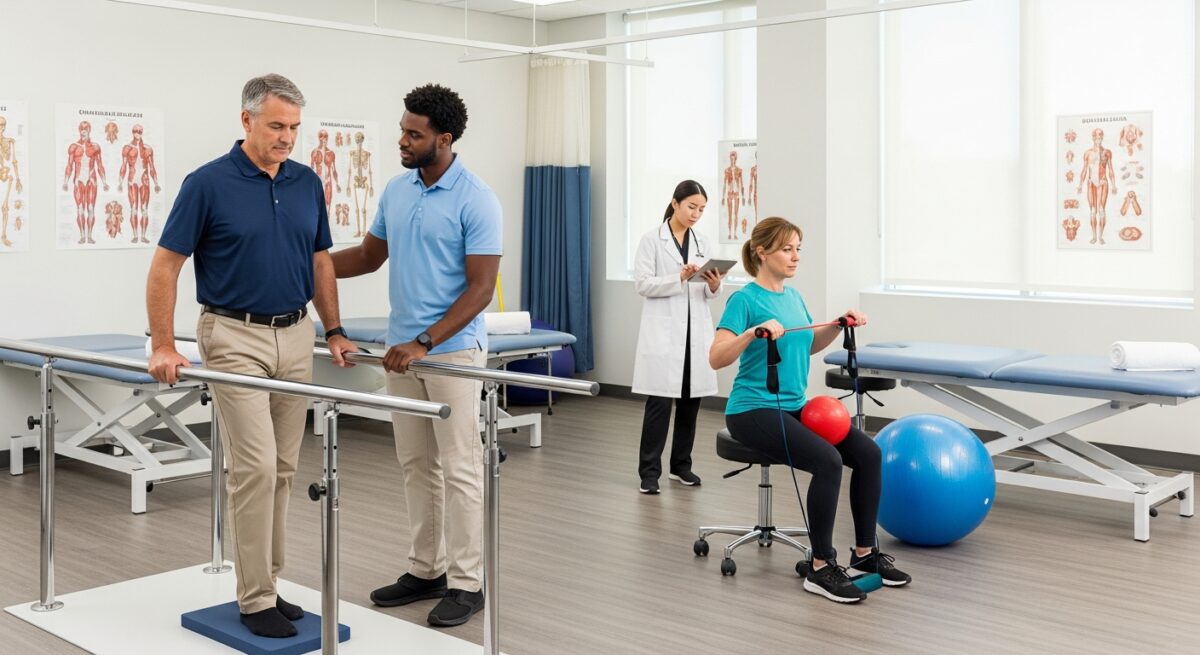
If you are considering a career that combines science, hands-on patient care, and the opportunity to restore mobility and improve quality of life, becoming a physical therapist is a powerful choice. The path to this rewarding profession requires earning a Doctor of Physical Therapy (DPT) degree, a rigorous clinical doctorate that prepares you for licensure and practice. This comprehensive Doctor of Physical Therapy Programs and Degree Guide will walk you through everything you need to know about DPT programs, from admission requirements and curriculum to career outcomes and financial considerations. By the end, you will have a clear roadmap for pursuing this advanced degree and launching a fulfilling career in physical therapy.
Physical therapy is a dynamic field that addresses movement dysfunction caused by injury, illness, or aging. Physical therapists are movement experts who diagnose and treat patients of all ages, using therapeutic exercise, manual techniques, and education to help them regain function and prevent disability. The demand for skilled physical therapists continues to grow, driven by an aging population and increased emphasis on non-surgical, rehabilitative care. To enter this profession, you must graduate from a Commission on Accreditation in Physical Therapy Education (CAPTE)-accredited DPT program and pass the National Physical Therapy Examination (NPTE).
What Is a Doctor of Physical Therapy (DPT) Degree?
A Doctor of Physical Therapy (DPT) is a professional doctoral degree that prepares individuals to practice as licensed physical therapists. Unlike a research-focused PhD, the DPT is a clinical doctorate emphasizing applied knowledge, patient examination, diagnosis, intervention, and outcomes assessment. The degree typically requires three years of full-time study after completing a bachelor’s degree with prerequisite coursework. Programs blend classroom instruction in foundational sciences like anatomy, physiology, and neuroscience with extensive clinical education experiences.
The transition from a master’s degree to the DPT as the entry-level degree occurred in the early 2000s, reflecting the profession’s growing complexity and the need for autonomous practitioners. Today, all accredited physical therapy programs in the United States award the DPT. This shift ensures that graduates possess the advanced reasoning, evidence-based practice skills, and professional behaviors required to meet the healthcare needs of a diverse population.
Core Components of a DPT Curriculum
Most DPT programs follow a similar structure, though specific courses vary by institution. The curriculum is divided into three main areas: foundational sciences, clinical sciences, and clinical education. Foundational courses include human anatomy, physiology, kinesiology, neuroscience, and pathology. Clinical sciences cover therapeutic exercise, manual therapy, pharmacology, diagnostic imaging, and management of specific patient populations such as orthopedics, neurology, pediatrics, and geriatrics.
Students also complete coursework in professional development, including ethics, healthcare administration, communication, and interprofessional collaboration. A hallmark of DPT education is the integration of clinical education experiences, where students apply classroom knowledge in real-world settings under the supervision of licensed physical therapists. These experiences typically total 30 to 40 weeks of full-time clinical rotations, often in multiple settings like hospitals, outpatient clinics, skilled nursing facilities, and schools.
Before you begin a DPT program, you must complete prerequisite courses as part of your undergraduate degree. Common prerequisites include:
- Human or vertebrate anatomy with lab
- Human or mammalian physiology with lab
- General chemistry with lab (one or two semesters)
- Physics with lab (one or two semesters)
- Biology with lab (one or two semesters)
- Statistics
- Psychology (introductory and sometimes abnormal psychology)
Many programs also require coursework in exercise physiology, medical terminology, and sociology. Admission is competitive, so a strong GPA, especially in science prerequisites, is essential. Most programs require a bachelor’s degree before enrollment, though some offer accelerated pathways for students who complete prerequisites during their undergraduate years.
Admission Requirements for DPT Programs
Gaining admission to a DPT program requires careful planning and a strong application. The typical applicant holds a bachelor’s degree with a minimum cumulative GPA of 3.0, though many successful candidates have GPAs of 3.5 or higher. Science GPA is particularly important, and programs often set a minimum of 3.0 for prerequisite courses. Beyond grades, programs evaluate candidates through observation hours, letters of recommendation, a personal statement, and the Graduate Record Examination (GRE). Some schools have moved to test-optional policies, but many still require GRE scores.
Observation hours are a critical component of the application. Programs want to see that you have realistic exposure to the profession. Most require between 50 and 150 hours of volunteer or paid work in at least two different physical therapy settings, such as an outpatient orthopedic clinic and an inpatient rehabilitation hospital. These experiences help you confirm your career choice and provide material for your personal statement.
Letters of recommendation typically come from a licensed physical therapist, a professor, and a supervisor or employer. Your personal statement should articulate your motivation for pursuing physical therapy, highlight relevant experiences, and demonstrate your understanding of the profession’s demands and rewards. Applying through the Physical Therapist Centralized Application Service (PTCAS) streamlines the process, allowing you to submit one application to multiple programs.
How to Choose the Right Doctor of Physical Therapy Program
Selecting the right DPT program is a major decision that affects your education, career trajectory, and financial future. With over 250 accredited programs across the United States, you have many options. Factors to consider include program accreditation, graduation and licensure pass rates, clinical education opportunities, faculty expertise, location, cost, and program format. Accreditation by CAPTE is non-negotiable, as only graduates of CAPTE-accredited programs can sit for the NPTE and obtain licensure.
Program reputation and outcomes matter. Look for programs with high first-time pass rates on the NPTE, strong job placement rates, and a curriculum that aligns with your interests, whether in orthopedics, sports, neurology, pediatrics, or geriatrics. Clinical education opportunities are particularly important, as they shape your practical skills and professional network. Some programs have affiliations with top hospitals and clinics, while others offer international experiences or specialized residency pathways.
Cost is a significant consideration, as DPT programs can be expensive. Tuition varies widely, from around $30,000 for an in-state public program to over $120,000 for private institutions. Factor in living expenses, books, and fees. Financial aid, scholarships, and graduate assistantships can help offset costs. Many students also consider the availability of online or hybrid DPT programs, which offer flexibility for working adults or those with family obligations. However, note that all DPT programs require on-campus labs and clinical rotations, so purely online options are rare.
If you are exploring other advanced degrees, you might find value in our guide on A Comprehensive Guide to San Diego State Online Degrees: Programs and Opportunities, which highlights flexible options for graduate study.
The DPT Application Timeline and Process
Applying to DPT programs requires careful timing. Most programs begin in the fall, and the application cycle opens in July or August of the previous year. The PTCAS application allows you to apply to multiple programs with one submission, but each program may have supplemental applications and deadlines. Start preparing at least 18 months before your intended start date. Complete prerequisite courses, take the GRE, and accumulate observation hours early to avoid last-minute stress.
The typical timeline looks like this:
- 18-24 months before enrollment: Research programs, complete prerequisite courses, and begin observing physical therapists in different settings.
- 12-18 months before enrollment: Take the GRE, request letters of recommendation, and draft your personal statement. Identify programs and note their deadlines.
- 6-12 months before enrollment: Submit your PTCAS application and any supplemental materials. Monitor deadlines, as some programs have rolling admissions.
- 3-6 months before enrollment: Interview with programs if invited. Accept offers and complete background checks and health requirements.
Interviews are a common part of the admissions process. They may be in-person or virtual and often include multiple mini-interviews (MMIs), group discussions, or traditional one-on-one conversations. Prepare by reviewing ethical scenarios, practicing your communication skills, and articulating why you are drawn to a specific program.
Career Outlook and Salary for Physical Therapists
The job outlook for physical therapists is excellent. According to the U.S. Bureau of Labor Statistics, employment of physical therapists is projected to grow 15 percent from 2022 to 2032, much faster than the average for all occupations. This growth is driven by the aging baby boomer population, who are staying active later in life but also experiencing age-related conditions like arthritis and joint replacements. Additionally, advances in medical technology and rehabilitation techniques are expanding the scope of physical therapy.
Physical therapists work in a variety of settings, including outpatient clinics, hospitals, skilled nursing facilities, home health agencies, schools, sports medicine centers, and private practice. Some specialize in areas such as orthopedics, neurology, cardiopulmonary rehabilitation, geriatrics, pediatrics, or sports physical therapy. With a DPT, you may also pursue board certification through the American Board of Physical Therapy Specialties, which can enhance your expertise and earning potential.
The median annual wage for physical therapists was $97,720 in 2022, with the highest earners in home health services, nursing facilities, and outpatient care centers. Salaries vary by geographic location, experience, and setting. Many physical therapists report high job satisfaction, citing the ability to build meaningful relationships with patients and see tangible improvements in their mobility and quality of life.
For a broader look at how different degrees align with career goals, you can explore resources at collegedegrees.school, which provides additional insights into educational pathways.
Financial Aid and Affordability for DPT Students
Financing a DPT degree can be challenging, but several options exist to make it more affordable. The first step is to complete the Free Application for Federal Student Aid (FAFSA) to determine eligibility for federal loans, grants, and work-study programs. Graduate students can borrow up to $20,500 per year in Direct Unsubsidized Loans and additional amounts through Grad PLUS Loans, which have higher interest rates but cover the full cost of attendance.
Scholarships are available from the American Physical Therapy Association (APTA), state physical therapy associations, and individual universities. Many programs offer merit-based scholarships, diversity awards, or need-based grants. Some employers, especially hospitals and clinics, offer tuition reimbursement or loan repayment programs in exchange for a commitment to work for them after graduation. Additionally, the National Health Service Corps provides loan repayment for physical therapists who work in underserved areas.
It is essential to calculate the total cost of attendance, including tuition, fees, books, living expenses, and travel for clinical rotations. Public in-state programs are generally the most affordable, while private programs can be significantly more expensive. Use the APTA’s financial resources and your program’s financial aid office to create a realistic budget and repayment plan.
Frequently Asked Questions About DPT Programs
How long does it take to complete a Doctor of Physical Therapy program?
Most DPT programs require three years of full-time study, though some accelerated programs can be completed in two and a half years. Part-time options are rare but exist at a few institutions.
Can I become a physical therapist with a bachelor’s degree in a different field?
Yes. Your bachelor’s degree can be in any major, as long as you complete the prerequisite science and psychology courses. Common majors include exercise science, biology, kinesiology, and psychology.
What is the difference between a DPT and a PhD in physical therapy?
A DPT is a clinical doctorate that prepares you for practice. A PhD is a research doctorate focused on generating new knowledge through scholarship. Some physical therapists pursue both degrees for academic or research careers.
Do I need to complete a residency after earning a DPT?
No, residency is optional. However, many new graduates choose to complete a one-year clinical residency to gain advanced skills in a specialty area. Residencies are increasingly common and can improve job prospects and earning potential.
Are online DPT programs available?
Few fully online DPT programs exist because the degree requires extensive in-person lab work and clinical education. Some programs offer hybrid formats with online coursework and on-campus intensives, but all require hands-on components.
How much does a DPT program cost?
Tuition ranges from approximately $30,000 to over $120,000 total for the three-year program, depending on whether the institution is public or private and the student’s residency status. Additional costs include fees, books, and living expenses.
Becoming a physical therapist is a demanding but deeply rewarding journey. This Doctor of Physical Therapy Programs and Degree Guide has provided a thorough overview of the educational path, from prerequisites and admission to curriculum and career outcomes. As you move forward, research specific programs, visit campuses if possible, and connect with current students or alumni. Your commitment to helping others regain movement and independence will guide you through the challenges of graduate school and into a fulfilling career. Take the next step by exploring accredited DPT programs and starting your application today.