
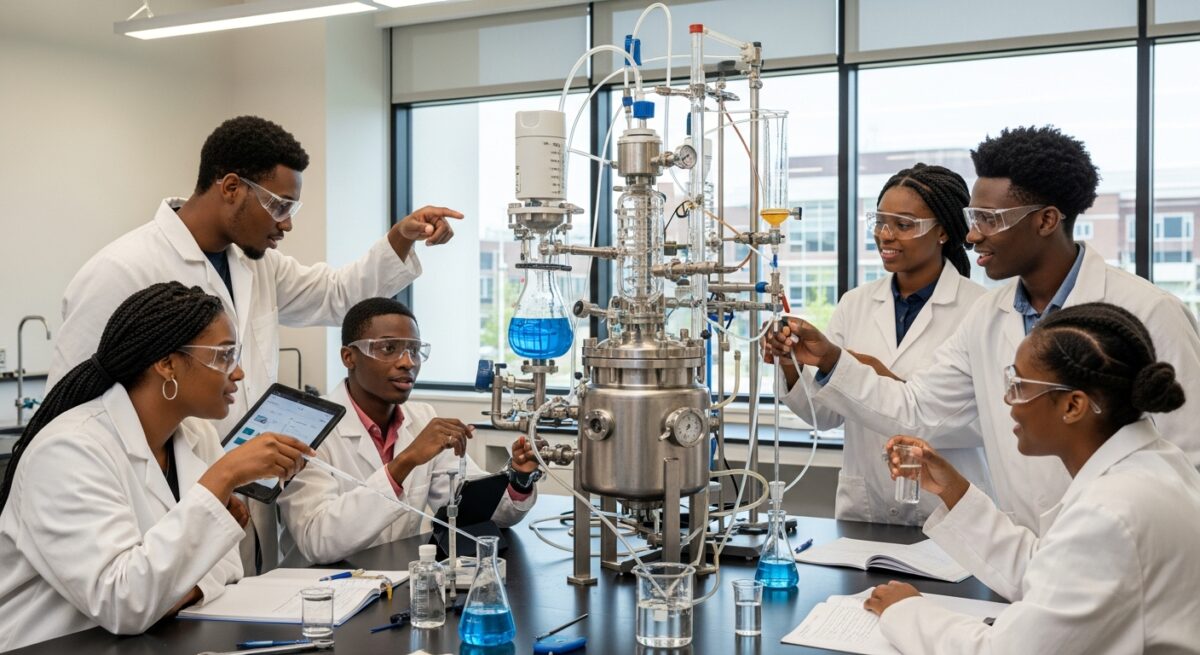
If you enjoy chemistry, physics, and mathematics, and you want to solve real-world problems, a chemical engineering degree might be the perfect fit. This field combines hard science with engineering principles to transform raw materials into valuable products. From pharmaceuticals to fuel, chemical engineers design the processes that make modern life possible. This engineering degree guide explains exactly what you will study in a chemical engineering program and the diverse career paths that await after graduation.
What Is a Chemical Engineering Degree?
A chemical engineering degree is a professional undergraduate program that teaches students how to design, optimize, and manage industrial processes. Unlike pure chemistry, which focuses on discovering new compounds, chemical engineering focuses on scaling those discoveries into commercial production. The curriculum blends core engineering subjects with advanced chemistry and biology.
Most chemical engineering programs are accredited by the Accreditation Board for Engineering and Technology (ABET). This accreditation is important because it ensures the program meets rigorous academic standards and qualifies graduates for professional engineering licensure. A typical bachelor’s degree takes four years of full-time study, though some students may take longer if they include a co-op or internship term.
The demand for chemical engineers remains strong. According to the U.S. Bureau of Labor Statistics, employment in this field is projected to grow steadily. Graduates find work in energy, pharmaceuticals, food processing, materials science, and environmental protection. The skills learned in this program apply to nearly any industry that involves large-scale chemical transformations.
Core Subjects in a Chemical Engineering Program
The curriculum of a chemical engineering program is intentionally rigorous. It builds from foundational sciences into specialized engineering coursework. Here is a breakdown of the major subject areas you will encounter.
Foundation Sciences and Mathematics
Every chemical engineering student begins with calculus, differential equations, and linear algebra. These math courses are the language of engineering. You will also take general chemistry, organic chemistry, and physics. Some programs require biochemistry or physical chemistry. These courses provide the molecular-level understanding needed for later design work.
Transport Phenomena
Transport phenomena is the study of how momentum, heat, and mass move through systems. This includes fluid mechanics (how liquids and gases flow), heat transfer (how thermal energy moves), and mass transfer (how substances diffuse). These principles are essential for designing reactors, heat exchangers, and separation units. You will learn to calculate pressure drops, temperature profiles, and concentration gradients in industrial equipment.
Thermodynamics
Engineering thermodynamics applies the laws of energy to chemical processes. You will study phase equilibria, chemical reaction equilibria, and energy balances. This knowledge helps you determine whether a reaction will proceed spontaneously and how much energy it will require. Thermodynamics is critical for optimizing process efficiency and reducing waste.
Chemical Reaction Engineering
This subject focuses on the design and analysis of chemical reactors. You will learn about reaction kinetics, catalyst selection, and reactor types such as batch, continuous stirred-tank, and plug-flow reactors. The goal is to maximize the yield of desired products while minimizing byproducts and energy consumption.
Process Design and Control
Process design is the capstone of the chemical engineering curriculum. Students learn to draw flow diagrams, size equipment, perform economic analyses, and ensure safety. Process control teaches you how to maintain stable operation using sensors, controllers, and feedback loops. Many programs require a final design project where teams develop a complete plant design from concept to cost estimate.
Laboratory and Safety Training
Hands-on laboratory work is a mandatory part of any chemical engineering degree. You will conduct experiments on fluid flow, heat exchange, distillation, and reaction kinetics. Safety training is also emphasized because chemical plants involve hazardous materials. Students learn about hazard identification, risk assessment, and emergency response procedures.
Specializations Within the Major
Many chemical engineering programs offer elective tracks that allow you to focus on a specific industry. Here are some common specializations.
- Biochemical Engineering: Focuses on processes involving living organisms, such as fermentation, cell culture, and enzyme reactions. Graduates often work in pharmaceuticals, biofuels, or food science.
- Environmental Engineering: Covers pollution control, water treatment, and sustainable process design. This track prepares students for careers in regulatory agencies or environmental consulting firms.
- Materials Science: Explores the production and properties of polymers, ceramics, metals, and composites. Graduates may work in electronics, aerospace, or manufacturing.
- Energy Engineering: Concentrates on fossil fuel processing, renewable energy systems, and battery technology. This is a growing field as the world transitions to cleaner energy sources.
- Nanotechnology: Studies materials and devices at the atomic scale. Applications include drug delivery systems, advanced sensors, and ultra-strong materials.
Choosing a specialization can make you more competitive in a specific job market. However, the core chemical engineering degree provides enough flexibility to switch industries later in your career. Many employers value the broad problem-solving skills that all chemical engineers share.
Career Paths for Chemical Engineering Graduates
A chemical engineering degree opens doors to a wide range of careers. The skills you gain are transferable across many sectors. Below are some of the most common career paths.
Process Engineer
Process engineers are the backbone of manufacturing. They design and optimize production processes to ensure they are safe, efficient, and cost-effective. Typical employers include chemical plants, oil refineries, pharmaceutical manufacturers, and food processing companies. Process engineers often work on site and collaborate with operators, maintenance teams, and management.
Product Development Engineer
Product development engineers focus on creating new materials or formulations. This could involve developing a new polymer for lightweight car parts, a more effective drug delivery system, or a longer-lasting battery. These roles are common in research and development departments. They require creativity and a strong understanding of chemistry and material properties.
Environmental Engineer
Environmental engineers apply chemical engineering principles to protect the environment. They design systems for wastewater treatment, air pollution control, and hazardous waste management. They also conduct environmental impact assessments and ensure compliance with regulations. Government agencies, consulting firms, and industrial companies hire environmental engineers.
Energy Engineer
Energy engineers work in the oil and gas industry, renewable energy sector, or utility companies. They design processes for extracting and refining fuels, or they develop new technologies for solar, wind, or geothermal energy. With the growing focus on sustainability, this career path is becoming increasingly important.
Pharmaceutical Engineer
Pharmaceutical engineers specialize in the production of drugs and medical devices. They design processes that meet strict regulatory standards for purity and consistency. This field requires knowledge of biochemistry, sterile processing, and quality control. The pharmaceutical industry offers high salaries and job stability.
Consultant
Many chemical engineers work for consulting firms that advise companies on process improvement, safety, or regulatory compliance. Consultants often travel to different client sites and work on a variety of projects. This career path offers variety and the opportunity to see many different industries.
Salary and Job Outlook
According to the Bureau of Labor Statistics, the median annual wage for chemical engineers was over $106,000 in 2023. The top earners, often those with advanced degrees or many years of experience, can earn significantly more. Entry-level positions typically offer salaries in the $70,000 to $85,000 range, depending on the industry and location.
The job outlook for chemical engineers is positive. The BLS projects about 4% growth from 2022 to 2032, which is about average for all occupations. However, growth varies by industry. For example, pharmaceutical manufacturing is expected to grow faster than petroleum refining. Graduates with experience in biotechnology or sustainability will have the best prospects.
For those interested in advancing their education, a master’s degree or Ph.D. can lead to higher-level research positions or academic careers. Many universities offer online graduate programs, making it possible to earn an advanced degree while working. If you are considering this path, you can explore options through a platform like Degrees Online to find programs that fit your schedule.
How to Choose the Right Chemical Engineering Program
Selecting the right school is a critical decision. Here are factors to consider.
- Accreditation: Ensure the program is ABET-accredited. This is necessary for licensure and is preferred by most employers.
- Curriculum: Look at the required courses and electives. Does the program offer specializations that interest you?
- Co-op and Internship Opportunities: Hands-on experience is invaluable. Schools with strong industry partnerships can help you secure internships that lead to job offers.
- Faculty Expertise: Research the professors. Are they active in research? Do they have connections to industries you want to work in?
- Cost and Financial Aid: Compare tuition rates and available scholarships. Consider both in-state and online options to find affordable programs.
- Location: Some regions have more chemical engineering jobs than others. Attending school near a major industrial hub can provide networking opportunities.
Many students use resources like CollegeDegree.Education to compare programs and find matches that fit their goals. This service can simplify the search process and connect you with accredited schools.
Frequently Asked Questions
Is chemical engineering a difficult degree?
Yes, chemical engineering is considered one of the most challenging undergraduate majors. It requires strong math and science skills, as well as the ability to think systematically. However, students who are passionate about the subject and willing to work hard typically succeed.
Can I get a chemical engineering degree online?
Some universities offer online bachelor’s degrees in chemical engineering, but they are less common than on-campus programs. Online programs are more common at the master’s level for working professionals. If you need flexibility, look for programs that offer a hybrid model with some lab work completed on campus.
What is the difference between chemistry and chemical engineering?
Chemistry focuses on discovering and understanding chemical reactions at the molecular level. Chemical engineering applies that knowledge to design industrial processes that produce chemicals at a large scale. Chemists often work in labs, while chemical engineers work in plants or design offices.
Do I need a master’s degree to be a chemical engineer?
No, a bachelor’s degree is sufficient for most entry-level positions. However, a master’s degree can lead to higher-level roles in research, management, or specialized fields. Some employers offer tuition reimbursement for employees who pursue advanced degrees.
What industries hire the most chemical engineers?
The largest employers include chemical manufacturing, petroleum refining, pharmaceuticals, food processing, and environmental services. Chemical engineers also work in electronics, aerospace, and biotechnology.
Start Your Journey Today
Choosing a chemical engineering degree is an investment in a stable and rewarding career. The curriculum is demanding, but the skills you gain are highly valued across many industries. Whether you want to design a cleaner energy process, develop life-saving drugs, or optimize a manufacturing plant, this degree gives you the tools to make a real impact. Explore accredited programs through CollegeDegree.Education to find the right fit for your goals and start your path toward becoming a chemical engineer.