
BYU Geology Degree: Earth Science Bachelor's Guide
Explore BYU's Geology/Earth Science Bachelor's degree: 4 years in-person, strong fieldwork, and career pathways. Call (877)-218-7081 for program guidance.

By Lucas Martin
Choosing a major that combines scientific rigor, outdoor fieldwork, and strong career prospects can feel overwhelming, especially when you want a program grounded in both academic excellence and a supportive community. The Geology/Earth Science, General Bachelor's degree, usually 4 years In-person at Brigham Young University offers exactly that: a comprehensive, hands-on education in the Earth sciences delivered on a vibrant campus in Provo, Utah. Whether you are a high school student planning your next step, a transfer student seeking a new direction, or a working adult considering a career change, understanding what this program entails will help you make an informed decision about your academic future.
Why Study Geology and Earth Science at Brigham Young University?
Brigham Young University is a private research institution known for its rigorous academics, strong sense of community, and commitment to integrating faith and learning. The Geology/Earth Science, General Bachelor's degree, usually 4 years In-person at Brigham Young University is housed within the College of Physical and Mathematical Sciences, which provides students with access to modern laboratories, experienced faculty, and a curriculum that balances theoretical knowledge with practical application.
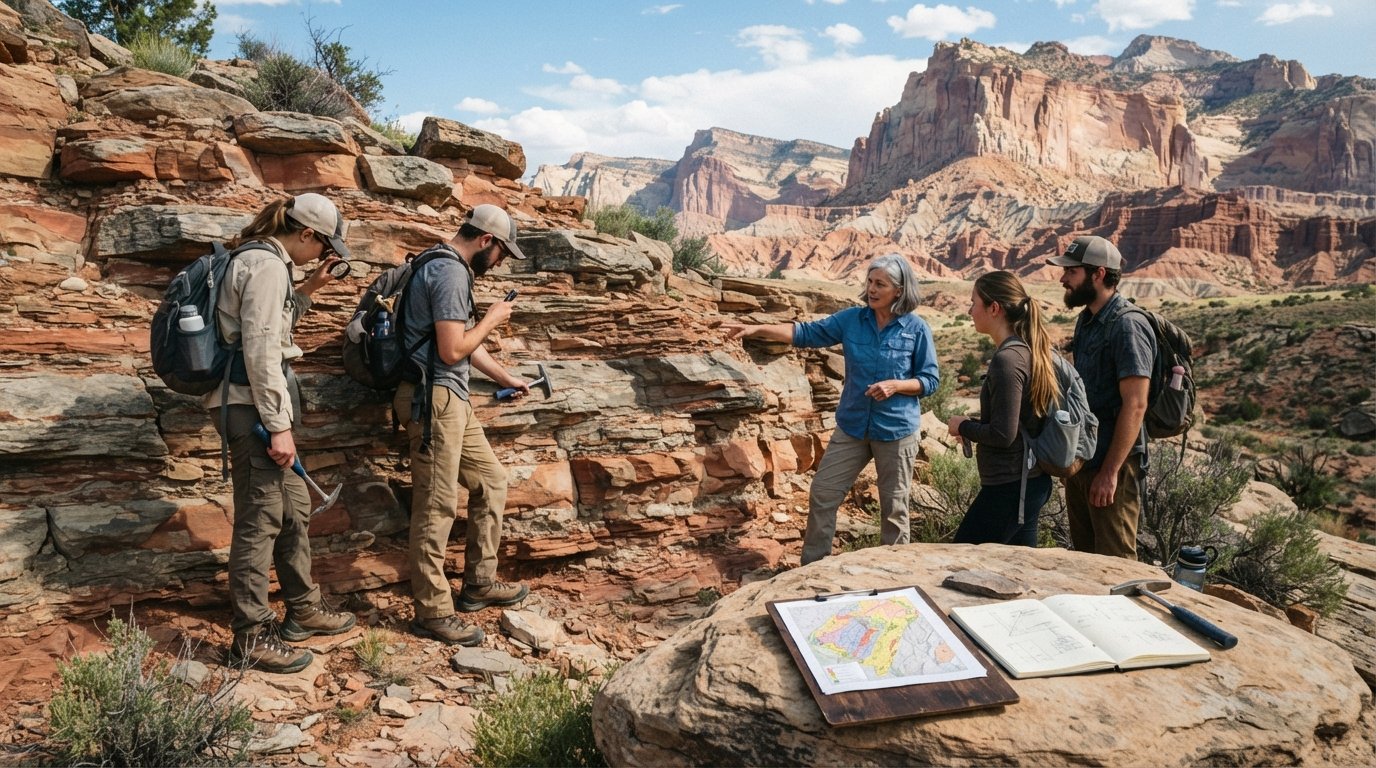
One of the standout features of this program is its emphasis on field experience. Geology is fundamentally a field science, and BYU takes that seriously. Students participate in multiple field trips and a capstone field camp, often held in the diverse geological landscapes of Utah and surrounding states. These experiences allow students to apply classroom concepts to real-world rock formations, fault lines, and sedimentary structures, building skills that are directly transferable to careers in energy, environmental consulting, and natural resource management.
The program also benefits from BYU's strong alumni network and career services. Graduates have gone on to work for major oil and gas companies, environmental firms, government agencies like the U.S. Geological Survey, and educational institutions. The degree also provides a solid foundation for graduate study in geology, hydrology, geophysics, and related fields.
If you are exploring different science degrees and want to compare options, you might find it helpful to read our guide on What Is a Bachelor of Science in Health Science? A Complete Guide, which explains how another science-focused path can lead to diverse healthcare careers.
Program Structure and Curriculum Overview
The Geology/Earth Science, General Bachelor's degree, usually 4 years In-person at Brigham Young University is designed to be completed in four years of full-time study. The curriculum typically includes a mix of core geology courses, supporting science and math courses, and electives that allow students to tailor their education to specific interests such as petroleum geology, environmental geology, or paleontology.
Core courses often include physical geology, historical geology, mineralogy, petrology, structural geology, sedimentology and stratigraphy, and paleontology. Students also take courses in chemistry, physics, and calculus to build a strong scientific foundation. Upper-division electives may cover topics like geochemistry, geophysics, hydrogeology, and basin analysis. A capstone field camp, usually taken during the summer after the junior or senior year, provides intensive hands-on training in geological mapping and interpretation.
In addition to coursework, students are encouraged to participate in undergraduate research with faculty mentors. This can involve studying local geological hazards, analyzing rock samples in the lab, or contributing to ongoing projects in tectonics or sedimentology. Such research experiences are valuable for building a resume and can lead to conference presentations or publications.
Here is a sample breakdown of the program's key components:
- Core Geology Courses: Physical and historical geology, mineralogy, petrology, structural geology, sedimentology, paleontology.
- Supporting Sciences: General chemistry, physics, calculus, and possibly statistics or computer science.
- Field Experience: Multiple field trips and a required summer field camp.
- Electives: Courses in geochemistry, geophysics, hydrogeology, and specialized topics.
- Capstone: Senior thesis or research project, often presented at a departmental symposium.
This structure ensures that graduates have a well-rounded education that prepares them for both employment and advanced study. The program is also flexible enough to accommodate minors or double majors in related fields like environmental science, geography, or chemistry.
Admission Requirements and Application Process
Admission to Brigham Young University is competitive, and prospective students should prepare accordingly. For the Geology/Earth Science, General Bachelor's degree, usually 4 years In-person at Brigham Young University, applicants must first be admitted to the university. BYU considers factors such as high school GPA, ACT or SAT scores (though test-optional policies may apply), essays, and extracurricular activities. Prospective students are encouraged to demonstrate a strong interest in science and math through their coursework and activities.
Once admitted to BYU, students can declare geology as their major. There may be specific prerequisites for some upper-division courses, such as completion of introductory geology and chemistry sequences. It is advisable to meet with an academic advisor early to plan a course schedule that keeps you on track for graduation in four years.
Transfer students should ensure that their previous coursework aligns with BYU's requirements. The university has a transfer evaluation process, and advisors can help determine which credits will apply toward the geology major. For students who are also considering other science or health-related programs, our guide on the Bachelor of Science in Health Science provides useful comparison points.
Financial aid and scholarships are available through BYU's Financial Aid Office. Many geology students receive departmental scholarships based on academic merit or financial need. Additionally, students can explore external scholarships from geological societies and industry organizations. For a broader overview of college costs and financial aid strategies, you can visit CollegeAndTuition, a resource dedicated to helping students and families navigate higher education expenses.
Career Paths and Job Outlook for Geology Graduates
Graduates with a Geology/Earth Science, General Bachelor's degree, usually 4 years In-person at Brigham Young University are well-prepared for a variety of careers in the geosciences and beyond. The skills gained, including critical thinking, data analysis, fieldwork, and problem-solving, are highly valued by employers in multiple sectors.
Common career paths include:
- Environmental Consulting: Geologists assess soil and groundwater contamination, prepare environmental impact reports, and help companies comply with regulations.
- Energy and Mining: Work in oil and gas exploration, mineral extraction, or renewable energy projects such as geothermal.
- Government Agencies: Employment with the U.S. Geological Survey, Environmental Protection Agency, or state geological surveys.
- Education: Teaching earth science at the high school or community college level (additional certification may be required).
- Graduate Study: Pursuing a master's or Ph.D. in geology, hydrology, or geophysics to advance into research or academia.
According to the U.S. Bureau of Labor Statistics, employment of geoscientists is projected to grow faster than the average for all occupations, driven by demand for energy resources, environmental protection, and infrastructure development. Salaries for geologists vary by industry and location, but median annual wages are well above the national average for bachelor's degree holders.
The BYU alumni network is particularly strong in the energy and environmental sectors, and the university's career services office provides job fairs, resume workshops, and networking events to help students launch their careers. Many students also complete internships during their undergraduate years, gaining valuable experience that often leads to full-time offers after graduation.
Is This Program Right for You?
The Geology/Earth Science, General Bachelor's degree, usually 4 years In-person at Brigham Young University is an excellent choice for students who are passionate about understanding the Earth, enjoy working outdoors, and want a degree that offers strong career prospects. The program's combination of rigorous coursework, field experience, and research opportunities prepares graduates for success in a variety of fields.
Prospective students should consider their personal interests and career goals. If you thrive in hands-on learning environments, are curious about natural processes, and want to make a positive impact on the environment, this program could be a great fit. The in-person format at BYU provides a traditional college experience with face-to-face interaction with professors and peers, which many students find invaluable for building professional relationships and networking.
Additionally, the values-based education at BYU, which integrates spiritual and intellectual growth, appeals to students seeking a holistic learning environment. The university's LDS (Church of Jesus Christ of Latter-day Saints) affiliation means that students agree to honor a code of conduct, and the campus culture is shaped by those shared commitments.
If you are still weighing your options, consider reaching out to the BYU Department of Geological Sciences to speak with an advisor or visit campus. They can provide more specific information about course sequencing, research opportunities, and financial aid. You can also explore other degree programs through CollegeDegree.Education's matching tools to compare options that fit your schedule, budget, and career aspirations.
In summary, the Geology/Earth Science, General Bachelor's degree, usually 4 years In-person at Brigham Young University offers a comprehensive, hands-on education that opens doors to diverse and rewarding careers. With a strong curriculum, dedicated faculty, and a supportive community, it is a solid choice for anyone eager to study the Earth and its processes.