
Biola Sociology Bachelor's: 4-Year In-Person Program
Biola's in-person sociology bachelor's blends faith and social science. See the 4-year curriculum, costs, and career paths before you apply.

By Lucas Martin
Choosing a major is one of the most consequential decisions of your undergraduate years, and for students drawn to how societies function, a Sociology, General Bachelor's degree, usually 4 years In-person at Biola University offers a structured, faith-informed path into that discipline. Biola's program pairs rigorous social science training with a Christian worldview, giving students tools to analyze inequality, family structures, urban life, and social change through both empirical and ethical lenses. If you are comparing on-campus sociology programs and want a clear picture of what four years at Biola actually involve, this guide walks through the curriculum, admissions, costs, career outcomes, and the practical questions you should ask before committing.
What the Sociology, General Bachelor's Degree at Biola University Covers
Biola University is a private Christian institution in La Mirada, California, and its general sociology major is designed as a broad liberal arts degree rather than a narrow pre-professional track. That means students take foundational courses in sociological theory, research methods, statistics, and social stratification, then round out their studies with electives in areas such as race and ethnicity, gender, religion, family, and urban sociology. The general designation signals flexibility: rather than specializing early, you build a wide base you can apply to graduate school, ministry, social services, or law.
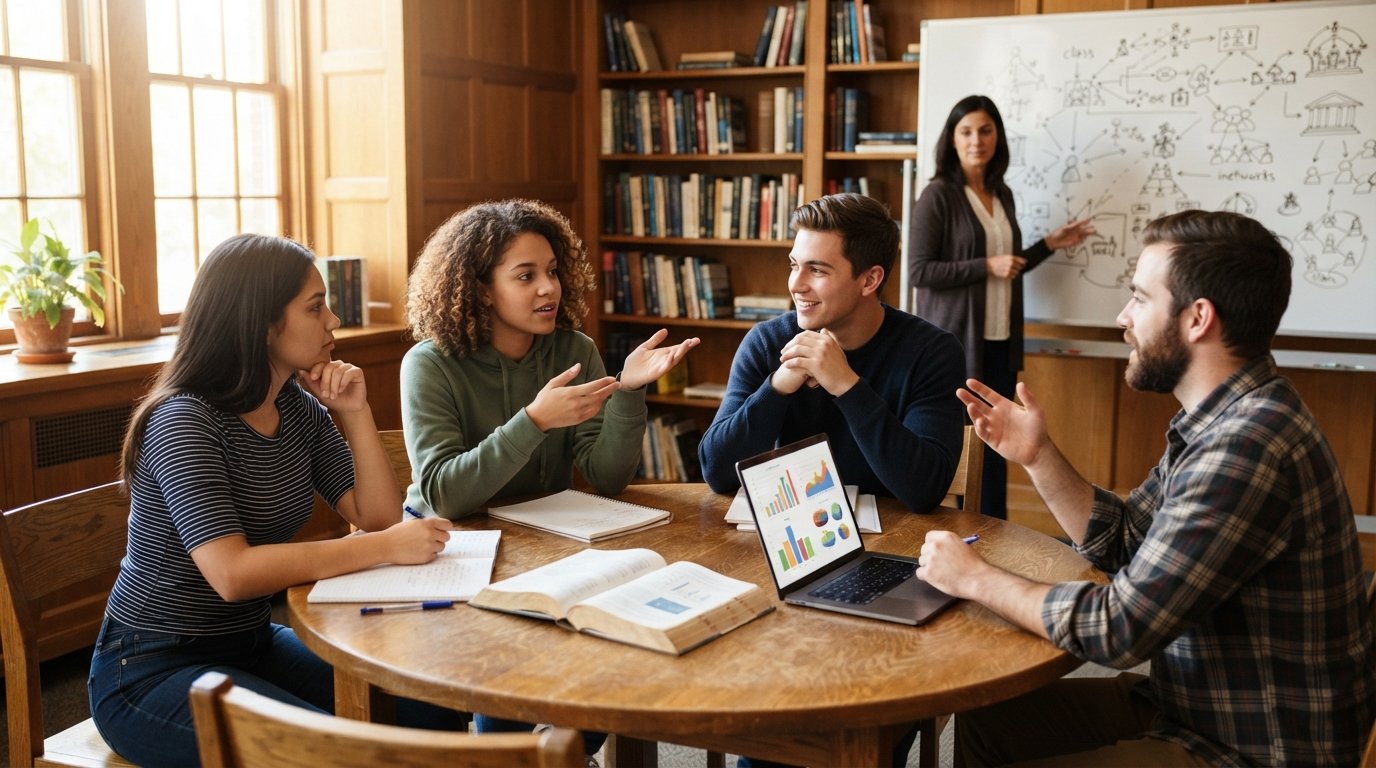
The four-year, in-person format matters here. Sociology is a discussion-heavy discipline, and Biola's small class sizes and seminar-style upper-division courses depend on face-to-face debate, faculty mentorship, and cohort relationships. Students typically complete roughly 120 semester units, with the major core occupying about a third of that load and the remainder devoted to Biola's general education requirements and electives. Many students add a minor in psychology, biblical studies, or intercultural studies to sharpen their vocational direction.
Because the program sits inside a Christian university, coursework frequently asks students to connect sociological findings with theological and ethical questions. A class on poverty or immigration, for example, may pair census data with reflection on justice and neighbor-love. That integration is a distinctive feature of the Biola experience and a major reason students choose it over a secular sociology department. If you want to understand how degree structures like this compare across fields, our overview of what a civil engineering bachelor's degree involves shows how differently technical and liberal arts majors allocate credits and time.
Admissions and the Four-Year Timeline
Biola admits students holistically, weighing GPA, coursework rigor, essays, and faith background alongside test scores, which remain optional for many applicants. Prospective sociology majors apply through the university's undergraduate admissions portal, typically during the fall of their senior year of high school or as transfer students from community colleges. Transfer-friendly policies matter: California community college students who complete an associate degree for transfer can often enter with junior standing, which can shorten the total time to graduation even though the standard program is designed for four years.
Once enrolled, the four-year sequence generally follows a predictable rhythm. First-year students take introductory sociology, writing, and general education courses; sophomores add statistics and theory; juniors move into research methods and upper-division electives; seniors complete a capstone seminar or thesis and often an internship. Here is a simplified roadmap you can use when planning:
- Year 1: Introduction to Sociology, English composition, Bible survey, and general education foundations.
- Year 2: Social statistics, classical sociological theory, and the first elective cluster (for example, family or race and ethnicity).
- Year 3: Research methods, contemporary theory, and an internship or service-learning placement in a community organization.
- Year 4: Capstone seminar or thesis, remaining electives, and graduation requirements, plus graduate school or job applications.
That sequence assumes full-time enrollment and steady progress. Students who work long hours, change majors, or transfer credits may need a summer term or an extra semester, which is common across private universities. Meeting with an academic advisor each semester is the simplest way to protect the four-year timeline.
Cost, Financial Aid, and Transfer Credit
Biola is a private university, so sticker-price tuition runs well above public in-state rates. The published cost of attendance includes tuition, fees, housing, meals, books, and personal expenses, and most families do not pay the full figure. Biola awards institutional scholarships for academics, need, ministry involvement, and athletics, and students can stack federal grants, Cal Grants for California residents, and outside scholarships. Filing the FAFSA early, ideally in the fall before enrollment, is the single most important financial step.
Because cost shapes the decision for many families, it helps to compare net price rather than sticker price. Ask the financial aid office for an estimated award letter before depositing, and confirm whether scholarships renew automatically or require a minimum GPA. Students who begin at a community college and transfer can reduce total cost substantially, though they should verify that sociology core courses transfer before enrolling. For broader context on how career guides evaluate training paths and costs across occupations, Careers.org maintains plain-language profiles of what different professions require and how education fits in.
Careers and Graduate Study After the Degree
A general sociology bachelor's is not a credential for one job; it is a platform. Graduates enter social services, nonprofit administration, human resources, community organizing, market research, education, and local government, and many pursue graduate work in sociology, social work, public policy, law, or ministry. The degree builds skills employers consistently name: qualitative and quantitative research, written communication, cultural competence, and the ability to interpret data about people and communities.
Biola's location in Southern California gives students access to internships with churches, school districts, nonprofits, and county agencies, and the university's career center helps with resumes and graduate school applications. Students aiming at clinical social work should plan for a Master of Social Work, which typically takes two additional years and leads to licensure. Those interested in research or teaching should prepare for a PhD. A common mistake is assuming the bachelor's alone guarantees a specific salary; outcomes vary by role, region, and further credentials.
Here are practical steps to strengthen your position while still enrolled:
- Complete at least one internship or volunteer placement in a social service or research setting.
- Learn one statistical software package (SPSS, R, or Stata) well enough to list it on a resume.
- Build relationships with two or three faculty members who can write recommendation letters.
- Attend career fairs and alumni events, and use the university career center early, not in senior spring.
Those steps turn a broad major into a specific story that hiring managers and admissions committees can evaluate. They also help you decide, before graduation, whether the next step is a job, a master's program, or a service year.
Is Biola's In-Person Sociology Program the Right Fit?
The in-person format is the program's biggest selling point and its biggest constraint. Students who thrive at Biola tend to want a residential campus experience, small classes, and a faith-integrated curriculum, and they value professors who know them by name. Students who need to work full time, care for family members, or live far from La Mirada may find the schedule and cost difficult, and they should compare online sociology options before applying. Biola does offer some online and hybrid courses, but the general sociology major is built around on-campus study.
Prospective students should also consider what they want from a sociology department: faculty research areas, internship networks, study abroad options, and the strength of the university's writing and research support. Visiting campus, sitting in on a class, and speaking with current majors gives a far better sense of fit than brochures. Asking about four-year graduation rates and average class sizes in the major is also fair game, and admissions offices expect those questions from serious applicants.
For students who want to compare this program against other accredited options, CollegeDegree.Education's matching tools let you filter programs by level, field, and format, and its financial aid guides explain how to estimate net cost before you apply. A sociology degree is a long-term investment in how you think, research, and serve communities, so the right choice is the one that fits your goals, budget, and calling rather than the one with the best marketing. Biola's general sociology major, with its four-year in-person structure and Christian liberal arts foundation, is a strong fit for students who want depth, mentorship, and a clear ethical framework for studying society.