
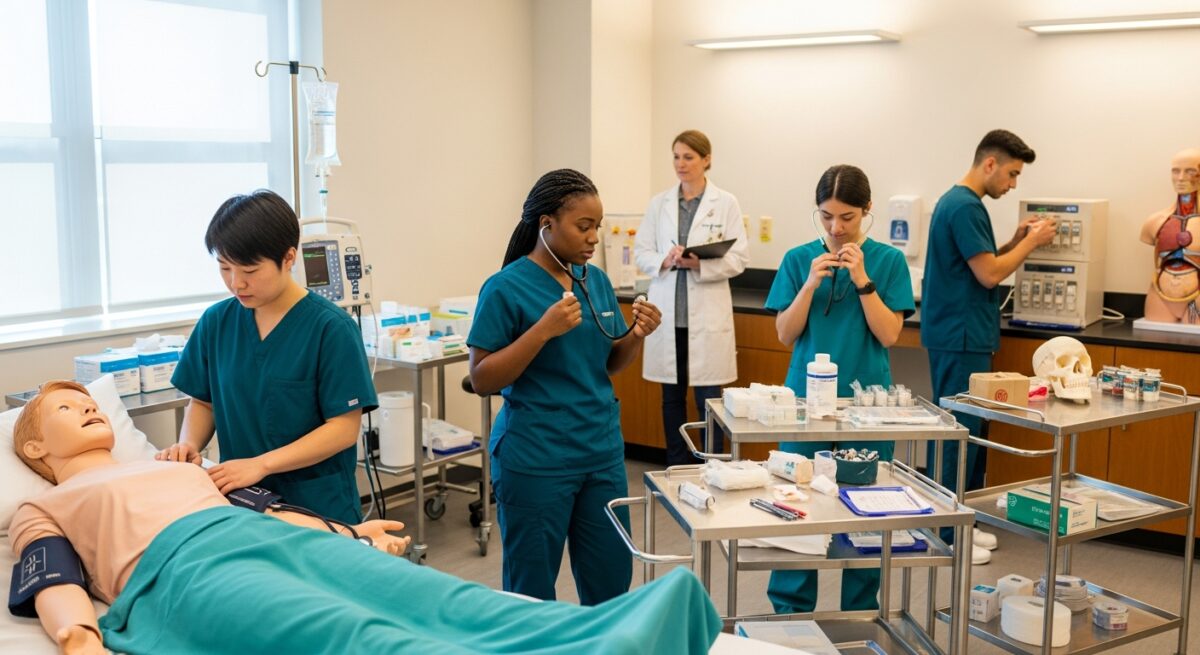
Choosing a career in nursing is more than a job decision; it is a commitment to care, science, and service. The Bachelor of Science in Nursing (BSN) has become the gold standard for registered nurses, opening doors to higher pay, specialized roles, and leadership positions. This Bachelor of Science in Nursing Degree Guide will walk you through everything from program types and admission requirements to clinical experiences and career outcomes. Whether you are a high school graduate, a working adult, or an RN with an associate degree, this guide will help you map your path to a rewarding nursing career.
What Is a Bachelor of Science in Nursing (BSN)?
A Bachelor of Science in Nursing is a four-year undergraduate degree that combines rigorous academic coursework with hands-on clinical training. Unlike a two-year associate degree in nursing (ADN), a BSN includes deeper study in community health, nursing research, leadership, and evidence-based practice. This broader education prepares nurses to think critically, manage complex patient care, and adapt to the rapidly changing healthcare landscape.
Many healthcare employers now prefer or require a BSN for new hires. The Institute of Medicine has called for 80% of nurses to hold a BSN by 2026, and many hospitals have already adopted this standard. By earning your nursing bachelor’s degree, you position yourself for better job security, higher starting salaries, and more opportunities for advancement.
Types of BSN Programs
There is no single path to a BSN. Your choice depends on your current education, work schedule, and career goals. Here are the most common program formats:
- Traditional BSN (4-year): Designed for high school graduates, this full-time program combines general education prerequisites with nursing coursework and clinical rotations.
- Accelerated BSN (12-18 months): For students who already hold a non-nursing bachelor’s degree, this intensive program builds on prior coursework and fast-tracks you into nursing practice.
- RN-to-BSN (1-2 years): For registered nurses with an associate degree or diploma, this program focuses on leadership, community health, and evidence-based practice, often with flexible online options.
- Online BSN (hybrid): Many accredited schools offer online BSN programs where you complete theory courses remotely and fulfill clinical hours at approved local sites.
Each format has its own timeline, cost, and admission criteria. For example, an accelerated BSN is ideal if you already have a bachelor’s degree in biology or psychology and want a fast career change. An RN-to-BSN is perfect for working nurses who need flexibility while continuing to practice.
Core Curriculum and Clinical Experience
BSN programs blend classroom learning with real-world clinical practice. In your first two years, you will take prerequisites such as anatomy, physiology, microbiology, chemistry, and statistics. The final two years focus on nursing-specific topics, including pharmacology, health assessment, pathophysiology, and nursing ethics.
Clinical rotations are the heart of a BSN program. You will spend hundreds of hours in hospitals, clinics, and community settings, working under the supervision of experienced nurses. Rotations typically cover medical-surgical nursing, pediatrics, obstetrics, mental health, and critical care. These experiences not only build your skills but also help you discover which specialty suits you best.
In addition to clinical hours, many programs require a capstone project or a leadership practicum. This allows you to apply research findings to real clinical problems, develop quality improvement initiatives, or shadow nurse managers. Such experiences are invaluable when you start interviewing for your first job.
Admission Requirements and Prerequisites
Getting into a BSN program is competitive. Here are the typical requirements:
- High school diploma or GED
- Minimum GPA (often 3.0 or higher)
- Completed prerequisite courses with a C or better
- TEAS or HESI entrance exam scores
- Letters of recommendation
- Personal statement or essay
- Background check and immunizations
For accelerated and RN-to-BSN programs, you will also need proof of prior degree and, for RNs, a current, unencumbered nursing license. Some programs require a minimum number of work hours as a nurse. Since admission is competitive, it is wise to apply to multiple schools and to strengthen your application by volunteering in healthcare settings or shadowing nurses.
Accreditation is a critical factor to consider. Look for programs accredited by the Commission on Collegiate Nursing Education (CCNE) or the Accreditation Commission for Education in Nursing (ACEN). Attending an accredited program is essential for licensure eligibility and for transferring credits if you decide to pursue a graduate degree later.
Cost, Financial Aid, and Return on Investment
The cost of a BSN varies widely by institution and format. Public universities often charge between $20,000 and $40,000 for the entire program, while private schools can exceed $60,000. Accelerated programs may be more expensive per credit, but they also let you enter the workforce sooner. Online programs often have lower tuition and eliminate commuting costs, but they still require in-person clinicals.
Financial aid options include federal grants, scholarships, and student loans. Many hospitals offer tuition reimbursement for employees pursuing a BSN, and the Nurse Corps Scholarship Program pays tuition in exchange for a service commitment in underserved areas. Additionally, the Health Resources and Services Administration (HRSA) provides loan repayment programs for nurses. A helpful resource for finding scholarships and funding is scholarship.education, which aggregates opportunities specifically for healthcare students.
When evaluating the return on investment, remember that BSN-prepared nurses earn about $10,000 more per year than ADN-prepared nurses, according to the American Association of Colleges of Nursing. Over a 30-year career, that difference can exceed $300,000. Additionally, BSN holders are more likely to qualify for management roles, which command even higher salaries.
Licensure and Certification After Graduation
After completing your BSN, you must pass the NCLEX-RN exam to become a licensed registered nurse. This computerized adaptive test covers safe and effective care environments, health promotion, psychosocial integrity, and physiological integrity. Most graduates prepare for the NCLEX for several weeks using review courses and practice questions.
Once licensed, you can also pursue optional certifications in specialties like medical-surgical nursing, pediatrics, or critical care. These credentials, offered by organizations like the American Nurses Credentialing Center (ANCC), demonstrate advanced knowledge and can boost your resume. Many employers offer financial support for certification exams, so check with your future employer.
Career Paths and Advancement Opportunities
A BSN opens doors to a wide range of nursing roles. You can work in hospitals, outpatient clinics, schools, home health agencies, and government organizations. Common job titles include registered nurse, school nurse, case manager, and public health nurse. With experience, you can move into charge nurse, nurse manager, or clinical educator positions.
For those who want to advance further, a BSN is the foundation for graduate study. Master of Science in Nursing (MSN) programs lead to roles like nurse practitioner, nurse anesthetist, clinical nurse specialist, and nurse midwife. Doctoral programs (DNP or PhD) prepare you for the highest levels of clinical practice, research, and academia. Your BSN also makes you eligible for leadership training and interprofessional education opportunities.
The demand for nurses remains exceptionally strong. The U.S. Bureau of Labor Statistics projects a 6% growth in registered nurse employment through 2032, driven by an aging population and increased focus on preventive care. In many regions, nurses with a BSN are preferred for hospital positions, and some states are considering legislation to require a BSN for new RNs within 10 years of licensure.
Frequently Asked Questions
How long does it take to earn a BSN?
A traditional BSN takes four years of full-time study. Accelerated programs for students with a prior bachelor’s degree can be completed in 12 to 18 months. RN-to-BSN programs typically take one to two years of part-time or full-time study, depending on your schedule.
Can I work while earning a BSN?
Yes, many students work part-time while earning a BSN, especially in RN-to-BSN and online programs. However, clinical rotations and demanding coursework can make full-time work challenging during the final semesters. Be realistic about your time and energy, and consider flexible employment options like per diem nursing or working as a patient care technician.
What is the difference between a BSN and an ADN?
An ADN is a two-year associate degree that qualifies you for entry-level nursing positions. A BSN is a four-year bachelor’s degree that provides a more comprehensive education, including leadership, research, and community health. Many employers now prefer BSN-prepared nurses, and BSN is often a requirement for advanced roles.
Is an online BSN as good as an on-campus program?
Yes, if the program is accredited and includes sufficient clinical hours. Online BSN programs offer flexibility for working adults, but you must be self-disciplined and proactive in securing clinical placements. Many employers value the same skills regardless of the delivery format.
How do I choose the right BSN program for me?
Consider factors such as accreditation, cost, location, clinical placement support, NCLEX pass rates, and program format. Visit campuses, talk to current students, and check licensure pass rates. Also, think about your career goals: if you want to become a nurse practitioner, choose a program with a strong research foundation.
Your Next Steps Toward a BSN
Earning a Bachelor of Science in Nursing is a challenging but incredibly rewarding journey. It offers job stability, intellectual stimulation, and the chance to make a real difference in people’s lives. Start by researching accredited programs that fit your needs and goals.
For more guidance on choosing the right nursing program and exploring financial aid options, check out our related resource on Bachelor of Science in Biology Degree Overview to see how science prerequisites can align with nursing pathways. Then, take the next step: request information from schools, compare curricula, and begin your application. The healthcare field needs passionate, well-educated nurses, and a BSN is your key to a fulfilling and impactful career.