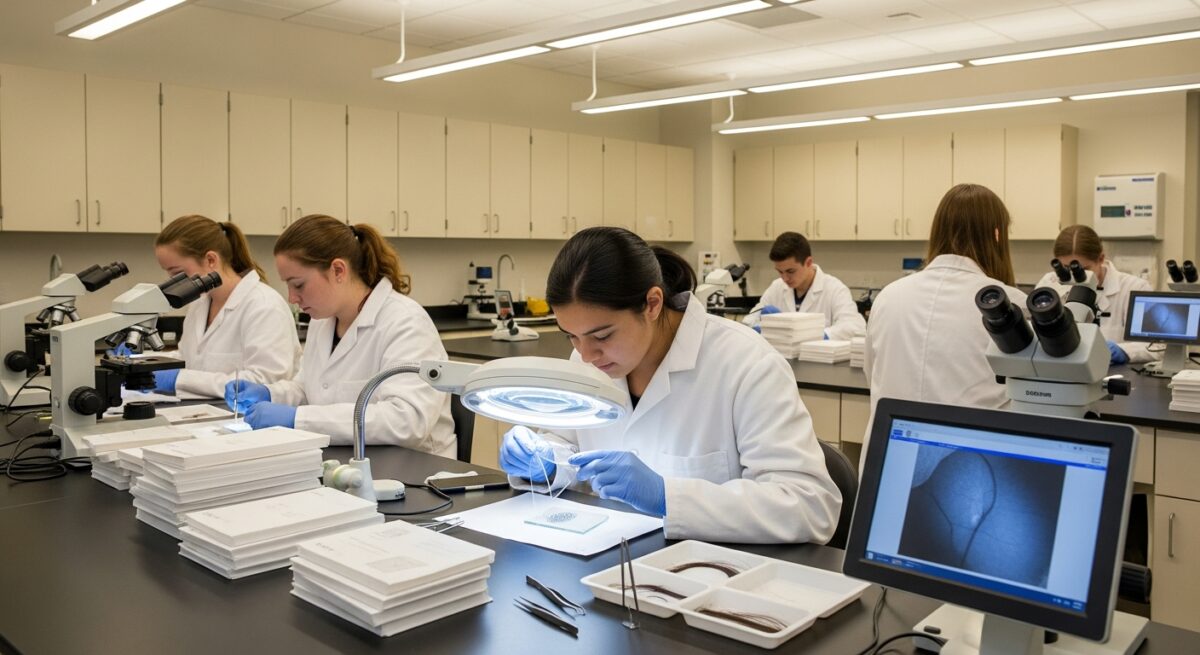
Imagine a career where your scientific expertise directly impacts the pursuit of justice, where every analysis contributes to solving a puzzle, and your work provides answers for victims, families, and legal systems. This is the reality for graduates with a Bachelor of Forensic Science degree. Far from the dramatized versions seen on television, a forensic science career path is a rigorous, detail-oriented, and profoundly impactful field that applies scientific principles to legal questions. This comprehensive guide will navigate the educational journey, diverse specializations, and concrete career trajectories you can pursue with this specialized undergraduate degree, providing a clear map from the classroom to the crime lab, courtroom, or beyond.
Understanding the Bachelor of Forensic Science Degree
A Bachelor of Forensic Science is typically a four-year undergraduate program that blends a strong foundation in natural sciences with specialized coursework in criminal justice and forensic applications. The core curriculum is designed to develop both the analytical mind of a scientist and the meticulous eye of an investigator. Students should expect a heavy course load in chemistry, biology, physics, and mathematics, as these form the bedrock of all forensic analysis. This scientific core is then layered with subjects like criminal law, ethics, evidence collection, and courtroom procedures. The goal is to produce graduates who not only understand how to perform complex analyses but also comprehend the legal framework that governs the admissibility and handling of evidence, ensuring their work can withstand scrutiny in a legal setting.
When exploring programs, accreditation is a critical factor. Seeking a program accredited by the Forensic Science Education Programs Accreditation Commission (FEPAC) is highly recommended, as it signifies the program meets rigorous national standards for forensic science education. Furthermore, the structure of a forensic science degree can vary. Some programs offer a broad overview, while others require or encourage students to choose a concentration early on, such as forensic biology, forensic chemistry, digital forensics, or toxicology. This choice will significantly influence your elective coursework and, ultimately, your initial career path. For a broader look at how a science-focused undergraduate degree can launch a technical career, our guide to Bachelor of Science degrees provides useful context on STEM education fundamentals.
Core Career Paths with a Forensic Science Bachelor’s Degree
Upon graduation, a wide array of professional doors open. The most direct path is employment in a public crime laboratory at the local, state, or federal level. These positions are highly competitive but represent the classic application of the degree. However, the career landscape is much broader. Graduates can find rewarding roles in medical examiner’s offices, homeland security agencies, pharmaceutical companies (in drug safety and compliance), environmental protection agencies (analyzing pollutants and crime scenes), and even in the private sector as forensic consultants or fraud investigators for insurance firms and financial institutions.
The day-to-day work varies drastically by specialization. A forensic biologist might spend hours extracting and analyzing DNA from minute biological samples. A forensic chemist could be identifying unknown powders, analyzing fire debris for accelerants, or testing for controlled substances. A digital forensic examiner recovers and investigates data from computers and smartphones. Despite these differences, all roles share common requirements: exceptional attention to detail, strong written and verbal communication skills for report writing and testimony, unwavering ethical integrity, and the ability to work methodically under sometimes stressful conditions. The work is not always fast-paced like on TV, but it is consistently consequential.
Specialized Fields and Their Requirements
Choosing a specialization during your degree program can streamline your entry into specific niches. Forensic biology and DNA analysis is one of the largest and fastest-growing areas, often requiring a very strong background in genetics, molecular biology, and statistics. Forensic chemistry focuses on the analysis of non-biological trace evidence, such as fibers, glass, paint, explosives, and arson residues, demanding excellence in analytical chemistry techniques. Digital forensics, a field exploding in demand, requires coursework in computer science, cybersecurity, and data recovery alongside the core forensic curriculum. Toxicology involves detecting and identifying drugs, alcohol, and poisons in bodily fluids, leaning heavily on biochemistry and pharmacology. Each of these specializations may have additional certification or training requirements post-graduation to be eligible for certain positions.
The Professional Journey: From Graduate to Expert
Landing your first job is a significant milestone, but it is just the beginning of a forensic science career path. Entry-level positions, such as a Forensic Laboratory Technician or Evidence Technician, often involve supporting senior analysts, maintaining equipment, and learning standard operating procedures under close supervision. This period is crucial for gaining practical, hands-on experience that simply cannot be replicated in a university lab. With one to three years of experience, professionals typically advance to an Analyst or Criminalist role, where they begin to perform independent casework, interpret results, and write formal reports.
Continued professional development is not just encouraged, it is often mandated. Many laboratories require analysts to achieve certification through professional bodies like the American Board of Criminalistics (ABC) or the International Association for Identification (IAI) within a few years of employment. These certifications validate your expertise and are a mark of professional credibility. Furthermore, forensic scientists must regularly testify in court as expert witnesses. This is a skill developed over time, requiring the ability to explain complex scientific findings clearly and confidently to judges and juries who lack a scientific background. Senior-level roles include Lead Analyst, Laboratory Supervisor, and Laboratory Director, positions that involve managerial duties, method validation, and complex case review.
For those considering the long-term academic and career landscape, exploring various academic program insights can be invaluable for comparing different educational tracks and understanding how advanced degrees might fit into your professional goals.
Essential Skills and Attributes for Success
Technical knowledge from your forensic science degree is paramount, but soft skills are what differentiate a competent analyst from an exceptional one. The following attributes are non-negotiable for a successful and sustainable career in this field:
- Meticulous Attention to Detail: A single oversight can compromise an entire analysis or, worse, a legal case. Procedures must be followed exactly, and observations must be recorded with precision.
- Critical Thinking and Problem-Solving: Evidence does not always present itself clearly. Analysts must devise analytical approaches, interpret ambiguous results, and draw logical, defensible conclusions based on the scientific data, not on preconceived notions.
- Integrity and Ethical Fortitude: Forensic scientists serve the truth, not the prosecution or defense. They must maintain absolute objectivity, avoid bias, and be prepared to deliver findings that may be unfavorable to the side that requested the analysis.
- Resilience and Emotional Stability: Dealing with evidence from violent crimes, accidents, or tragedies can be emotionally taxing. Professionals must develop coping mechanisms to manage this stress without letting it affect their work.
- Communication Proficiency: The most brilliant analysis is useless if it cannot be understood. You must excel at writing clear, concise, and unambiguous reports and verbally explaining your methods and conclusions in depositions and courtroom testimony.
Cultivating these skills begins during your degree program. Seek out internships, participate in undergraduate research projects, and take courses that challenge your writing and presentation abilities. These experiences will make you a far more competitive candidate and a better-prepared professional.
Beyond the Bench: Alternative and Advanced Pathways
A bachelor’s in forensic science is also an excellent springboard to careers beyond the traditional crime lab. Some graduates leverage their unique skill set to move into law enforcement as crime scene investigators or detectives, where their scientific literacy aids in scene assessment and evidence collection. Others enter the legal field as paralegals or legal assistants, particularly in firms dealing with criminal defense or personal injury, where understanding forensic reports is a major asset. The field of forensic sales and support is another avenue, where individuals work for companies that manufacture the sophisticated instrumentation used in labs, providing training, technical support, and sales expertise.
For those seeking to deepen their expertise or move into research, teaching, or high-level administrative roles, pursuing a graduate degree is the next logical step. A Master of Science in a forensic specialization or a related natural science can open doors to more advanced analytical positions, research roles in federal agencies like the FBI, or quality assurance management. A doctoral degree (Ph.D.) is typically required for leading cutting-edge research, directing large laboratory systems, or becoming a university professor. It is important to note that some very specialized fields, like forensic anthropology or forensic odontology, almost always require advanced degrees for professional practice.
Frequently Asked Questions
Is a forensic science degree worth it?
Yes, for the right person. It is a challenging and rewarding field for those passionate about applying science to law. Job growth is steady, though competition for public lab positions can be fierce. The degree also provides a versatile science foundation applicable to many other industries.
Do I need to get a master’s degree?
For many entry-level analyst positions, a bachelor’s degree is sufficient, especially if it is from a FEPAC-accredited program. However, a master’s degree is becoming increasingly common and can provide a significant competitive advantage, allow for specialization, and be required for certain advanced or supervisory roles.
What is the salary range for forensic scientists?
According to the U.S. Bureau of Labor Statistics, the median annual wage for forensic science technicians was approximately $63,740 as of recent data. Salaries vary widely based on education, experience, geographic location, specialization, and employer (local government vs. federal agency vs. private sector).
How important is certification?
Professional certification is highly important and often expected for career advancement. It demonstrates a standardized level of knowledge and competency to employers and the courts. Many labs require analysts to become certified within a specified timeframe after hiring.
Can I work in the field with just a biology or chemistry degree?
Yes, many forensic scientists hold degrees in traditional natural sciences. However, a dedicated forensic science degree has the advantage of integrating the crucial criminal justice and law components from the start, which can make the transition to forensic work smoother.
Embarking on a Bachelor of Forensic Science degree career path is a commitment to a profession built on truth, precision, and service. It demands a unique blend of scientific curiosity and legal awareness. By carefully selecting an accredited program, gaining hands-on experience through internships, developing both technical and soft skills, and strategically planning for certifications or advanced education, you can build a stable and impactful career. The path requires dedication, but for those drawn to this intersection of science and justice, the opportunity to contribute meaningful answers in a complex world is a powerful and enduring reward.