
Our planet faces unprecedented challenges, from climate change and biodiversity loss to pollution and resource scarcity. Addressing these complex issues requires a new generation of skilled, scientifically literate professionals. A Bachelor of Environmental Science degree is the foundational credential that equips students with the interdisciplinary knowledge and practical tools to understand these challenges and develop viable solutions. This comprehensive degree program merges rigorous scientific study with real-world application, preparing graduates for impactful careers dedicated to protecting and sustaining our natural world. This overview will detail what you can expect from this dynamic science degree, from core curriculum and specializations to career outcomes and the path to enrollment.
What Is a Bachelor of Environmental Science Degree?
A Bachelor of Environmental Science (B.Envs., B.S. in Environmental Science, or sometimes B.A. in Environmental Studies) is an undergraduate academic degree focused on the scientific study of the environment and the development of solutions to environmental problems. It is distinct from a purely policy-focused environmental studies degree in its heavy emphasis on foundational sciences like biology, chemistry, geology, and physics. The program is inherently interdisciplinary, weaving together laboratory science, field research, data analysis, and often elements of policy, economics, and ethics. Students learn to apply the scientific method to assess environmental health, monitor changes in ecosystems, and evaluate the human impact on natural systems. The goal is to produce graduates who are not just aware of environmental issues but are trained to investigate them empirically and engineer practical, evidence-based interventions.
The structure of the degree typically involves a progression from general education and introductory science courses to advanced, specialized topics in environmental science. A significant component is hands-on learning, which may include laboratory sessions, computer modeling, and extensive field work in local ecosystems. Many programs culminate in a senior capstone project or thesis, where students conduct original research on a topic of their choice. This blend of theoretical knowledge and applied skill is what makes the environmental science degree so valuable in the job market. For those interested in the broader landscape of scientific undergraduate education, our guide on A Bachelor of Science Degree BSc Guide provides useful context on the structure and benefits of a STEM-focused path.
Core Curriculum and Common Specializations
The curriculum for a bachelor of environmental science is designed to build a strong scientific foundation before branching into specialized areas of application. While course titles vary by institution, the core subjects are remarkably consistent across accredited programs.
Foundational science courses are non-negotiable. Students will take sequences in general biology, general chemistry, organic chemistry, geology, physics, and calculus or statistics. These courses provide the language and tools necessary for advanced environmental analysis. From this base, students move into core environmental science courses. These typically include environmental chemistry (studying pollutants and their interactions), ecology (understanding relationships in ecosystems), hydrology (the science of water movement), atmospheric science (climate and weather), and geospatial analysis (using GIS and remote sensing). A strong program will also incorporate courses on environmental policy, law, and ethics to provide context for how scientific findings translate into societal action.
Most programs offer specializations or concentration tracks that allow students to tailor their environmental studies degree to specific career interests. Choosing a specialization can make a graduate more competitive for niche roles. Common specializations include:
- Conservation Biology and Ecology: Focuses on preserving biodiversity, managing wildlife populations, and restoring damaged ecosystems.
- Environmental Chemistry and Toxicology: Concentrates on analyzing pollutants, understanding their fate in the environment, and assessing their effects on human and ecological health.
- Water Resources and Hydrology: Examines the distribution, quality, and management of freshwater resources, critical for addressing issues of scarcity and pollution.
- Climate Science and Energy: Delves into the causes and impacts of climate change, as well as the science behind renewable energy technologies and mitigation strategies.
- Sustainability Science: Applies systems thinking to develop sustainable practices in agriculture, business, urban planning, and resource management.
Career Paths and Industry Demand
Graduates with a bachelor of environmental science degree enter a diverse and growing job market. Public awareness of environmental issues, coupled with increasing regulations and corporate sustainability initiatives, drives demand for qualified professionals. The career paths are varied, spanning government agencies, private consulting firms, non-profit organizations, and corporate sectors.
Many graduates find roles as environmental scientists or specialists. They work for government agencies like the Environmental Protection Agency (EPA), U.S. Geological Survey (USGS), or state departments of natural resources, conducting research, monitoring compliance with regulations, and managing environmental cleanup projects. In the private sector, environmental consultants are in high demand. Consulting firms hire scientists to conduct environmental impact assessments for new construction projects, remediate contaminated sites (brownfields), and help businesses comply with environmental laws. These roles often involve a mix of field sampling, data analysis, and report writing.
Other prominent career options include sustainability coordinator for corporations or municipalities, where the focus is on reducing environmental footprints and improving operational efficiency. Conservation scientists and foresters manage and protect natural resources on public and private lands. Hydrologists and water quality specialists work to ensure safe drinking water and healthy aquatic systems. Furthermore, this science degree provides an excellent foundation for advanced study in law (environmental law), public health, urban planning, or graduate school (M.S. or Ph.D.) for those aiming for research or academic positions. The interdisciplinary nature of the training also opens doors in science communication, environmental education, and non-profit advocacy work.
Skills Developed in an Environmental Science Program
Beyond specific knowledge of ecosystems and pollutants, an environmental studies degree cultivates a powerful suite of transferable skills. First and foremost is scientific literacy and critical thinking. Students learn to formulate research questions, design experiments, collect and analyze data, and draw evidence-based conclusions. This rigorous approach to problem-solving is applicable in virtually any professional context. Quantitative skills are also heavily emphasized, including statistical analysis and mathematical modeling, which are essential for interpreting environmental data and predicting trends.
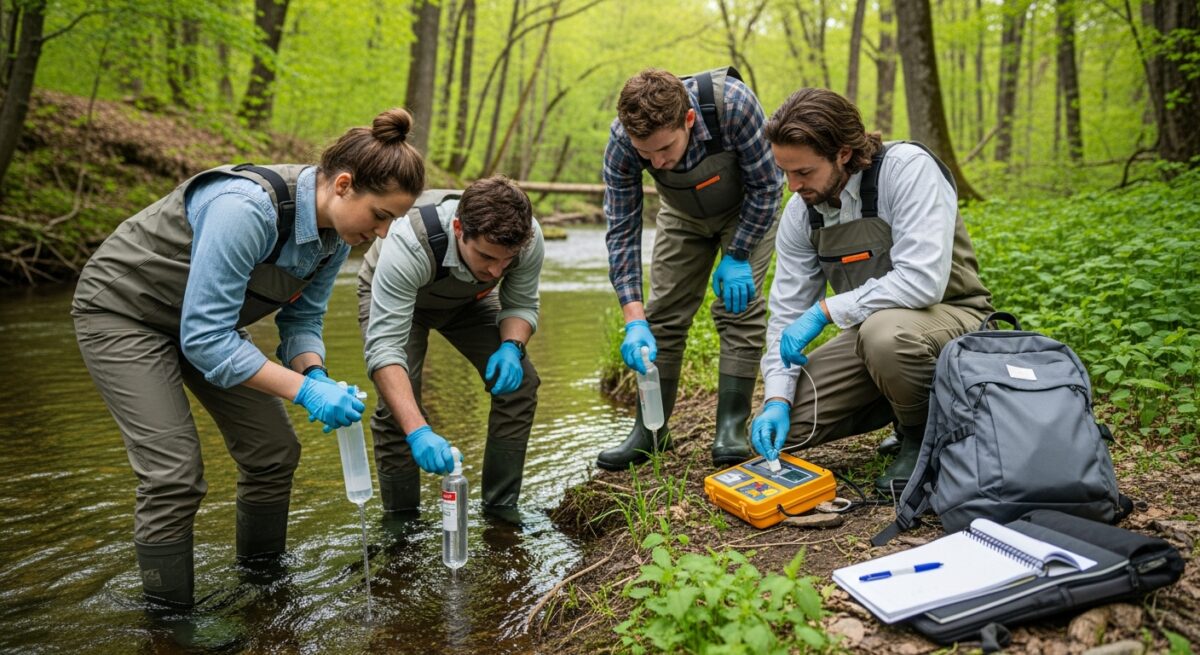
Technical proficiency is another key outcome. Graduates are typically skilled in using Geographic Information Systems (GIS) for spatial analysis, remote sensing software, and various data management and statistical programs (like R or Python). Field skills, such as soil and water sampling techniques, species identification, and the use of environmental monitoring equipment, are hallmarks of a hands-on program. Furthermore, students develop strong communication skills, learning to translate complex scientific findings into clear reports, presentations, and recommendations for policymakers, clients, or the public. The ability to work effectively in interdisciplinary teams, often with engineers, planners, and legal experts, is also a crucial competency fostered through group projects and collaborative research.
Choosing the Right Program and Financial Considerations
Selecting the right bachelor of environmental science program is a critical decision. Key factors to consider include accreditation (ensuring the institution meets high educational standards), the program’s specific focus and available specializations, the qualifications of the faculty (look for active researchers and practitioners), and opportunities for hands-on learning like internships, field courses, and undergraduate research. The location of the school can also be important, as it may provide access to unique ecosystems (coastal, forest, urban, etc.) for study.
Financial planning is an essential part of the college search process. Prospective students should thoroughly investigate tuition costs, fees, and the availability of scholarships, grants, and work-study programs specifically for STEM or environmental majors. Many schools offer departmental scholarships for high-achieving science students. It is also wise to consider the long-term return on investment, as careers in environmental science, while not always the highest paying initially, offer strong growth potential and high job satisfaction. For comprehensive tools and resources to compare costs and plan your educational investment, a dedicated resource for college cost & financial planning can be invaluable in making an informed decision.
Frequently Asked Questions
What is the difference between a B.S. in Environmental Science and a B.A. in Environmental Studies?
The Bachelor of Science (B.S.) in Environmental Science is typically more science-intensive, requiring a full suite of foundational courses in biology, chemistry, physics, and calculus. It prepares students for technical, research-oriented, or field-based careers. The Bachelor of Arts (B.A.) in Environmental Studies often has a lighter science core and incorporates more social sciences, humanities, and policy courses, preparing students for roles in advocacy, communication, law, or policy analysis.
Can I get a good job with just a bachelor’s degree, or do I need a master’s?
A bachelor’s degree in environmental science is sufficient for many entry-level and mid-level positions, especially in consulting, government agency work, and non-profit sectors. A master’s degree (M.S. or M.Envs.) can be beneficial for advancing into senior scientific roles, management, specialized research, or highly competitive fields like climate modeling. Many professionals gain work experience after their bachelor’s before deciding if and when to pursue a graduate degree.
Are there online bachelor of environmental science degrees available?
Yes, many accredited institutions now offer online or hybrid environmental science degrees. These are excellent options for working adults or those with geographical constraints. It’s crucial to ensure the online program includes opportunities for hands-on laboratory and field work, often through arranged local partnerships or short-term residential intensives.
What kind of salary can I expect with this degree?
Salaries vary widely based on job title, employer, location, and experience. According to the U.S. Bureau of Labor Statistics, the median annual wage for environmental scientists and specialists was approximately $78,000. Specialists in consulting and private industry often earn higher salaries than those in government or non-profit sectors, especially with experience.
Is this degree a good fit for someone who loves the outdoors?
While a passion for nature is a common motivator, prospective students should understand that professional environmental science involves significant indoor work: data analysis, report writing, laboratory work, and meetings. Fieldwork is a component, not the entirety, of most jobs. The degree is ideal for those who enjoy science and problem-solving as much as they enjoy being outdoors.
Pursuing a Bachelor of Environmental Science degree is a commitment to becoming part of the solution to our planet’s most pressing issues. It offers a rigorous and rewarding educational journey that blends scientific discovery with tangible application. The degree provides not only a deep understanding of natural systems but also a versatile skill set that is increasingly valued across multiple sectors. For individuals driven by curiosity, a desire to make a difference, and an affinity for scientific inquiry, this program of study can be the first critical step toward a meaningful and sustainable career. By carefully selecting a program that aligns with your interests and goals, you can position yourself to contribute significantly to building a more resilient and sustainable future.