
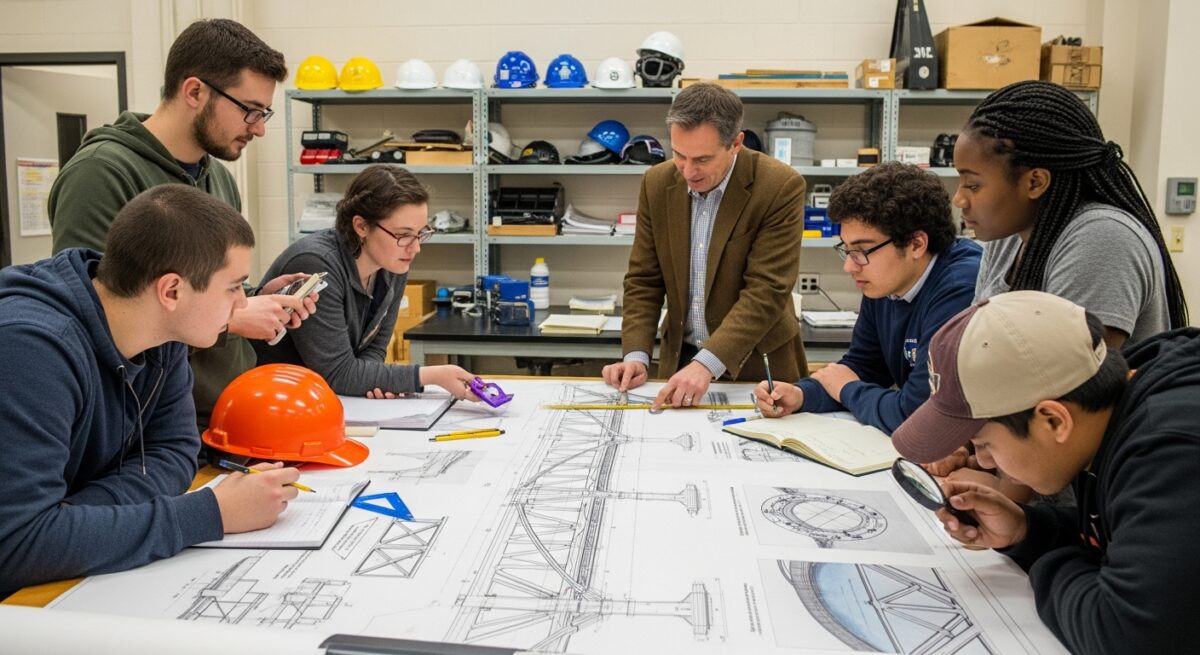
If you dream of designing bridges, skyscrapers, or sustainable water systems, a Bachelor of Civil Engineering Degree Guide can show you the path forward. Civil engineering is one of the oldest and most versatile engineering disciplines, shaping the physical world around us. From the roads we drive on to the buildings where we live and work, civil engineers are responsible for creating and maintaining the infrastructure that modern society depends on. This guide will walk you through everything you need to know about earning a bachelor’s degree in civil engineering, including curriculum details, career outcomes, accreditation requirements, and how to choose the right program for your goals.
Choosing to pursue a civil engineering degree is a significant decision that requires careful planning. The field offers strong job stability, competitive salaries, and the satisfaction of seeing your work literally take shape in the community. However, the path to becoming a licensed professional engineer (PE) is rigorous and demands a solid educational foundation. This comprehensive guide is designed to provide clarity for prospective students, career changers, and anyone exploring whether this demanding but rewarding field is the right fit.
What Is a Bachelor of Civil Engineering Degree?
A Bachelor of Civil Engineering (BSCE) is a four-year undergraduate degree that prepares students for professional practice in civil engineering. The program blends theoretical knowledge with practical application, covering topics like structural analysis, geotechnical engineering, transportation systems, and environmental engineering. Unlike some broader engineering degrees, a BSCE is highly specialized, focusing on the design, construction, and maintenance of public and private infrastructure.
The curriculum is built on a foundation of mathematics, physics, and chemistry, then progresses into core engineering subjects. Students learn to analyze forces, design safe structures, manage construction projects, and consider environmental impacts. By graduation, you will have developed the technical skills and professional judgment needed to tackle complex engineering challenges. For many, this degree is the first step toward becoming a licensed Professional Engineer (PE), a credential that opens doors to leadership roles and higher earning potential.
Core Curriculum and Specializations
The typical civil engineering degree program is structured to provide both breadth and depth. The first two years focus on foundational sciences and introductory engineering courses. The final two years dive into specialized topics and often include a capstone design project where students work in teams to solve a real-world engineering problem.
Foundational Courses
In the first two years, you can expect to take courses in calculus, differential equations, physics, chemistry, and statics. These courses build the mathematical and scientific framework needed for advanced study. You will also likely take an introduction to civil engineering course that covers the profession, ethics, and basic design principles. These early years are critical for developing problem-solving skills and understanding the scientific principles that underpin all engineering work.
Core Civil Engineering Subjects
Once you enter the upper-division portion of the program, the coursework becomes highly focused. The core subjects typically include:
- Structural Engineering: Analysis and design of buildings, bridges, and other structures to withstand loads and environmental forces.
- Geotechnical Engineering: Study of soil and rock mechanics, foundation design, and earth-retaining structures.
- Transportation Engineering: Planning, design, and operation of highways, railways, airports, and transit systems.
- Environmental Engineering: Water and wastewater treatment, air quality management, and solid waste disposal.
- Hydraulics and Water Resources: Behavior of fluids, design of pipelines, dams, and flood control systems.
- Construction Engineering and Management: Project scheduling, cost estimation, and construction methods.
Each of these areas is essential for a well-rounded civil engineer. The combination of these subjects ensures that graduates can understand how different systems interact. For example, a bridge design (structural) must account for the soil conditions (geotechnical) and water flow patterns (hydraulics) at the site. This interdisciplinary understanding is what makes civil engineers so valuable on large projects.
Specialization Options
Many programs allow students to specialize by choosing technical electives in a particular area. Specializing can help you stand out in the job market and align your education with your career interests. Common specialization tracks include structural engineering, transportation engineering, environmental engineering, and geotechnical engineering. Some universities also offer combined bachelor’s and master’s programs, allowing you to earn both degrees in five years. Choosing a specialization early can give you a head start on advanced coursework and research opportunities.
Accreditation and Why It Matters
When researching civil engineering programs, accreditation is non-negotiable. The Accreditation Board for Engineering and Technology (ABET) accredits engineering programs in the United States. Graduating from an ABET-accredited program is a prerequisite for licensure as a Professional Engineer in most states. Without an ABET-accredited degree, you may face significant hurdles in becoming licensed, which limits your career advancement.
ABET accreditation ensures that the program meets rigorous academic standards and prepares students for professional practice. It also assures employers that your education is of high quality. When you use a platform like CollegeDegree.Education to explore programs, you can filter for ABET-accredited civil engineering degrees, making it easier to find legitimate, high-quality options. Always verify accreditation status before applying to any program, whether it is on-campus or online.
Online vs. On-Campus Civil Engineering Degrees
While civil engineering is a hands-on field, online bachelor’s degree programs are becoming more common. Many online programs are designed for students who have already completed some college coursework or for working professionals seeking to advance their careers. However, fully online civil engineering degrees are less common than in other fields because of the lab and design studio requirements.
If you are considering an online option, look for programs that offer hybrid models. These programs deliver lectures online but require periodic on-campus labs or intensive weekend sessions. Some schools also partner with local community colleges for lab courses. An online civil engineering degree can offer flexibility, but it requires strong self-discipline and time management skills. For most students, a traditional on-campus program provides better access to lab equipment, faculty mentorship, and peer collaboration.
When comparing options, consider the total cost, transfer credit policies, and the availability of ABET accreditation. You can use school comparison tools to evaluate different programs side by side. This research is especially important for online programs, where quality can vary significantly between institutions.
Career Paths and Salary Expectations
A bachelor of civil engineering opens the door to a wide range of career opportunities. Civil engineers work in both the public and private sectors, for consulting firms, government agencies, construction companies, and utility providers. Common job titles include structural engineer, transportation engineer, geotechnical engineer, water resources engineer, and construction project manager.
According to the U.S. Bureau of Labor Statistics, the median annual wage for civil engineers was over $89,000 in 2023, with the top 10% earning more than $150,000. Job growth is projected at 5% through 2032, driven by the need to repair aging infrastructure and build new sustainable systems. The demand is particularly strong for civil engineers with expertise in environmental engineering and renewable energy projects.
Beyond salary, civil engineering offers strong job security. Infrastructure is a fundamental need, and civil engineers are essential for maintaining and improving it. The work is also varied. One day you might be analyzing soil samples for a new building foundation, and the next you could be designing a stormwater management system for a new subdivision. This variety keeps the career interesting and engaging.
Licensure and Professional Certification
Becoming a licensed Professional Engineer (PE) is a key milestone in a civil engineering career. Licensure demonstrates a high level of competence and is required for engineers who sign off on public projects. The path to licensure typically involves four steps:
- Graduating from an ABET-accredited bachelor’s degree program.
- Passing the Fundamentals of Engineering (FE) exam, which is often taken during or shortly after college.
- Gaining four years of progressive engineering experience under the supervision of a licensed PE.
- Passing the Principles and Practice of Engineering (PE) exam in a specific discipline.
Many civil engineers also pursue voluntary certifications, such as the Leadership in Energy and Environmental Design (LEED) accreditation or a Construction Manager in Training (CMIT) credential. These certifications can make you more competitive for specific roles and demonstrate your commitment to professional development. The process of licensure requires dedication, but it significantly enhances your career prospects and earning potential.
How to Choose the Right Program
Selecting the right civil engineering degree program is a personal decision that depends on your goals, budget, and learning style. Start by identifying programs that are ABET-accredited. Then consider factors like location, cost, class size, and the availability of internships or co-op programs. Hands-on experience during college is invaluable for building your resume and making professional connections.
Visit campuses, talk to current students and faculty, and review the curriculum in detail. Look for programs that offer strong support services like tutoring, career counseling, and job placement assistance. If you are interested in a specific specialization, check whether the program offers advanced courses or research opportunities in that area. For example, if you want to focus on environmental engineering, look for programs with strong water resources or sustainable design tracks.
Finally, consider the financial aspect. Civil engineering programs can be expensive, but many schools offer scholarships, grants, and work-study opportunities. You can also explore affordable online degrees or community college transfer pathways to reduce costs. Use financial aid calculators and speak with admissions counselors to understand the full cost of attendance and available aid.
Frequently Asked Questions
Is a bachelor of civil engineering degree hard? Yes, it is challenging. The program requires strong math and science skills, as well as dedication to completing complex problem sets and design projects. However, with consistent effort and good study habits, most students succeed.
Can I become a civil engineer with a related degree? It is possible but less common. Many employers prefer graduates with an ABET-accredited bachelor’s in civil engineering. A degree in a related field like construction management or environmental science may limit your opportunities without additional coursework or experience.
Do I need a master’s degree to become a civil engineer? Not for entry-level positions. A bachelor’s degree is sufficient for most jobs. However, a master’s degree can help you specialize, qualify for higher-level roles, or increase your earning potential, particularly in research or academia.
What is the difference between civil engineering and construction management? Civil engineering focuses on the design and technical analysis of infrastructure projects. Construction management focuses on the execution, budgeting, and scheduling of construction projects. The two fields overlap but require different skill sets. Many civil engineers move into construction management later in their careers.
Are there online bachelor of civil engineering programs? Yes, but they are less common than on-campus programs. Fully online ABET-accredited programs exist, but many are hybrid, requiring some in-person lab work. Always verify accreditation before enrolling.
The path to becoming a civil engineer is demanding but deeply rewarding. Whether you are drawn to designing sustainable buildings, improving transportation networks, or protecting water resources, this degree equips you with the tools to make a tangible impact on the world. As you explore your options, remember that the right program is one that matches your academic strengths, career goals, and personal circumstances. Take the time to research thoroughly, ask questions, and choose a path that will set you up for success in this vital profession. Learn more