
Embarking on a Bachelor of Architecture (B.Arch) degree is a profound commitment to a demanding, creative, and highly rewarding profession. It is far more than just a college major, it is a rigorous professional program designed to transform how you see the world and equip you with the skills to shape it. For prospective students wondering what to expect from a Bachelor of Architecture degree, the journey is defined by intense studio culture, a blend of artistic and technical learning, and a path toward licensure. This comprehensive guide will walk you through the core components, challenges, and triumphs of this unique five-year undergraduate program, providing a clear architecture degree overview to help you make an informed decision about your future in design.
The Structure and Timeline of a B.Arch Program
A professional Bachelor of Architecture degree is typically a five-year, 150 to 170-credit program, distinct from a four-year Bachelor of Science or Arts in Architectural Studies. This extended timeline is necessary to cover the extensive curriculum mandated for professional licensure. The years are often segmented into a carefully sequenced progression. The first two years, or the “foundation” phase, introduce core principles: design fundamentals, visual communication (drawing, sketching, model-making), architectural history, and basic structures. This is where you learn the language of architecture.
The middle years (often third and fourth) represent the core of the architectural education. Here, studio projects increase in complexity, moving from small-scale objects and spaces to larger buildings with real-world constraints like site analysis, building codes, and environmental systems. Courses in structural engineering, environmental controls, building technology, and materials science become deeply integrated with design work. The final year, or “thesis” year, is the capstone. Students undertake a self-directed, comprehensive design project that synthesizes everything they have learned, resulting in a major presentation that serves as a portfolio centerpiece and a bridge to professional practice.
The Heart of the Experience: The Design Studio
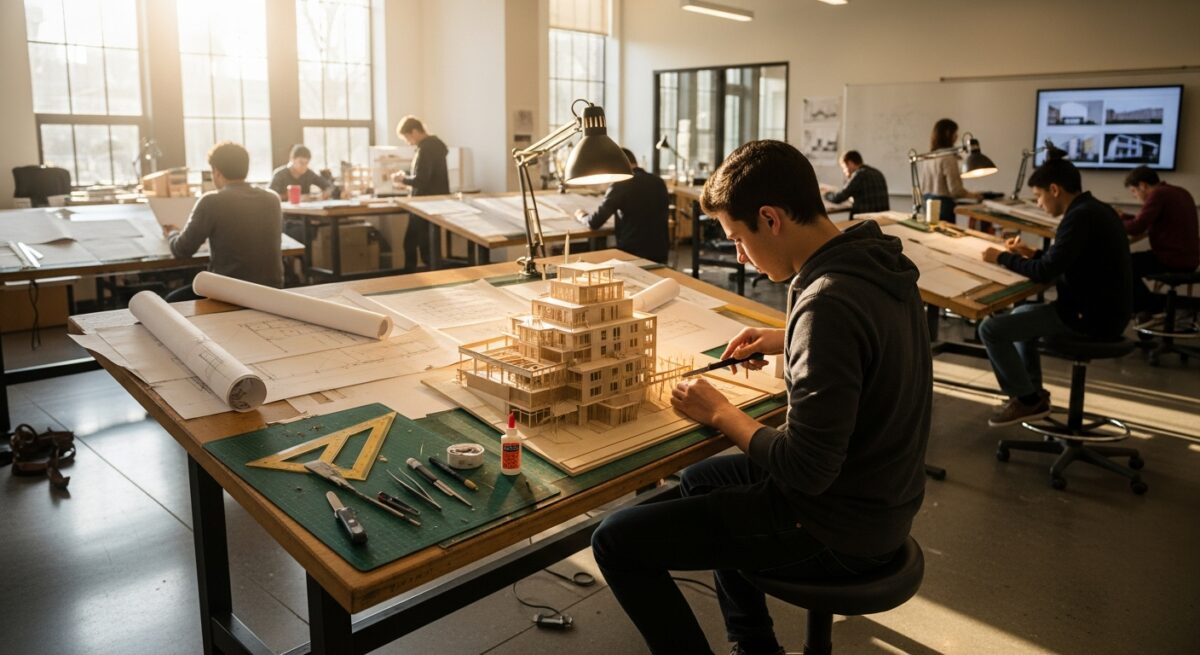
To understand what to expect from a Bachelor of Architecture degree, you must first understand the studio. It is not a classroom, it is a workshop, a laboratory, and a second home. Students typically have a dedicated desk in a shared studio space where they spend countless hours. The studio is where theoretical knowledge is applied. Under the guidance of professors (often practicing architects), you work on design projects that are reviewed in “crits” or critiques. These sessions, where you present your work to instructors and peers for feedback, are central to architectural pedagogy. They teach you to think on your feet, defend your ideas, and accept constructive criticism, which is vital for professional growth.
The studio culture fosters a unique sense of community and collaboration, but it also demands a significant time commitment. Late nights, or “all-nighters,” are a notorious part of the experience, especially as project deadlines approach. Learning to manage this intense workload, often while balancing other lecture-based courses, is one of the key challenges and formative aspects of the program. The studio is where you build not just models, but resilience, problem-solving skills, and a deep bond with your classmates.
Curriculum: Balancing Art, Science, and Humanities
The B.Arch curriculum is intentionally interdisciplinary. It sits at the intersection of art, science, and the humanities. You will not only learn to design beautiful forms but also understand the forces that act upon them and the cultural contexts they inhabit. A typical curriculum includes several key pillars of study that provide a complete architecture degree overview.
Design and Visual Communication
This is the creative core. You will learn design thinking, spatial composition, and programming. Communication skills are paramount: hand drawing, digital drafting (CAD), 3D modeling (with software like Rhino, Revit, or SketchUp), physical model building, and rendering. Your ability to visually and verbally articulate a design concept is as important as the concept itself.
Technical and Building Science
Architecture must stand up. Courses in structures (statics, strength of materials, and systems), building technology (enclosures, assemblies), and environmental systems (HVAC, lighting, acoustics) ensure your designs are buildable, safe, and sustainable. This is the “science” that grounds the “art.”
History and Theory
Understanding the past is crucial for innovating in the present. You will study the history of architecture and urbanism across cultures and time periods. Theory courses examine the philosophical, social, and political ideas that shape the built environment, helping you develop a critical stance on your own work.
Professional Practice
In the later years, courses cover the business and legal aspects of architecture: ethics, contracts, project management, and the path to licensure, including the Architectural Experience Program (AXP) and the Architect Registration Examination (ARE). Understanding college cost & financial planning early is also wise, as the financial investment in this degree is significant, and planning for graduate studies or licensure exams is part of the long-term professional journey.
Skills You Will Develop and Challenges You Will Face
Pursuing this design degree cultivates a diverse and powerful skill set. You will emerge as a strong visual and spatial thinker, a creative problem-solver, and a proficient communicator. Technical proficiency with industry-standard software becomes second nature. You will learn to work collaboratively and manage complex, long-term projects. However, the path is not without its hurdles. The workload is exceptionally heavy, requiring exceptional time management. The subjective nature of design criticism can be personally challenging. The financial cost of tuition and supplies (models, printing, software) is high. Furthermore, it’s important to know that the B.Arch is an undergraduate professional degree, but it is only the first step toward becoming a licensed architect, which requires completing the AXP and passing the ARE.
For those considering flexible learning options, it’s worth exploring resources that detail alternative pathways. For instance, our guide on Top Online Architecture Degrees Online Programs explains how some foundational and theoretical components can be pursued through accredited digital platforms, though the studio component typically requires in-person attendance.
Career Pathways After Your Bachelor of Architecture
Graduating with a NAAB-accredited B.Arch degree allows you to work in the architecture field immediately. Most graduates start as architectural interns or designers in architecture firms, where they begin accumulating AXP hours. The career paths, however, are diverse. Many focus on traditional architectural design for residential, commercial, or institutional projects. Others specialize in areas like sustainable design, urban planning, historic preservation, or interior architecture. The skills are also highly transferable to related fields like construction management, real estate development, set design, or digital visualization. Some graduates use the degree as a foundation for further study in landscape architecture, urban design, or business. The critical thinking and design skills are valued in many industries that require innovative problem-solving.
Frequently Asked Questions
Do I need to be good at drawing to start a B.Arch?
While natural drawing talent is helpful, it is not a prerequisite. Programs teach drawing as a skill for communication and ideation. The ability to think spatially and a willingness to learn are more important than being a skilled artist on day one.
What is the difference between a B.Arch and a BS in Architecture?
A B.Arch is a five-year, professional, NAAB-accredited degree that allows you to pursue licensure directly. A four-year BS in Architectural Studies is a pre-professional degree that often requires a subsequent Master of Architecture (M.Arch) to meet licensure requirements.
How important is accreditation?
Crucial. If your goal is to become a licensed architect in the United States, you must graduate from a program accredited by the National Architectural Accrediting Board (NAAB). Always verify a program’s accreditation status.
What should my portfolio include for application?
Admissions portfolios for undergraduate programs often do not require architectural work. They look for creativity, curiosity, and visual thinking. Include artwork, photography, sketches, models, or any projects that demonstrate your design sensibility and process.
Is the workload really as intense as people say?
Yes, it is demanding. The studio requires a massive time investment. Successful students learn to manage their time efficiently, develop healthy work habits to avoid constant burnout, and find balance where possible.
Choosing to pursue a Bachelor of Architecture degree is a decision to engage in a transformative educational experience that blends creativity with technical rigor. Knowing what to expect, from the immersive studio culture to the comprehensive curriculum, allows you to enter the program prepared for its challenges and excited by its possibilities. It is a path for passionate, dedicated individuals ready to learn the discipline of design and begin shaping the future of our built environment. By aligning your expectations with the reality of the program, you can fully embrace the journey toward becoming an architect.