
Automotive Technology Degree: Your Path to a Technician Career
An automotive technology degree provides the technical foundation for high-demand careers as master technicians, diagnosticians, and service managers. This guide details the curriculum and diverse career paths available.

By Ryan Taylor
The modern automobile is a rolling supercomputer, a complex symphony of mechanical engineering, advanced electronics, and software. Keeping these sophisticated machines running requires a new breed of skilled professional, one equipped with a deep, technical education. An automotive technology degree provides the foundational knowledge and hands-on skills necessary to thrive in this high-tech, high-demand field. This comprehensive guide will explain exactly what an automotive technology degree entails and map out the diverse career paths it unlocks, from the service bay to the engineering lab.
What Is an Automotive Technology Degree?
An automotive technology degree is a post-secondary educational program designed to train individuals for careers as automotive service technicians, diagnosticians, and related roles. Far from the old model of simple mechanical repair, today’s programs are rigorous, blending traditional hands-on skills with intensive instruction in computer systems, electronics, and hybrid/electric vehicle technology. These programs are typically offered at community colleges, technical schools, and some universities, culminating in an Associate of Applied Science (A.A.S.) degree, though certificate and bachelor’s degree options also exist. The core curriculum is built to align with industry standards and often incorporates preparation for nationally recognized certifications from organizations like the National Institute for Automotive Service Excellence (ASE).
The value of a formal auto tech degree lies in its structured, comprehensive approach. Students gain a systematic understanding of vehicle systems, which is critical for diagnosing complex, interconnected problems. They learn in a controlled environment with access to modern tools, diagnostic scanners, and training vehicles that mirror what they will encounter in the workforce. This education provides the “why” behind the “how,” enabling technicians to adapt to new technologies rather than just memorizing repair procedures for current models. For those considering flexible learning options, many accredited institutions now offer robust online components for theory, though hands-on lab work remains essential. Exploring online degrees for career growth can reveal how hybrid programs in automotive technology are structured.
Core Curriculum and Skills Developed
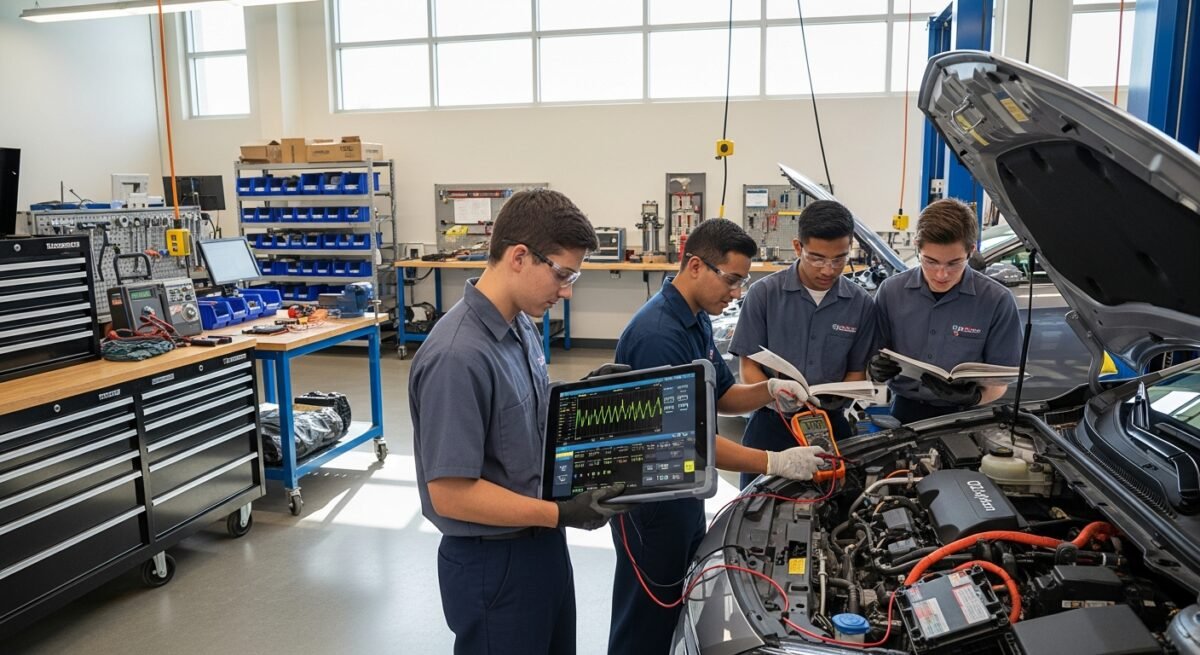
The coursework in an automotive technician program is demanding and multifaceted. It moves progressively from foundational principles to advanced, system-specific diagnostics. A typical program begins with automotive fundamentals, covering shop safety, tool identification and use, and basic vehicle construction. Students then delve into core systems: engine repair and performance, braking systems, steering and suspension, electrical and electronic systems, heating and air conditioning, and manual/automatic transmissions. Each module combines classroom theory with extensive lab work, where students disassemble, diagnose, and reassemble components on real vehicles.
In today’s digital garage, a significant portion of the curriculum is dedicated to electronics and diagnostics. Students learn to read wiring diagrams, use multimeters and oscilloscopes, and operate advanced onboard diagnostic (OBD) scan tools. They study network communications like Controller Area Network (CAN) buses that allow vehicle modules to talk to each other. With the rise of alternative powertrains, courses on hybrid and electric vehicle technology, including high-voltage system safety, are now standard. Beyond technical skills, programs emphasize critical soft skills: written communication for detailed repair orders, customer service for explaining complex issues, and logical problem-solving for efficient diagnostics. This holistic training produces a well-rounded professional ready for the challenges of a modern repair facility.
Specializations Within the Field
While a general automotive technology degree provides broad competency, many programs offer or lead to specializations that allow technicians to focus on areas of high demand or personal interest. These specializations often align with ASE certification areas and can significantly boost earning potential and job satisfaction. Common focus areas include automotive diagnostics and drivability, where technicians become experts in solving complex engine performance and emission problems. Another major path is in hybrid and electric vehicle propulsion systems, a rapidly growing niche requiring specialized safety and technical knowledge. Other technicians may specialize in diesel engine performance, medium/heavy truck repair, or specific manufacturer programs, often sponsored by car companies themselves.
These specialized tracks are crucial because vehicle technology is advancing faster than any single technician can master entirely. By developing deep expertise in one domain, a technician becomes an invaluable resource. For instance, a specialist in advanced driver-assistance systems (ADAS) calibration is essential for proper repairs after a collision. A master technician in automotive cybersecurity is emerging as a new frontier. Choosing a specialization can be guided by local market demand, personal aptitude for certain types of systems (electrical vs. mechanical), and the specific partnerships a school has with industry employers. This focused expertise transforms a graduate from a general practitioner into a sought-after specialist.
Career Paths and Opportunities
Graduating with an automotive technology degree opens doors to a wide array of career paths, many of which extend beyond the traditional image of a service technician. The most direct path is becoming a Automotive Service Technician or Mechanic. In this role, you perform maintenance, conduct inspections, and diagnose and repair customer vehicles. Career progression typically moves from a lube technician to a general service technician, then to a master technician or diagnostic specialist. With experience, technicians can move into shop foreman or service manager positions, overseeing operations, managing other technicians, and interacting with customers. The median annual wage for automotive service technicians and mechanics was over $46,000 in recent Bureau of Labor Statistics reports, with experienced master technicians earning significantly more, especially in dealership or specialist settings.
Other career avenues leverage the technical foundation in different ways. A graduate might become a Parts Specialist or Manager, using their deep knowledge of vehicle systems to source and sell the correct parts. The field of automotive technical writing is another option, creating repair manuals, service bulletins, and owner documentation. For those with strong analytical skills, roles as a Field Service Engineer or Technical Representative for parts manufacturers or tool companies are excellent fits, providing support to repair shops and dealerships. The performance and racing industry also seeks skilled technicians. Furthermore, the skills are highly transferable to related fields like diesel, heavy equipment, agricultural, or marine mechanics. The diagnostic and systematic thinking skills are invaluable assets. For a broader look at how different degrees can propel your professional life, valuable education and degree resources are available to compare academic tracks and outcomes.
Here are some key career trajectories for automotive technology graduates:
- Line Technician: Entry-level position performing maintenance and basic repairs.
- Diagnostic Technician: Advanced role focusing on complex problem-solving using specialized tools.
- Shop Foreman/Service Manager: Leadership role managing workflow, quality control, and team coordination.
- Technical Instructor: Teaching the next generation of technicians at a vocational school or college.
- Field Service Representative: Working for an OEM or tool company to support dealerships and repair facilities.
Certifications and Continuing Education
In the automotive industry, certifications are the currency of credibility. While an automotive technology degree provides the essential education, professional certifications validate your skills to employers and customers. The gold standard is certification from the National Institute for Automotive Service Excellence (ASE). ASE offers a series of tests in various specialties, such as Engine Repair, Electrical/Electronic Systems, and Brakes. Achieving certification in multiple areas leads to ASE Master Technician status, a highly respected designation. Many employers offer pay incentives for each ASE certification earned. Furthermore, most major manufacturers offer their own branded certification programs (e.g., Ford ASSET, GM ASEP, Toyota T-TEN). These programs, often integrated into degree curricula, provide brand-specific training and frequently include paid internships at dealerships.
Continuing education is not optional in this field, it is a requirement for career longevity. Vehicle technology evolves annually, with new systems, materials, and software updates. Technicians must engage in ongoing training through manufacturer webinars, technical seminars, and courses offered by tool and parts suppliers. Many of the best automotive technology degree programs emphasize this mindset of lifelong learning. Some technicians pursue additional formal education, such as a bachelor’s degree in automotive engineering technology or business management, to advance into roles in engineering, operations, or corporate training. Staying current is the key to avoiding obsolescence and securing a long, prosperous career at the forefront of transportation technology.
Frequently Asked Questions
Is an automotive technology degree worth it compared to just learning on the job?
Yes, for most people. While on-the-job training is valuable, a structured degree program provides comprehensive, foundational knowledge much faster. It teaches theory and diagnostics that allow you to understand why systems fail, not just how to fix a specific problem. Graduates often start at higher pay scales and advance more quickly due to their broader skill set.
What is the difference between a certificate and a degree in automotive technology?
A certificate program (often 6-12 months) focuses on core hands-on skills for entry-level positions. An associate degree (typically 2 years) includes all certificate coursework plus general education classes (math, communications, physics) and more in-depth technical theory. The degree offers better long-term career mobility and is often a prerequisite for management roles.
Are there opportunities for women in automotive technology careers?
Absolutely. The industry actively seeks to diversify its workforce. The skills required, diagnostic thinking, attention to detail, and technical aptitude, are not gender-specific. Many successful master technicians, shop owners, and technical trainers are women, and supportive networks and scholarships exist to encourage more women to enter the field.
How physically demanding is a career as an automotive technician?
The job can be physically demanding, involving lifting, bending, and working in awkward positions. However, the industry increasingly relies on diagnostic skills and computer-based work. Proper use of lifts, tools, and ergonomic practices mitigates physical strain. Roles in diagnostics, management, or technical support can be less physically intensive.
Can I start my own business with this degree?
Definitely. An automotive technology degree provides the technical foundation to ensure quality work, which is crucial for building a reputation. Coupled with business courses (often included in degree programs) or self-study in small business management, many technicians successfully open independent repair shops, specialty service centers, or mobile repair businesses.
Pursuing an automotive technology degree is a strategic investment in a future-proof career. It equips you with a blend of timeless mechanical knowledge and cutting-edge technical skills that are in constant demand. As vehicles continue to evolve toward electrification, connectivity, and automation, the trained professionals who can service and understand them will only become more valuable. This path offers a clear route to a stable, well-compensated, and intellectually engaging profession where you can literally see the tangible results of your work every day.