
ASU Animation and Special Effects Degree Guide
Explore the Animation, Interactive Technology, Video Graphics, and Special Effects Bachelor's degree at ASU. Call (877)-218-7081 for guidance on admissions and next steps.
By Scott Thompson
Aspiring animators, game designers, and visual effects artists often search for a program that combines artistic training with serious technical skill. The Animation, Interactive Technology, Video Graphics, and Special Effects Bachelor's degree, usually 4 years In-person at Arizona State University Campus Immersion, sits at the center of that search. It is a hands-on, studio-driven pathway for students who want to build characters, design interactive experiences, and produce cinematic effects on a real campus with real equipment. If you are comparing creative technology programs and want to understand what this degree involves, how to apply, and where it can lead, this guide walks you through the essentials.
What This ASU Animation and Special Effects Program Covers
The program blends four overlapping disciplines. Animation focuses on motion, timing, character performance, and storytelling. Interactive technology covers game engines, user experience, real-time rendering, and interactive media. Video graphics includes compositing, motion graphics, digital cinematography, and post-production workflows. Special effects spans practical effects, digital simulation, visual effects compositing, and pipeline integration. Together, these areas prepare graduates for roles that demand both creative vision and technical fluency.
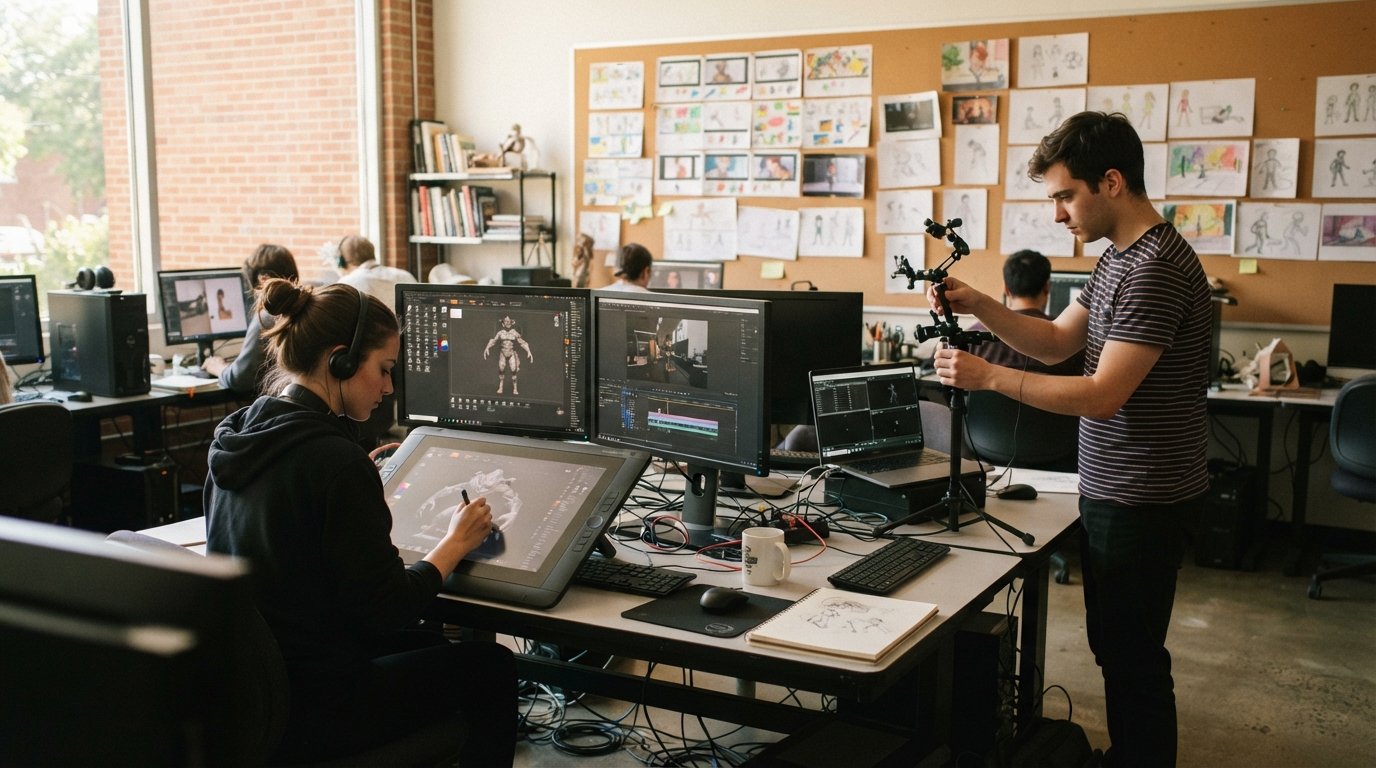
At Arizona State University, the campus immersion format matters. Students work in labs, studios, and collaborative production spaces. They get face time with faculty who have industry experience, access to motion capture stages, render farms, and editing suites, and the chance to build a portfolio alongside peers who push them creatively. That in-person environment mirrors how real production teams operate: deadlines, critiques, version control, and collaborative problem solving.
Coursework typically moves from foundations to specialization. Early classes build drawing, design, 3D modeling, and digital imaging skills. Mid-level courses introduce rigging, animation principles, compositing, and game engine workflows. Advanced courses focus on capstone projects, team productions, and electives that let you deepen a specialty such as character animation, visual effects, or interactive media. General education requirements round out the degree, developing writing, critical thinking, and communication skills that employers consistently value.
Because the field changes quickly, strong programs emphasize learning how to learn. Software updates, rendering pipelines, and delivery platforms evolve constantly. The best preparation is a mix of durable fundamentals (composition, color, storytelling, physics of motion) and adaptable technical habits (scripting, asset management, iterative critique). This degree is designed with that balance in mind.
Admission Steps and Degree Requirements at a Glance
Admission to this program generally follows the university's undergraduate application process, with some creative programs requesting a portfolio or supplemental materials. Requirements can vary by academic year, so always confirm details with the department and the university's official admissions pages. In broad strokes, here is how most students approach it.
- Complete the university application. Submit transcripts, test scores if required, and the standard application fee or waiver request by the posted deadline.
- Prepare creative materials if requested. A portfolio may include drawings, 3D models, animations, game prototypes, motion graphics, or visual effects shots. Quality and clear documentation matter more than quantity.
- Meet general education and program prerequisites. These often include foundational courses in art, design, math, or computer literacy, depending on your high school background.
- Maintain academic progress. Once enrolled, students typically need to pass core studio courses and maintain a minimum GPA to continue in sequence.
- Plan for the four-year timeline. The degree is usually completed in four years of full-time study, though transfer credits, summer courses, or part-time pacing can change that.
Course requirements usually include a mix of studio courses, lecture courses, electives, and a capstone or senior project. Students often choose electives that align with career goals, such as advanced character animation, virtual production, game design, or effects simulation. Because the program is in-person, scheduling matters: many studio courses meet multiple times per week and require lab access outside class hours.
Cost is a major consideration. Tuition, fees, equipment, and software can add up. Prospective students should explore financial aid, scholarships, grants, and work-study options early. If you are also weighing technology-focused alternatives, a practical resource like this bachelor of information technology degree guide can help you compare technical degree structures, career outcomes, and program formats before you commit.
Skills You Build in an In-Person Studio Environment
The campus immersion format accelerates skill development in ways that are hard to replicate online. In a shared studio, you see how others solve problems. You learn to give and receive critique. You practice pitching ideas, defending creative choices, and revising under deadline. Those soft skills are often the difference between a good reel and a hired artist.
Technically, students build a toolkit that spans the production pipeline. Common skill areas include:
- 2D and 3D animation principles, including timing, weight, and performance
- Modeling, texturing, lighting, and rendering for games and film
- Compositing, rotoscoping, tracking, and color correction for video graphics
- Game engine workflows, real-time interactivity, and level design basics
- Visual effects simulation, particle systems, and practical effects integration
These skills map to real job tasks. A junior animator might spend a week polishing a character walk cycle. A compositor might remove rigs, add atmosphere, and match camera motion. An interactive designer might prototype a mechanic in a game engine and test it with users. A VFX artist might combine a practical explosion plate with digital smoke and debris. The degree exposes you to all of these so you can choose a lane with confidence.
Portfolio development is continuous. By graduation, students should have a focused reel or interactive demo that showcases their best work, explains their role in each piece, and demonstrates both technical execution and creative decision-making. Faculty feedback and peer review help sharpen that portfolio before it goes to employers or graduate programs.
Careers and Salary Outlook for Graduates
Graduates pursue roles across film, television, streaming, games, advertising, architectural visualization, medical animation, education, and emerging fields like virtual production and extended reality. Job titles vary, but common entry points include animator, compositor, motion graphics artist, game artist, technical artist, interactive designer, and visual effects artist. Some graduates continue to graduate school or teacher training, while others move directly into studio or agency work.
Earnings depend on location, industry, specialization, and experience. Animation and game hubs tend to pay more, but remote work has widened opportunities. Building a strong reel, networking at festivals and conferences, and taking contract work early can accelerate growth. Many professionals start in junior roles and specialize over time, moving into senior artist, lead, supervisor, or technical director positions.
Because the industry is project-based, resilience and continuous learning matter. Successful graduates often keep learning new software, study adjacent skills like scripting or cinematography, and maintain a portfolio that evolves with their goals. The four-year in-person structure gives you time to build those habits with mentorship and structured deadlines.
For adult learners and career changers who need flexibility, it is worth comparing on-campus and online options carefully. If you are exploring flexible pathways to technical or creative careers, visiting a resource hub for online degree programs and college planning can help you understand accreditation, transfer credits, and program formats before you decide.
How to Decide If This Degree Fits You
The Animation, Interactive Technology, Video Graphics, and Special Effects Bachelor's degree, usually 4 years In-person at Arizona State University Campus Immersion, is a strong fit for students who want a structured, collaborative, studio-based education and are ready to commit to full-time study on campus. It rewards curiosity, persistence, and a willingness to iterate. It also demands time management, because studio courses can be intensive and equipment access may require evening or weekend work.
If you prefer fully online learning, need to keep a full-time job, or want a shorter credential, other pathways may serve you better. If you want deep technical training, a broad creative network, and access to production-grade facilities, the campus immersion model has clear advantages. The best way to decide is to visit campus, talk to current students and faculty, review the curriculum, and compare costs and outcomes against your goals.
Start early with applications, financial aid, and portfolio preparation. Ask about scholarship deadlines, equipment requirements, and internship connections. Talk to advisors about course sequencing so you can avoid bottlenecks in popular studio classes. With good planning, this degree can be a launchpad into a creative technology career that blends art, engineering, and storytelling.