
For many career changers and recent graduates, the idea of spending two or more years in a classroom before entering the healthcare workforce feels like an insurmountable barrier. Medical assisting is one of the fastest-growing allied health fields, and the demand for trained professionals continues to rise. However, the traditional route to certification can feel slow. This is where accelerated medical assistant programs offer a compelling alternative. These intensive courses compress months of training into weeks, allowing students to sit for their certification exams and begin working in clinics, hospitals, and private practices much sooner. But speed does not mean cutting corners. Understanding how these programs work, what they require, and who they serve best is essential before making a commitment.
What Are Accelerated Medical Assistant Programs?
Accelerated medical assistant programs are structured educational tracks designed to cover the same core curriculum as a standard program but in a significantly shorter timeframe. While a traditional diploma or associate degree program might span nine months to two years, an accelerated version can be completed in as few as eight to twelve weeks. These programs are not simply “cram courses.” They follow a rigorous schedule that often includes full-time, daytime classes, evening labs, and compressed clinical externships. The goal is to produce job-ready graduates who can pass the Certified Medical Assistant (CMA) or Registered Medical Assistant (RMA) exams.
The typical curriculum covers both administrative and clinical duties. Students learn medical terminology, anatomy and physiology, phlebotomy, pharmacology, and patient preparation. Administrative topics include medical billing and coding, electronic health records software, and appointment scheduling. Because the pace is fast, students must be prepared to absorb information quickly and practice hands-on skills intensively. Many accelerated programs are offered by private career colleges, community colleges, and online hybrid providers. For those exploring options, a comprehensive online medical assistant programs guide can help clarify which format suits different learning styles.
Key Differences Between Accelerated and Traditional Programs
Understanding the structural differences helps prospective students decide which path aligns with their life circumstances. The most obvious difference is time. Traditional programs spread coursework over multiple semesters, often with breaks between terms. Accelerated programs run continuously, sometimes with classes five or six days a week. This intensity allows students to finish faster but requires a higher level of commitment and time management.
Another difference involves the externship component. In traditional programs, the clinical externship may occur at the end of the program and last several months. In accelerated tracks, externships are often scheduled immediately after the classroom portion and may be shorter but more concentrated. Students typically complete 160 to 240 hours of hands-on clinical work in a real medical office or hospital setting. Accreditation also plays a role. Many accelerated programs seek accreditation from the Commission on Accreditation of Allied Health Education Programs (CAAHEP) or the Accrediting Bureau of Health Education Schools (ABHES). Graduates of CAAHEP-accredited programs are eligible to sit for the CMA exam offered by the American Association of Medical Assistants (AAMA).
Who Should Choose an Accelerated Program?
Accelerated medical assistant training is not for everyone. It works best for individuals who can dedicate themselves fully to their studies without major distractions. Ideal candidates often include:
- Career changers who have prior college experience and can handle a fast-paced learning environment.
- Parents or caregivers who have arranged childcare and family support for a concentrated period.
- Recent high school graduates who prefer an intensive, focused route over a longer academic calendar.
- Military veterans or active-duty spouses who need to gain credentials quickly before a relocation.
- Students who have already completed prerequisite coursework in anatomy or medical terminology.
These programs demand strong organizational skills and a willingness to study outside of class. Students who struggle with self-paced learning or who have significant work or family obligations may find the pace overwhelming. It is important to honestly assess your capacity before enrolling.
What You Will Learn in an Accelerated Medical Assistant Program
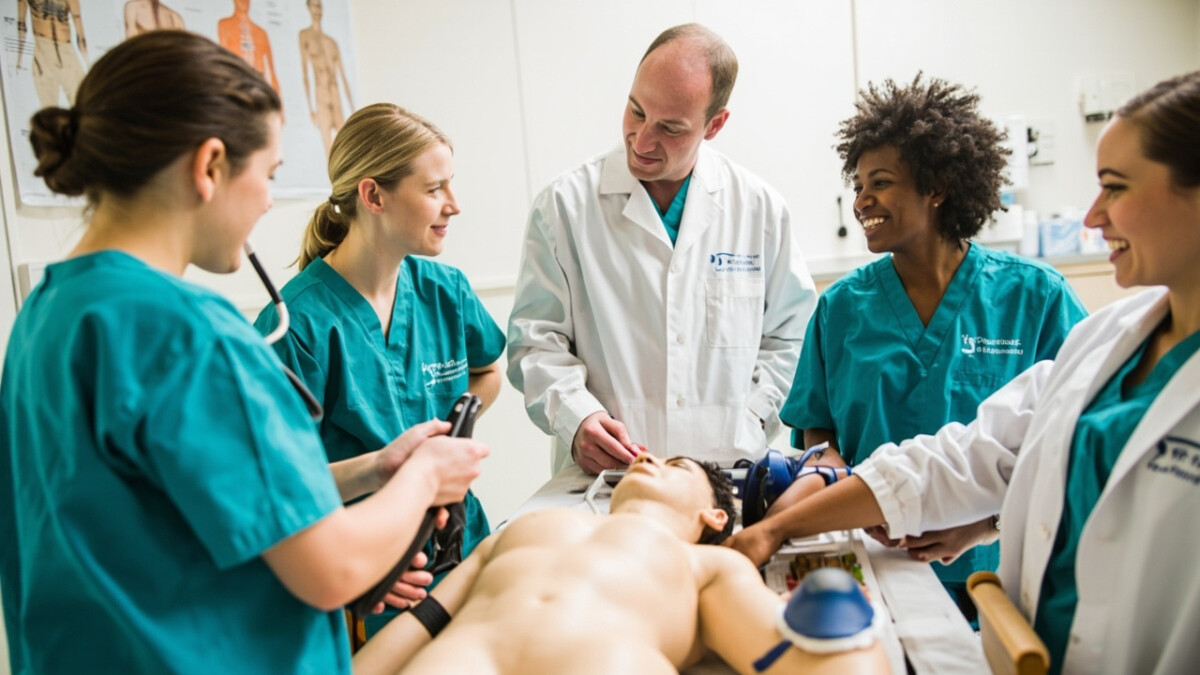
Despite the compressed timeline, accelerated programs cover the same competencies as their longer counterparts. The curriculum is divided into three main areas: clinical skills, administrative skills, and professional development. Clinical instruction includes taking vital signs, administering injections, performing EKGs, drawing blood, assisting with minor surgical procedures, and preparing specimens for lab testing. Students practice these skills in a lab setting under the supervision of experienced instructors.
Administrative training focuses on the behind-the-scenes work that keeps a medical practice running smoothly. This includes scheduling patients, managing medical records, processing insurance claims, and handling billing inquiries. Students learn to use practice management software and understand the basics of medical coding systems such as CPT and ICD-10. Some programs also include a module on patient communication and ethics. The combination of clinical and administrative training makes medical assistants versatile professionals who can fill multiple roles in a healthcare setting.
Professional development is another component that is often emphasized in accelerated programs. Instructors provide guidance on resume writing, interview techniques, and job search strategies. Because the program ends quickly, career services support is typically front-loaded. Many schools have partnerships with local clinics and hospitals that hire graduates directly after they pass their certification exams. For students interested in maximizing their career options, exploring tuition and program financing options can help remove financial barriers to enrollment.
Accreditation and Certification: Why They Matter
Not all accelerated medical assistant programs are created equal. Accreditation is the single most important factor to consider when choosing a program. Graduating from a CAAHEP or ABHES accredited program ensures that your education meets national standards and that you are eligible to take the CMA or RMA certification exam. Employers often prefer or require certification, and some states have specific licensing mandates.
Certification exams test knowledge across clinical, administrative, and safety domains. The CMA exam, for example, includes questions on anatomy, medical terminology, patient care, and legal ethics. Passing the exam demonstrates competence and can lead to higher starting salaries and better job opportunities. Many accelerated programs claim to prepare students for these exams, but it is worth verifying their pass rates. Reputable programs publish their exam pass rates and job placement statistics on their websites. Prospective students should request this data before enrolling.
It is also important to note that some accelerated programs are offered entirely online with a local externship component. While online learning offers flexibility, students must ensure the program is accredited and that the clinical externship site meets requirements. Hybrid programs combine online lectures with in-person lab sessions, which can be a good compromise for students who need some flexibility but still want hands-on practice.
Cost and Financial Aid Considerations
The cost of accelerated medical assistant programs varies widely depending on the institution and format. Private career colleges often charge between $3,000 and $15,000 for a complete program. Community college programs may be more affordable, sometimes under $2,000 for in-district students. However, accelerated programs at community colleges are less common because their academic calendars are typically semester-based. Private schools are more likely to offer rolling start dates and fast-track schedules.
Financial aid is available for eligible students. Federal Pell Grants, federal student loans, and institutional scholarships can help cover tuition and fees. Students should complete the Free Application for Federal Student Aid (FAFSA) to determine their eligibility. Some employers also offer tuition reimbursement programs for employees pursuing healthcare credentials. Additionally, many schools offer payment plans that allow students to spread the cost over several months. Comparing total program cost, including textbooks, lab fees, and exam fees, is essential before making a decision.
Frequently Asked Questions
How long does an accelerated medical assistant program take?
Most accelerated programs take between 8 and 12 weeks to complete. Some intensive full-time programs can finish in as little as 6 weeks, while part-time accelerated options may take up to 16 weeks. The exact duration depends on the school and the number of hours required for the clinical externship.
Can I work while attending an accelerated program?
Working full-time while enrolled in an accelerated program is very challenging. The schedule often requires 30 to 40 hours per week of class and lab time, plus additional study hours. Many students reduce their work hours or take leave during the program. Part-time work may be manageable if the program offers evening or weekend classes, but students should plan carefully.
Do I need prior healthcare experience to enroll?
No prior healthcare experience is typically required. Most accelerated programs accept students with a high school diploma or GED. However, some programs recommend or require coursework in biology or anatomy as a prerequisite. Students without a science background may need to complete a short prerequisite course before starting.
Are accelerated medical assistant programs accredited?
Many are, but not all. It is critical to verify accreditation before enrolling. Look for CAAHEP or ABHES accreditation on the school’s website. Graduating from an accredited program is necessary to qualify for the CMA or RMA certification exams.
What is the job outlook for medical assistants?
The Bureau of Labor Statistics projects that employment of medical assistants will grow 16 percent through 2031, much faster than the average for all occupations. This growth is driven by an aging population and increased demand for healthcare services. Certified medical assistants with formal training from an accelerated program are well positioned to fill these roles.
Accelerated medical assistant programs offer a practical, time-efficient pathway into a rewarding healthcare career. They are not a shortcut but a concentrated learning experience that demands focus and dedication. For students who can commit fully, these programs can open doors to stable employment, professional growth, and the satisfaction of helping others. Before enrolling, research accreditation, verify certification eligibility, and assess your personal readiness for an intensive schedule. With the right preparation, an accelerated program can be the fast track to a new career in medical assisting.