
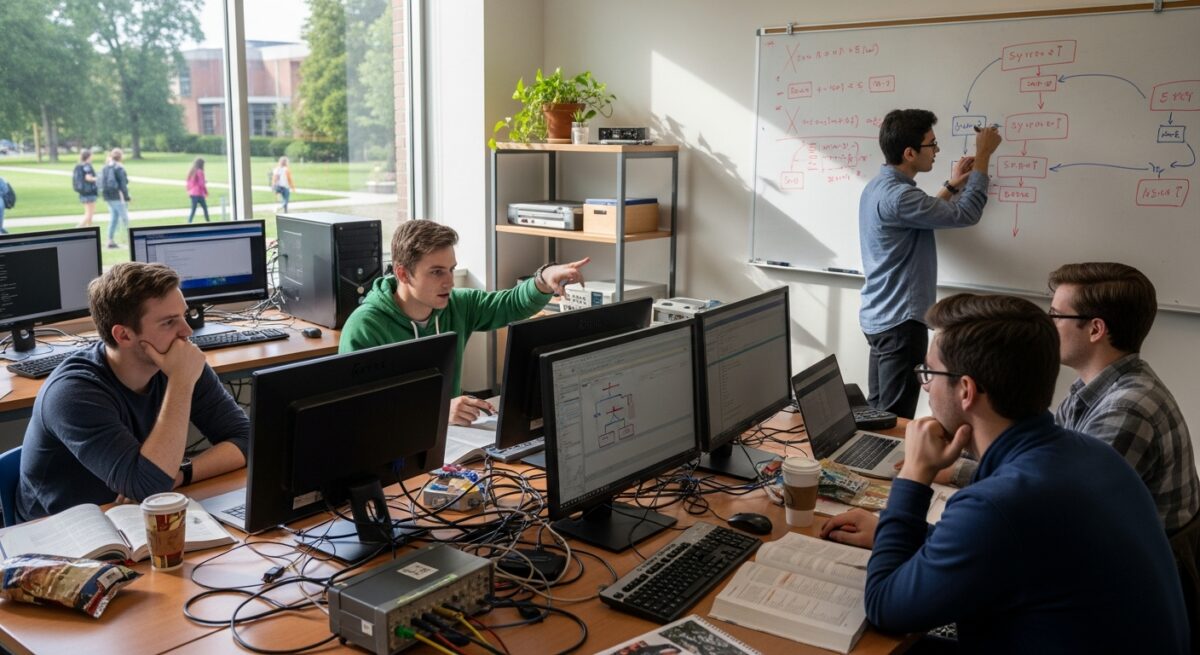
Computer science has become one of the most sought-after fields in higher education, and for good reason. The digital economy runs on software, algorithms, and data, and the people who understand how to build and optimize these systems are in high demand. If you are considering a technology-focused degree, you have likely encountered the term “Bachelor of Science in Computer Science.” This degree is often abbreviated as BS Computer Science or BSC Computer Science, and it represents a rigorous, math-heavy pathway into the world of computing. But what does this degree actually entail, and is it the right choice for your career goals? This article breaks down the structure, curriculum, career outcomes, and key considerations of this popular undergraduate program.
At its core, a Bachelor of Science in Computer Science is an undergraduate degree that focuses on the theoretical foundations of computing and the practical application of those principles. Unlike a Bachelor of Arts in computer science, which may include more liberal arts requirements, the BS version emphasizes mathematics, programming, algorithms, and systems architecture. It is designed to give you a deep understanding of how computers work, from the hardware components to the software that runs on them. This degree is not just about learning to code; it is about learning to think computationally, to solve complex problems, and to design efficient solutions that can scale to millions of users.
The Core Curriculum of a BS Computer Science Program
Most BS Computer Science programs share a common core of foundational courses. These courses are designed to build your technical skills and analytical thinking from the ground up. In your first year, you will typically take introductory programming courses, usually in languages like Python or Java. These courses teach you the basics of syntax, data types, control structures, and functions. You will also begin your mathematics sequence, which usually starts with calculus and discrete mathematics. Discrete math is particularly important because it introduces you to logic, sets, graph theory, and combinatorics, all of which are essential for understanding algorithms and data structures.
As you progress into your sophomore and junior years, the curriculum becomes more specialized. You will likely take courses in data structures and algorithms, which are the building blocks of efficient software. You will also study computer organization and architecture, learning how processors, memory, and input/output devices interact. Operating systems is another key course, covering how software manages hardware resources and provides services to applications. Additionally, you will explore topics like database management, network fundamentals, and software engineering principles. These courses collectively give you a broad understanding of the entire computing stack, from the physical hardware to the user-facing applications.
Here are some of the most common courses you can expect to encounter in a BS Computer Science program:
- Programming Fundamentals (Python, Java, or C++)
- Data Structures and Algorithms
- Discrete Mathematics and Linear Algebra
- Computer Architecture and Organization
- Operating Systems and Systems Programming
- Database Systems and SQL
- Computer Networks and Security Basics
This list is not exhaustive, but it gives you a sense of the core areas of study. In your senior year, you will often have the opportunity to choose electives that align with your interests, such as artificial intelligence, machine learning, cybersecurity, data science, or human-computer interaction. Many programs also require a capstone project, where you work in a team to design and build a significant software system, applying everything you have learned to a real-world problem.
Why Choose a BS Over a BA in Computer Science?
One of the most common questions prospective students ask is whether they should pursue a Bachelor of Science or a Bachelor of Arts in computer science. The answer depends on your career goals and academic interests. A BS Computer Science degree is more math-intensive and focuses on the technical and theoretical aspects of computing. It is often the preferred choice for roles that require deep technical expertise, such as software engineering, systems analysis, and research. If you are aiming for a career as a software developer at a major tech company, a BS is a strong credential.
On the other hand, a BA in computer science may be housed in a liberal arts college and includes more general education requirements, such as languages, humanities, and social sciences. This can be a good option if you are interested in interdisciplinary fields like digital media, computational linguistics, or technology policy. However, it is important to note that the difference in degree title may matter to some employers, though many focus more on your actual skills and portfolio. For most technical positions, a BS is the standard expectation, and it provides a more direct path to advanced study in graduate school if you are considering a master’s or PhD.
Career Opportunities and Salary Potential
Earning a Bachelor of Science in Computer Science opens the door to a wide range of career paths. The most obvious is software engineering, where you might develop mobile apps, web services, or enterprise software. But the degree also prepares you for roles in data science, where you analyze large datasets to extract insights; cybersecurity, where you protect systems from threats; and artificial intelligence, where you build intelligent systems that can learn and adapt. The demand for these skills is not limited to the tech industry; banks, healthcare organizations, government agencies, and retail companies all need computer science professionals.
According to the U.S. Bureau of Labor Statistics, computer and information technology occupations are projected to grow much faster than the average for all occupations. The median annual wage for these workers was over $100,000 in recent years, which is significantly higher than the median for all occupations. Of course, salaries vary based on location, experience, and the specific role. A software engineer in Silicon Valley will earn more than one in a small Midwestern city, but the cost of living is also higher. The key takeaway is that a BS Computer Science degree offers strong earning potential and job security, making it a wise investment for many students.
For a broader perspective on how a science degree can shape your future, you might find our Bachelor of Science in Biology Degree Overview and Career Paths helpful, as it explores similar themes of education and career alignment.
Specializations and Electives
One of the strengths of a BSC Computer Science degree is the ability to specialize in a particular area. While the core curriculum provides a solid foundation, your electives allow you to tailor your education to your interests and career aspirations. For example, if you are fascinated by artificial intelligence, you might choose electives in machine learning, neural networks, and natural language processing. If you prefer security, you could focus on cryptography, network security, and ethical hacking. Data science is another popular specialization, with courses in statistical modeling, big data technologies, and data visualization.
Choosing a specialization can make you more attractive to employers in that niche. However, it is also important to maintain a broad skill set, as the technology landscape changes rapidly. A well-rounded computer scientist who understands algorithms, systems, and software engineering principles can adapt to new technologies more easily. When selecting electives, consider what problems you want to solve and what industries excite you. Talk to your academic advisor and professors, and look at job postings to see what skills are in demand.
Online and Accelerated Options
Not all students can attend a traditional on-campus program, which is why many universities offer a Bachelor of Science in Computer Science online. Online programs provide flexibility for working adults, parents, and military veterans who need to balance their studies with other responsibilities. These programs typically deliver lectures through video, use virtual labs for hands-on assignments, and facilitate collaboration through discussion forums and group projects. The curriculum is often identical to the on-campus version, and the degree you earn is the same. However, it is crucial to ensure that the online program is accredited, as this affects the value of your degree and your eligibility for financial aid.
Another option is an accelerated degree program, which allows you to complete your BS in less than four years. These programs might involve taking courses during the summer, enrolling in a heavier course load, or starting with college credit from AP or dual-enrollment classes. Accelerated programs are intense and require strong time management skills, but they can save you time and money if you are motivated. Additionally, some schools offer a combined BS/MS program, where you can earn both a bachelor’s and a master’s degree in five years, giving you a competitive edge in the job market.
Skills You Develop Beyond Coding
While the BS Computer Science curriculum is technical, it also helps you develop valuable soft skills. You will learn how to break down complex problems into smaller, manageable components, a skill that is useful in any professional setting. You will also work on team projects, which teaches you collaboration, communication, and project management. Debugging code requires patience and attention to detail, and presenting your work teaches you how to explain technical concepts to non-technical stakeholders. These skills are just as important as your programming skills when it comes to advancing your career.
Moreover, computer science encourages a mindset of continuous learning. Technology evolves quickly, and the tools and languages you learn in school may become outdated within a few years. The fundamental principles, however, remain constant. Your education will give you the ability to learn new languages and frameworks on your own, a skill that will serve you throughout your career. This adaptability is one of the reasons why computer science graduates are so highly valued in the workforce.
Is a BS in Computer Science Right for You?
Before committing to this degree, it is important to assess your interests and strengths. Computer science is not for everyone; it requires a strong aptitude for mathematics and abstract reasoning. If you enjoy solving puzzles, thinking logically, and working with technology, you will likely find the material engaging. However, if you struggle with math or find coding tedious, you may want to consider other IT-related degrees, such as information technology or cybersecurity, which are more applied and less theoretical.
It is also worth considering the financial aspect. A four-year degree is a significant investment, but the return on investment for computer science is generally high. Many students finance their education through scholarships, grants, and student loans. If you are concerned about costs, look for affordable online degree programs or community college transfer pathways that can reduce your total tuition. The platform degreeonline.education can help you explore accredited online programs that fit your budget and schedule.
Ultimately, a Bachelor of Science in Computer Science is a powerful credential that can launch your career in one of the most dynamic and rewarding fields of the 21st century. It offers a strong technical foundation, excellent career prospects, and the flexibility to specialize in areas that excite you. Whether you choose to study on campus or online, the skills you gain will be invaluable.
Frequently Asked Questions
What is the difference between a BS and a BA in Computer Science?
A BS in Computer Science is more math-heavy and technical, focusing on algorithms, systems, and theory. A BA typically includes more liberal arts courses and may be less intensive in mathematics. For most technical jobs, a BS is the preferred degree.
Can I get a BS in Computer Science online?
Yes, many accredited universities offer online BS Computer Science programs. These programs provide the same curriculum as on-campus versions and offer flexibility for working students. Be sure to verify accreditation before enrolling.
What kind of jobs can I get with this degree?
Graduates can work as software developers, data scientists, systems analysts, network administrators, cybersecurity specialists, and more. The skills are applicable across many industries, including finance, healthcare, and entertainment.
How long does it take to complete a BS in Computer Science?
A traditional program takes four years of full-time study. Some students may take longer if they attend part-time, while accelerated programs can shorten the duration to three years or less.
In summary, a Bachelor of Science in Computer Science is a rigorous and rewarding degree that prepares you for a wide range of careers in technology. It is an excellent choice for students who are passionate about computing and eager to solve complex problems. With the rise of online education, earning this degree has become more accessible than ever, allowing you to pursue your goals without sacrificing your current commitments. As you weigh your options, remember to consider your personal strengths, career ambitions, and financial situation, and explore all the resources available to you, including accredited online programs that can help you achieve your dreams.