
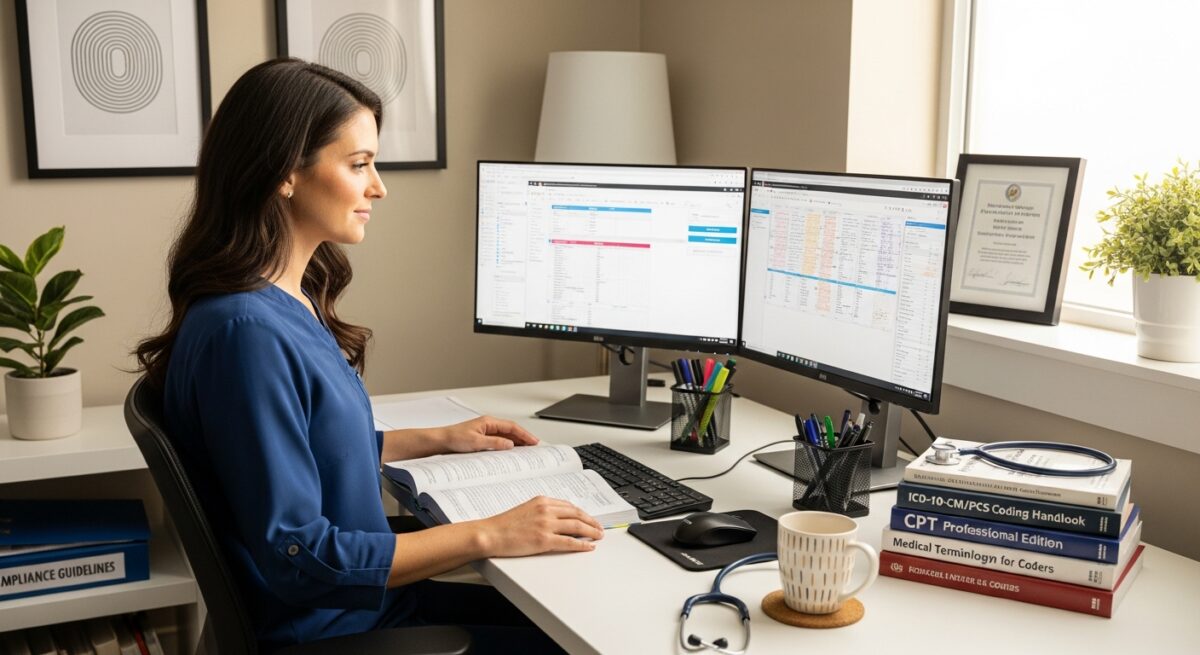
Behind every medical claim, every insurance payment, and every patient record lies a critical role that ensures the healthcare system runs smoothly. A coding specialist translates complex medical procedures, diagnoses, and treatments into standardized codes used for billing, research, and compliance. Without these professionals, hospitals, clinics, and insurance companies would struggle to process payments, track public health data, or maintain accurate patient histories. If you are considering a career in healthcare that combines analytical thinking, attention to detail, and a steady demand for skilled workers, understanding what does a coding specialist do is the first step toward deciding if this path fits your goals.
Medical coding specialists work behind the scenes, but their impact touches every patient encounter. They ensure that the care provided is accurately documented and that healthcare providers receive proper reimbursement. This role has grown increasingly important as healthcare regulations become more complex and as the shift toward electronic health records expands the need for precise data. Whether you are a career changer, a recent graduate, or a working adult seeking a stable profession, the coding specialist role offers a blend of structure, autonomy, and growth potential that few other healthcare careers match.
The Core Responsibilities of a Coding Specialist
At its heart, the coding specialist role revolves around converting clinical documentation into alphanumeric codes. These codes come from standardized systems such as ICD-10-CM (International Classification of Diseases, 10th Revision, Clinical Modification) for diagnoses, CPT (Current Procedural Terminology) for procedures, and HCPCS (Healthcare Common Procedure Coding System) for supplies and services. A coding specialist reviews patient records, including physician notes, lab results, and imaging reports, to identify all billable services and applicable diagnoses.
Accuracy is paramount. A single misplaced digit can result in a denied claim, a delayed payment, or even an audit from a regulatory agency. Coding specialists must also stay current with code updates, which occur annually, and with payer-specific guidelines that vary by insurance company. Beyond coding, many specialists audit their own work and the work of peers to maintain quality standards. They collaborate with physicians and nurses to clarify incomplete or ambiguous documentation, a process known as querying. This ensures the medical record reflects the full scope of care provided.
Common Daily Tasks for a Coding Specialist
To give you a concrete picture, here are the typical activities a coding specialist handles during a shift:
- Reviewing patient charts and extracting relevant diagnoses and procedures from physician notes, operative reports, and discharge summaries.
- Assigning accurate ICD-10-CM, CPT, and HCPCS codes according to official coding guidelines and payer policies.
- Using encoders and computer-assisted coding software to improve efficiency and reduce errors.
- Querying healthcare providers when documentation is unclear, incomplete, or contradictory.
- Monitoring claim rejections and denials, then correcting codes or resubmitting claims as needed.
These tasks require a methodical approach and the ability to focus for extended periods. Many coding specialists work remotely, which offers flexibility but also demands self-discipline and strong time management. The work is detail-intensive, but it also provides a sense of accomplishment when claims are paid correctly and patients receive the benefits they deserve.
Where Coding Specialists Work
Coding specialists are employed across a wide range of healthcare settings. Hospitals, physician practices, outpatient clinics, nursing homes, and home health agencies all rely on coding professionals to process claims and maintain compliance. Insurance companies and third-party billing firms also hire coding specialists to review claims for accuracy before payment. Some specialists work for government agencies, such as the Centers for Medicare and Medicaid Services (CMS), where they help develop or enforce coding policies.
The rise of telemedicine and remote work has expanded opportunities further. Many coding specialists now work from home, connecting to secure systems to access patient records. This trend accelerated during the pandemic and has remained a popular option for employers seeking to reduce overhead and for employees seeking better work-life balance. According to the Bureau of Labor Statistics, the demand for medical records and health information specialists, which includes coding specialists, is projected to grow faster than the average for all occupations through 2032.
Education and Certification Pathways
Becoming a coding specialist typically requires a combination of formal education and professional certification. Many community colleges and technical schools offer associate degrees or certificate programs in medical billing and coding. These programs cover anatomy, physiology, medical terminology, coding systems, and healthcare reimbursement methods. Some students enter the field with a high school diploma and complete a focused coding bootcamp or online course, though employers often prefer candidates with a recognized credential.
Certification is a critical differentiator in the job market. The most widely recognized credential is the Certified Professional Coder (CPC) offered by the American Academy of Professional Coders (AAPC). Other respected certifications include the Certified Coding Specialist (CCS) from the American Health Information Management Association (AHIMA) and the Certified Billing and Coding Specialist (CBCS) from the National Healthcareer Association. Earning a professional medical coder certification validates your knowledge, demonstrates commitment to the field, and often leads to higher starting salaries.
Steps to Launch Your Coding Career
If you are ready to pursue this career, follow these steps to build a solid foundation:
- Complete a medical billing and coding program from an accredited institution, either online or in person.
- Gain practical experience through an internship or entry-level position in a healthcare setting.
- Study for and pass a certification exam, such as the CPC or CCS, to earn your professional medical coder certification.
- Apply for coding specialist roles at hospitals, clinics, insurance companies, or remote staffing agencies.
- Maintain your certification through continuing education units (CEUs) to stay current with code changes.
Many employers offer tuition reimbursement or sponsor certification exams for employees, making it easier to advance without incurring significant debt. For those seeking affordable pathways, online degree programs can provide the flexibility needed to balance work, family, and education.
Skills That Set Great Coding Specialists Apart
Technical knowledge alone does not guarantee success in this field. Employers look for candidates who combine coding expertise with strong analytical thinking, communication skills, and integrity. A coding specialist must interpret complex medical records and apply the correct codes without overstepping or undercoding. This requires a deep understanding of medical processes and the ability to question documentation when something seems off.
Communication skills matter because coding specialists frequently interact with physicians, nurses, and billing staff. When a record lacks specificity, the specialist must draft a clear, professional query that prompts the provider to add detail without suggesting a specific code. This delicate balance demands tact and clinical knowledge. Additionally, coding specialists must be comfortable with technology, including electronic health record systems, encoders, and spreadsheet software for tracking productivity metrics.
Career Advancement and Salary Outlook
Entry-level coding specialists can expect to earn between $35,000 and $45,000 annually, depending on location and setting. With experience and advanced certifications, salaries can climb to $60,000 or more. Specialists who move into auditing, compliance, or management roles often earn higher wages. Some coding professionals transition into health information management, where they oversee entire departments and shape organizational policy.
The career path offers clear milestones. After gaining two to three years of experience, a coding specialist might pursue a specialty certification in areas such as inpatient coding, outpatient coding, or risk adjustment. These niches command premium pay because they require deeper expertise. Others choose to become coding educators or consultants, teaching new coders or helping practices improve their revenue cycle. The field also offers opportunities for those interested in data analytics, as coded data drives population health studies, quality reporting, and value-based reimbursement models.
Frequently Asked Questions
What is the difference between a coding specialist and a medical biller?
A coding specialist focuses on assigning accurate codes to diagnoses and procedures. A medical biller uses those codes to generate claims and follow up on payments. Some professionals perform both roles, especially in smaller practices, but larger organizations typically separate the functions.
Do coding specialists work directly with patients?
No, coding specialists work behind the scenes and rarely interact with patients. Their primary interactions are with medical records, physicians, and billing staff. This makes the role ideal for people who prefer analytical work over direct patient care.
How long does it take to become a certified coding specialist?
Most certificate programs take six to twelve months to complete. An associate degree typically requires two years. After finishing your education, you can prepare for the certification exam, which may take an additional few weeks to a few months of study. Many candidates complete the entire process within 18 months.
Is remote work common for coding specialists?
Yes, remote coding positions have become very common. Many healthcare organizations and outsourcing firms hire coding specialists to work from home, provided they have a secure internet connection and meet productivity standards. Remote work offers flexibility but requires strong self-motivation.
What is the hardest part of being a coding specialist?
Staying current with annual code updates and payer policy changes is challenging. Coding specialists must commit to lifelong learning and dedicate time to continuing education. The work can also be repetitive and requires sustained concentration, which can be mentally taxing.
Is a Coding Specialist Career Right for You?
A career as a coding specialist offers stability, flexibility, and a clear path to advancement for those who enjoy detail-oriented work and want to contribute to healthcare without providing direct patient care. The role is essential, the skills are transferable, and the demand shows no signs of slowing. For anyone exploring what does a coding specialist do, the answer is clear: they turn clinical stories into data that powers the healthcare system, ensuring accuracy, compliance, and fair reimbursement.
If you are ready to take the next step, consider researching accredited training programs and certification options that align with your schedule and budget. CollegeDegree.Education offers resources to help you compare degree programs, understand financial aid, and connect with schools that fit your goals. With the right preparation, you can join a profession that values precision, rewards expertise, and offers a meaningful way to support patient care from behind the scenes. For a deeper look at the field, explore our Medical Billing and Coding Specialist Career Guide 2026 for detailed steps on starting your journey.