
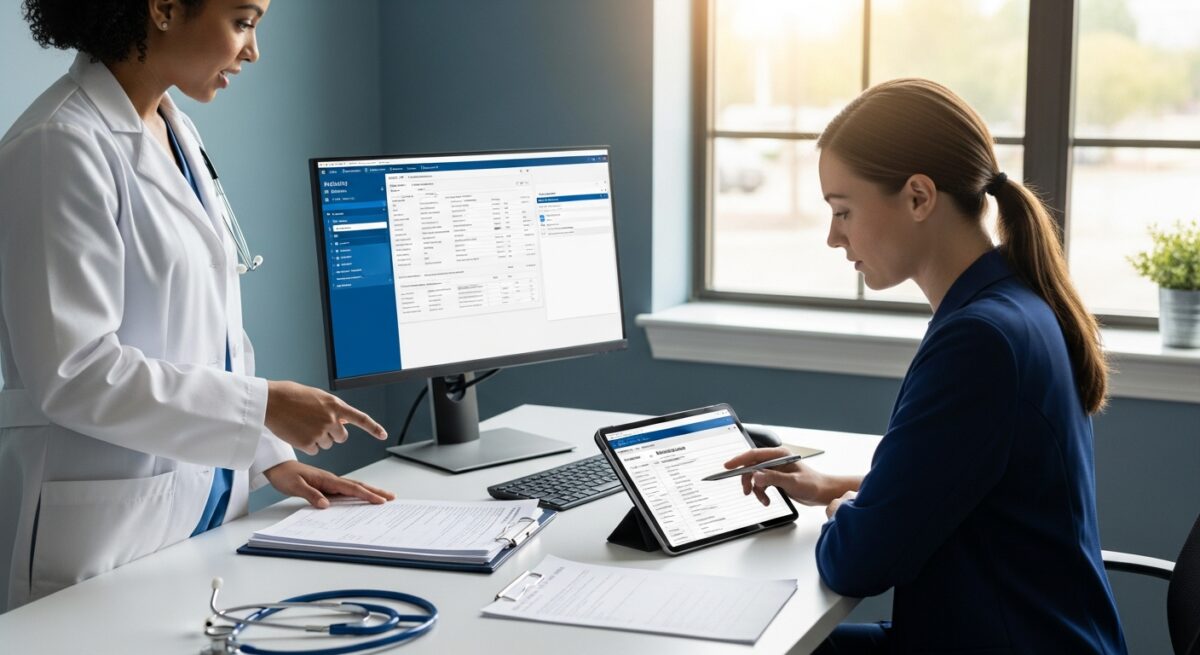
The healthcare industry runs on accurate documentation and timely reimbursement. Medical billers and coders are the professionals who make sure providers get paid for their services while ensuring patient records remain compliant with complex regulations. If you are looking for a stable, growing career that does not require years of medical school, earning a medical billing certification is your most direct path. This guide explains exactly how to get certified, what to expect from a medical billing course, and how to choose the right medical billing classes for your goals.
What Is a Medical Billing Certification?
A medical billing certification is a professional credential that proves you have the knowledge to handle billing software, process insurance claims, and navigate healthcare reimbursement rules. Unlike a general degree, a certification focuses specifically on the tasks you will perform on the job: submitting claims, following up on denials, managing patient accounts, and ensuring compliance with payer policies.
Employers often require or strongly prefer certified candidates because the credential shows you have passed a standardized exam and understand current industry standards. Without certification, you may struggle to compete for roles in hospitals, physician practices, and billing companies. The certification process typically involves completing a training program, studying for an exam, and passing a test administered by a recognized organization.
Why Certification Matters for Your Career
The demand for skilled medical billers continues to grow as the healthcare system expands. The U.S. Bureau of Labor Statistics projects employment for medical records specialists to grow faster than the average for all occupations. Certification can accelerate your entry into the field and increase your earning potential. Certified professionals often earn higher salaries than their non-certified peers because employers trust the credential as a reliable indicator of competence.
Additionally, certification opens doors to remote work opportunities. Many medical billing positions allow you to work from home, which makes this career appealing for parents, caregivers, and anyone seeking flexible employment. A recognized certification also provides a clear career ladder: you can start as a billing specialist and later move into coding, auditing, or management roles.
How to Get Certified: The Step-by-Step Process
Getting certified requires a deliberate plan. Follow these five steps to earn your medical billing certification and launch your career.
Step 1: Understand the Credential Options
Several organizations offer medical billing certifications. The most widely recognized include the Certified Professional Biller (CPB) from the American Academy of Professional Coders (AAPC) and the Certified Medical Reimbursement Specialist (CMRS) from the American Medical Billing Association (AMBA). Each credential has slightly different requirements and focuses, so research which one aligns with your career goals. The CPB is popular for its comprehensive coverage of billing and coding, while the CMRS is more specialized for billing professionals.
Step 2: Complete a Medical Billing Course or Training Program
Most certification exams require you to demonstrate knowledge of medical billing concepts. You can gain this knowledge through a formal medical billing course offered by community colleges, vocational schools, or online platforms. A good course covers medical terminology, health insurance basics, claim forms, coding systems (such as ICD-10-CM and CPT), and billing software. Look for programs that specifically prepare you for the certification exam you plan to take. In our guide on Medical Billing and Coding Courses and Classes Explained, we break down the differences between online and in-person options to help you choose the best fit.
Step 3: Gain Practical Experience
While some certifications do not require work experience, having hands-on practice makes the exam easier and makes you more attractive to employers. Many training programs include a practicum or internship component. If your program does not offer this, consider volunteering at a clinic, working as a medical receptionist, or shadowing a billing professional. Practical experience helps you understand real-world claim scenarios and denial management.
Step 4: Prepare for the Certification Exam
Exam preparation is critical. Use study guides, practice exams, and review courses provided by the certifying body. Set a study schedule that covers all exam domains, including claim submission, payment posting, appeals, and compliance. Many students spend 8 to 12 weeks studying before sitting for the exam. Focus on areas where you feel weakest, and take multiple practice tests to build confidence.
Step 5: Register and Pass the Exam
Once you feel prepared, register for the exam through the certifying organization. Exams are often offered at testing centers or online with a proctor. Fees vary but typically range from $200 to $400. After passing, you receive your credential, which you must maintain through continuing education units (CEUs) to keep it active.
Choosing the Right Medical Billing Classes
Not all medical billing classes are created equal. When evaluating programs, consider these factors to ensure you invest your time and money wisely.
- Accreditation: Choose a program from an accredited institution or one endorsed by a major certifying body like AAPC or AMBA. Accreditation ensures the curriculum meets industry standards.
- Format: Decide whether you prefer in-person classes, live online sessions, or self-paced courses. Self-paced options offer flexibility for working adults, while live classes provide structured interaction with instructors.
- Cost: Tuition ranges from a few hundred dollars for short online courses to several thousand for comprehensive diploma programs. Factor in exam fees, study materials, and potential costs for retakes.
- Job Placement Support: Some programs offer career services, resume assistance, or connections to local employers. This support can significantly shorten your job search after certification.
- Reviews and Outcomes: Look for student reviews and graduation rates. A program with high exam pass rates and positive alumni feedback is a strong indicator of quality.
Taking the time to research these elements will help you avoid programs that lack depth or fail to prepare you for the certification exam. Remember that the goal is not just to complete a course but to pass the certification test and enter the workforce with confidence.
What You Will Learn in a Medical Billing Course
A comprehensive medical billing course covers several core areas. You will learn about the revenue cycle, which includes patient registration, insurance verification, charge capture, claim submission, payment posting, and denial management. You will also study medical coding basics, as billing and coding are closely linked. Understanding CPT and ICD-10-CM codes is essential for submitting clean claims. Additionally, courses cover legal and ethical issues, such as HIPAA privacy rules and fraud prevention. By the end of a good program, you should be able to process a claim from start to finish and handle common payer rejections.
Online vs. In-Person Medical Billing Courses
Both online and in-person options have advantages. Online courses offer flexibility, allowing you to study around your current job or family responsibilities. They are often more affordable and can be accessed from anywhere. In-person classes provide direct interaction with instructors and classmates, which can be helpful if you learn better in a structured environment. Some students prefer hybrid models that combine online lectures with in-person labs or workshops. Your choice should depend on your learning style, schedule, and budget. Many successful billers have earned their certifications entirely through online programs, so do not feel pressured to choose a traditional classroom setting if online learning works for you.
For those looking to explore degree options alongside certification, platforms like DegreesOnline.Education can help you compare accredited programs that offer medical billing and health information management degrees. Combining a degree with certification can make you a stronger candidate for supervisory roles.
How Long Does It Take to Get Certified?
The timeline varies depending on your prior experience and the pace of your training. If you enroll in an intensive medical billing course, you can complete the training in 4 to 6 months. Self-paced programs may take longer if you study part-time. After finishing the course, you will need 4 to 8 weeks to prepare for the exam. In total, most people earn their certification within 6 to 9 months. If you already have a background in healthcare administration, you may be able to study independently and pass the exam in a shorter time frame.
Cost of Certification and Training
The total cost includes tuition for the medical billing course, exam fees, study materials, and possibly membership dues. Here is a general breakdown:
- Training Program: $500 to $3,000 depending on the provider and format
- Exam Fee: $200 to $400 for most certifications
- Study Materials: $100 to $300 for books, practice exams, and online resources
- Annual Membership: $50 to $150 for professional organizations (often required for exam eligibility)
Some employers reimburse certification costs, so check with potential employers before enrolling. Scholarships and payment plans are also available through some training providers.
Maintaining Your Certification
Certification is not a one-time achievement. To keep your credential active, you must earn continuing education units (CEUs) every year or two, depending on the certifying body. CEUs can be earned through webinars, conferences, online courses, or professional reading. This requirement ensures you stay current with changes in coding guidelines, insurance policies, and healthcare regulations. Maintaining your certification demonstrates a commitment to professionalism and ongoing learning.
Frequently Asked Questions
Do I need a degree to get a medical billing certification?
No, a degree is not required. Most certifications only require completion of a training program or passing the exam. However, having an associate degree in health information management can complement your certification and open more senior roles.
Can I get certified online?
Yes. Many certifying bodies offer online proctored exams. You can also complete your entire medical billing course online. The key is to choose a reputable program that prepares you for the specific certification you want.
What is the difference between medical billing and medical coding?
Medical billing focuses on claim submission, payment follow-up, and patient account management. Medical coding involves translating diagnoses and procedures into standardized codes. The two roles overlap, and many professionals hold certifications in both areas.
How much can I earn with a medical billing certification?
Salaries vary by location, experience, and employer. According to the BLS, the median annual wage for medical records specialists was around $48,000 in 2023. Certified professionals often earn 10 to 20 percent more than non-certified colleagues.
Which certification is best for beginners?
The Certified Professional Biller (CPB) from AAPC is a strong choice for beginners because it covers billing fundamentals and is widely recognized. The Certified Medical Reimbursement Specialist (CMRS) from AMBA is also beginner-friendly and focuses exclusively on billing.
Getting your medical billing certification is a smart investment in your future. The healthcare industry needs qualified professionals who can manage the revenue cycle efficiently. By following the steps outlined here, selecting the right medical billing classes, and committing to exam preparation, you can earn your credential and start a rewarding career in a matter of months.