
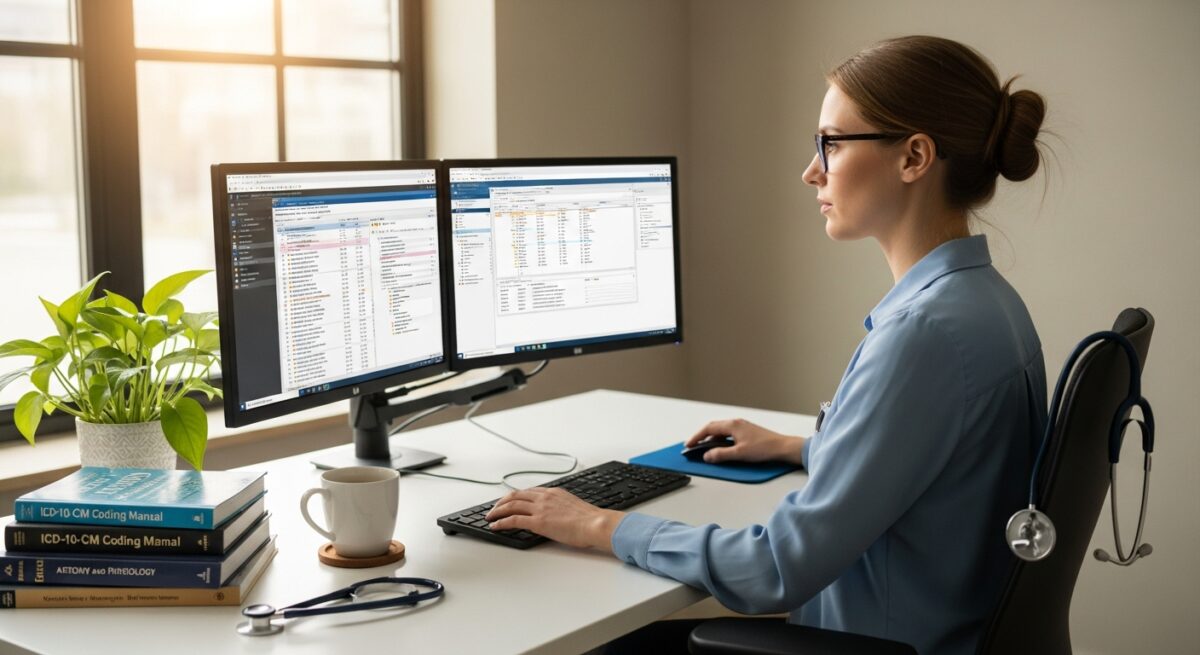
Healthcare runs on documentation. Every diagnosis, procedure, and treatment must be translated into standardized codes for billing, insurance reimbursement, and public health data. This translation work falls to professional medical coders, who serve as the critical link between patient care and the financial systems that keep healthcare organizations running. The demand for skilled coders continues to grow as healthcare regulations become more complex and the population ages. For individuals seeking a stable, well-paying career that does not require a four-year degree or direct patient contact, the professional medical coder path offers a compelling option. This guide explores the realities of the field, the certification process, and the steps you can take to build a successful career.
What Does a Professional Medical Coder Do?
A professional medical coder reviews patient medical records and assigns standardized alphanumeric codes to each diagnosis, procedure, and service provided. These codes come from classification systems such as ICD-10-CM (International Classification of Diseases, 10th Revision, Clinical Modification), CPT (Current Procedural Terminology), and HCPCS (Healthcare Common Procedure Coding System). The coded data flows into billing systems, insurance claims, and national health databases.
The work requires close attention to detail. Coders must read physician notes, lab results, and operative reports to identify the exact conditions and treatments. A single miscoded digit can lead to a denied claim, a delayed payment, or even an audit. Beyond accuracy, coders must understand medical terminology, anatomy, pharmacology, and reimbursement rules. They often work in hospitals, physician practices, insurance companies, or remote coding firms. Many coders transition into roles such as coding auditor, compliance officer, or health information manager after gaining experience.
Coding in medical settings also involves ethical responsibilities. Coders must follow strict guidelines to avoid upcoding (assigning a more severe code to increase reimbursement) or downcoding (assigning a less severe code that underrepresents care). These ethical boundaries protect patients, providers, and the integrity of healthcare data. For a deeper look at the training and certification process, see our guide on Certified Medical Coder Training and CPT Certification Guide.
Why Pursue a Career in Medical Coding?
The Bureau of Labor Statistics projects that employment for medical records specialists, which includes coders, will grow faster than the average for all occupations through the next decade. Several factors drive this growth. An aging population requires more medical services, which generates more records to code. Electronic health records have expanded the volume of data needing classification. Additionally, the shift toward value-based care demands accurate coding to measure outcomes and justify payments.
Salary potential is another strong draw. According to industry surveys, certified coders earn significantly more than non-certified staff. Entry-level certified coders often start between $40,000 and $50,000 annually, while experienced coders with advanced certifications can earn $70,000 or more. Remote work is common in this field, offering flexibility that appeals to many professionals. Many coders work from home after completing initial on-site training, which reduces commuting costs and allows for better work-life balance.
The career also offers clear advancement pathways. Coders can specialize in areas like outpatient coding, inpatient coding, risk adjustment, or oncology coding. Each specialization requires additional study but leads to higher pay and greater job security. Some coders eventually become coding educators, auditors, or consultants. Others pursue degrees in health information management to move into leadership roles. For career changers, the path from entry-level coder to senior specialist typically takes three to five years.
Essential Skills for Success in Coding for Healthcare
Becoming a competent coder requires more than memorizing code books. Successful coders develop a blend of technical, analytical, and interpersonal skills. Here are the most important ones to cultivate:
- Analytical thinking: Coders must interpret incomplete or ambiguous documentation and determine the correct code based on context. This requires logic, pattern recognition, and the ability to ask clarifying questions.
- Attention to detail: A single character error can change a code’s meaning. Coders double-check their work and cross-reference guidelines to ensure accuracy.
- Medical knowledge: Understanding anatomy, disease processes, and treatment procedures helps coders assign codes that reflect the true clinical picture. Strong knowledge of coding for healthcare systems like ICD-10 and CPT is essential.
- Ethical judgment: Coders often face pressure to assign codes that maximize reimbursement. Ethical coders resist this pressure and follow compliance rules.
- Technical proficiency: Most coding work happens in electronic health record systems and coding software. Coders must navigate these tools efficiently and keep up with updates.
Building these skills takes time. Many coders start with a certificate program or associate degree, then gain hands-on experience through internships or entry-level jobs. Continuing education is mandatory for maintaining certification, which ensures coders stay current with changing codes and regulations. Professional organizations such as the American Academy of Professional Coders (AAPC) and the American Health Information Management Association (AHIMA) offer resources, webinars, and networking opportunities to support skill development.
Certification: The Gateway to Credibility
While it is possible to work as a coder without certification, most employers prefer or require certified professionals. Certification demonstrates that a coder has passed a rigorous exam and meets national standards for knowledge and ethics. Two major organizations offer the most recognized credentials: AAPC and AHIMA. AAPC’s Certified Professional Coder (CPC) credential is the most popular for physician-based coding. AHIMA’s Certified Coding Specialist (CCS) credential is more common in hospital settings. Both require passing an exam and earning continuing education units (CEUs) to maintain the credential.
The certification process typically involves completing a training program, studying for the exam, and passing a multiple-choice test that covers code assignment, reimbursement methodology, and compliance. Many training programs include exam preparation as part of the curriculum. Some employers offer tuition reimbursement or on-the-job training to help employees earn certification. The investment in certification pays off quickly: certified coders earn 20 to 30 percent more than non-certified peers and have more job opportunities.
Steps to Launch a Professional Medical Coder Career
The path to becoming a certified coder is straightforward but requires dedication. Follow these steps to build a solid foundation:
- Complete a training program. Accredited programs are available at community colleges, vocational schools, and online platforms. Look for programs that cover medical terminology, anatomy, ICD-10-CM, CPT, HCPCS, and reimbursement methods. Many programs take 6 to 12 months to complete.
- Gain practical experience. Some programs include an internship or practicum. If yours does not, consider entry-level roles such as medical records clerk or billing assistant. These positions expose you to real-world coding workflows and help you build a resume.
- Choose a certification path. Research the CPC, CCS, or other credentials that match your career goals. Review exam requirements, costs, and study materials. AAPC and AHIMA both offer practice exams and study guides.
- Pass the certification exam. Schedule your exam after completing thorough preparation. Many test-takers spend 3 to 6 months studying. The exam covers coding guidelines, anatomy, and reimbursement rules. A passing score varies by credential but typically requires 70 percent or higher.
- Apply for coding positions. Use job boards, professional networks, and recruiter connections to find openings. Highlight your certification and any relevant experience in your resume and cover letter. Tailor your application to each employer’s setting (hospital, clinic, insurance company, etc.).
Once employed, continue learning. Coding guidelines change annually, and new codes are added regularly. Subscribe to industry newsletters, attend webinars, and join local AAPC or AHIMA chapter meetings. Many employers provide paid time for continuing education. Some coders pursue advanced certifications after a few years of experience, such as the Certified Inpatient Coder (CIC) or Certified Risk Adjustment Coder (CRC). These advanced credentials open doors to higher-paying specialist roles.
Career Outlook and Advancement Opportunities
The professional medical coder career offers strong long-term prospects. The healthcare industry is one of the few sectors that continues to grow regardless of economic cycles. Coding errors cost healthcare organizations millions of dollars each year, so accurate coding is a priority for administrators. This creates consistent demand for skilled coders who can reduce claim denials and optimize revenue cycles.
Advancement often follows a pattern. Entry-level coders typically work under supervision, coding straightforward cases. After one to two years, they handle more complex records and may specialize in a particular area such as surgery, radiology, or emergency medicine. Senior coders often take on auditing roles, reviewing the work of other coders for accuracy. Some coders move into management, overseeing coding departments or revenue cycle operations. Others become independent contractors, setting their own hours and rates.
For those interested in further education, a bachelor’s degree in health information management can lead to roles such as director of health information or compliance officer. Many colleges offer online degree programs tailored to working professionals. CollegeDegree.Education can help you explore accredited programs that fit your schedule and budget. Combining certification with a degree maximizes earning potential and career flexibility.
Choosing the Right Educational Path
Because medical coding is a specialized field, choosing the right training program is critical. Look for programs that are accredited by recognized bodies such as the Commission on Accreditation for Health Informatics and Information Management Education (CAHIIM) or that align with AAPC or AHIMA curriculum standards. Online programs offer flexibility for students who work or have family obligations. Many programs include access to coding software, code books, and practice exams. Some even offer job placement assistance after graduation.
When evaluating programs, consider cost, duration, and support services. Community college certificate programs often cost between $2,000 and $5,000 and take 6 to 12 months. Online programs may cost slightly more but offer self-paced study. Some employers invest in their employees’ education by offering tuition reimbursement or paying for certification exam fees. If you are currently working in healthcare, ask your employer about these benefits. For those starting from scratch, CollegeDegree.Education’s matching service can connect you with schools offering medical coding programs that fit your goals and budget. The platform simplifies the search process so you can focus on your studies.
Regardless of the path you choose, commitment to ongoing learning is essential. The coding field evolves constantly, and professionals who stay current will always be in demand. Joining professional organizations, attending conferences, and participating in online forums can help you stay ahead of changes. Many coders also mentor newcomers, which reinforces their own knowledge and builds professional networks.
Final Thoughts
A professional medical coder career offers stability, competitive pay, and the satisfaction of contributing to healthcare efficiency. The work requires precision, ethical judgment, and a willingness to learn continuously. Certification is the key that unlocks the best opportunities, and the steps to earn it are clear and achievable. Whether you are a recent high school graduate, a career changer, or a healthcare professional looking for a new direction, medical coding provides a path to a rewarding future. Take the first step by researching training programs, connecting with professional organizations, and setting a study schedule. The demand for skilled coders will only grow, and the time to start is now. Learn more