
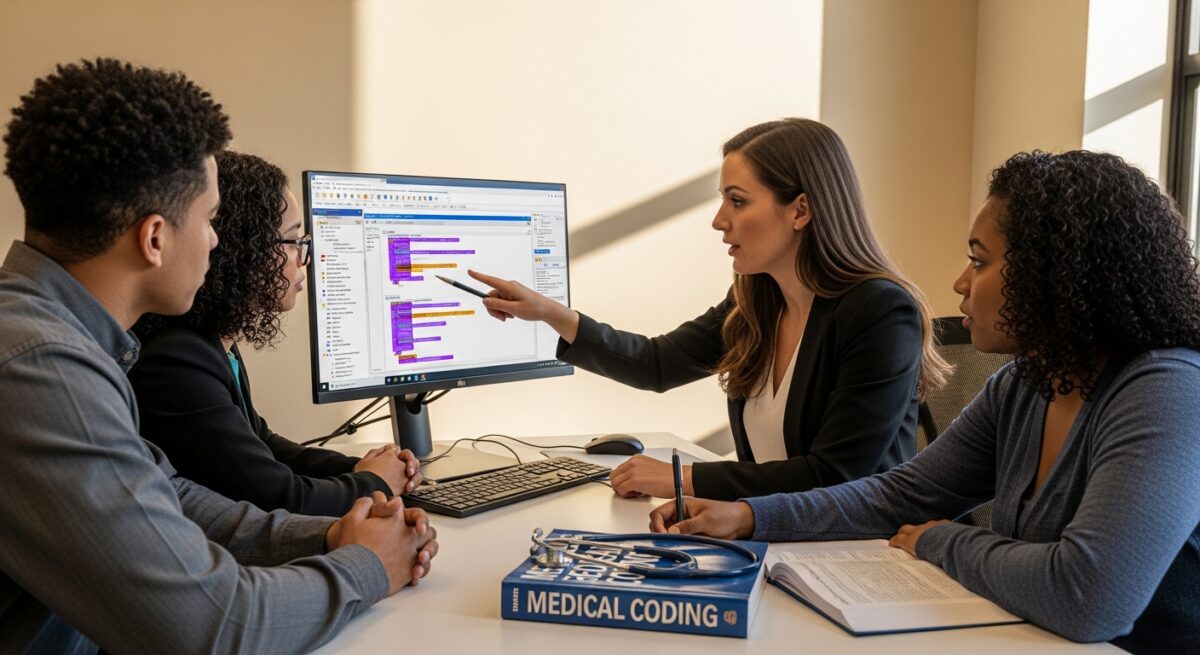
The healthcare industry relies on accurate medical records, insurance claims, and billing processes. Behind every patient visit, there is a skilled professional translating diagnoses, treatments, and procedures into standardized codes. Medical coding offers a stable, rewarding career path that does not require a decade of schooling. With the right training, you can enter this field in less than two years. This article provides a comprehensive medical coding courses and training programs overview to help you understand your options, choose the right path, and take the first step toward certification.
What Is Medical Coding and Why Does It Matter?
Medical coding is the process of converting healthcare diagnoses, procedures, medical services, and equipment into universal alphanumeric codes. These codes appear on medical records, insurance claims, and billing statements. Coders work with systems like ICD-10-CM, CPT, and HCPCS Level II. Their work ensures that healthcare providers receive accurate reimbursement from insurance companies and government programs. Without skilled coders, hospitals and clinics would face billing errors, claim denials, and compliance issues.
The demand for medical coders continues to grow. An aging population, increased healthcare access, and the shift toward electronic health records all contribute to this need. The Bureau of Labor Statistics projects steady growth for medical records and health information specialists. This makes medical coding a reliable career choice for those seeking job security and competitive pay.
Types of Medical Coding Courses and Training Programs
When researching a course for medical coding, you will encounter several formats. Each option serves different learning styles, schedules, and budgets. The key is to match the program type with your personal circumstances and career goals.
Online Medical Coding Programs
Online programs have become the most popular choice for aspiring coders. They offer flexibility for working adults, parents, and military veterans. Most online courses are self-paced, allowing you to complete modules on your own schedule. Reputable online programs include interactive exercises, video lectures, and virtual labs. Many also provide access to instructors and peer discussion forums. When selecting an online program, verify that it covers the official coding guidelines and prepares you for a recognized certification exam.
On-Campus Training Programs
Traditional classroom settings still exist at community colleges, technical schools, and universities. These programs offer face-to-face interaction with instructors and classmates. On-campus training can be beneficial if you thrive in structured environments and prefer direct feedback. Many community colleges offer associate degrees in health information management or medical coding. These programs often include externships or clinical practice, giving you real-world experience before graduation.
Certificate vs. Degree Programs
Certificate programs focus exclusively on coding skills. They typically take six to twelve months to complete. A certificate is the fastest way to gain entry-level coding knowledge. Degree programs, such as an Associate of Applied Science in Health Information Technology, provide broader education. They include general education courses alongside coding-specific classes. A degree may open doors to supervisory roles or advanced positions in health information management. Both paths can lead to certification, but your long-term career goals should guide your decision.
Key Components of a Quality Training Program
Not all programs are created equal. To ensure you receive adequate preparation, look for the following elements in any medical coding course you consider.
- Accreditation: The program should be accredited by a recognized agency such as the Commission on Accreditation for Health Informatics and Information Management Education (CAHIIM) or a regional accrediting body.
- Certification Preparation: The curriculum must align with the content of major certification exams like the Certified Professional Coder (CPC) exam from AAPC or the Certified Coding Associate (CCA) exam from AHIMA.
- Hands-On Practice: Look for programs that include real-world coding exercises, case studies, and lab time. Practical application is essential for mastering coding guidelines.
- Experienced Instructors: Faculty should hold current coding credentials and have recent industry experience. They can provide insights that textbooks cannot.
- Career Support: Some programs offer resume assistance, interview prep, and job placement services. These resources can significantly shorten your job search after graduation.
When you enroll in a program that meets these criteria, you build a strong foundation for your coding career. The right training makes the difference between struggling with the exam and passing with confidence.
Medical Coding Accredited Schools: What to Look For
Choosing one of the medical coding accredited schools ensures that your education meets industry standards. Accreditation protects your investment of time and money. Employers prefer graduates from accredited programs because they know the curriculum meets current professional requirements. Financial aid is also more accessible for students attending accredited institutions.
To verify accreditation, visit the school’s website or check the CAHIIM directory. Regional accreditation is also valuable, especially if you plan to transfer credits to a degree program later. Avoid schools that make exaggerated promises about job placement or starting salaries. A legitimate program will be transparent about outcomes and costs.
Coder Programs: Certification Pathways Explained
After completing a course for medical coding, the next step is certification. Employers almost always require coders to hold one or more professional credentials. The two main certifying bodies are AAPC and AHIMA. Each organization offers several certifications targeting different specialties and experience levels.
The most common entry-level credential is the Certified Professional Coder (CPC) from AAPC. This certification covers physician-based coding. For those interested in hospital coding, the Certified Inpatient Coder (CIC) or the Certified Coding Specialist (CCS) from AHIMA are strong options. The Certified Coding Associate (CCA) is a general credential that works well for beginners.
Many coder programs include exam review sessions and practice tests. Some even bundle the exam fee with tuition. Passing the certification exam demonstrates your competence and makes you a competitive candidate in the job market. Most coders maintain their credentials through continuing education units (CEUs), which also encourages lifelong learning.
How to Choose the Right Program for You
With so many options available, selecting the best program can feel overwhelming. Start by evaluating your schedule and budget. If you need to work while studying, an online self-paced program might be ideal. If you learn best in a structured classroom, consider a local community college. Next, research the program’s pass rates for certification exams. High pass rates indicate effective teaching and a strong curriculum.
Also consider the total cost. Tuition for certificate programs ranges from $1,000 to $5,000. Associate degree programs can cost more but may qualify for federal financial aid. Compare the return on investment by looking at average starting salaries for coders in your area. Finally, read student reviews and talk to alumni if possible. Their experiences can reveal strengths and weaknesses not listed in the program brochure.
Financial Aid and Affordable Options
Cost should not be a barrier to entering this field. Many medical coding accredited schools offer financial aid packages. Federal Pell Grants, student loans, and work-study programs are available for eligible students at accredited institutions. Some employers also offer tuition reimbursement for employees pursuing coding careers.
Scholarships are another resource. Professional organizations like AAPC and AHIMA offer scholarships to aspiring coders. Local hospitals and healthcare systems sometimes sponsor training for employees who commit to working for them after certification. If you are a military veteran, your GI Bill benefits can cover coding programs at approved schools. Explore all options before committing to a program. For more information on finding affordable educational pathways, you can visit College and Tuition for resources on funding your education.
Frequently Asked Questions
How long does it take to become a medical coder?
Most certificate programs take six to twelve months to complete. Associate degree programs take about two years. After finishing a program, you may need additional weeks to prepare for and pass the certification exam.
Do I need a degree to work as a medical coder?
No, a degree is not always required. Many employers accept a certificate from an accredited program plus a professional certification. However, a degree can help you advance to management roles or higher-paying positions.
What is the difference between a CPC and a CCS?
The CPC (Certified Professional Coder) focuses on physician office and outpatient coding. The CCS (Certified Coding Specialist) covers hospital inpatient coding. Your choice depends on where you want to work.
Can I learn medical coding for free?
Free resources exist, such as introductory videos and sample code sets. However, comprehensive training that prepares you for certification usually requires paid tuition. Free options rarely include hands-on practice or exam preparation.
Is medical coding a good career for working adults?
Yes. Many coders work remotely, which offers flexibility for parents and caregivers. The field also allows for part-time and full-time positions. Online training programs make it possible to study while maintaining your current job.
Start Your Medical Coding Journey Today
Medical coding offers a clear path to a stable, well-paying career in healthcare. Whether you choose an online certificate, a community college degree, or a specialized coder program, the key is to select an accredited program that prepares you for certification. Take the time to research your options, compare costs, and read reviews. With the right training and credential, you can join a growing field that values accuracy, attention to detail, and a commitment to quality healthcare. The demand for skilled coders will only increase, making now the ideal time to begin your training.