
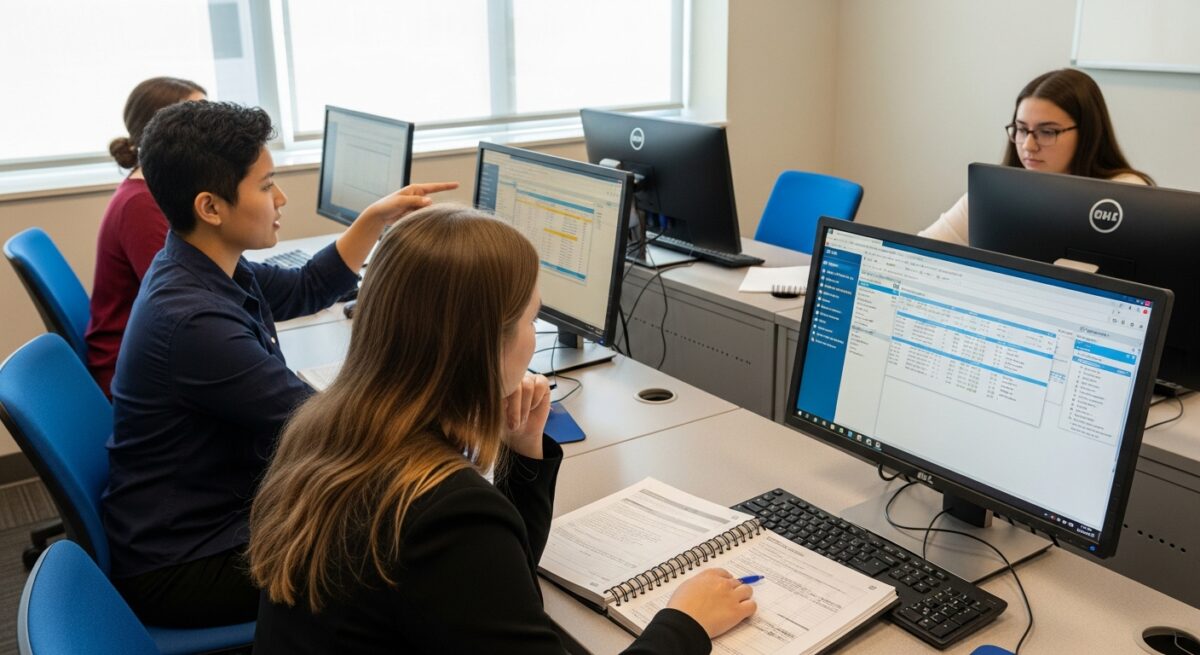
Healthcare is one of the fastest-growing industries in the United States, and behind every successful medical practice, hospital, or clinic is a team of skilled professionals who ensure that patient data is accurate, insurance claims are processed correctly, and revenue flows smoothly. Among these essential roles, medical billing and coding specialists stand out as the bridge between healthcare providers and insurance companies. If you are looking for a stable, well-paying career that does not require years of medical school or a four-year commitment, an associate degree in medical billing and coding might be your ideal path. This article breaks down exactly what this degree entails, what you will learn, how long it takes, what jobs await you, and how to choose the right program for your goals.
What Is an Associate Degree in Medical Billing and Coding?
An associate degree in medical billing and coding is a two-year postsecondary degree program that trains students to manage patient health records, assign standardized medical codes to diagnoses and procedures, and handle insurance billing and reimbursement processes. Unlike a certificate program, which often focuses narrowly on coding skills, an associate degree provides a broader education that includes general education courses in English, math, and science, as well as specialized healthcare coursework. This combination makes graduates more competitive in the job market and better prepared for supervisory roles or further education later.
Earning an associate in medical billing and coding typically requires 60 to 70 credit hours and can be completed in about 18 to 24 months when attending full-time. Many accredited colleges and universities offer these programs entirely online, giving students the flexibility to balance work, family, and school. The curriculum blends medical terminology, anatomy and physiology, healthcare law and ethics, coding systems such as ICD-10-CM, CPT, and HCPCS Level II, and billing software training. By the end of the program, you will be prepared to sit for national certification exams, which many employers require or prefer.
Why Choose a Medical Billing and Coding Associate Degree?
If you are considering a healthcare career but want to avoid the high cost and long timeline of nursing or medical school, a medical billing and coding associate degree offers a practical alternative. The Bureau of Labor Statistics projects that employment for medical records and health information specialists will grow much faster than average over the next decade, driven by an aging population and the increasing use of electronic health records. This translates into strong job security and steady demand for qualified professionals.
Additionally, many medical billing and coding specialists work remotely, which has become an increasingly attractive option in the post-pandemic world. With a reliable internet connection and the right software, you can process claims and manage patient records from home. The earning potential is also solid. According to the BLS, the median annual wage for health information technicians was around $48,000 in 2023, with the top earners making over $73,000. Those who earn certifications, such as the Certified Professional Coder (CPC) credential from the AAPC, often command higher salaries and more job opportunities.
Core Curriculum and Skills You Will Learn
An associate degree in medical billing and coding is designed to equip you with both technical knowledge and practical skills. Below is an overview of the key subject areas you will study.
Medical Terminology and Anatomy
You will learn the language of medicine, including prefixes, suffixes, root words, and abbreviations used in patient records. Understanding anatomy and physiology is essential because coding requires you to translate a physician’s diagnosis and procedure notes into accurate codes. For example, you must know the difference between a fracture of the tibia and a fracture of the fibula to assign the correct ICD-10 code.
Coding Systems and Guidelines
The core of the program focuses on the three main coding systems used in the United States. ICD-10-CM (International Classification of Diseases, 10th Revision, Clinical Modification) is used for diagnoses. CPT (Current Procedural Terminology) is used for medical procedures and services. HCPCS Level II (Healthcare Common Procedure Coding System) covers supplies, equipment, and services not included in CPT. You will learn how to read medical records, abstract relevant information, and assign codes according to official guidelines.
Healthcare Reimbursement and Billing
This part of the curriculum covers the entire revenue cycle, from patient registration and insurance verification to claim submission, payment posting, and denial management. You will learn how to complete CMS-1500 and UB-04 claim forms, understand different payer types (Medicare, Medicaid, commercial insurance), and navigate the appeals process. Billing software training is often included, giving you hands-on experience with tools used in real medical offices.
Health Information Law and Ethics
Medical coders and billers handle sensitive patient data daily. You will study HIPAA (Health Insurance Portability and Accountability Act) privacy and security rules, patient confidentiality, and ethical coding practices. Understanding compliance is critical because improper coding or billing can lead to audits, fines, or even fraud charges.
General Education Requirements
Like any associate degree, you will also complete courses in English composition, college algebra, psychology, and communications. These courses improve your critical thinking, writing, and interpersonal skills, which are valuable when communicating with insurance companies, physicians, and patients.
Accreditation and Certification: Why They Matter
When researching programs, always look for accreditation from a recognized agency, such as the Commission on Accreditation for Health Informatics and Information Management (CAHIIM) or the Accrediting Bureau of Health Education Schools (ABHES). Attending an accredited program ensures that your education meets industry standards and that you are eligible to sit for national certification exams. In our guide on accredited medical billing and coding schools, we explain how to verify a school’s credentials and why this step is critical for your career.
Certification is not always required by law, but most employers prefer or mandate it. The most recognized credentials include the Certified Professional Coder (CPC) from the AAPC and the Certified Coding Specialist (CCS) from AHIMA. Some programs include exam preparation as part of the curriculum, and many schools have high pass rates for first-time test takers. Earning your certification can boost your starting salary by 10% to 20% and open doors to positions in hospitals, insurance companies, and consulting firms.
Career Paths and Job Outlook
Graduates with an associate in medical billing and coding can pursue a variety of roles. The most common job titles include medical coder, medical biller, health information technician, coding specialist, and reimbursement specialist. You might work in a hospital, physician’s office, nursing home, outpatient clinic, or insurance company. Some coders specialize in specific areas such as radiology, emergency medicine, or pathology, which can lead to higher pay.
Remote work is also a major draw. Many medical coding and billing positions can be done from home, especially for large healthcare systems or outsourcing companies. This flexibility allows you to design your work schedule around your life, which is particularly appealing for parents, caregivers, or anyone seeking a better work-life balance. According to the BLS, about 15% of health information technicians were self-employed in 2023, often working as independent contractors for multiple clients.
How to Choose the Right Program
With so many options available, selecting the best program can feel overwhelming. Here are a few factors to consider before you apply.
- Accreditation status: Confirm that the school is regionally accredited and that the health information program holds specialized accreditation from CAHIIM or ABHES.
- Program format: Decide whether you prefer an on-campus, online, or hybrid format. Online programs offer flexibility, but make sure they provide adequate support and access to instructors.
- Cost and financial aid: Compare tuition rates, fees, and the availability of scholarships, grants, or employer tuition reimbursement. Community colleges often offer the most affordable associate degrees.
- Certification exam pass rates: Ask the program for its CPC or CCS first-time pass rates. High pass rates indicate strong instruction and curriculum alignment.
- Internship or practicum opportunities: Some programs include a capstone or externship that gives you real-world experience before graduation. This can be a significant advantage when applying for jobs.
Once you have narrowed your list, reach out to admissions counselors and ask about job placement rates, alumni outcomes, and the types of employers that recruit from the program. Many community colleges have strong local connections with hospitals and clinics, which can help you land your first job quickly after graduation.
Online vs. On-Campus: Which Is Right for You?
Both formats have their merits. On-campus programs provide face-to-face interaction with instructors and peers, access to campus resources like libraries and tutoring centers, and a structured schedule that some students need to stay on track. However, they require commuting and fixed class times, which can be difficult for working adults.
Online programs, on the other hand, allow you to study from anywhere at any time. Many accredited schools now offer fully online associate degrees in medical billing and coding that are identical in content to their on-campus counterparts. You will watch recorded lectures, complete assignments on your own schedule, and participate in discussion boards. The key is to choose a program that offers robust student support, including technical help, academic advising, and career services. If you are self-disciplined and comfortable with technology, an online program can be an excellent choice. For more resources on finding the right fit, you can explore the degree matching tools available at DegreesOnline.Education, which helps connect you with accredited programs tailored to your needs.
Frequently Asked Questions
How long does it take to earn an associate degree in medical billing and coding?
Most full-time students complete the program in about two years. Part-time students may take three to four years. Accelerated programs are available at some schools and can be finished in as little as 12 to 18 months.
Can I get a job with just an associate degree?
Yes. Many entry-level medical coding and billing positions require only an associate degree or a postsecondary certificate. However, earning a certification like the CPC or CCS will significantly improve your job prospects and earning potential.
Is medical billing and coding hard to learn?
The material is technical and requires attention to detail, but most students find it manageable with consistent study. The hardest part for many is mastering the coding guidelines and learning to apply them accurately. Practice and repetition are key.
What is the difference between medical billing and medical coding?
Medical coding involves translating diagnoses, procedures, and services into standardized alphanumeric codes. Medical billing uses those codes to create and submit insurance claims, follow up on payments, and manage accounts receivable. Many professionals perform both roles, especially in smaller practices.
Can I work from home as a medical coder?
Yes. Remote medical coding and billing jobs are common. Many companies hire remote coders after they have gained one to two years of experience. Some employers provide the necessary equipment and software.
Taking the Next Step Toward Your Healthcare Career
An associate degree in medical billing and coding is a smart investment in your future. It offers a clear pathway to a stable, well-paying career in healthcare without the need for a four-year degree or extensive clinical training. The skills you gain are in high demand, the work can be done remotely, and the opportunities for advancement are real. Whether you are a recent high school graduate, a career changer, or a working parent looking for flexibility, this degree can help you achieve your professional goals. Start by researching accredited programs, comparing costs and formats, and reaching out to schools that align with your needs. With the right education and certification, you will be ready to join the growing field of health information management.