
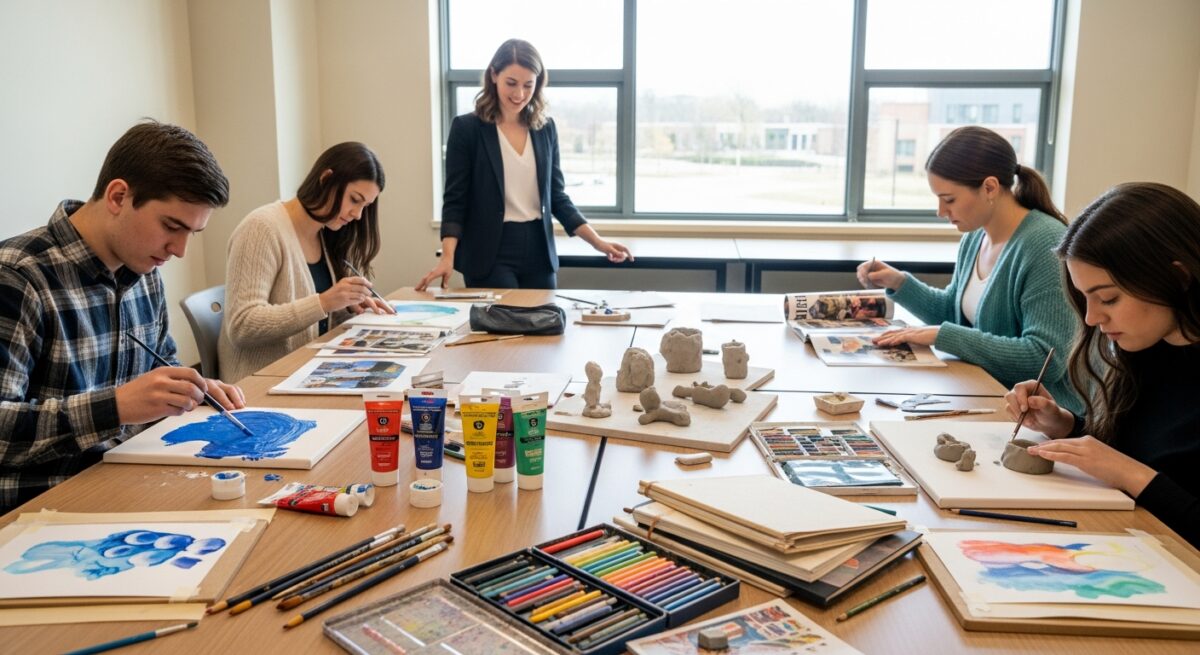
Art therapy sits at the intersection of creative expression and mental health treatment. It is a clinical practice where licensed therapists use the creative process to help clients explore emotions, reduce anxiety, improve self-esteem, and resolve psychological conflicts. But behind every session lies a trained professional who has earned a specific credential: an art therapy degree. If you are considering a career that blends artistic passion with meaningful therapeutic work, understanding what an art therapy degree entails is the first step. This article explains the degree structure, career outcomes, accreditation requirements, and how to choose the right program for your goals.
Defining the Art Therapy Degree
An art therapy degree is a graduate-level credential that prepares students to become registered art therapists (ATR) or board-certified art therapists (ATR-BC). Unlike a general fine arts degree, this program combines studio art practice with clinical psychology, counseling techniques, and human development. Most programs are offered at the master’s level, though some undergraduate degrees in art therapy or related fields can serve as a foundation for graduate study.
The curriculum typically includes courses in psychopathology, ethics, group therapy, multicultural counseling, and assessment methods. Students also complete supervised clinical internships where they apply art-based interventions with diverse populations. The goal is to produce practitioners who can ethically and effectively use art as a diagnostic and healing tool.
Core Components of Art Therapy Programs
Art therapy programs share a common structure regardless of the institution. They are designed to meet the educational standards set by the American Art Therapy Association (AATA) and the Art Therapy Credentials Board (ATCB). Most accredited programs require the following elements:
- Studio art coursework: At least 12 semester hours in drawing, painting, sculpture, ceramics, or other visual media to ensure the student has a strong artistic foundation.
- Psychology and counseling theory: Courses in developmental psychology, abnormal psychology, theories of personality, and counseling techniques.
- Art therapy theory and practice: Classes that cover the history of art therapy, major theoretical frameworks (e.g., psychodynamic, humanistic, cognitive-behavioral), and ethical standards.
- Supervised clinical experience: A minimum of 700 hours of practicum and internship, with at least 350 hours of direct client contact under an ATR supervisor.
- Research methods: Training in qualitative and quantitative research to evaluate therapeutic outcomes and contribute to the field.
After completing these components, graduates must pass the national board examination administered by the ATCB to earn the ATR-BC credential. Many states also require a state license to practice as a mental health counselor, which may involve additional coursework or examinations.
Types of Art Therapy Degrees Available
Prospective students can choose from several degree pathways depending on their career stage and educational background.
Bachelor’s Degrees in Art Therapy
An undergraduate degree in art therapy is rare but exists at a handful of universities. More commonly, students major in psychology, fine arts, or human services with a minor in art therapy. This foundation prepares them for master’s-level study. A bachelor’s degree alone does not qualify someone to practice as an art therapist, but it can lead to roles such as art program coordinator or behavioral health technician.
Master’s Degrees in Art Therapy
The master’s degree is the standard entry point for the profession. Programs typically span 2 to 3 years and result in a Master of Arts (MA), Master of Science (MS), or Master of Professional Studies (MPS) in Art Therapy. Some programs offer concentrations in areas like trauma-informed care, child and adolescent therapy, or addiction counseling. Graduates are eligible for the ATR credential after completing postgraduate supervised experience.
Doctoral Degrees in Art Therapy
A PhD or EdD in art therapy is intended for those pursuing research, academia, or advanced clinical supervision. These programs are less common and often require a master’s degree in art therapy or a related field for admission. Doctoral candidates conduct original research, teach at the university level, and may develop new assessment tools or treatment protocols.
Accreditation and Credentialing
Accreditation is critical when selecting an art therapy program. The AATA approves programs that meet its educational standards, while regional accreditation ensures the institution itself is legitimate. Graduating from an AATA-approved program is often a prerequisite for ATR eligibility and state licensure. The ATCB manages the national credentialing process, which includes the board examination, continuing education requirements, and a code of ethics.
State licensure varies widely. Some states license art therapists as independent practitioners, while others require them to hold a professional counselor license (LPC) with an art therapy specialization. Before enrolling, check the licensure requirements in the state where you plan to work. For a deeper look into how to find accredited programs that fit your schedule and budget, explore our guide on Accredited Art Therapy Degrees Online: Programs & Benefits.
Skills You Develop in an Art Therapy Degree Program
Art therapy education builds a unique blend of artistic, clinical, and interpersonal skills. Students learn to interpret visual metaphors, recognize nonverbal cues, and facilitate creative processes with individuals and groups. They also develop therapeutic rapport, cultural competence, and the ability to handle sensitive disclosures. Ethical decision-making is woven throughout the curriculum, especially regarding boundaries, confidentiality, and the use of touch in art making. Graduates leave with the confidence to design interventions that meet clients where they are, whether in a hospital, school, private practice, or community mental health center.
Career Paths and Salary Expectations
Art therapists work in a variety of settings. Many are employed in hospitals, psychiatric facilities, rehabilitation centers, schools, nursing homes, and correctional institutions. Others work in private practice or as part of multidisciplinary teams with psychologists, social workers, and occupational therapists. According to the Bureau of Labor Statistics, the median annual wage for art therapists (classified under recreational therapists) is around $55,000, though experienced practitioners in private practice or hospital settings can earn $70,000 or more. Job growth is projected at 8 percent through 2030, driven by increased recognition of the mental health benefits of creative therapies.
Art therapy degrees also open doors to related careers. Some graduates become expressive arts therapists, grief counselors, or art educators in special education. Others pursue doctoral studies or move into program administration. The combination of clinical training and artistic expertise makes these professionals valuable in settings where traditional talk therapy may not be effective.
How to Choose the Right Art Therapy Program
Selecting an art therapy program requires careful research. Start by confirming that the program is AATA-approved and regionally accredited. Look at faculty credentials: do they hold the ATR-BC and have clinical experience? Consider the format: many schools now offer low-residency or fully online master’s degrees in art therapy, which are ideal for working adults. Examine the internship placements available. A program with partnerships in hospitals, schools, and community agencies will give you broader clinical exposure. Finally, compare tuition costs and financial aid options. Some programs offer graduate assistantships or scholarships specifically for art therapy students.
If you are still exploring options, visiting open houses, talking to current students, and reading program outcomes (such as exam pass rates and job placement statistics) can provide clarity. Remember that the cheapest program is not always the best fit, but an expensive one without strong clinical training will not serve you either.
Frequently Asked Questions
Can I become an art therapist with a bachelor’s degree?
No, a master’s degree from an AATA-approved program is the minimum requirement to become a registered art therapist. A bachelor’s degree in psychology, fine arts, or a related field is the typical prerequisite.
Is art therapy the same as art education?
No. Art education focuses on teaching artistic skills and techniques. Art therapy uses the creative process as a therapeutic tool to address mental health issues. Art therapists must have clinical training and licensure.
Do I need to be a good artist to earn an art therapy degree?
You need a solid foundation in visual art, but you do not need to be a professional artist. Programs look for competence in several media and an understanding of the creative process, not gallery-level skill.
How long does it take to complete an art therapy degree?
A master’s degree typically takes 2 to 3 years of full-time study. Part-time options may take 3 to 4 years. Postgraduate supervised experience for the ATR credential adds another 1,000 hours (about 2 years of part-time work).
Can I pursue an art therapy degree online?
Yes. Several accredited institutions offer online or hybrid art therapy programs. These programs require in-person internships, so you must live near approved clinical sites. Our guide on online options can help you identify programs that match your location and schedule.
Taking the Next Step
An art therapy degree is a meaningful investment in a career that heals through creativity. It demands dedication to clinical training, artistic growth, and personal reflection. But for those who are drawn to the intersection of art and psychology, the rewards are substantial. You will help clients find voice where words fail, process trauma in a safe container, and discover resilience they did not know they had. As the mental health field continues to embrace holistic and expressive approaches, the demand for qualified art therapists will only grow. Whether you are a recent graduate exploring graduate school or a working professional considering a career change, now is an excellent time to explore accredited art therapy programs. To begin your search for the right school and program, visit CollegeDegrees.school for resources on degree matching, financial aid, and career planning.